

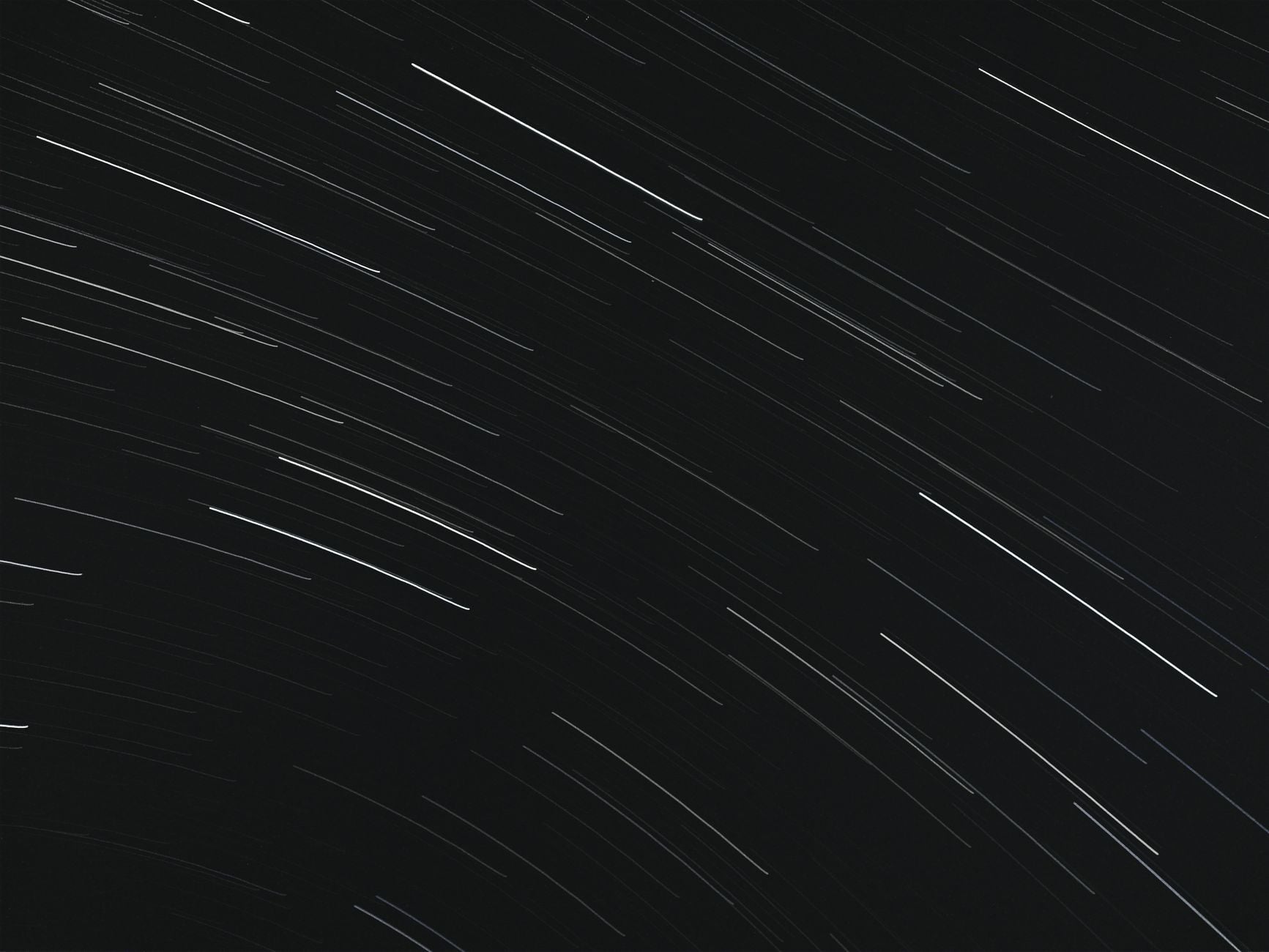
Travel to another star at almost the speed of light and something strange happens to time. You might age only a few years on the journey, while the people you left on Earth age by generations, or are long gone, centuries having passed. This is not a storytelling liberty. It is a real, repeatedly tested consequence of Einstein’s physics, even though the spacecraft that could do it does not exist and may never.
That is the honest split to keep in mind throughout. The physics is settled and confirmed. The engineering is the fantasy.
Time is not the same for everyone
The idea comes from Einstein’s special theory of relativity, published in 1905. Its starting point is that the speed of light is the same for every observer, no matter how they are moving. Holding that fixed comes at a price: time itself can no longer be a universal clock ticking the same for all.
Instead, a clock moving quickly relative to you runs slow compared with your own. The faster something moves through space, the more slowly it moves through time, as measured by someone it is rushing past. At the speeds of everyday life the effect is far too small to notice. As you approach the speed of light, it becomes overwhelming.
The maths of a fast journey
Physicists capture this with a single stretching factor that grows as you speed up. At 99 per cent of the speed of light, time runs about seven times slower for the traveller than for those left behind. At 99.99 per cent, about seventy times slower. At 99.9999 per cent, around seven hundred times slower.
The consequences for a star voyage are dramatic. Imagine a ship that could cruise at 99.99 per cent of light speed to a star a hundred or so light-years away. From Earth the round trip would take a little over two centuries. On board, with time running some seventy times slower, the crew might age only about three years. They could step off the ship into a world two hundred years in their future, having lived through only a few birthdays. These numbers are illustrative rather than a specific mission plan, but the effect they describe is exactly what relativity predicts.
How we know it is real
None of this is guesswork, because the effect is measured constantly. The clearest natural example is the muon, a particle created when cosmic rays strike the upper atmosphere. Muons live only about two millionths of a second before decaying, far too short a life to reach the ground from tens of kilometres up. Yet they arrive at sea level in abundance, because they travel so fast that their internal clocks run slow, stretching their brief lives enough to complete the trip.
The same shows up in human technology. In 1971, scientists flew atomic clocks around the world on ordinary airliners and, on landing, found them slightly out of step with identical clocks left on the ground, exactly as predicted. The satellites of the GPS network have to correct for relativity every day; their onboard clocks and ground clocks tick at different rates, and without accounting for it, navigation would drift by kilometres within a day. The effect is tiny at these speeds, but it is there, and it matches the theory precisely.
The twin who comes home younger
The most famous illustration is the twin paradox. Send one twin on a near-light-speed trip to a distant star and back, and leave the other at home. When the traveller returns, they are genuinely younger than the twin who stayed.
It sounds contradictory, since from each twin’s point of view the other was the one moving. The resolution is that their situations are not the same. The traveller has to accelerate, turn around and come back, and that breaks the symmetry. This is the sense in which travelling near light speed is a one-way trip into the future. You can leap ahead in Earth’s calendar, but you cannot return to the moment you departed, and you cannot bring the people you knew forward with you.
The catch is the engineering, not the physics
So why can we not do this yet? Because the hard part is reaching the speed, not surviving the time warp. Pushing a spacecraft to even a fraction of light speed demands staggering amounts of energy, and our fastest probes travel at a tiny fraction of one per cent of it. We are nowhere close, and there may be no practical way to get there.
That is why this remains a thought experiment about what nature permits rather than a travel brochure. The rules allow a traveller to cross vast distances within a single lifetime, and to skip centuries of Earth’s history in the process. Building the vehicle to test it is a different and possibly unreachable problem.
Why it matters
The lesson runs deeper than space travel. Time is not a fixed backdrop against which everything else happens. It is part of the fabric of the universe, and it bends with motion. Taken to its extreme, that means the stars are not quite as unreachable as they seem, at least for the traveller. The price is steep and strange: you could reach them within your own lifetime, but only by leaving your own era, and everyone in it, permanently behind.