
On 14 December 1972, near the end of the final moonwalk of the Apollo programme, the commander of Apollo 17, Gene Cernan, knelt on the surface and traced three letters into the lunar dust with one finger. The letters were TDC, the initials of his daughter, Teresa Dawn Cernan, known as Tracy, who was nine years old at the time.
The sequence of those last minutes is worth getting right. Cernan had just driven the lunar rover a short distance from the lander, parking it so its camera could film the ascent stage lifting off the next day. He traced the initials near the rover. Then he walked back to the lunar module, climbed the ladder, and that walk back left the last human footprints on the Moon. The initials were among the last things he did on the surface, not quite the final act, but close to it.
Cernan described the moment in his memoir, titled The Last Man on the Moon. He wrote that he scratched Tracy’s initials into the dust knowing the three letters would stay there, undisturbed, for longer than anyone could easily imagine.
Why the Moon keeps a mark
The reason the gesture works as a gesture is a matter of physics. On Earth, a name traced in dust or sand is temporary by default. Wind moves it, rain erases it, plants grow through it, and the ordinary churn of weather and life clears the surface within days or seasons.
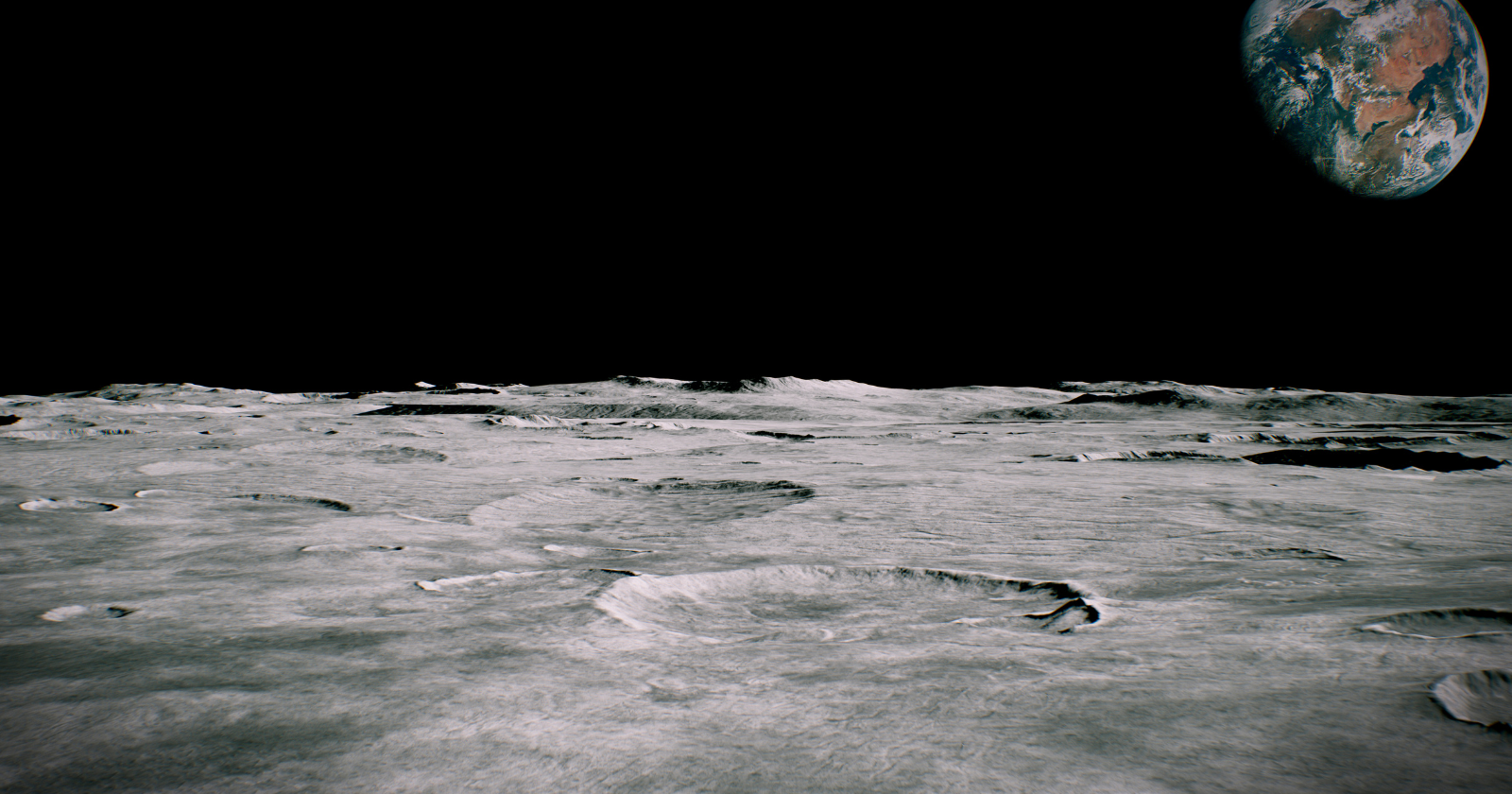
The Moon has none of that. It has no meaningful atmosphere, so there is no wind. It has no liquid water and no rain. It has no plant or animal life disturbing the ground. The lunar surface is, in the ordinary sense, geologically quiet. A footprint or a traced letter is not under the constant low-level erosion that an equivalent mark on Earth would face.
This is why the Apollo footprints, the rover tracks, and the equipment left at all six landing sites are still in place. They are not preserved in any active sense. Nothing on the Moon erases them quickly.
What “a very long time” actually means
The figure sometimes attached to the Apollo footprints is not a neat measured expiry date. The safer way to put it is that marks in the lunar dust can last for an extremely long time by human standards, potentially millions of years, but not forever. The Moon has no wind or rain, but it is constantly struck by micrometeorites. Over very long periods, those impacts churn and mix the upper layer of soil, gradually blurring fine surface features.
One thing could remove them far faster: a direct disturbance. A future landing nearby, a rover, or deliberate human activity at the Taurus-Littrow site would erase in a moment what natural processes would otherwise take an extremely long time to undo. Those long timescales assume the site is left alone.
The gesture, kept in proportion
Cernan returned to this moment often in later life. In his 2007 NASA oral history, and elsewhere, he said he imagined a future finder coming across the rover, the footprints, and the initials, and wondering who had been there. He also said, looking at a painting of the Apollo 17 site by the astronaut and artist Alan Bean, that he wished he had thought to write his daughter’s name on a nearby boulder. Bean added the name to the painting anyway, and the rock in that image became known as Tracy’s Rock.
It is an easy story to oversell, and it does not need overselling. A father knelt down near the end of three days of work on another world and wrote his child’s initials in the dirt, the way a parent might anywhere. What makes it hold is only the setting. The same small act, performed on the Moon rather than on a beach, lands in a place where the ordinary forces that erase such things do not operate.
The initials are almost certainly still there now, just over fifty years on, though “unchanged” should be understood in the ordinary human sense rather than the geological one. On the available physics, they will outlast the people who remember why they were made, and very probably the nation that sent the man who made them. Whether anyone ever returns to Taurus-Littrow to see them is a separate question, and an open one.
