
The Apollo 13 distance record was never meant to be a monument. It was a byproduct of a rescue.
In April 1970, Apollo 13 was supposed to land in the Fra Mauro highlands. Instead, an oxygen tank explosion crippled the spacecraft, killed the lunar landing attempt and forced NASA to turn the mission into a survival problem. The crew used the Moon not as a destination, but as a bend in the road home.
That emergency loop carried Jim Lovell, Jack Swigert and Fred Haise farther from Earth than any humans had ever gone. NASA later described how, while rounding the far side, Apollo 13 set a distance record of 248,655 miles from Earth, helped by the Moon’s position in its elliptical orbit and the spacecraft’s higher-than-usual lunar flyby.
For 56 years, that accidental record stood.
Then Artemis II broke it by design.
On 6 April 2026, NASA astronauts Reid Wiseman, Victor Glover and Christina Koch, along with Canadian Space Agency astronaut Jeremy Hansen, became the first humans since Apollo to fly around the Moon. At 12:56 p.m. CDT, NASA announced that the crew had reached 248,655 miles from Earth and surpassed Apollo 13’s mark. Later that day, Orion reached about 252,756 miles from Earth, putting Artemis II exactly 4,101 miles beyond the old record by the final published numbers.
The contrast is the whole story. Apollo 13 went that far because something had gone terribly wrong. Artemis II went farther because the route was built that way.
A Record Born From Failure
Apollo 13 remains one of the most famous missions in space history precisely because it did not achieve the mission it was assigned. It was humanity’s third planned lunar landing, but two days after launch, a blast in the service module turned the command module Odyssey into a damaged, power-starved spacecraft.
The lunar module Aquarius became a lifeboat. Mission Control had to ration electricity, water and oxygen, invent procedures in real time and use the lunar module’s engine for course corrections it had never been intended to perform in that way.
NASA’s own Apollo 13 mission account says the explosion forced the spacecraft to circle the Moon without landing. In another history of the rescue, NASA recalls that the crew abandoned their lunar landing plans and looped around the Moon using Aquarius’s engine to speed the return to Earth.
That loop mattered. A direct turn back would have been difficult and risky. The Moon’s gravity could instead help swing the damaged spacecraft around and set it on a path home. The maneuver saved the crew, but it also pushed them out to a distance no human mission had exceeded.
There was no celebration when the record was set. The crew were cold, exhausted and living inside a powered-down spacecraft with no guarantee of survival. The farthest human journey from Earth was, for more than half a century, a record made in the middle of an emergency.
Artemis II Took the Long Way on Purpose
Artemis II was different from the beginning. It was a test flight, not a landing mission. Its job was to send astronauts around the Moon aboard Orion, prove the spacecraft and life-support systems in deep space and bring the crew home before later Artemis missions attempt lunar landings.
That meant the free-return-style path was not a desperate improvisation. It was part of the mission architecture. The spacecraft would fly around the Moon, use lunar gravity to help shape the return and test the systems humans will depend on for future lunar operations.
On flight day six, Orion reached its closest approach to the Moon at about 4,067 miles above the surface. Two minutes later, according to NASA’s live mission updates, it hit its maximum distance from Earth at 252,756 miles, setting the new record for human spaceflight.
The numbers make the handoff almost cinematic. Apollo 13: 248,655 miles, reached because the spacecraft had to survive. Artemis II: 252,756 miles, reached because NASA deliberately sent a crew back into lunar space to test the next era.
The difference is only 4,101 miles, less than the width of Earth. But symbolically, it is enormous. It separates a record made by accident from one made by planning.
Names From the Far Side
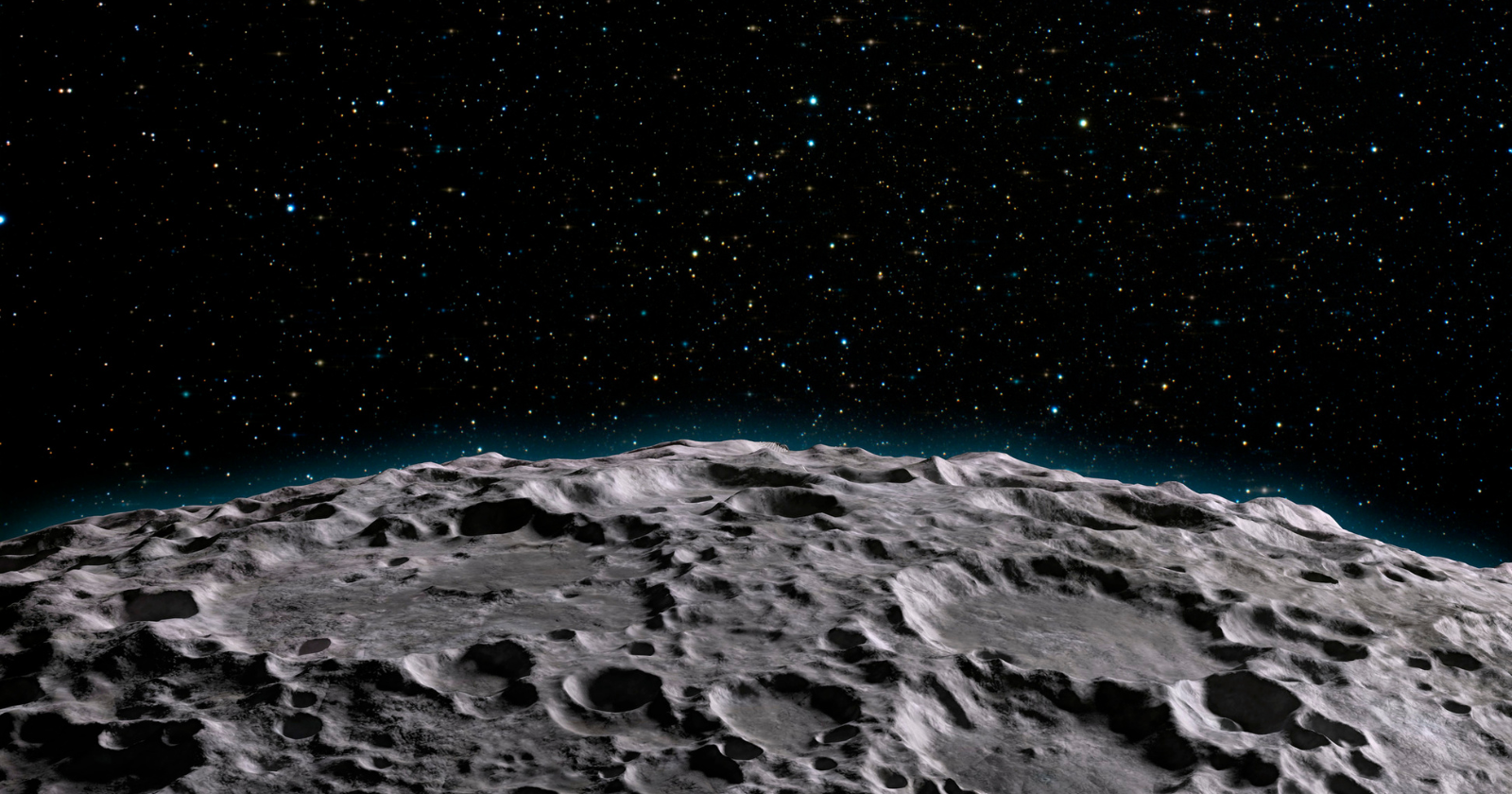
The record was not the only human moment during the flyby. As the astronauts passed over the lunar surface, they were not simply passengers on a trajectory. They were observers, giving scientists real-time descriptions of craters, basins, colour differences and surface textures from a viewpoint humans had not held since Apollo 17.
Shortly after the crew broke the Apollo 13 record, they described two small unnamed craters near the Orientale basin and suggested provisional names for them. NASA’s live update says one crater, northwest of Orientale, was proposed as Integrity, after the crew’s Orion spacecraft. A second nearby crater was suggested as Carroll, in honour of Wiseman’s late wife, Carroll Taylor Wiseman.
Those names were not instantly official. Lunar names are governed by the International Astronomical Union, and NASA said the proposals would be formally submitted after the mission. But the moment still mattered. It turned a record-setting trajectory into something more intimate: four people, passing over the Moon, naming places they could see with their own eyes.
That is the part machines cannot quite replace. Robotic orbiters have mapped the Moon in extraordinary detail. They can measure, image and revisit the same terrain again and again. But Artemis II showed why human observers still have a particular scientific and cultural role. They notice, compare, react and attach meaning in real time.
Two Loops Around the Moon
Apollo 13 and Artemis II are linked by geometry. Both missions used the Moon as the turning point in a vast arc away from Earth and back again. Both placed human beings farther from home than almost anyone in history. Both relied on careful navigation, lunar gravity and a spacecraft capable of surviving the trip.
But emotionally, the missions sit at opposite ends of the same curve.
Apollo 13’s loop was a way out of disaster. Artemis II’s loop was a doorway into a programme designed to return humans to the lunar surface and, eventually, push deeper toward Mars. One proved that a damaged spacecraft could still bring its crew home. The other tested whether a new spacecraft could carry crews outward again with confidence.
Records in space are often treated as clean numbers: altitude, speed, distance, duration. This one is messier and more human. The old record came from fear, improvisation and survival. The new one came from preparation, testing and return.
For 56 years, Apollo 13 marked the farthest humans had ever been from Earth because a failed Moon landing had forced three astronauts around the far side. Artemis II finally carried humans farther, by just 4,101 miles, and did so calmly enough that the crew could look down and offer names to craters passing beneath them.
