
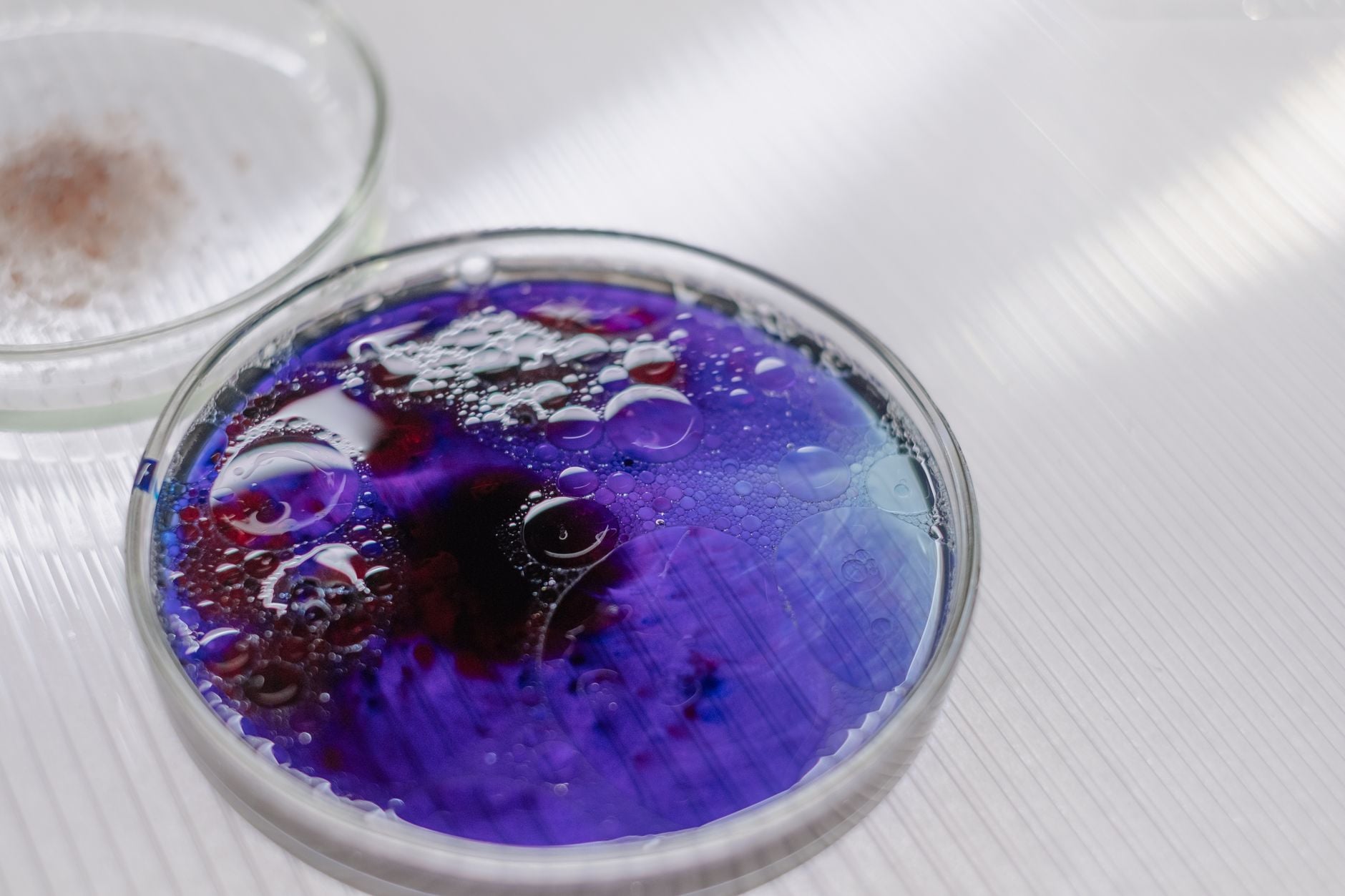
A laboratory screen is physical work. Compounds have to exist, sit in plates, meet bacteria under controlled conditions, and produce a measurable result. Even when robotics and automation are involved, the scale is bounded by chemistry, storage, assay cost, time and the small practical problem of handling real matter.
That is why the reported scale of SyntheMol-RL, an AI model from McMaster University, is worth taking seriously. The model is described as searching a chemical space of 46 billion possible compounds while designing a new antibiotic candidate. That is far beyond the ordinary reach of a physical screen, which usually tests from hundreds of thousands to a few million molecules.
The important word is candidate. This is not an approved antibiotic. It is not even, by itself, proof that a medicine will emerge. A molecule can look promising in a model and still fail because it is hard to make, unstable, toxic, poorly absorbed, too weak against real infections, or unsuitable for the body. The useful question is narrower and more interesting: can an AI system help researchers look through chemical regions that no physical library could sensibly cover?
SyntheMol-RL sits in a fast-moving part of drug discovery where models are not only ranking existing molecules, but proposing new ones that might be synthesizable. Earlier public discussion of McMaster researcher Jonathan Stokes’ work on SyntheMol described a system constrained by known building blocks and reactions, intended to avoid the common generative-AI problem of producing beautiful structures that chemists cannot actually make. SyntheMol-RL appears to continue that logic with reinforcement learning: not merely imagining molecules, but navigating a vast set of possible makeable molecules toward antibacterial promise.
Why 46 billion is not just a big number
Drug discovery has always been a search through possibility. The difficulty is that chemical possibility grows much faster than any laboratory can test. A small change to a molecule can alter its activity, solubility, toxicity, stability or ability to enter a bacterial cell. Multiply that by available building blocks, reaction routes and molecular arrangements, and the space becomes enormous.
High-throughput screening was developed to make this search more systematic. Robots can move liquids, fill plates, measure responses and process results far faster than a human bench scientist could do by hand. But even high-throughput screening is still a physical process. It deals with compounds that exist in a library or can be produced for testing. A 2017 paper on Bayesian multi-plate high-throughput screening describes HTS as involving thousands to millions of compounds in the search for candidate hits.
Forty-six billion changes the relationship between search and matter. The molecules do not all have to sit in vials. They can exist first as possibilities inside a constrained chemical space. The model can score, rank or generate candidates, and only a much smaller subset then has to be made in the lab. If the constraints are good, the machine is not replacing chemistry. It is deciding where chemistry should spend its limited attention.
That is the central promise of this approach. Physical screening asks, “Which of the compounds we have does something useful?” Generative chemical search asks a different question: “Which compounds could we make, and which of those are worth making first?”
The old problem with antibiotic discovery
Antibiotics are unusually hard business for both biology and economics. A new compound has to kill or suppress bacteria without harming the patient, reach the site of infection, survive long enough to work, and avoid being too similar to drugs bacteria already resist. Even then, a successful antibiotic may be deliberately held in reserve so it remains useful against resistant infections.
The scientific problem is not simply that researchers need more screens. It is that many familiar chemical collections have already been searched repeatedly. The same kinds of molecules tend to appear. Some have weak activity, some are toxic, some rediscover known scaffolds, and many do not survive later optimisation.
That is why AI-guided discovery has become attractive. A model can be trained to recognise features associated with antibacterial activity, then asked to evaluate or propose molecules outside the small set sitting in physical libraries. But this comes with a trap. If a model is allowed to generate any structure, it may propose molecules that are formally valid on paper but not practical to synthesize. A drug discovery model that ignores the bench can produce an impressive list of dead ends.
SyntheMol-style systems try to avoid that by linking the search to known chemistry. Instead of roaming through all imaginable molecular structures, they search a space built from available building blocks and feasible reactions. That is still large enough to be far beyond laboratory enumeration, but constrained enough that selected molecules should have a route toward synthesis.
What reinforcement learning adds
The “RL” in SyntheMol-RL points to reinforcement learning, a machine-learning approach in which a system learns to choose actions that improve a reward. In a chemical design setting, the actions might involve building, modifying or selecting molecules, while the reward could combine predicted antibacterial activity with other constraints such as novelty, synthesizability or reduced predicted toxicity.
That matters because drug discovery is rarely a single-objective problem. The most active molecule is not necessarily the best candidate. A compound that kills bacteria in a dish may also damage mammalian cells. A structure that looks novel may be impossible to make reliably. A molecule that scores well on one assay may fail because it cannot reach its target.
A reinforcement-learning system can be designed to balance competing criteria. It can search toward molecules that are not merely predicted to be active, but also plausible enough for chemists to take seriously. The model’s output is therefore not a replacement for medicinal chemistry. It is a proposed starting point for it.
The scale also changes what failure means. If a model searches 46 billion possible compounds and produces only a small number worth testing, most of the value lies in rejection. The system’s job is not to make every virtual molecule interesting. It is to discard the overwhelming majority quickly enough that researchers can focus on a shortlist.
Why the word “candidate” does so much work
A candidate is a beginning, not an ending. In antibiotic discovery, a molecule selected by an AI model still has to be made, purified, tested against bacteria, tested against mammalian cells, examined for resistance patterns, checked for stability, and studied in more complex biological systems. If it survives those steps, it still faces animal studies, formulation, dosing, manufacturing and clinical trials.
This is where AI coverage often becomes too loose. A model can identify a promising molecule, but it cannot by itself show that the molecule is safe or useful in patients. Biology remains stubbornly physical. Bacteria evolve. Bodies metabolise compounds. Tissues distribute drugs unevenly. A chemical structure is only one part of the problem.
The more careful reading is that SyntheMol-RL may improve the front end of the search. It can help decide which molecules deserve the expense and labour of physical testing. That is valuable, but it is not the same as compressing the whole drug-development process into a model run.
The laboratory still has the final vote
There is a useful tension in this work. The computer expands the search, but the lab narrows the claim. A model can evaluate billions of possibilities in ways no wet-lab screen can match. The laboratory then asks the humbler questions: can the molecule be made, does it dissolve, does it kill the intended bacteria, does it spare other cells, and does it retain activity in more realistic conditions?
That tension is not a weakness. It is the point. The best use of AI in this setting is not to remove experimental biology, but to make the first experimental steps less blind. If researchers can begin with candidates drawn from a much larger and more diverse chemical space, the odds of finding unusual scaffolds may improve.
The broader antimicrobial-resistance context makes that search urgent. The World Health Organization has repeatedly described antimicrobial resistance as a major global public-health threat, and its 2024 bacterial priority pathogens list was designed to guide research and development toward bacteria of public-health importance. New discovery methods do not solve the resistance problem on their own, but they can widen the pool from which future candidates are drawn.
A larger map, not a shortcut to medicine
The most grounded way to understand SyntheMol-RL is as a map-making tool for chemical possibility. It does not make 46 billion molecules real. It does not test them in patients. It does not remove the need for chemists, microbiologists, pharmacologists or clinical researchers.
What it does, if the reported result holds up through experimental validation, is shift the first question. Instead of asking a lab to test whatever molecules happen to be in reach, it asks software to explore a much larger region of synthesizable chemistry, then hand the lab a smaller set of candidates with a reason to exist.
That is a serious change in the geography of antibiotic discovery. The bottleneck has not disappeared. It has moved. The hard work still returns to the bench, where real molecules meet real bacteria. But the search that leads to those molecules may no longer be limited to the shelves of a compound library.
