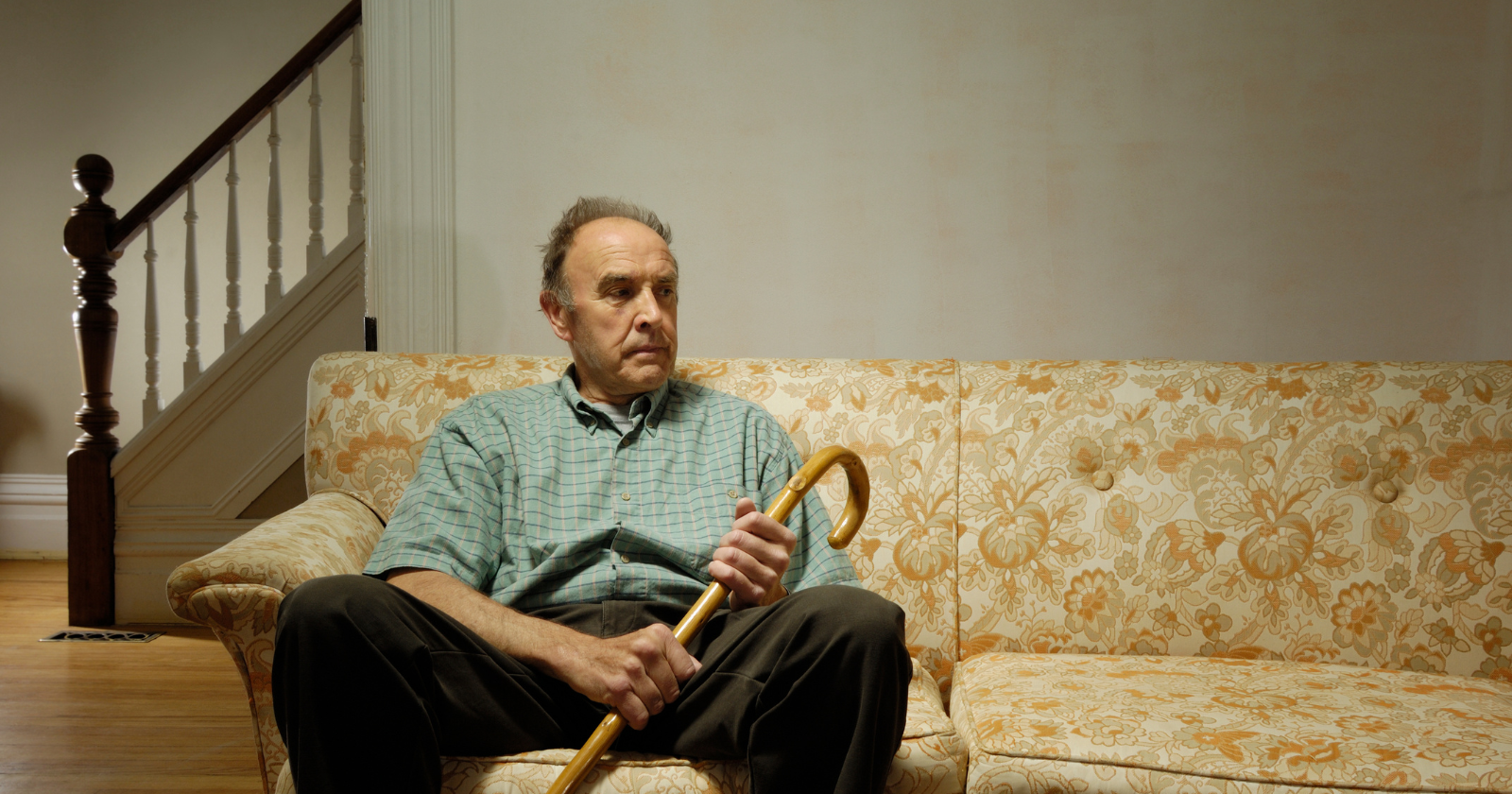
My dad retired three years ago.
He’d been at the same company for thirty-one years. He was good at his job, well-liked, the kind of person colleagues genuinely wanted to grab a coffee with. On his last day they threw him a proper send-off. Speeches. A card signed by everyone. Promises to stay in touch. He came home that evening with a bottle of nice whisky from the team and a quiet, contented look on his face.
Six months later, he told me something that’s stayed with me.
“Mate, I knew I’d miss the work. I didn’t know I was going to miss the people, because I didn’t realize how much of the people was actually the work.”
He wasn’t bitter when he said it. He was just describing what he’d discovered. The colleagues he’d genuinely liked, the ones he’d assumed were friends, mostly drifted within months. Not because of any falling out. Just because the structure that had been holding the relationships in place was gone, and without it, almost none of those connections survived under their own weight.
This is a version of loneliness that hardly anyone warns you about. It’s not the loneliness of retirement itself. It’s the loneliness that arrives a few months in, when you do a quiet audit and realize how much of your adult social life was being silently funded by your workplace.
Watching my dad go through this made me realize it’s a pattern worth understanding long before retirement arrives. Research in social psychology backs this up — and if you know about it early enough, you can do something about it.
The subsidy you didn’t know you were getting
For most working adults, the workplace functions as a giant, invisible relationship subsidy.
Think about what your job provides, socially, that you don’t have to organize yourself. You see the same group of people daily without making any plans. You have natural shared topics, shared frustrations, shared inside jokes. There’s a built-in reason to talk to someone, since you both work on the same project or eat lunch in the same room. Birthdays get marked. Difficult life events get acknowledged. There’s a low-key emotional ecosystem running in the background of your day that you didn’t have to build.
When you’re inside it, this all feels like ordinary friendship. You’d describe these people as your work friends. You’d genuinely mean it.
What the workplace subsidy hides is how much of that friendship is being held in place by frequency rather than choice. You’re not seeing these people because you’ve actively decided to. You’re seeing them because the structure of your life puts you in the same building every day. Take the building away, and you’d be amazed how few of the relationships generate enough of their own gravity to keep going.
The day you retire, the subsidy ends. The relationships that were ever fully yours stay. The ones that weren’t quietly stop returning your calls. And you spend the next year or two figuring out which was which, often with some real grief.
What my dad watched happen
Watching my dad’s first year of retirement was instructive.
Within a month, the daily Slack messages and casual emails from work people had stopped. He’d expected this. The bigger surprise was that the social calendar he’d assumed would still exist, just shifted to weekends and dinners, also began to shrink. The first few catch-ups happened. Then they got harder to organize. People had their own routines that didn’t naturally accommodate his. He wasn’t on the daily flow of office life anymore, so he wasn’t on the radar for spontaneous invitations. His former colleagues weren’t being unkind. They just had full lives that hadn’t been shaped around him in the first place. He’d been part of their workdays, not their lives.
By month four or five, my dad had a clearer picture. There were two former colleagues, out of dozens, who actually wanted his friendship as a freestanding thing. They invited him to their house. They asked about my mum. They reached out without needing him to. Those friendships have only deepened in the years since, and they’re now among the most important relationships in his life.
The other thirty or forty colleagues he’d been close to for decades? They’ve drifted into Christmas-card territory. He doesn’t resent them for it. He doesn’t even feel particularly sad about it now. But he had to grieve, in that first year, the fact that what had felt like a robust social life had been mostly a structural illusion.
The audit is humbling. It also clarifies, very quickly, who was ever really there.
Why this catches people so off guard
The reason this loneliness is so disorienting is that it doesn’t match the story we’d been telling ourselves for years.
If you’d asked my dad at age sixty how many close friends he had, he’d have said something like fifteen or twenty. He genuinely believed it. So would most working adults. We mistake frequent contact for closeness. We mistake shared lunches for shared lives. We assume that the warmth we feel in a hallway conversation is evidence of a friendship that would survive any change in circumstance.
It usually isn’t.
This isn’t a moral failure on anyone’s part. It’s just that human attention is finite, and people will, in practice, prioritize the relationships that the structure of their daily life keeps in front of them. The colleague you saw every day for ten years is still, in many cases, more of an acquaintance than your nervous system has been telling you. They’re an acquaintance you happened to spend a lot of time with.
Retirement is the moment that gap gets exposed. Suddenly you’re no longer in front of them. You stop being prioritized, not because you’re disliked, but because you’re no longer in the daily rhythm. And you discover, often with some shock, how thin the bond actually was.
What my mum did differently
There’s a small contrast in my own family that I’ve thought about a lot.
My mum, who worked too but had also invested for years in friendships outside of her workplace, didn’t have the same retirement adjustment. She’d kept up a tight group of women friends from her thirties onwards. They met for walks. They had a book club for two decades. They went on trips together once a year. None of that was tied to her job. When she retired, almost nothing about her social life shifted, because almost none of her social life had been work-subsidized in the first place.
My dad and my mum retired in the same year, from similar levels of work, after similar lengths of career. They had completely different post-retirement experiences, and the difference came down almost entirely to where they’d been investing their relationship energy in the decades leading up to it.
My dad’s energy had gone, understandably, into the relationships that were directly in front of him every day. My mum’s had gone partly there and partly into a parallel network that didn’t depend on her job to exist. She’d been quietly building something, year after year, that the end of work couldn’t take from her.
She’d say, if you asked her, that she didn’t do this strategically. She just liked her women friends and made the effort. The strategic outcome was an accidental byproduct of caring about specific people for specific reasons that had nothing to do with where she happened to work.
What this means if you’re still working
Here’s the part of this I want to land on, because I think it’s actually useful for those of us still in our careers.
You can’t fully know which of your current relationships are workplace-subsidized and which are real until the subsidy ends. But you can make an educated guess, and you can act on the guess now rather than waiting twenty or thirty years to find out the hard way.
Look at your closest current relationships. Ask yourself, honestly, which of them would survive if you never went to that office again. Which of those people would you call on a Saturday? Which would call you? Which friendships exist because you genuinely chose each other, and which exist because a company happened to put you in the same room?
The honest answers might be uncomfortable. But they’re also clarifying. They tell you where to invest your time and emotional energy outside of the workplace — in friendships, communities, and relationships that belong to you and not to your job title.
Research consistently shows that people with strong social ties outside of work adjust far better to retirement. A 2016 study published in The Journals of Gerontology found that retirees with diverse social networks — meaning connections that extended well beyond former colleagues — reported significantly higher life satisfaction and lower rates of depression.
My mum is living proof of that finding. My dad, to his credit, has since started building the kind of social life he wished he’d invested in earlier. He joined a walking group. He volunteers at a local community garden. He’s made new friends in his late sixties that have nothing to do with any workplace. He says it’s harder to do this at his age than it would have been at forty, but it’s not impossible, and the effort has been worth it.
The lesson, as I see it, is simple: don’t wait for the subsidy to end to find out what you actually have. Build relationships now that don’t need a workplace to survive. The people who do this, whether by instinct or by design, are the ones who retire into a full life rather than a quiet one.