
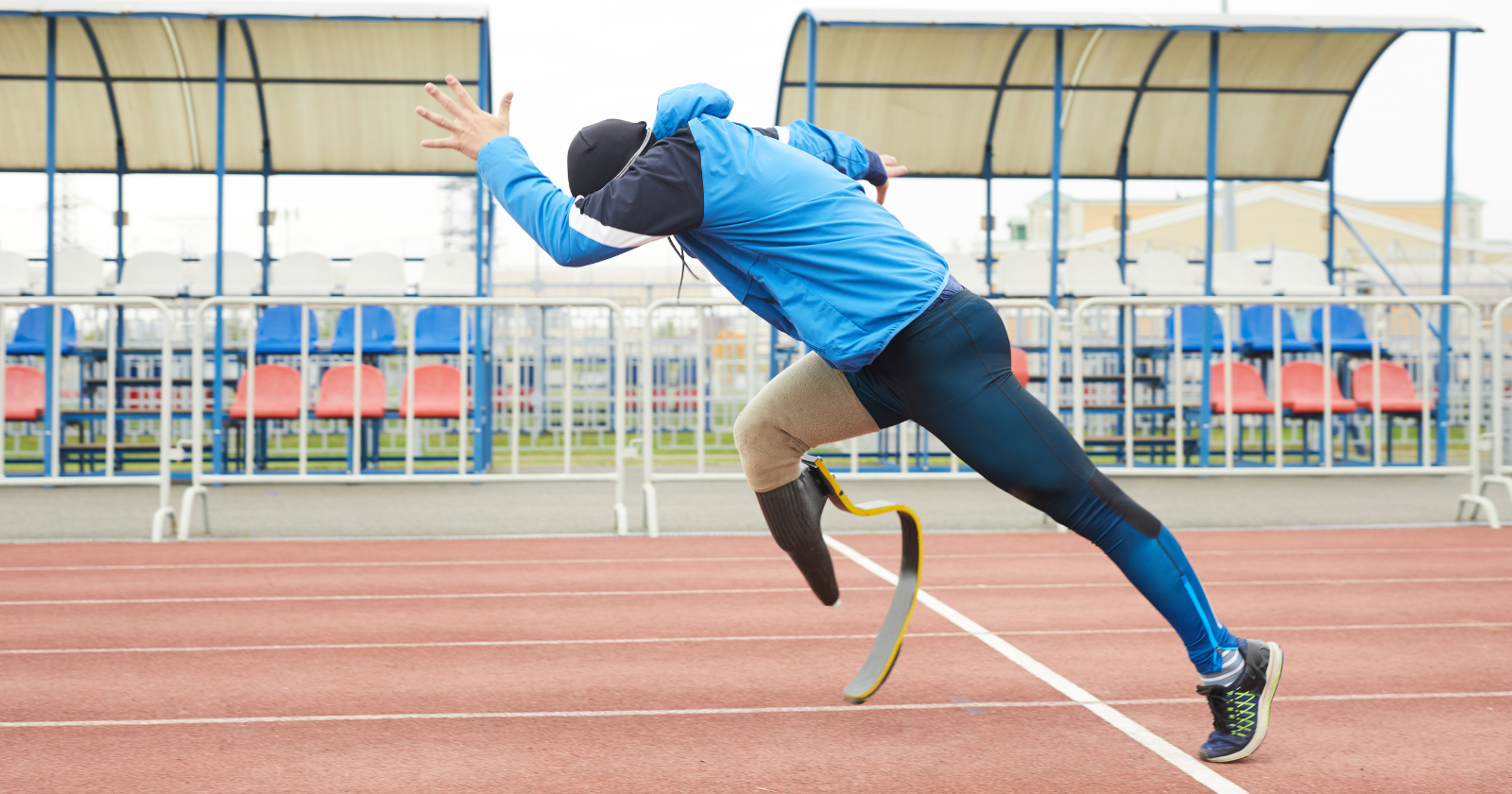
John McFall lost his right leg in a motorcycle accident at 19, won a Paralympic bronze medal in Beijing, became an orthopaedic surgeon, and may now become the first person with a physical disability to live and work in orbit.
The proposed flight is not just a symbolic first. If it happens, McFall’s body and prosthesis will become instruments in a medical experiment that six decades of crewed spaceflight have barely begun to design.
The UK Space Agency has signed a memorandum of understanding with the California company Vast that could send McFall to Haven-1, the company’s planned commercial space station. The UK government says the agreement would have the UK Space Agency support Vast in seeking sponsorship to fund McFall’s flight, with Haven-1 scheduled for launch as early as 2027.
McFall could also fly on a private mission to the International Space Station with Vast. Either way, the science is unusually direct: what happens when a body that has already adapted to limb loss enters an environment where every body must relearn fluid balance, movement, heat transfer and load?
McFall was selected for the European Space Agency’s 2022 astronaut reserve and its Fly! feasibility study, which was created to understand and reduce barriers to spaceflight for astronauts with physical disabilities. ESA’s own profile notes that he was selected in November 2022 and took part in the Fly! study after the amputation of his right leg at age 19.
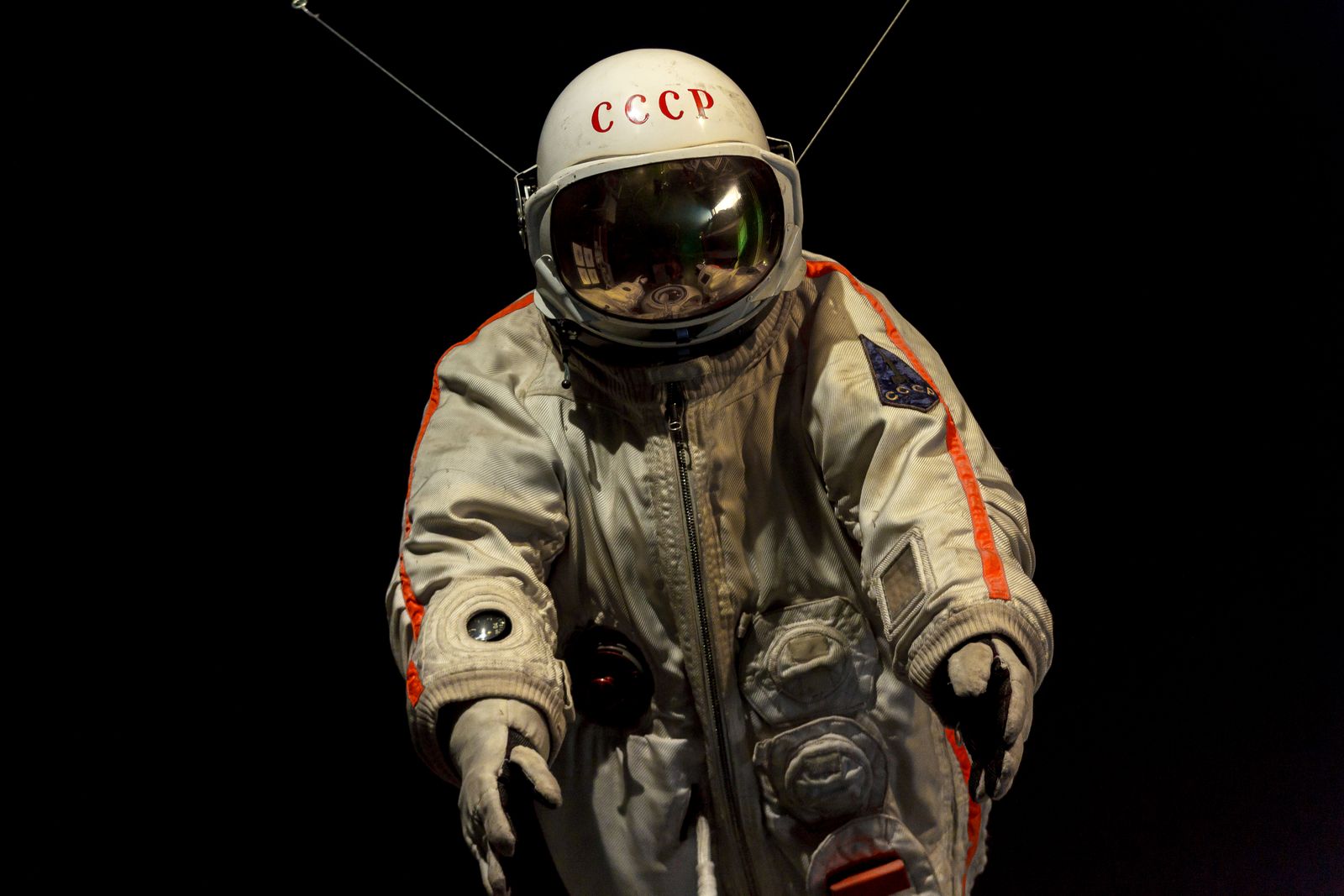
A physiological experiment with a sample size of one
Almost everything known about the human body in microgravity comes from people who passed astronaut medical selection under able-bodied assumptions. McFall’s possible flight puts pressure on that history.
Kirsty Lindsay, a physiotherapist and physiologist who works in spaceflight research, framed the question in an analysis published in The Conversation: what happens to a body that already moves, balances and bears load differently when gravity is removed?
The honest answer is that no one knows yet. That uncertainty is not a weakness in the story. It is the point of the mission.
Writer Arthur C. Clarke imagined an amputee commanding a space station decades before the first human spaceflight. McFall’s mission would turn that old fiction into measurements taken from a real body in orbit.
The fluid-shift problem
On Earth, gravity helps pull fluids toward the legs. In orbit, that vertical gradient disappears, and body fluids shift toward the chest and head.
That headward movement is one of the suspects in spaceflight-associated neuro-ocular syndrome, or SANS, a cluster of eye and vision changes seen in some astronauts after long-duration missions. NASA-linked summaries of SANS describe optic-disc edema, globe flattening, choroidal folds and hyperopic shifts in long-duration astronauts, while noting that the exact cause is still unresolved.
McFall has less lower-limb tissue for fluid to occupy. His fluid shift, and any knock-on effect on vision, may not match the patterns measured in crewmates with two intact lower limbs.
One person cannot settle the science. But one carefully monitored flight can give researchers a first real datapoint where there is now mostly inference.
A spine already under uneven load
Microgravity changes the spine because the usual axial load of standing and walking disappears. Astronauts can experience back pain in flight, and the relationship between spinal unloading, intervertebral discs and postflight reloading remains a live medical concern.
Research on intervertebral-disc damage and spaceflight has described herniated discs after missions and raised the possibility that astronauts may face increased risk when reloaded by re-entry, landing and gravity. The evidence is not simple, because many astronauts also have histories of high-G aviation exposure, but the risk is serious enough to shape medical monitoring.
Lower-limb amputees often move with asymmetry through the pelvis and trunk. Reviews of amputee gait describe spinal, pelvic and hip movement asymmetries, and clinical work has long connected those adaptations with back-pain concerns.
That makes McFall’s spine medically interesting before launch. The key question is not whether his body is fragile. It is how a body already adapted to uneven loading responds when loading disappears, then returns suddenly during landing.
Heat, sockets and the engineering of the body
Temperature regulation is another open question. In microgravity, buoyancy-driven convection is reduced, so warm air does not rise around the body in the ordinary terrestrial way.
That matters because thermoregulation is partly environmental. Airflow, clothing, body shape and equipment all influence how heat moves away from skin.
Then there is the prosthesis itself. A socket is not a generic attachment. It is an intimate piece of engineering, fitted to a residual limb whose volume can change with activity, fluid balance, heat and time.
Prosthetic-socket research has repeatedly treated fit as a central problem, because pressure, shear and small volume changes at the residual-limb interface can determine whether a limb is usable for hours or painful within minutes. McFall’s socket in orbit will be a biomedical instrument as much as a mobility device.
The UK government says the proposed mission would study human physiology, musculoskeletal adaptation, prosthetics in microgravity, and movement and balance in space. Those findings could feed back into lighter, more adaptable prosthetic designs on Earth.
Certification was an engineering problem, not just a medical one
Much of the work to clear McFall has been mechanical rather than philosophical. Engineers and flight surgeons had to ask whether his prosthesis, seat interface, emergency procedures and body mechanics could work during launch, docking, emergency escape and landing.
ESA selected McFall in 2022 for the astronaut reserve and Fly! study. The UK government says he later became the first person with a physical disability to be medically cleared for a long-duration mission.
That clearance does not mean the proposed Haven-1 flight is guaranteed. It means the old assumption that a lower-limb amputation automatically blocks an astronaut from long-duration orbital work has been tested and did not hold.
Space Daily has previously reported on McFall’s medical clearance and on parallel work testing prosthetic mobility in zero gravity.
What a sample of one can actually prove
A two-week flight by one astronaut will not produce statistically powerful conclusions about amputees in microgravity. It will produce something earlier and more basic: a baseline.
The fluid-shift data, spinal imaging, thermal readings, socket-fit logs and movement recordings would become the first entries in a dataset that does not yet exist.
Future missions could build on that baseline. Groups such as AstroAccess have already run parabolic research flights with disabled crews, and commercial stations may give researchers more chances to test bodies that were historically excluded from astronaut selection.
The Vast agreement was formally announced by the UK government as a partnership in which the UK Space Agency would help Vast seek sponsorship for McFall’s mission. Crew would travel aboard SpaceX’s Crew Dragon capsule on a Falcon 9 rocket.
SpaceNews has reported that the UK is treating the Vast partnership as a way to re-establish a sovereign human-spaceflight presence without building a full national human-spaceflight program. The science and the geopolitics are moving together.
McFall has been careful about the way the mission is described. He has said he wants to do the job well, not be treated as a stunt, and that he is happy to be a pioneer only if the work has value for space exploration and for people on Earth.
Tim Peake, the last British ESA astronaut to live aboard the International Space Station, called the agreement a landmark moment for inclusive human spaceflight. That framing is true, but it understates the harder scientific point.
For more than sixty years, space medicine has studied the orbital body through a narrow physiological template. If McFall flies, the next measurement will not begin with that template. It will begin with a residual limb, a socket, a spine under different history, and a body answering questions spaceflight medicine never had to ask.
