

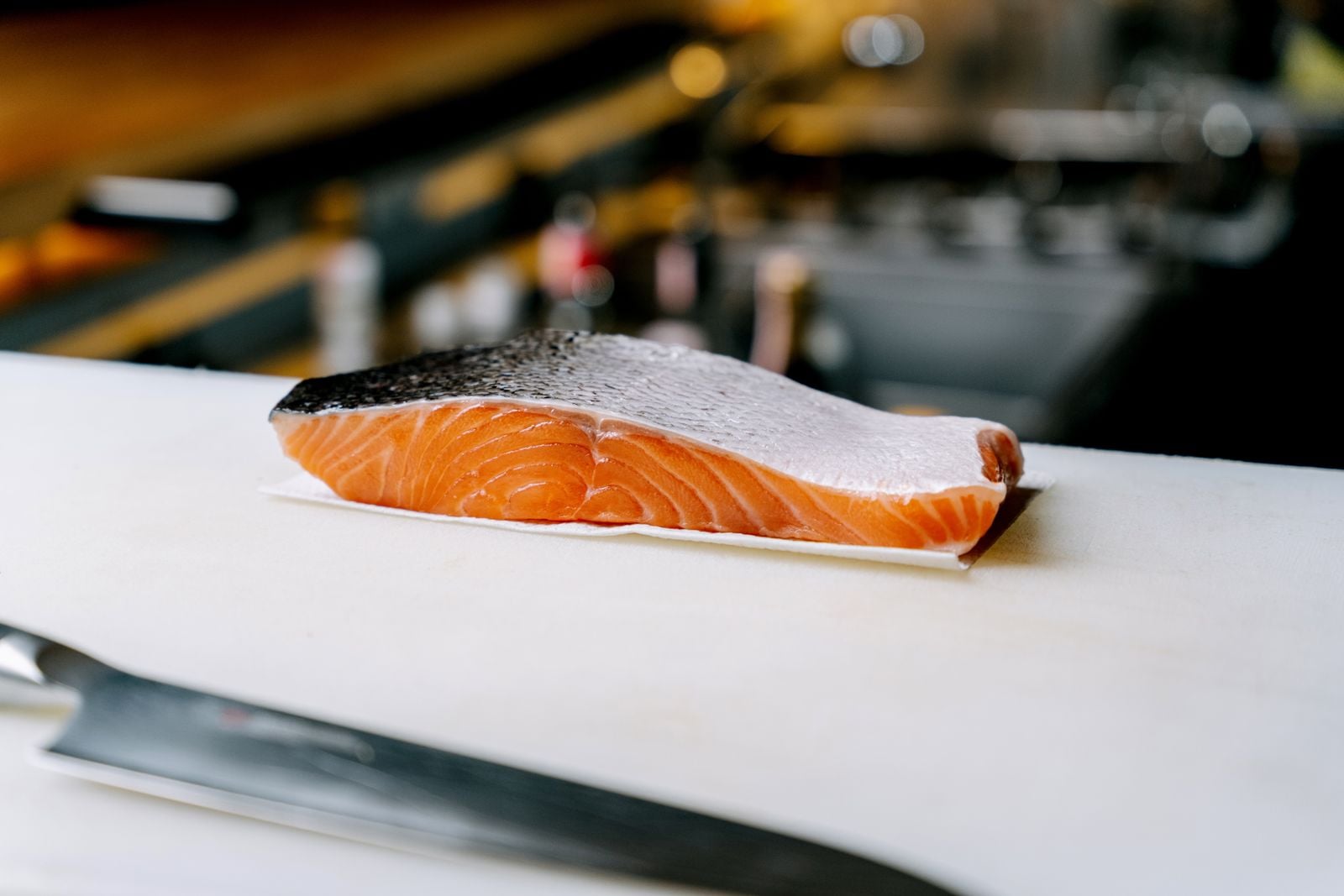
Inside the white muscle of Pacific salmon, Henneguya salminicola persists without the machinery for aerobic respiration. Its microscopic spores collect in conspicuous white cysts that can reach several millimetres, giving infected flesh the appearance fisheries call tapioca disease.
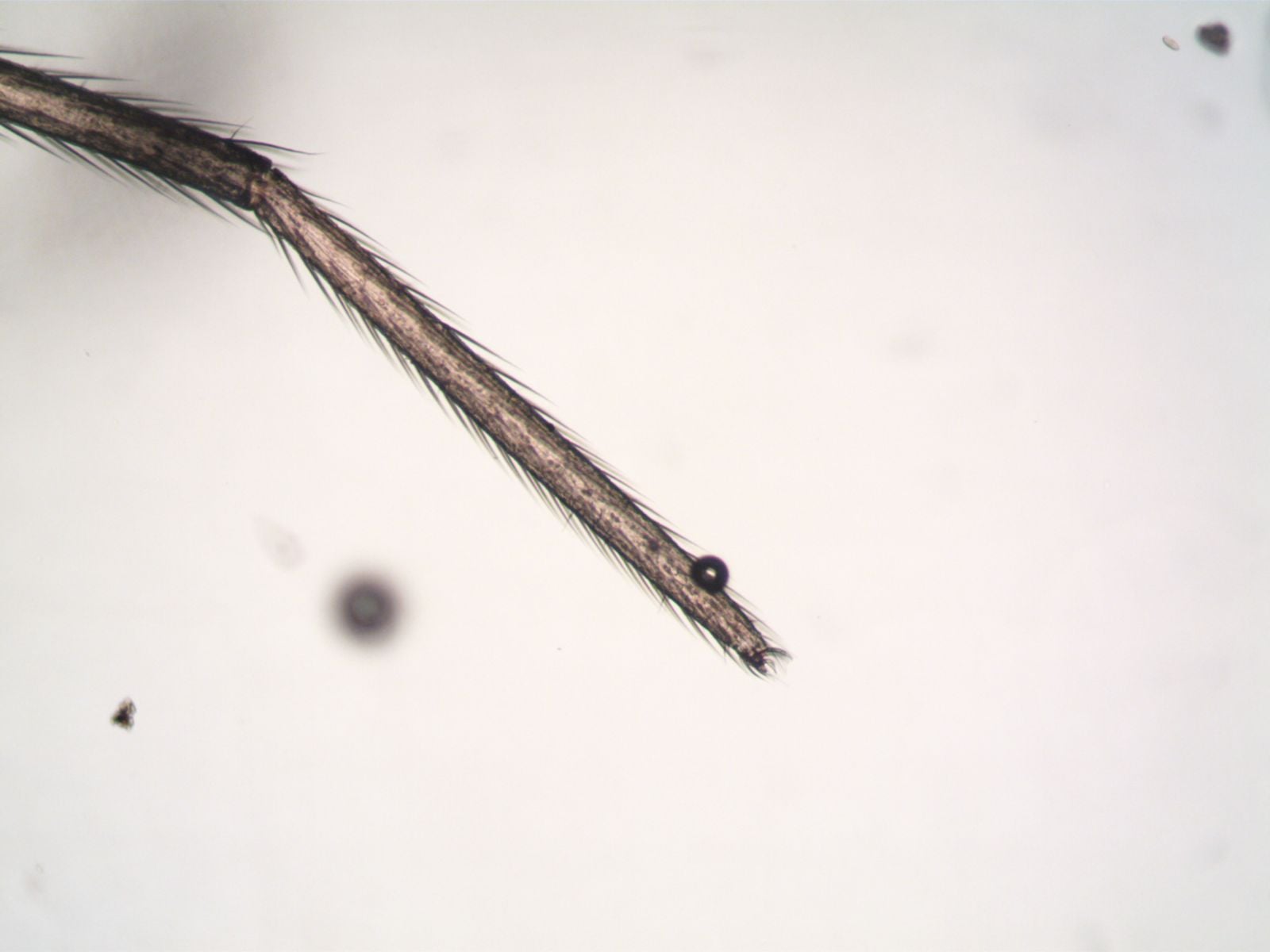
In a 2020 Proceedings of the National Academy of Sciences study, researchers including first author Dayana Yahalomi and senior researcher Dorothée Huchon showed that the parasite has no mitochondrial genome and has lost the standard genetic machinery needed for aerobic cellular respiration. Oregon State University described the organism as having fewer than 10 cells and as the first animal known not to need oxygen to live; under the microscope, its paired polar capsules can look like eyes, but those structures are not visual organs.
What the parasite actually is
Henneguya salminicola is a myxozoan, part of an extremely reduced group of parasitic cnidarians. That puts it in the same phylum as jellyfish, corals and sea anemones, even though most myxozoan life stages consist of only a handful of cells.
The evolutionary connection is written into the parasite’s polar capsules. A phylogenomic study of Myxozoa confirmed their position within Cnidaria and described polar capsules as homologous to cnidarian nematocysts, the stinging structures used by free-living relatives. In myxozoans, the eversible tubule is adapted for attachment and infection rather than prey capture.
The life cycle is more uncertain than the shorthand version often suggests. Most myxozoans alternate between a vertebrate host and an invertebrate, usually an annelid, but the 2020 Henneguya paper states that this species’ obligate invertebrate host has not been identified; the authors infer that it is probably a naidid annelid based on related species.
In salmon, the parasite proliferates and forms spores inside pseudocysts in white muscle. Alaska Department of Fish and Game guidance says flesh-targeting Henneguya has not been associated with fish mortality and presents no known human-health concern, although the cysts are visually unappealing.
The cysts, not the individual spores, provide the millimetre-scale feature visible in a fillet. Historical observations archived by the U.S. Geological Survey describe H. salminicola cysts measuring about 3 to 6 millimetres in diameter.
Why the missing mitochondrial genome matters
Most animal cells depend on mitochondria for aerobic respiration. Mitochondria also retain a small genome of their own, a legacy of their ancient bacterial ancestry, even though most mitochondrial proteins are now encoded by genes in the cell nucleus.
When the researchers assembled the H. salminicola genome, they could not identify mitochondrial DNA. Fluorescence microscopy told the same story: the related parasite Myxobolus squamalis, processed as a control, showed mitochondrial DNA, while H. salminicola did not.
The nuclear genome supplied a second line of evidence. Nearly all genes involved in transcription and replication of the mitochondrial genome were gone, while genes associated with key parts of the aerobic respiratory chain were absent or reduced to pseudogenes.
That distinction matters because H. salminicola did not simply lose one circular piece of DNA while leaving ordinary respiration intact. The genetic system needed to use oxygen as the terminal electron acceptor in the standard mitochondrial respiratory chain had been dismantled as well.
The result was the first genomic demonstration in an animal of a transition from aerobic metabolism to an exclusively anaerobic one. It was not merely an observation that the parasite could tolerate a few hours or days of low oxygen.
What remains where mitochondria used to be
The parasite has not lost every trace of the mitochondrial compartment. Electron microscopy revealed double-membrane mitochondria-related organelles, or MROs, and those organelles still contain a few cristae, the folds normally seen in the inner mitochondrial membrane.
They are not functioning as ordinary aerobic mitochondria. The 2020 study found that respiratory-chain complexes I, III and IV were missing or pseudogenised, and most genes for the membrane-spanning portion of ATP synthase were missing too.
At the same time, the MROs are not empty shells. The genome retains genes for proteins involved in other mitochondrial metabolic pathways, which is why the researchers classified the structures as mitochondria-related organelles rather than declaring the compartment completely gone.
That combination is unusual: an organelle with mitochondrial architecture, including cristae, but no mitochondrial genome and no standard aerobic respiratory chain. The authors suggested that the loss may be evolutionarily recent enough for some structural features to remain after the respiratory machinery disappeared.

How it makes energy is still an open question
The paper is clearest about what H. salminicola cannot do. It does not reveal exactly how the parasite makes enough ATP to grow, divide and produce spores inside its host.
Huchon said the parasite might draw energy from surrounding fish cells, or it might use another form of oxygen-free respiration, according to Tel Aviv University’s account of the discovery. Those possibilities remain hypotheses rather than a biochemically demonstrated pathway.
The researchers also looked for genes associated with hydrogen-producing mitochondria and hydrogenosomes, anaerobic organelles found in some single-celled eukaryotes. They did not find the hydrogenase machinery that would justify calling Henneguya’s MRO a hydrogenosome.
That leaves the most interesting biochemical step unresolved. The parasite has clearly abandoned standard oxygen-based respiration, but the energy pathway that replaced it has not yet been mapped in detail, and the organism cannot currently be cultured in the laboratory for the experiments that would make that easier.
Reductive evolution stripped away more than respiration
Myxozoans are an extreme example of reductive evolution. Their ancestors belonged to a lineage of free-living cnidarians, but parasitism was accompanied by drastic reductions in body plan, genome size and gene content.
What survived that reduction is revealing. Polar capsules remain because attachment and infection still matter. Many genes involved in development, cell differentiation and cell-to-cell communication have been lost or reduced across myxozoans, while the structures needed to complete the parasitic life cycle remain.
The missing mitochondrial genome fits that broader pattern, but the 2020 authors were careful not to present gene loss as purposeful. They proposed that low-oxygen conditions in the fish host and the probable invertebrate host may have helped make aerobic respiration dispensable, allowing respiratory genes to be lost over evolutionary time.
The creature that remains is still an animal. Its position inside Cnidaria is supported by phylogenomics, and its polar capsules are modified versions of a cnidarian hallmark rather than structures independently invented by a protist.
What the finding does and does not change
The discovery did not arrive in a vacuum. In 2010, researchers reported loriciferans living in permanently anoxic Mediterranean sediments and described organelles resembling hydrogenosomes in those animals. The original loriciferan study was provocative, but the Henneguya authors noted a decade later that genomic data for those animals were still unavailable and that alternative explanations had been proposed.
That is why the 2020 result is better stated narrowly: H. salminicola was the first animal genetically shown to lack a mitochondrial genome together with the standard machinery for aerobic respiration. The study did not determine the exact replacement pathway, and it did not show that a free-living complex animal could evolve the same way.
Its astrobiological relevance is therefore suggestive rather than sweeping. A parasite embedded in an oxygen-breathing fish is not a model for an independent ecosystem on an anoxic moon, but it does show that animal cells are not universally locked to the standard aerobic mitochondrial programme.
That matters when thinking about environments where chemistry supplies energy in unfamiliar ways. Space Daily has recently examined how radiolysis could create chemical energy in Europa’s ocean and how tidal heating could keep oceans liquid inside distant exomoons. Neither case predicts animals like Henneguya, but both are reminders that habitability depends on energy pathways, not on one Earthlike recipe.
The same network has looked at the opposite kind of physiological extreme in the hadal snailfish living more than eight kilometres below the ocean surface. That fish survives by preserving elaborate cellular machinery under pressure; H. salminicola survives by discarding machinery that most animals keep.
In a salmon fillet, the visible sign is still just a pale cyst a few millimetres wide. Inside it are microscopic spores and a few-celled animal lineage whose mitochondria-related organelles carry no mitochondrial genome, still completing its life cycle without the aerobic respiration that once seemed inseparable from animal life.