
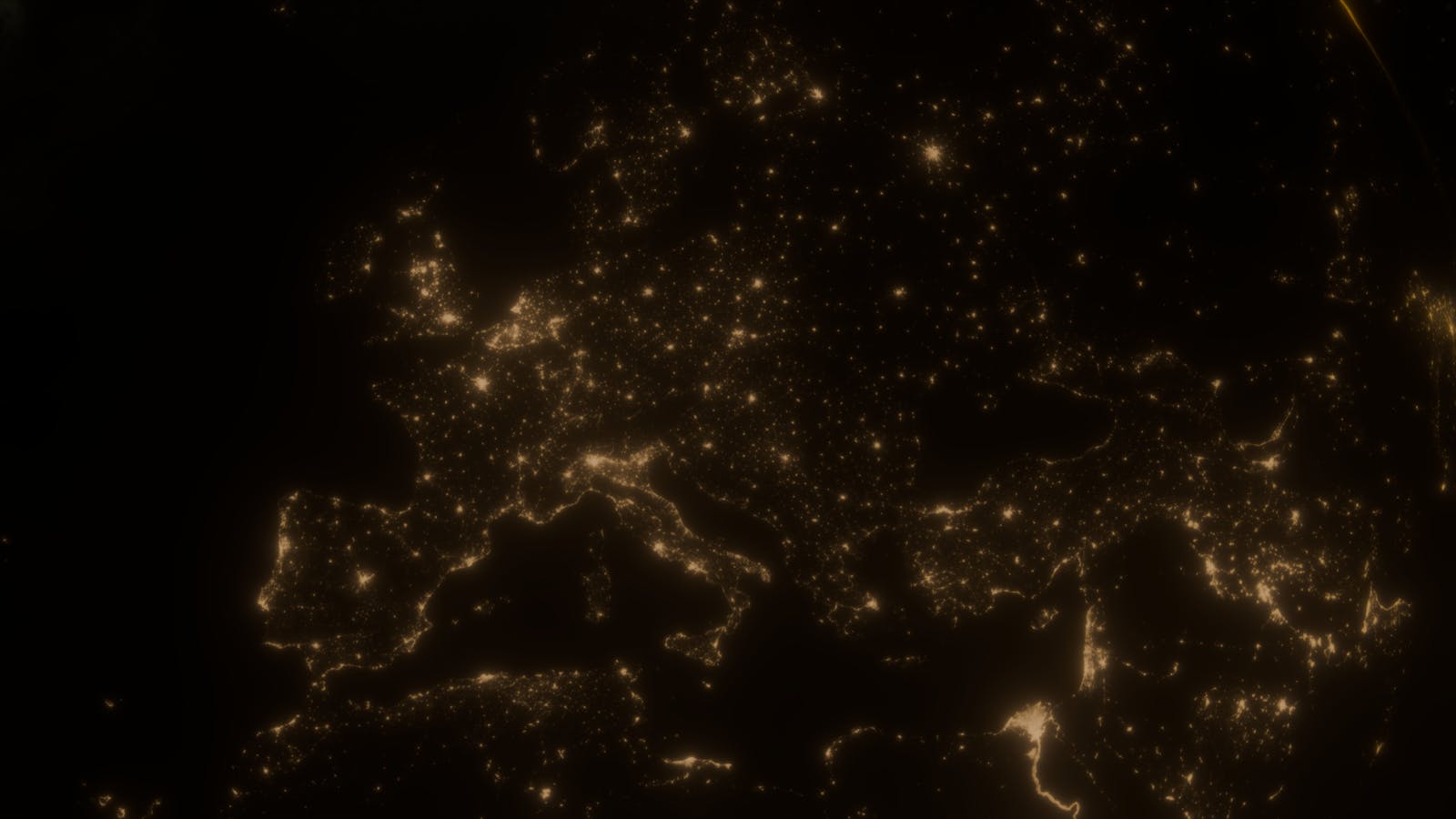
European Earth-observation companies are absorbing a surge of commercial demand for satellite imagery of Iran and the Gulf after the largest US operator withdrew its data from the open market at the Trump administration’s request. The shift is rewiring a global imagery supply chain that energy traders, insurers, shipping firms, and newsrooms had built around American providers.
Iran has imposed a de facto closure of the Strait of Hormuz since 28 February, when the US and Israel launched coordinated airstrikes on Iran. Within weeks, Planet Labs announced it would indefinitely withhold imagery of the conflict region, citing a request from the White House asking all commercial satellite operators to voluntarily impose an “indefinite withhold of imagery.” Vantor, formerly Maxar, separately tightened access to Middle East imagery under its own enhanced access controls, though the company told reporters it had not been contacted by the US government and that its restrictions were not government-mandated.
That left a gap. European firms moved into it.
The commercial vacuum
Earth observation data is no longer a niche input for the energy sector. Traders need to know which tankers are loading, which terminals are operating, and how much crude is sitting in storage. Insurers need to price risk on hulls that may or may not be moving. Reinsurers need to know what’s on fire. Newsrooms need to verify claims from belligerent governments. All of that work depends on a steady flow of fresh pixels.
When the largest American provider closed the tap, that work didn’t stop. It migrated.
Why the strait matters
Roughly one-fifth of the world’s seaborne oil trade and about one-fifth of global liquefied natural gas shipments pass through the Strait of Hormuz in a normal year. The closure has stranded hundreds of vessels and thousands of mariners inside the Gulf. Brent crude has traded around 50 percent higher than its pre-war level.
That price signal is what makes satellite imagery so valuable right now. Every cargo movement, every drone strike on a tanker, every refinery flare carries multimillion-dollar consequences. And much of the activity is invisible to conventional tracking: maritime analytics firms estimate that AIS-based vessel tracking in and around the strait is now missing roughly half of actual traffic, with vessels increasingly switching off transponders, spoofing positions, or broadcasting false identities.
Ships going dark on AIS means satellites are often the only way to see them at all.
Who is filling the gap
The list of European beneficiaries is broad. Airbus Defence and Space, with its Pléiades Neo constellation, and the Italian-French joint operator e-GEOS, which distributes COSMO-SkyMed radar imagery, are the largest commercial players. Several smaller European New Space entrants — including firms recently brought into the Copernicus Contributing Missions programme — are picking up business from clients who previously had standing contracts with US firms.
The European Union’s Copernicus programme, which operates the Sentinel family of satellites, has continued distributing imagery of the conflict zone without restriction. Copernicus data is free and open by design, which means anyone, from a Reuters editor to a hedge fund analyst in Geneva, can pull a recent Sentinel-1 radar pass over Bandar Abbas and see what is moving. The Washington Post recently used lower-resolution European science imagery to verify damage at US bases in the Gulf after losing reliable access to its preferred US-provider feeds.
Argentine-headquartered Satellogic, which is not subject to US shutter-control authority in the same way as Planet Labs, has continued to supply imagery to the commercial market during the conflict, including imagery used by open-source analysts to document the opening wave of strikes on Tehran.
Strategic autonomy, finally tested
For more than a decade, European officials have used “strategic autonomy” as shorthand for reducing dependence on American technology in defense, energy, and space. The phrase has often felt aspirational. The Iran crisis has converted it into a working business case.
The Planet Labs shutoff was not the result of sanctions or treaty obligations. It was the result of a request. American commercial operators license their high-resolution capacity under shutter-control provisions that give Washington authority to restrict distribution during national security events. When the Trump administration asked operators to voluntarily withhold imagery, Planet Labs — whose open-access model had made its data central to journalists, analysts and traders — pulled back within days.
European operators are not subject to that mechanism. That difference, abstract on most days, became the entire value proposition once the war started.
What this means for the imagery market
The commercial Earth-observation business has been brutally competitive for years. Pricing has compressed, and several US operators have consolidated under defense-and-intelligence buyers who treat commercial sales as a secondary line. The Iran episode adds a new variable to procurement decisions: jurisdictional risk.
A trader signing a multi-year imagery contract now has to ask whether the provider can be asked to stop delivering during the exact crisis that makes the data valuable. That question has an obvious answer for US firms whose primary customer base is the US government, and a different obvious answer for European ones.
Whether the shift outlasts the war is the harder question. Iran has reportedly offered to reopen the strait if the US lifts its counter-blockade of Iranian ports and ends the war, an offer Washington has so far been unwilling to accept on its current terms. The Trump administration also launched a short-lived escort mission, Project Freedom, to guide stranded vessels out of the Gulf — and paused it within a day, citing diplomatic progress. A negotiated reopening would reduce the urgency. It would not erase the procurement lesson.
Industrial implications
The episode arrives at a moment when European Earth-observation firms have been pushing hard for new institutional contracts and infrastructure. Recent wins include a UK thermal satellite contract with the European Space Agency aimed at climate and security applications, and Italy’s IRIDE constellation has begun returning operational imagery, with the first high-resolution scene released in March 2025 and further satellites added in the months since.
The sector has also seen a broader trend toward convergence between satcom and Earth observation operators, which has the side effect of giving European integrators more end-to-end control over data flows.
None of these developments were caused by the Hormuz crisis. All of them are now being marketed in its shadow.
The wider lesson
Space infrastructure has always had a dual character. The same satellite that monitors crop yields can count tanks. The same constellation that flags illegal fishing can verify a ceasefire. That duality has historically been an abstraction for commercial customers, who buy imagery for ordinary business reasons and rarely think about who else might be telling the operator what to do.
The Iran shutoff has made the duality concrete. Customers learned, in real time, that the layer of geopolitical control sitting above their data contract can override it without notice. European providers happened to be standing nearby with comparable products and no equivalent off-switch.
That is how supply chains move. Not through white papers or summit declarations, but through a single phone call that reveals what a contract is really worth.
