
Every molecule of vitamin B12 in your bloodstream was, at some point in its history, built by a microbe. Not by a cow. Not by a chicken. Not by a spinach leaf or a sunflower or any plant that has ever grown on Earth. Only bacteria and archaea — the two oldest branches of life — carry the full genetic machinery to assemble cobalamin, the cobalt-cored ring that keeps your nerves insulated and your red blood cells dividing. Animals borrow it. Plants ignore it. Fungi can’t make it either. And your liver, quietly, hoards a stockpile large enough that a healthy adult can stop consuming B12 today and not show a measurable deficiency in the blood for something on the order of three years.
That storage window is one of the strangest facts in human nutrition. It’s also the reason arguments about diet, veganism, and supplementation tend to run on a delay — the body’s warning light is wired to a very slow fuse.
A vitamin no plant or animal can build
Cobalamin is the most structurally complex vitamin known. At its centre sits a single atom of cobalt, held inside a corrin ring that looks, at a glance, like the porphyrin ring in haemoglobin — but with an extra kink and a rarer metal. Assembling it requires a biosynthetic route so long and elaborate that no eukaryote has ever managed to evolve or retain it.
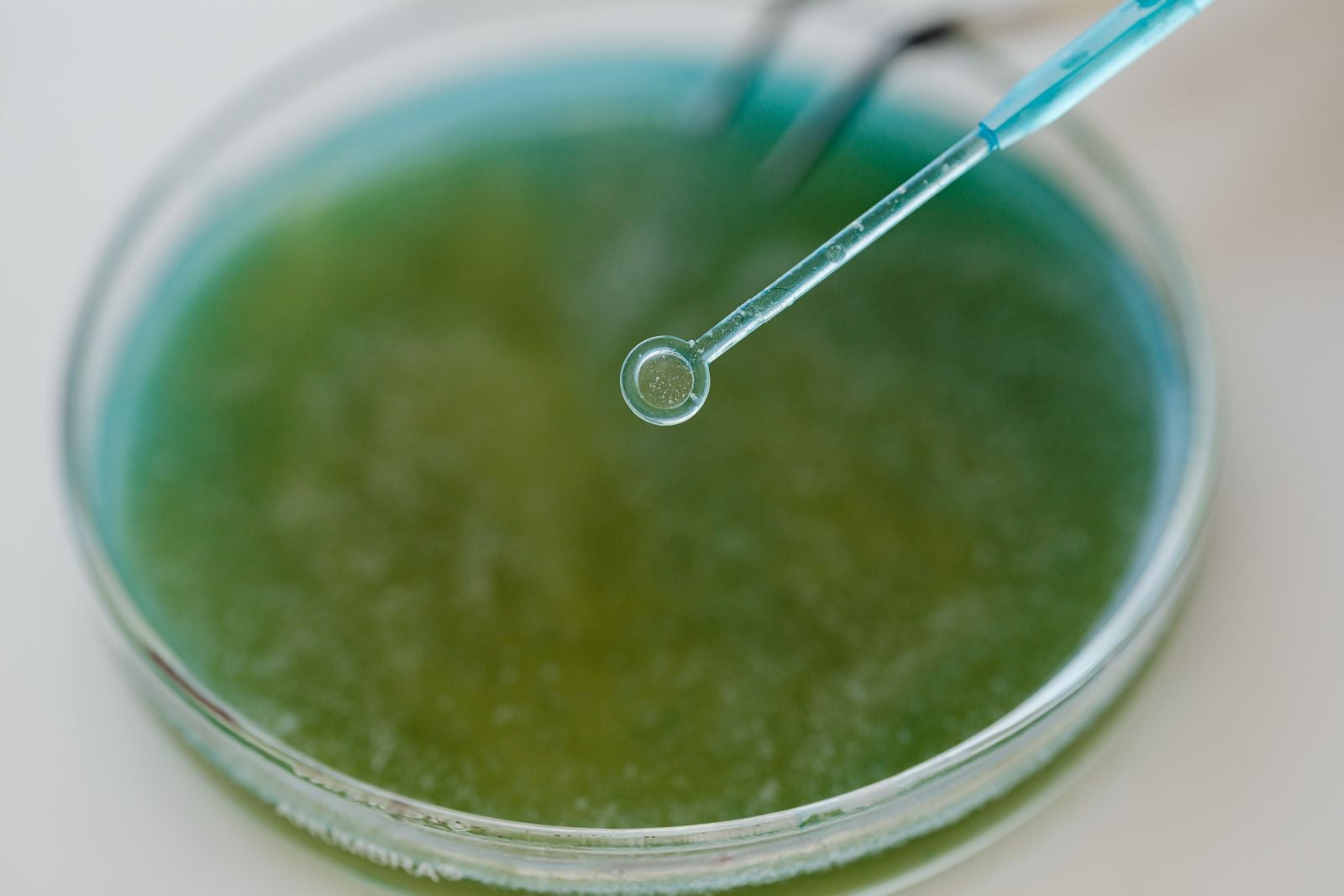
What builds it instead are prokaryotes. Soil bacteria. Gut bacteria. Marine bacteria drifting through the open ocean. And, less obviously, archaea — the domain of life that thrives in salt flats, hot springs, and the anaerobic guts of ruminants. A 2015 study in The ISME Journal found that a group of marine archaea called Thaumarchaeota are major global producers of cobalamin, quietly seeding the oceans with the vitamin that eventually works its way up the food chain into fish and, from there, into us. The same work showed that algae and other organisms unable to make their own B12 depend on a relatively small set of these microbial producers for their supply.
Cows don’t make B12. The microbes in their rumen do. A cow is, from a B12 perspective, a walking fermentation vessel that harvests cobalamin from its own gut flora and deposits it into muscle, milk, and liver. Salmon don’t make it either. They accumulate it from the microbial-laced krill and smaller fish they eat, which in turn accumulated it from bacteria and archaea at the base of the marine web.
Even the B12 in a multivitamin comes from a bacterial fermentation tank. Industrial producers grow bacterial strains in large-scale bioreactors, then extract and crystallise the cobalamin they excrete. There is no synthetic shortcut in commercial use. The molecule is too intricate to build economically from scratch — the same dependence on microbes that plays out across the ocean, where whole communities of algae rely on a handful of bacterial and archaeal producers for theirs.
Why the liver holds so much
Most water-soluble vitamins wash out of the body within days. Vitamin C, thiamine, riboflavin — miss them for a week or two and levels start dropping. B12 breaks the rule.
The human liver stores substantial amounts of cobalamin in a healthy adult, and daily usage is measured in micrograms. The difference creates the number that keeps showing up in clinical reviews: roughly three to five years of stored supply before blood levels drop into the deficient range. The variability is real — it depends on gut absorption, kidney turnover, and how much the liver had banked to begin with.
The mechanism is a small piece of biochemical engineering. B12 doesn’t diffuse freely. It’s shuttled through the body by a set of carrier proteins with names that sound like characters in a Tolkien novel: haptocorrin, intrinsic factor, transcobalamin. Intrinsic factor, secreted by cells in the stomach lining, is the one that matters most for absorption — it binds B12 in the small intestine and hands it off to receptors in the ileum. Without intrinsic factor, almost none of the cobalamin you eat gets in. This is why people with pernicious anaemia, an autoimmune condition that destroys the intrinsic-factor-producing cells, become deficient regardless of diet.
Once absorbed, B12 is recycled with unusual efficiency. Bile carries cobalamin from the liver into the small intestine, where most of it is reabsorbed and returned. It’s a closed loop, and it’s the reason the depletion curve is so slow. The body is essentially running the same molecules through the plumbing over and over.
What the vitamin actually does
Two enzymes in the human body require B12 as a cofactor. Just two. But both are critical.
The first, methionine synthase, sits at a junction of the folate cycle and the methylation pathway that keeps DNA synthesis running. Without it, red blood cells fail to divide properly and swell into the oversized, misshapen shapes that give the deficiency its clinical name: megaloblastic anaemia.
The second, methylmalonyl-CoA mutase, breaks down certain fatty acids and amino acids. When it stalls, a compound called methylmalonic acid builds up in the blood — and, more damagingly, the myelin sheath that insulates nerve fibres starts to degrade. That’s the neurological side of B12 deficiency. Tingling in the hands and feet. Memory lapses. Confusion. Balance problems. In severe cases, a syndrome called subacute combined degeneration of the spinal cord, which can leave permanent damage even after treatment.
The Jerusalem Post’s Dr. Maya Rosman, reviewing the nutritional causes of memory decline, lists B12 first among the correctable culprits, noting that a lack of B12 can cause memory loss, confusion, and fatigue, especially in older adults, with meat, fish, eggs, and dairy as the main dietary sources.
The three-year clock and why it misleads people
The long storage window creates a particular problem for anyone who reduces or eliminates animal products without supplementing. For the first two or three years, blood tests come back normal. Energy is fine. Cognition is fine. The stockpile is quietly draining, but there’s no signal.
Then, sometime in year three or four, the reserves cross a threshold. Serum B12 drops. Methylmalonic acid rises. Homocysteine, another downstream marker, climbs. The symptoms — fatigue, brain fog, tingling — arrive together, often without an obvious trigger, and often years after the dietary change that caused them.
This delayed onset is why nutritionists working with plant-based eaters recommend supplementation from day one rather than waiting to see if a deficiency emerges. Regular B12 supplementation is enough to maintain adequate levels. The vitamin itself is widely available because the bacteria in fermentation tanks do all the hard chemistry.
The clock also hides another population of deficient people: those on long-term medications that block absorption. Proton pump inhibitors, prescribed for reflux, reduce the stomach acid needed to release B12 from food proteins. Metformin, the most-prescribed drug for type 2 diabetes, interferes with the calcium-dependent uptake of the intrinsic-factor-B12 complex in the ileum. New Zealand clinical guidance describes metformin-induced B12 deficiency as easily overlooked but easily treated, with prevalence rising the longer patients stay on the drug. The same short list — metformin, proton pump inhibitors, and other acid-suppressing drugs — turns up again and again as the causes clinicians most often miss.
An older adult on metformin and omeprazole, eating a normal omnivorous diet, can slide into deficiency just as easily as a strict vegan who never supplements. The three-year buffer applies to everyone equally.
The cobalt at the centre
There’s a small piece of geochemistry buried inside all of this. Cobalt is a rare element in the Earth’s crust — about 25 parts per million, orders of magnitude less abundant than iron. Every B12 molecule requires exactly one cobalt atom, held in place by four nitrogen bonds inside the corrin ring. When chemists study cobalamin in the lab, what they find fascinating is how the cobalt centre cycles between three oxidation states — Co(I), Co(II) and Co(III) — allowing it to form and break carbon-cobalt bonds that no other biological cofactor can manage.
That carbon-cobalt bond is, as far as anyone has documented, the only naturally occurring organometallic bond in mammalian biochemistry. Everything else your cells do with metals — iron in haemoglobin, zinc in enzymes, magnesium in chlorophyll’s plant equivalents — uses ionic or coordination bonds. B12 alone gets to do organometallic chemistry inside a living human cell, and it does so because bacteria worked out the trick billions of years before animals existed.
A supply chain that runs through microbes
Step back and the picture is stranger than the label on a supplement bottle suggests. Every steak, every wheel of cheese, every fillet of tuna, every B12 tablet in a pharmacy traces back to microbial fermentation. The cow’s rumen, the fish’s food web, the industrial bioreactor — all three are variations on the same theme. Prokaryotes build the molecule. Everything else borrows it.
Space Daily has looked before at what happens when the body’s carefully tuned systems get pushed off their baseline — how the human heart shrinks within days in microgravity, or how returning astronauts have to relearn how to judge the weight of ordinary objects. B12 storage sits at the opposite end of that spectrum: a system so well-buffered that most people go their entire lives without noticing it exists.
Long-duration spaceflight makes the question sharper. A crew heading for Mars can’t grow cows in the payload bay and can’t grow B12-producing bacteria in a lettuce plant. Any closed-loop food system for deep space will either carry cobalamin supplements or grow the producing microbes deliberately, in tanks, the same way pharmaceutical companies do on Earth. There is no plant-based workaround. There has never been one.
What the deficiency actually looks like
The clinical picture is easy to miss because it develops so slowly. Early: a vague tiredness, harder to shake than usual. Later: pins and needles in the fingertips, a sense that words are harder to reach for than they used to be. Later still, if untreated: unsteadiness on the stairs, a numbness that creeps up the legs, memory that starts to feel unreliable in ways that get blamed on age.
A single blood test can catch it. As Consumer Reports notes, a test for total B12 is best done alongside a test for methylmalonic acid when the first result is borderline. Treatment is straightforward — oral tablets for most cases, intramuscular injections for people who can’t absorb it through the gut. Recovery of blood markers happens within weeks. Recovery of neurological function can take months, and in cases caught late, some damage doesn’t reverse.
The three-year window is generous. But it’s also a trap. A body that hides its deficiency for that long is a body that can be quietly running down without any of the usual warning signs, until the reserves finally give out and the symptoms arrive all at once. Somewhere in your liver right now, if you’re a typical adult on a typical diet, there are a few milligrams of a cobalt-cored molecule that a microbe made, waiting to be spent one microgram at a time. The bacteria did the hard part billions of years ago. The rest of us have been coasting on their chemistry ever since.