

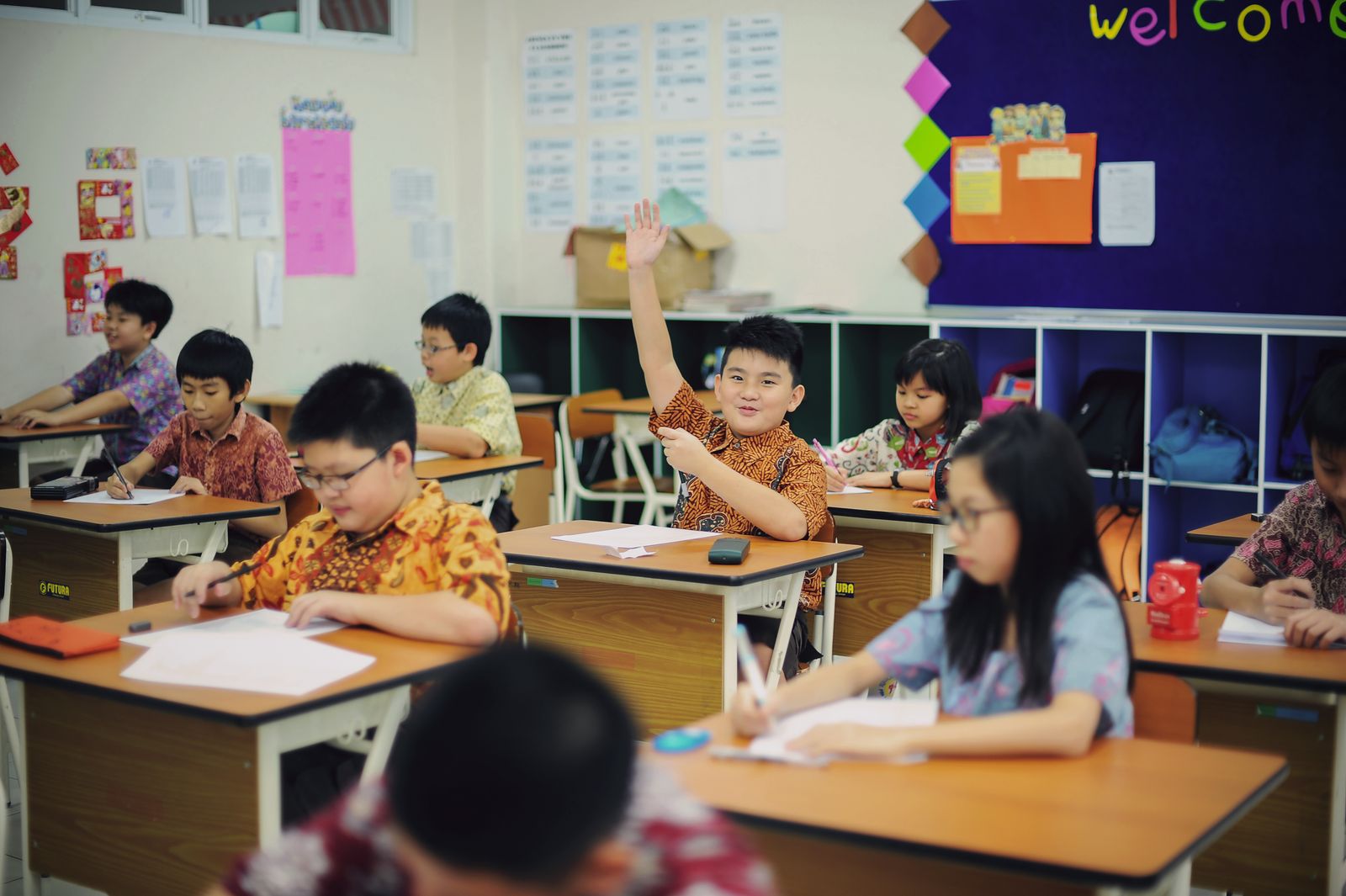
In Korea, nunchi describes the habit of watching a room before speaking in it. The practice has a name — nunchi, sometimes translated as eye-measure — and it asks a child to register the mood, hierarchy, and unspoken needs of everyone present before saying or doing anything. Popular accounts describe Korean parents passing it on casually, in kitchens and on playgrounds, but the sources cited here do not establish an age at which it is introduced.
The claim sometimes attached to it — that nunchi is roughly five thousand years old — is difficult to verify. Researchers measure related abilities such as theory of mind, emotion recognition and self-regulation, but the cited studies do not validate nunchi itself as a single laboratory construct.
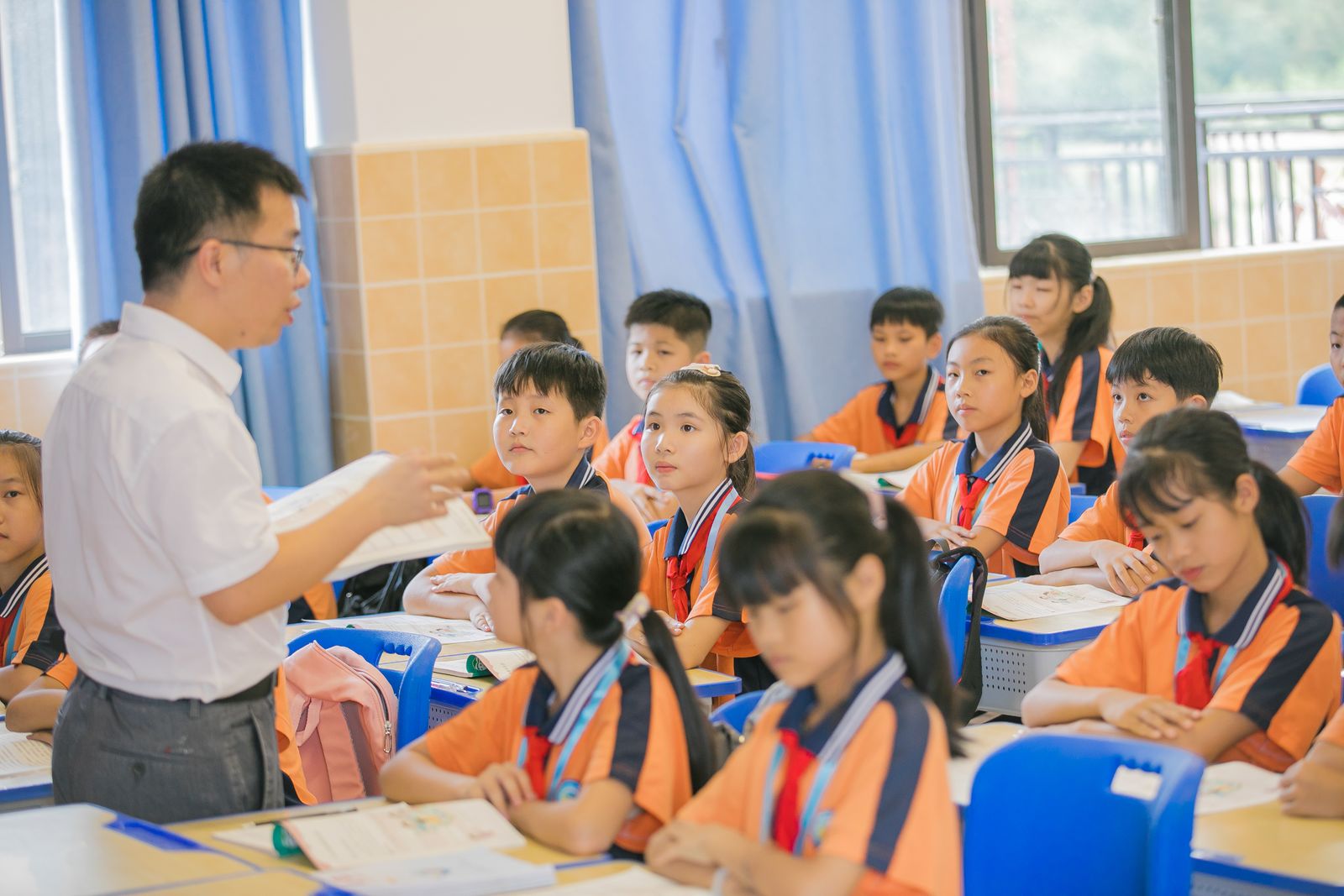
What nunchi actually asks a child to do
Strip the word of its mystique and nunchi is a cluster of perceptual habits. Read facial micro-expressions. Notice who has not yet spoken. Track the temperature of a conversation before adding to it. Adjust your behaviour to the group’s center of gravity rather than your own.
A child with strong nunchi, in the Korean framing, is not shy. The child is observant first, expressive second. The sequencing matters.
Western developmental psychology has its own vocabulary for parts of this — theory of mind, social cognition, emotion recognition, self-regulation — but those concepts tend to be measured one at a time. Nunchi is the bundle. It is the bundle taught early, taught socially, and taught as a virtue rather than a clinical capacity.
Why early childhood keeps coming up
Developmental researchers describe a shift in early childhood, when children move from reading basic emotions on faces to inferring what someone else might be thinking about a situation — the early architecture of perspective-taking.
That research concerns perspective-taking in general. It does not identify a nunchi-specific window, and the sources cited here do not establish age three as the point at which the practice is introduced.
The shift from virtue to variable
For most of its history, nunchi sat in the category of folk wisdom — the kind of thing grandmothers explained by example rather than by definition. The recent change is that pieces of it are being pulled into formal measurement.
Educational psychology now routinely separates cognitive skill (what you can solve on a test) from non-cognitive skill (how you regulate attention, motivation, and social attunement). A 2024 study in Nature Human Behaviour that followed more than 10,000 children in England and Wales from ages 7 to 16 found that non-cognitive skills became increasingly predictive of academic achievement across development — their influence on school performance grew steadily stronger as the children got older.
The same study found these skills are partly heritable but also responsive to environment — children with a genetic propensity toward emotional regulation actively shape the social worlds they’re placed in, which then amplifies the original disposition. The Nature Human Behaviour study examined broad non-cognitive skills, not nunchi training.
How researchers try to measure something this slippery
The hard part is that nunchi is not one thing. It is a composite. So researchers measure its components separately and then look at how they cluster.
Emotion recognition tasks ask children to identify feelings from photographs of faces. False-belief tasks test whether a child can model another person’s incorrect understanding of a situation. Behavioural observation in classrooms captures how often a child waits, watches, or matches the group’s tempo.
None of these instruments use the word nunchi. But the underlying construct — fast, contextual reading of a social field — is what they are trying to quantify.

Why context-sensitivity is finally getting taken seriously
For decades, Western developmental psychology treated cognition as something you could measure in a quiet room with a clipboard. That assumption is being challenged by cross-cultural work showing that children’s cognitive performance is deeply tied to the social setting in which it is tested.
Context wasn’t noise around the signal. Context was part of the signal.
That finding matters for nunchi because nunchi is, in effect, a child’s developing skill at being a precise instrument for context. A child raised to read the room is being trained on exactly the variable that Western researchers used to treat as a confound.
What pandemic studies examined
Studies of children during the pandemic examined changes in social interaction and emotion recognition rather than nunchi, and researchers who tracked development through that period reached mixed conclusions. Some documented measurable disruption; others were more reassuring — a 2022 study in Frontiers in Psychology on pandemic-related changes in social interaction and preschoolers’ emotion recognition found that children still drew enough from the visible faces around them to keep recognising and labelling emotions on track.
Children who had been on track to develop strong context-reading skills lost ground when their context shrank to a kitchen and two parents. The skill, it turned out, needed crowds, classrooms, hallways, and unfamiliar adults to grow. Nunchi cannot be taught entirely indoors.
The screen problem
There is also a more recent worry, which is that the inputs nunchi feeds on are being replaced for many young children by something flat and one-directional. A 2022 review in Frontiers in Psychology on screen exposure and young children’s cognitive development concluded that the effects of early screen time depend less on sheer quantity than on the context of viewing — whether an adult is involved, what is on the screen, and whether the device replaces real interaction or sits alongside it.
A screen does not glance back. It does not shift its weight when a child says the wrong thing. It does not go quiet when a grandmother enters the room. The training data for nunchi is the unscripted human face, and the volume of that data per child has been falling for about fifteen years.
What gets lost in translation
Korean parenting is not a utopia, and the same culture that produces nunchi also produces some of the highest academic-pressure environments in the world. Borrowing nunchi without borrowing the rest is the actual question facing parents outside Korea who find the concept appealing.
The piece worth borrowing is also the piece hardest to teach in cultures that prize early self-expression. A child taught to notice others first is being given a different default than a child taught to use their words. Neither is wrong. They produce different adults.
What the laboratories are actually finding
Even robots are now being enlisted to study how children develop social reading. In human–robot interaction research, some setups put a child in the position of correcting a machine, which forces the child to work out what the robot “thought” was true and why. That task measures perspective-taking with a non-human partner; it does not directly test nunchi.
The results suggest that the skill of inferring another mind is teachable, trainable, and visible in measurable behaviour by the time children are in early primary school.
The 5,000-year claim, examined honestly
Popular accounts often describe nunchi as a five-millennia-old practice tied to early Korean court culture and Confucian inheritance. The exact dating is impossible to confirm — written references to the concept appear far later than 3000 BCE, and the word itself is much younger than the social behaviours it names. The 5,000-year description is difficult to verify, and the available sources do not support a specific age for the practice.
The interesting fact is not the round number. The interesting fact is that a vernacular Korean parenting concept and a Nature Human Behaviour longitudinal study are now describing, from opposite directions, the same underlying capacity in a developing child.
What this looks like in a kitchen
A Korean grandmother does not hand a small child a worksheet. She asks, after a visitor leaves, what the child noticed. Was the visitor tired? Did she want more tea but not ask for it? Why did the conversation get quiet when a certain name came up?
The child guesses. The grandmother corrects, expands, sometimes laughs. Over years, the guesses get better. Twenty years later the same child, now an adult, walks into a meeting and knows within thirty seconds who is in charge, who is anxious, and who has already made up their mind. No test was ever scored. The skill is just there, the way a first language is just there.
This editorial team has written before about the strange efficiency of cultural artifacts that outperform their formal counterparts — a recent piece on Microsoft’s MAI-DxO diagnostic system looked at how a machine outperformed twenty-one experienced physicians on difficult cases. Nunchi is the opposite shape of the same observation: a low-tech, century-old practice that is outperforming many high-tech attempts to teach social cognition.
What the evidence does not establish
The sources cited here do not establish a nunchi-specific critical window. They do not show that age three opens one, that age seven closes it, or that the same learning becomes measurably harder later in life. Adults do report picking nunchi up later, often painfully, in unfamiliar workplaces.
Whatever a culture decides to teach young children about other people shapes the default they carry into adulthood. Korea, by many accounts, has long spent that attention on others. The results are still being measured, in laboratories, in classrooms, and in the quiet way a Korean child, asked what they saw at dinner, can sometimes name the thing the adults thought no one had noticed.