

On 7 March 2025, a jury at the Old Bailey returned guilty verdicts against three Bulgarian nationals — Katrin Ivanova, Vanya Gaberova and Tihomir Ivanchev — for conspiring to spy for Russia from a seaside guesthouse in the English town of Great Yarmouth. Three more members of the same cell, including ringleader Orlin Roussev, had already pleaded guilty. In May, Justice Nicholas Hilliard handed down sentences totalling more than 50 years. The longest, for Roussev, was 10 years and 8 months.
The cell called themselves the Minions. Their handler, prosecutors told the court, was a fugitive Austrian executive believed to be living in Moscow under the protection of Russian intelligence: Jan Marsalek, the former chief operating officer of the collapsed German payments company Wirecard.

A guesthouse in Great Yarmouth
Great Yarmouth is a faded Norfolk resort on the North Sea coast, the kind of place that smells of vinegar and diesel. It is roughly 130 miles northeast of London. Roussev, a 47-year-old Bulgarian who had lived in the UK since 2009, ran his operation out of a former guesthouse there.
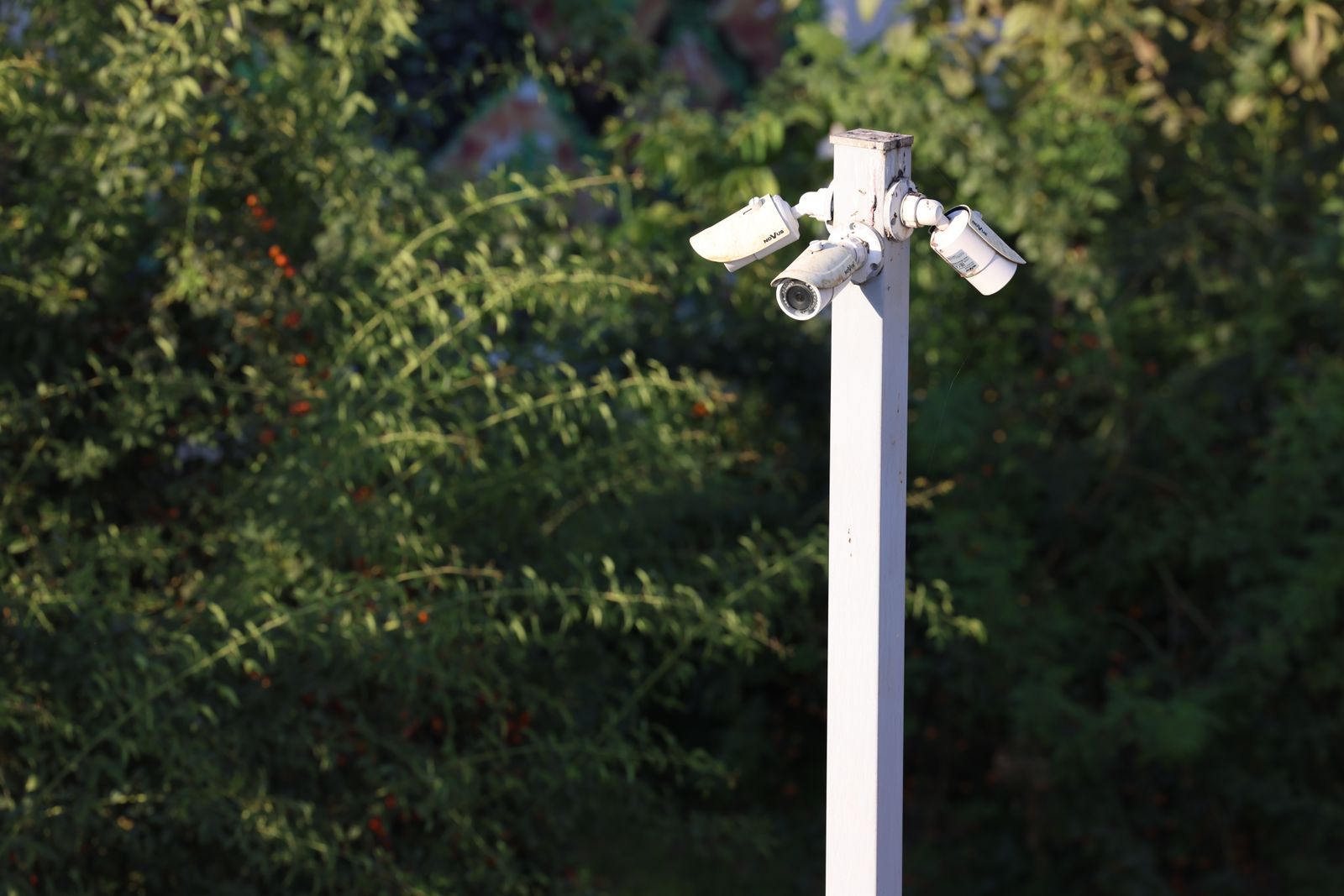
When Counter Terrorism Command officers raided the building in February 2023, they found what police described as a “treasure trove” of surveillance equipment. Cameras hidden in pens, neckties, sunglasses, a fake rock, a Coke bottle. One camera was sewn inside a plush Minion toy from the Despicable Me films. There were Wi-Fi jammers, GPS spoofers, eavesdropping devices, vehicle trackers. Roussev, in his Telegram messages, referred to the space as his “Indiana Jones warehouse.”
The Crown Prosecution Service called it “spying on an almost industrial scale” — one of the largest foreign intelligence operations ever prosecuted in a British court.
Six operations across five countries
The trial focused on six assignments the cell carried out between 2020 and 2023 in the UK, Germany, Austria, Spain and Montenegro. The targets were chosen with care.
The most prominent was Christo Grozev, the Bulgarian-born lead Russia investigator at Bellingcat, who had identified the GRU officers behind the 2018 Novichok poisoning of Sergei Skripal in Salisbury and the 2020 poisoning of Alexei Navalny. The cell followed Grozev from Vienna to a journalism conference in Valencia. In Telegram messages later read out in court, Roussev and Marsalek discussed robbing him, kidnapping him to Russia, or killing him outright.
“Learning only in retrospect that foreign agents have been monitoring my movements, communications and home, surveying my loved ones over an extended period — has been terrifying, disorientating and deeply destabilizing,” Grozev said in a statement read during the four-day sentencing hearing.
A second target was Roman Dobrokhotov, editor-in-chief of the Russian investigative outlet The Insider, who had worked with Grozev on the Skripal and Navalny cases. A third was Bergey Ryskaliyev, a former Kazakh politician living under asylum in the UK. A fourth was the Russian dissident Kirill Kachur. A fifth involved surveillance on Ukrainian soldiers being trained at the US Army’s Grafenwöhr base in Bavaria, with a view to tracking them after they returned to the front. A sixth involved a plan to drop fake pigs’ blood by drone on the Kazakh embassy in London to fake a protest — a piece of theatre intended to curry favour with Kazakh intelligence.
The Minions and their code names
The cell took its operational vocabulary from action movies. Roussev called himself Jackie Chan. His deputy, Biser Dzhambazov, was Mad Max — or, on lighter days, Jean-Claude Van Damme. The junior operatives were the Minions, after the yellow sidekicks who serve the supervillain Gru in the animated Despicable Me franchise. They were paid handsomely. Roussev received more than €200,000 to fund the activities. Sums of up to €1m were discussed in Telegram chats — a measure, prosecutors argued, of the value Moscow placed on the work.
The cell’s internal life was tangled. Dzhambazov, a 44-year-old who held down a day job as a medical courier while claiming to friends he was an Interpol officer, was in simultaneous relationships with two of the women he recruited. Katrin Ivanova, his long-term partner, worked as a laboratory assistant. Vanya Gaberova, 30, was a beautician who had left her partner Tihomir Ivanchev for Dzhambazov. When officers raided the addresses in February 2023, they found Dzhambazov in bed with Gaberova rather than at home with Ivanova.
Both women told the jury they had been deceived. The jury did not believe them. Justice Hilliard told Gaberova at sentencing she had known exactly what she was doing: “You found what you were doing exciting and glamorous, as demonstrated by the film you took of yourself wearing surveillance glasses in Montenegro.”
The fugitive in Moscow
The figure at the other end of Roussev’s Telegram channel was, according to prosecutors, Jan Marsalek — the 44-year-old former COO of Wirecard AG. Until June 2020, Marsalek had been one of the most powerful executives in European fintech. Wirecard was the only German technology company in the DAX index. Its market capitalisation briefly exceeded Deutsche Bank’s. Then €1.9 billion in claimed cash balances were found not to exist, and the company filed for insolvency. Marsalek boarded a private jet from Bad Vöslau airfield in Austria and disappeared. Investigators have placed him in Moscow ever since.
At the Old Bailey, prosecutors said Marsalek had acted as the go-between linking the Bulgarians to Russian intelligence services, principally the GRU. A selfie of Marsalek in a Russian military uniform was recovered from Roussev’s phone. The Telegram exchanges between the two men ran to thousands of messages, dealing with logistics, payments and targets. The exact technical claim — that the encrypted channel itself traced cleanly back to Marsalek in Moscow — is the prosecution’s account of what the digital evidence showed; it has not been independently audited outside the court process.
Marsalek remains on the Bundeskriminalamt’s wanted list and is the subject of an Interpol notice. He has not responded publicly to the espionage allegations. Wirecard’s former CEO Markus Braun, awaiting verdict in his Munich fraud trial, has denied wrongdoing and said he too was deceived by Marsalek.
Outsourced espionage
The Met’s Counter Terrorism Command described the case as a marker for a newer way of running intelligence work. Commander Dominic Murphy said it “highlights a relatively new phenomenon whereby espionage is being ‘outsourced’ by certain states.” Rather than deploying career officers under diplomatic cover — which became sharply harder after the mass expulsions that followed the Salisbury attack and the 2022 invasion of Ukraine — Russian services have been contracting out surveillance to non-Russian nationals who can move freely across European borders.
The Bulgarians had no formal training. Roussev had run a small signals-intelligence consultancy. Dzhambazov drove medical samples between hospitals. Gaberova ran a beauty salon in north London. None of them held a Russian passport. All of them could fly to Vienna, Valencia or Podgorica without raising flags. They learned tradecraft on the job — and, the trial showed, they were reasonably good at it. They tailed Grozev across two countries without being noticed. They sustained the operation for nearly three years.
The analysis published by War on the Rocks after the verdicts argued that the Minions case maps onto a wider pattern of Kremlin proxy operations across Europe since 2022 — arson attacks in Poland and the UK, parcel-bomb plots routed through DHL hubs, sabotage of rail lines in Germany. Cheap, deniable, run through intermediaries paid in cryptocurrency or cash.
What the messages contained
What made the trial unusual, beyond its scale, was how much of the operational chatter ended up in front of a jury. Roussev had archived almost everything. The court saw photographs of targets, video files, surveillance logs, and the day-to-day Telegram traffic between Roussev and his handler — banter about gadgets, gossip about the Minions’ love lives, and detailed operational planning.
In one exchange about Grozev, the two men discussed waiting for him at his Vienna apartment. In another, they speculated about whether they could lure him to a country with weaker rule of law. Marsalek, prosecutors said, signed off on payments and relayed instructions he attributed to Russian intelligence officers. When Roussev was arrested, he told police he had never done anything for any government. “No James Bond activity on my end, I guarantee you,” he said in interview. The Indiana Jones warehouse, and his messages calling himself Q, told a different story.
The sentences
On the morning of 12 May 2025, Justice Hilliard delivered sentences totalling more than 50 years across the six defendants. Roussev got 10 years and 8 months. Dzhambazov got 10 years and 2 months. Ivanova, 9 years and 8 months. Ivanchev, 8 years. Gaberova, after mitigation citing depression, panic disorder and the coercive nature of her relationship with Dzhambazov, was sentenced to 6 years, 8 months and 3 weeks. Ivan Stoyanov, the mixed martial arts fighter who had pleaded guilty early, received 5 years and 3 weeks. All six face deportation to Bulgaria after release.
Roussev was also ordered to pay a confiscation order of £180,768 in ill-gotten gains by 11 November 2025. The maximum sentence for conspiracy to spy under the Official Secrets Act is 14 years; the early pleas from Roussev, Dzhambazov and Stoyanov drew the standard credit. The mitigation arguments at the Old Bailey turned on whether the Bulgarians were ideological operatives or, as one defence barrister put it, “a world away from a classic spy.” The judge sided with the prosecution. “All were motivated by money,” he said.
The man who isn’t there
The trial answered the question of who the Minions were. It did not answer the question of who, exactly, gave Jan Marsalek his instructions, or what he was doing in Austria in the years before Wirecard collapsed, or how a fintech executive came to be running a surveillance network across the EU from a Moscow safe house. Those questions belong to investigators in Munich, Vienna and Berlin, and to the joint inquiries that outlets including Der Spiegel, ZDF and The Insider have continued to publish.
What the Old Bailey did establish, in admissible evidence, is that a former Norfolk guesthouse with mould on the walls and a Minion plushie on the shelf was, for nearly three years, a node in the European architecture of Russian intelligence. The cell was paid in euros. Its members shopped at Lidl. Its leader called himself Jackie Chan. And the man they reported to — the man whose face appears in a Russian military uniform on the ringleader’s phone — has, as of June 2026, still not been seen in public outside Russia since the evening of 19 June 2020, when he boarded a private jet in Bad Vöslau and vanished.
The six convicted Bulgarians began their sentences in May 2025. Marsalek’s room in Moscow, wherever it is, is still warm.
