
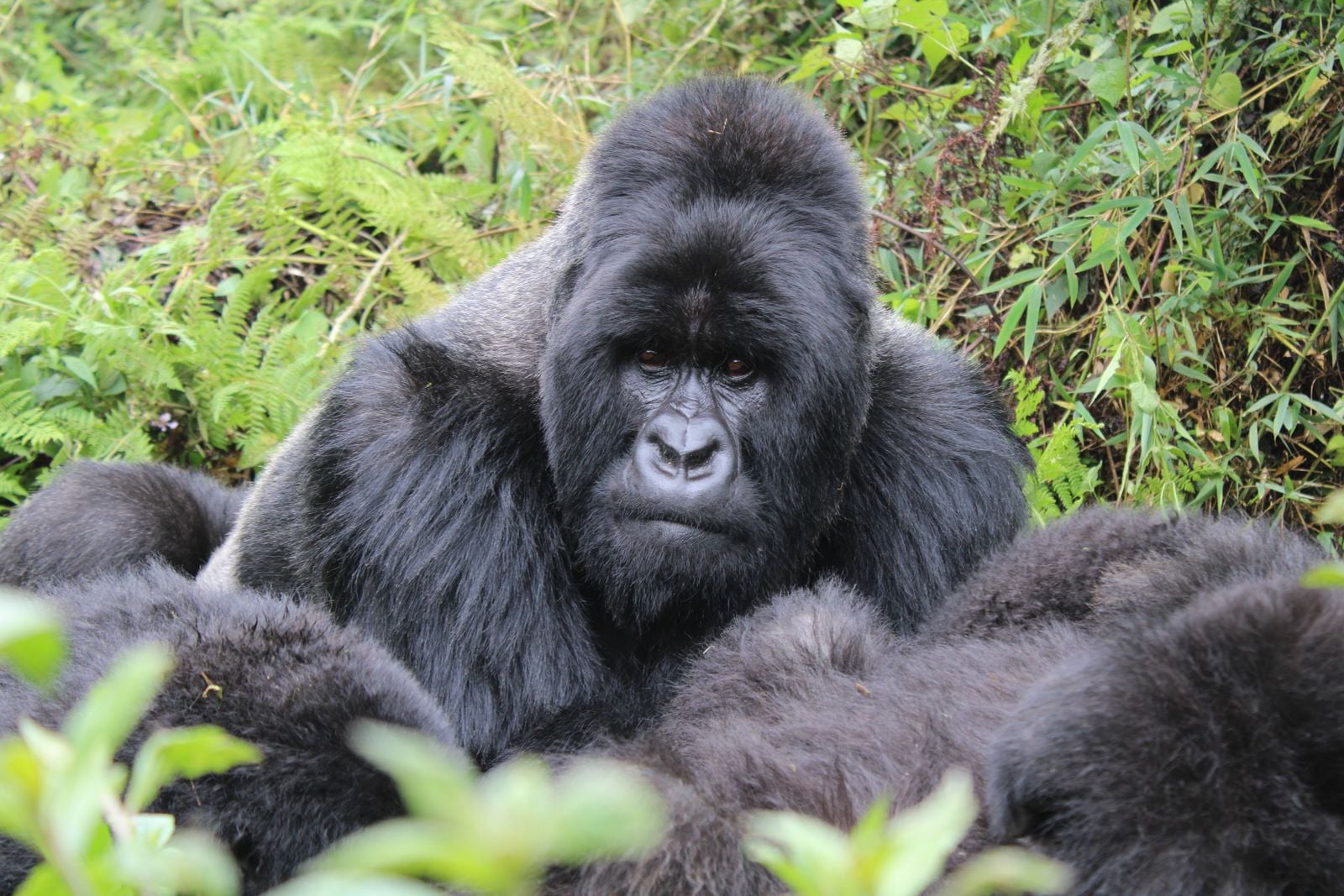
Mountain gorillas are a striking reminder that meat is not a biological requirement for building a large, muscular body. An average silverback can weigh as much as roughly 180 kilograms, while eating a diet dominated by leaves, shoots and stems.
But the familiar explanation — that gorillas somehow turn cellulose directly into muscle — gets the physiology wrong. Their muscle protein is built from amino acids supplied largely by the plants themselves. Fermentation performs a different job: microbes in the enlarged hindgut extract additional energy from fibrous material that the gorilla could not otherwise digest efficiently.
The leaf-to-muscle problem is really two problems
Muscle growth requires amino acids, sufficient energy and repeated mechanical loading. In a mountain gorilla, the amino acids come primarily from dietary plant protein. The energy comes from the digestible portions of those plants, supplemented by the products of microbial fermentation.
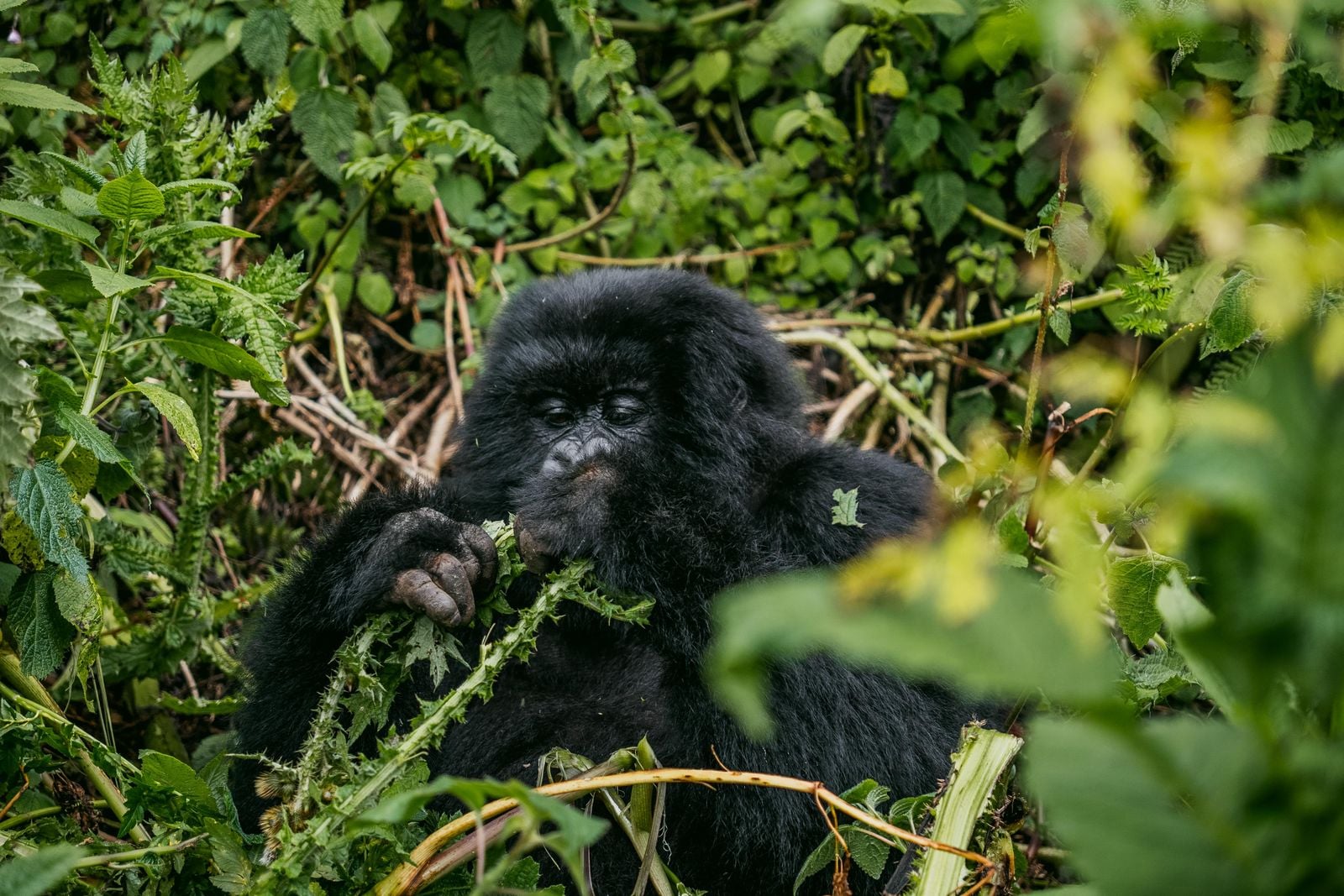
Mountain gorillas consume large quantities of foliage each day. Some of their preferred plants contain respectable concentrations of protein when measured on a dry-matter basis. Because the animals eat so much vegetation, those moderate concentrations can add up to a substantial daily protein intake.
Dry-matter percentages cannot, however, be multiplied directly by the fresh weight of the food. Leaves and stems contain large amounts of water. Twenty kilograms of freshly gathered vegetation therefore does not translate into three kilograms of protein simply because laboratory analysis reports 15 percent protein in the dried sample.
The real explanation is less spectacular but more accurate: enormous food volume, plant material with useful amounts of protein, and a digestive system adapted to recover energy from fibre.
What the colon contributes
Gorillas cannot efficiently break down cellulose with their own digestive enzymes. Instead, their enlarged colon houses communities of bacteria and archaea that carry out the necessary fermentation.
During the microbial fermentation of dietary fibre, plant carbohydrates are converted into short-chain fatty acids, chiefly acetate, propionate and butyrate. These molecules can cross the intestinal wall and contribute to the animal’s supply of usable energy.
Butyrate is consumed heavily by the cells lining the colon. Propionate is processed largely by the liver, while acetate can circulate to other tissues. Together, the three compounds allow a hindgut fermenter to recover nutritional value from plant material that would otherwise pass through with much of its chemical energy intact.
This contribution matters, but it should not be confused with protein synthesis. Short-chain fatty acids can help power the body that maintains and moves the muscle. They do not provide the amino-acid building blocks from which the muscle fibres themselves are assembled.
Why microbial protein is not the main answer
Microorganisms contain protein, but the location of fermentation determines whether an animal can make substantial use of that microbial biomass.
In foregut fermenters such as cattle, microbes grow before the food reaches the small intestine. The microbes can then pass into the intestine and be digested, supplying amino acids to the animal.
Gorillas are mainly hindgut fermenters. Much of their microbial growth occurs in the colon, after the principal site of dietary protein digestion and amino-acid absorption. That makes colonic microbial biomass a poor explanation for the gorilla’s muscularity.
Incidental insects may contribute tiny amounts of animal protein, but they are not needed to solve the puzzle. The bulk of the amino acids comes from the enormous quantity of plant matter the animal consumes.
Humans produce the same broad class of molecules
Humans also carry out hindgut fermentation, although on a much smaller scale. Resistant starch, oat beta-glucan, bean fibres and fruit pectins can reach the large intestine without being fully digested. Resident microbes then convert some of that material into acetate, propionate and butyrate.
Once produced, the acids can act locally or interact with specific G-protein-coupled receptors involved in metabolic and immune signalling.
The broad biochemical pathway resembles the one operating in a gorilla, but “the same molecules” does not mean the two digestive systems are equivalent. The species differ in gut proportions, microbial communities, transit times, food volume and the amount of energy fermentation can provide.
A 2026 open-label pilot reported by News-Medical followed 63 healthy adults consuming a short-chain oat beta-glucan supplement for two weeks. The supplement was associated with improved post-meal glucose responses and reduced gut symptoms, although the small, uncontrolled design means it cannot establish cause and effect on its own.
Research from Arizona State University covered by ScienceDaily also found that people whose gut communities produced more methane extracted somewhat more energy from a fibre-rich diet. Methane-producing microorganisms consume hydrogen generated during fermentation, allowing other microbes to continue producing short-chain fatty acids more efficiently.
That is a measurable human version of microbial energy recovery. It is not, however, fermentation on the scale available to a gorilla processing kilograms of fibrous vegetation every day.
What short-chain fatty acids do — and what they do not prove
Butyrate is an important fuel for colonocytes, the cells lining the large intestine. SCFAs also interact with cellular receptors and can influence gene expression, immune activity and metabolic regulation.
People with inflammatory bowel disease often have lower levels of certain SCFA-producing bacteria and lower faecal concentrations of their products. These patterns are associated with impaired barrier function and intestinal inflammation.
The association is biologically plausible, but it should not be reversed into a simple causal promise. Low SCFA levels may contribute to disease processes, result from them, or reflect several changes happening at once. The evidence does not mean that eating one fibre-rich food will prevent or treat inflammatory bowel disease.
The comparative-physiology point
Gorilla physiology is not a dietary blueprint for humans. Mountain gorillas can spend much of the day feeding, accommodate large volumes of plant matter and maintain a digestive tract suited to extensive hindgut fermentation. Humans have a smaller colon relative to body size and rely more heavily on cooked, energy-dense foods.
A person attempting to live on leaves and stems would not reproduce the gorilla’s results. Human athletes following meat-free diets instead obtain concentrated plant protein from foods such as legumes, soy, grains, nuts and seeds while consuming enough total energy and balancing their amino-acid intake.
The gorilla’s real lesson is narrower and more interesting than the slogan that leaves somehow become muscle. Muscle requires amino acids, energy and physical demand. Meat can provide the first two, but it is one delivery system rather than a biochemical requirement.
What the strategy costs
Extracting enough nutrition from fibrous plants requires time, digestive capacity and extraordinary food volume. Mountain gorillas devote substantial portions of their day to feeding and resting, while the colon’s microbial community continues processing what they have eaten.
That is the trade-off behind their diet. A large fermentation chamber recovers energy from low-density food, but the animal must continually supply it with plant matter.
The accurate comparison is therefore not that humans and gorillas can eat interchangeably. It is that both species depend on dietary protein for amino acids and both allow gut microbes to recover some additional value from fibre. Mountain gorillas simply operate the system at a scale that makes a massive body possible on leaves and stems.
