
Every photograph a human being has ever seen from the solid ground of another planet comes from one of two places. Mars, where rovers and landers have been operating in various forms since Viking 1 touched down in 1976. And Venus, where Soviet probes briefly opened their camera shutters between 1975 and 1982 before the heat killed them. That is the entire catalogue.
And the cameras that took those Venus pictures are still there. Soviet hardware remains on a surface near 465°C (about 870°F) and roughly 90 bar, in an atmosphere made mostly of carbon dioxide. Venus’s sulfuric-acid cloud deck is tens of kilometres above the ground, not bathing the landers at the surface. The pressure was a severe design load during descent and operation, but the inert remains are not undergoing a continuing process of being slowly crushed.
Correction, September 20, 2026: The headline and body were revised to place Venus’s sulfuric-acid clouds above the surface and to remove the claim that the dead landers are being slowly crushed there.
A paper published in 2025 by space archaeologist Luca Forassiepi and colleagues concluded that at least seven of the probes, landers and balloons that have reached the Venusian surface in the past six decades are probably still recognisable as machines. Deformed and chemically altered in places, but probably still sitting roughly where their parachutes dropped them.
The only surface photographs humanity possesses from a world that isn’t Mars
Mercury has been orbited but never landed on by a working camera. Jupiter and Saturn have no surface to land on. Titan has Huygens, which photographed a moon, not a planet. Pluto has been flown past. The Moon, of course, has thousands of frames, but it isn’t a planet.
So when you look at the orange-tinted, fisheye-warped image of flat basaltic plates stretching toward a hazy horizon, taken by Venera 13’s panoramic camera through a quartz window before the lander’s short operating life ended, you are looking at one of two photographic records humanity possesses of standing on another planet. The Soviet engineers who built those cameras did not know they were producing what would still be, in 2026, the only such record outside Mars.
What the surface actually does to a spacecraft
The numbers are worth sitting with. The surface of Venus is about 460 degrees Celsius, hot enough to glow a dull red in the dark. The atmospheric pressure is 90 bars, equivalent to being almost a kilometre underwater on Earth. The air is 96 percent carbon dioxide, and high in the clouds, droplets of concentrated sulfuric acid fall through a sky that never sees direct sunlight at the ground.
Testing what this does to hardware in extreme environment chambers has shown that titanium, a common structural metal in space probes, shows excellent resistance to the surface chemistry. Aluminium parts hold up too. Rubber O-rings and gaskets, however, fail quickly, letting pressure inside probes equalise with the outside and crushing internal components.
Forassiepi described what to expect if a future mission ever photographs one of these landers. Deformation, certainly. Compression from the violent entry. Metal that looks oxidised and corroded. But still, identifiably, a spacecraft. Sitting on the slope where it fell.
The Venera program nobody in the West remembers correctly
The Soviet Union sent more landers to Venus than any country has sent anywhere except Mars. Between the early 1960s and mid-1980s, the Venera program launched dozens of missions, and although many failed at launch or during the cruise to Venus, the ones that arrived achieved a string of firsts that NASA has never matched. The first spacecraft to transmit from the atmosphere of another planet. The first soft landing on another planet. The first surface photographs. The first colour surface photographs and first surface soil analysis.
The history of how the Soviet engineers got there, working largely in secrecy and through repeated failure, is told well in Astronomy Magazine’s account of the program. The early Venera probes kept getting crushed before reaching the ground because engineers underestimated the pressure at the surface. Early missions transmitted partway through the atmosphere and went silent. Later missions made it deeper. Eventually, a probe hit the ground and kept transmitting, weakly, for over twenty minutes.
By Venera 9 and 10 the design had been hardened into something resembling a deep-sea bathysphere with a camera turret. The landers were spherical pressure vessels wrapped in thick titanium, with shock-absorbing crush rings to soften the impact, refrigerated electronics packages designed to last under an hour, and tiny quartz windows for cameras protected by lens caps that ejected on landing. One of the Venera landers famously had a lens cap land directly underneath the probe’s soil compressibility experiment, which then measured the compressibility of the lens cap.
The probe that came back
Not every Venera went where it was supposed to. In March 1972, the Soviets launched a mission called Cosmos 482, intended for Venus. The launch vehicle’s upper stage failed, and the lander, a titanium sphere built to survive Venusian conditions, was stranded in a high Earth orbit instead. It stayed up there for over five decades.
After decades of orbital decay, the probe finally fell. Roscosmos confirmed that the Cosmos 482 descent module crashed into the Indian Ocean in 2025. The reentry had been tracked for weeks by space agencies trying to predict where the half-tonne titanium sphere would come down, with some initial projections at one point even suggesting it could cross parts of the southeastern United States. Because the probe was built to survive Venus, it almost certainly survived reentry through Earth’s much thinner atmosphere intact. Somewhere on the Indian Ocean floor sits a Soviet Venus lander, undamaged by reentry, that never made it to Venus.
That is one of the strangest objects ever launched by humans. A spacecraft designed to land on a planet 38 million kilometres away, sitting underwater on this one.
A hostile sky over a stable ground
The reason space archaeologists believe the surface Veneras can still be identified is the central paradox of Venus: the most chemically hostile surface in the inner solar system is also one of the most physically stable. There are no oceans grinding rock, no wind strong enough to move much material, and a far lower rate of volcanic and seismic activity than Earth. Once an object reaches the surface, it tends to stay where it lands, accumulating only the slow chemical and thermal changes that the hot, mostly carbon-dioxide surface environment can impose on metal.
The Forassiepi study evaluated each landing site for risks of volcanic burial, landslide, meteorite impact and sediment accumulation. Most of the probes, the researchers concluded, are in places where none of those threats are imminent on timescales of decades or even centuries. Space archaeologist Beth O’Leary, professor emerita at New Mexico State University, told Scientific American that the paper extends the discipline of space archaeology into a place researchers had written off. Venus was assumed to be the one body in the inner solar system where nothing humans sent would survive long enough to be worth studying. The new analysis says that assumption was wrong.
What that means, practically, is that there is now a small inventory of physical objects on Venus that count as cultural heritage. The Venera landers belong to that category in the same way Apollo descent stages on the Moon do, or the Viking landers on Mars, or the Mars rovers that will eventually run out of power and become artifacts themselves. Forassiepi’s framing is that material traces of humanity, wherever they exist, deserve study and preservation. The fact that Venus is hard to reach doesn’t reduce the cultural and historical value of what was left there.
What the next missions might find
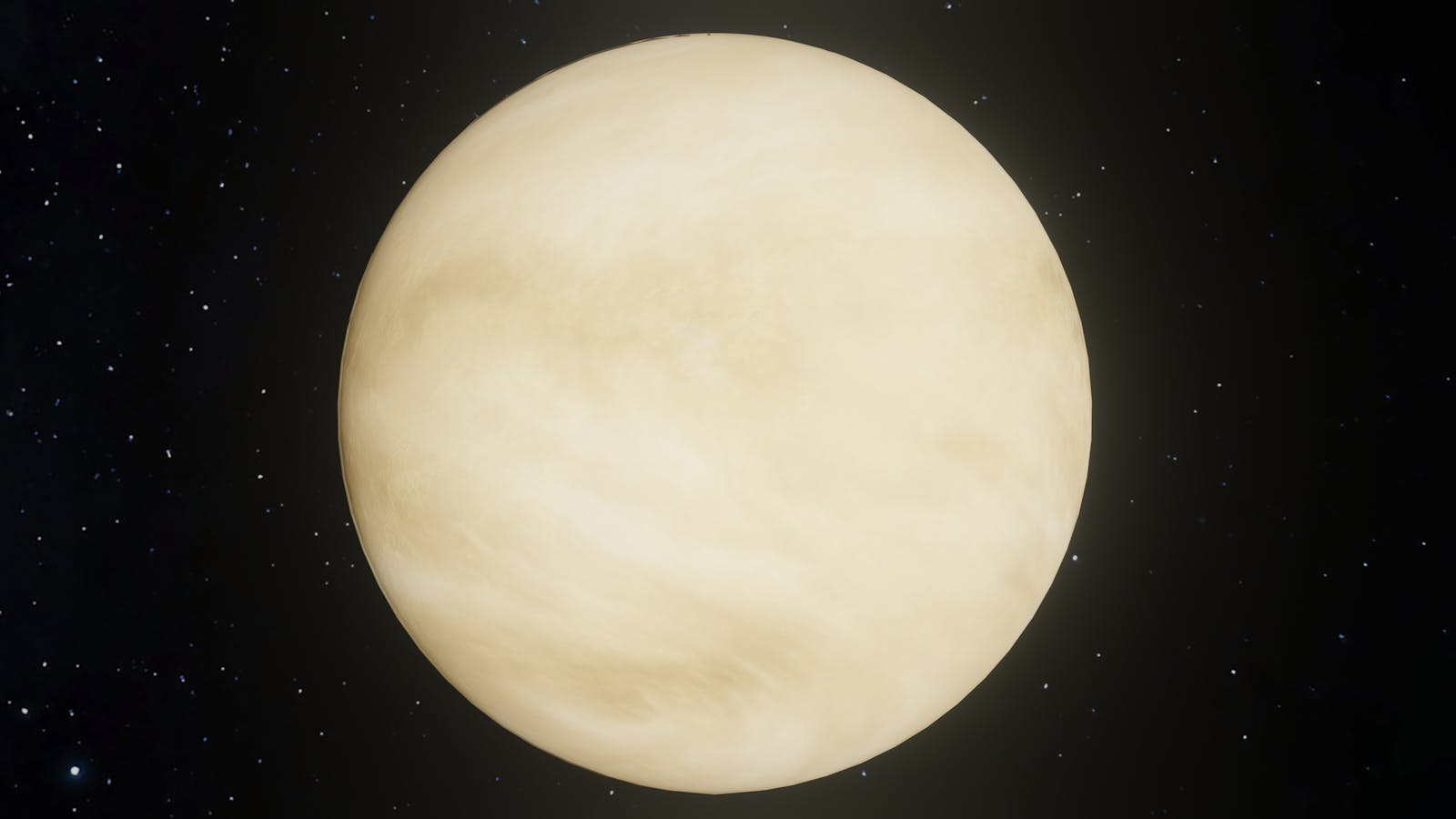
For the first time since the 1980s, multiple agencies are planning to go back. NASA’s DAVINCI mission, the Deep Atmosphere Venus Investigation of Noble Gases, Chemistry and Imaging, is planned for launch in the early 2030s. It will release a probe that descends through the atmosphere taking measurements and imagery before reaching the surface. Private missions backed by aerospace companies have been proposed for atmospheric probes. The European Space Agency’s EnVision orbiter is in development for the 2030s, and India’s Shukrayaan-1 is in development.
None of these missions are designed primarily to find old hardware. But DAVINCI’s descent imagery, if it survives and reaches the right area, could in principle catch a glimpse of a deformed Soviet titanium sphere on the rocks below. The landing ellipses overlap in places. Forassiepi told Scientific American he is hopeful that any future surface imaging will show artifacts in the same places they were left.
The longer scientific story
Venus has become a strange kind of obsession again. After being largely ignored for thirty years, the planet is the subject of multiple new programs and a sweeping Nature collection on solar system exploration that opens with the recognition that Venus, despite being nearly Earth’s twin in mass and bulk composition, took an evolutionary path so different that understanding why has become one of planetary science’s central questions. A planet that may once have had oceans, now drier than any desert and hotter than a pizza oven, sitting next door to a world that became habitable.
The Soviet probes are part of that scientific story, not just historical objects. The soil compositions measured, the panoramic horizons photographed, the temperature and pressure profiles transmitted on the way down. Much of what is known about the surface chemistry of Venus still comes from those brief windows of telemetry in the 1970s and early 1980s. Almost everything that has been learned about Venus’s ground has come from instruments that survived less than two hours.
One detail captures the strangeness. The first surface photograph ever taken on another planet other than Mars was returned in October 1975, the same month Bruce Springsteen released Born to Run, and the same year the first home VCRs went on sale. The camera that took the picture is still sitting on Venus. Its film, if it had been film, would have melted within minutes of arrival. Its electronics certainly did. But the metal housing, the lens, the structure, are almost certainly still there, slowly oxidising under a sky that has not changed appreciably in the fifty years since.
If DAVINCI’s descent probe ever gets close enough to image one, the picture will arrive on Earth as something like a family photograph found in an attic: the same object, fifty years older, sitting exactly where it has always sat. No human will ever walk over to it. No mission will ever bring it home. It will simply remain on that slope of basalt, under that yellow sky, for as long as Venus itself does.
