
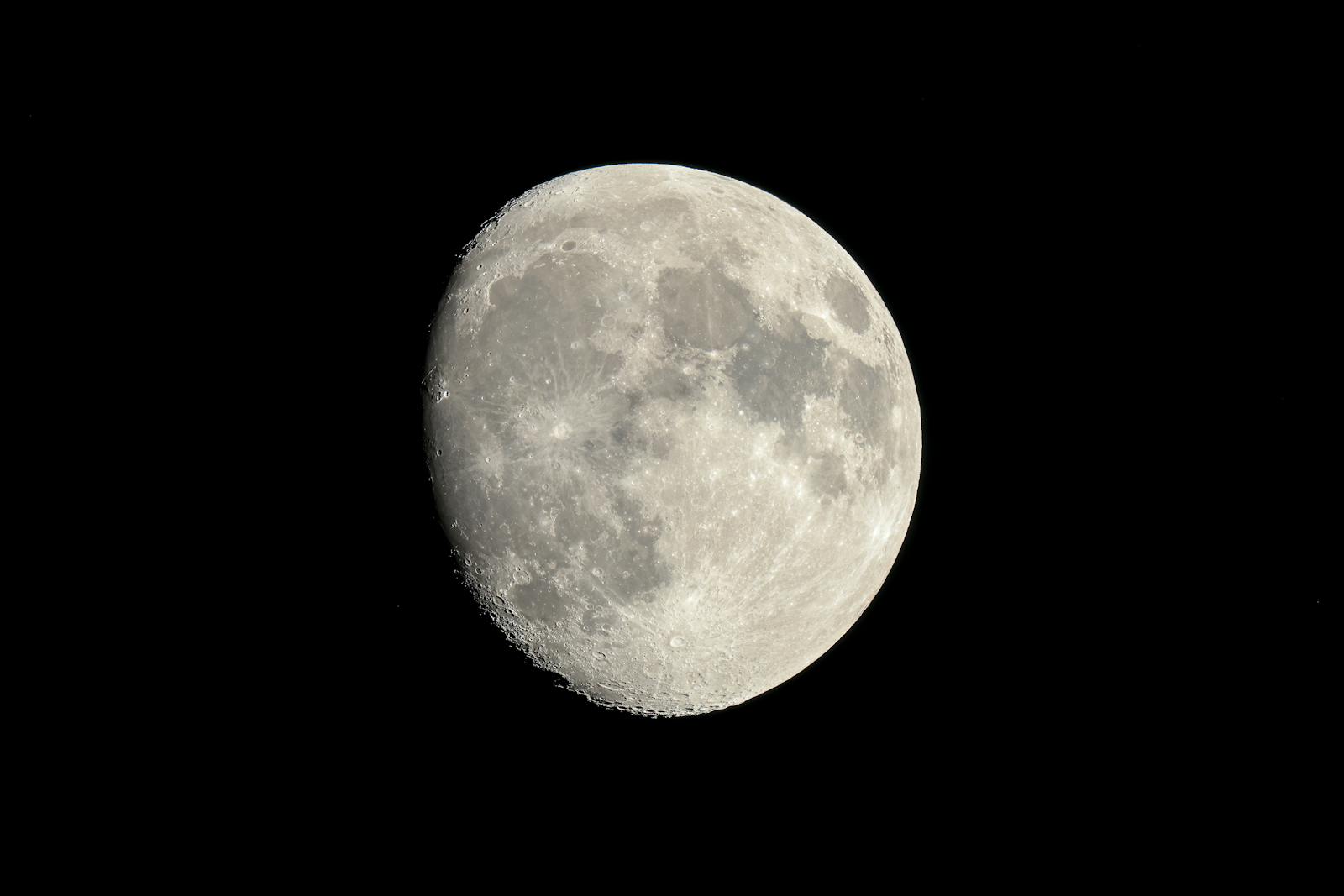
For nearly 40 years, Lunokhod 1 was not so much dead as misplaced.
The Soviet rover had stopped responding in 1971, after almost a year on the lunar surface. Its tracks were still there. Its body was still there. Its French-built laser reflector was still there too, bolted to the rover and facing whatever part of the sky it had last faced before the machine went silent.
The problem was that scientists no longer knew precisely where to aim.
That changed in 2010, when high-resolution images from NASA’s Lunar Reconnaissance Orbiter helped identify the rover’s location. Soon after, researchers using the Apache Point Observatory Lunar Laser-ranging Operation in New Mexico were able to acquire a signal from the long-lost reflector. In the abstract of their later paper, the team wrote that the reflector appeared to be in excellent condition and was returning a signal roughly four times stronger than the reflector on Lunokhod 2.
After decades of silence, the old Soviet rover had answered back.
A rover that outlived its mission by accident
Lunokhod 1 landed in the Sea of Rains on November 17, 1970, delivered by the Soviet Luna 17 mission. It was the first remote-controlled rover to operate on another world, a tub-like vehicle with eight wheels, a hinged solar lid, television cameras, scientific instruments, and a laser retroreflector built in France.
The rover was designed for a short mission, but it kept working for 11 lunar day-night cycles. According to the Lunar Reconnaissance Orbiter Camera team, Lunokhod 1 traveled about 10.5 kilometers before its journey formally ended on October 4, 1971, after contact attempts failed following the lunar night that began on September 14.
That was the end of the rover as a vehicle. It was not necessarily the end of the rover as a scientific target.
The reflector it carried was passive. It did not need power. Its job was simple: take a pulse of light fired from Earth and return it along nearly the same path. If a ground station could hit it, and if the reflector was still properly oriented, Lunokhod 1 could still be used for lunar laser ranging long after the rover itself had stopped moving.
The lost rover problem
Lunar laser ranging is simple in principle and brutal in practice. A station on Earth fires a laser pulse toward a reflector on the Moon, then measures how long it takes for the light to return. The round trip takes about 2.5 seconds. The measurement can reveal tiny changes in the Earth-Moon distance and the Moon’s motion.
But the target has to be known with extraordinary precision. Lunokhod 1 was not an Apollo reflector array placed by astronauts at a mapped landing site. It was a Soviet rover whose final position had become uncertain by kilometers. That is a vast uncertainty when the target is a small optical device sitting roughly 384,000 kilometers away.
For years, the reflector was treated as a long shot. It might have been tilted. It might not have been facing Earth. It might have been too weak to be useful even if someone found it.
The breakthrough came from orbit. The LRO camera team identified the rover and lander in lunar imagery, giving laser-ranging researchers coordinates precise enough to try again.

The signal came back bright
In April 2010, the APOLLO team at Apache Point Observatory used LRO-derived coordinates to send laser pulses toward Lunokhod 1. The team found the reflector and then used additional observations to refine its position.
The surprise was not simply that the reflector worked. It was how strong the return was.
ScienceDaily’s account of the UC San Diego announcement reported that the team found the signal to be “surprisingly bright,” with Tom Murphy of UC San Diego saying that the best signal from Lunokhod 2 in years of effort was 750 return photons, while Lunokhod 1 returned about 2,000 photons on the first try.
The peer-reviewed paper later published in Icarus was more measured, but the finding was still striking: Lunokhod 1’s reflector appeared to be in excellent condition and delivered a signal roughly four times stronger than the reflector on Lunokhod 2.
That does not mean the rover was untouched by the lunar environment. It means the reflector, in its final parked position, remained unusually useful.
Why the old reflector mattered
Lunokhod 1 added more than nostalgia to lunar science. Its location made it valuable.
The APOLLO team noted that Lunokhod 1 sits closer to the Moon’s limb than the other reflectors. That geometry gives scientists a better handle on the Moon’s subtle rocking motions, known as librations. Those motions help refine models of the Moon’s interior, including questions about its core.
NASA describes lunar laser ranging as one of the longest-running scientific experiments from the Apollo era. The Apollo 11, 14, and 15 crews left retroreflector arrays on the surface, and the Soviet Lunokhod 1 and 2 rovers carried additional reflectors. Together, those reflectors allow scientists to track the Earth-Moon distance with extreme precision.
One of the best-known results is that the Moon is slowly drifting away from Earth at about 3.8 centimeters per year, roughly the rate at which fingernails grow. NASA also notes that long-term laser-ranging measurements have helped reveal that the Moon has a fluid core.
So when Lunokhod 1 was recovered as a working target, it was not just a historical curiosity. It improved the geometry of a live experiment.
The dust question
The lunar surface is not weathered by wind or rain, but it is not gentle. Micrometeorite impacts can loft dust. Temperature swings can stress materials. Optical surfaces left on the Moon for decades can return less light than expected.
NASA has reported that older lunar reflectors are returning weaker signals, and that some experts suspect dust kicked up by micrometeorite impacts may be part of the reason. The question is not fully settled. NASA’s 2020 discussion of laser-ranging work with the Lunar Reconnaissance Orbiter noted that researchers were still trying to determine whether dust, heat, or other factors were responsible for the decline.
That makes Lunokhod 1 especially interesting. A reflector that had been lost for decades returned a strong signal when scientists finally aimed accurately enough. Its performance did not erase the dust problem, but it gave researchers another data point in a lunar experiment that depends on aging hardware.
The rover is still there
Lunokhod 1 has not moved since 1971. There is no wind to erase its tracks, no rain to soften the trail, no biology to break down the metal and glass. The Moon is a harsh place, but it is also a record-keeping surface.
The rover’s tracks remain visible in LRO images. So do the traces of Apollo, other landers, and other machines left behind on the surface. Human and robotic exploration has made the Moon a kind of archive, one where a machine can be lost for decades and then found again by orbital photography.
That is part of what makes the Lunokhod 1 story so strange. The rover was never gone. It was waiting inside the resolution limit of older maps.
The Green Bank coda
The same basic drama, Earth reaching across lunar distance and waiting for a return, is still unfolding in new forms.
In May 2026, the National Radio Astronomy Observatory reported that the NSF Green Bank Telescope had supported NASA’s Artemis II mission by tracking the crewed Orion spacecraft during its journey around the Moon. The observatory said the telescope conducted five observations over five days while the spacecraft was more than 200,000 miles from Earth.
The observatory also reported that Green Bank tracked the spacecraft’s motion within 0.2 millimeters per second of NASA’s projected value. In one image, the data represented Orion while it was more than 213,000 miles from Earth. Will Armentrout, an NSF Green Bank Observatory scientist, described the moment plainly: “There are four people in those pixels.”
The instruments have changed. The targets have changed. But the underlying act is still recognizable: send a signal into the distance, measure what comes back, and use the return to learn something that could not be seen directly.
Lunokhod 1 is still sitting on the Moon, silent as a rover and useful as a mirror. Its wheels will never turn again. Its cameras will never wake. But when the right observatory points at the right patch of Mare Imbrium, photons can still leave Earth, cross the Earth-Moon distance, strike a reflector built for a Soviet machine in 1970, and come home.
Sources and verification
NASA’s Scientific Visualization Studio documents the LRO identification and successful laser return. The APOLLO team’s paper on laser ranging to Lunokhod 1 reports that the reflector returned a signal roughly four times stronger than its Lunokhod 2 counterpart.
Editor’s note: Sources were added on September 14, 2026, to support the rediscovery, ranging result, and comparative signal strength.
