
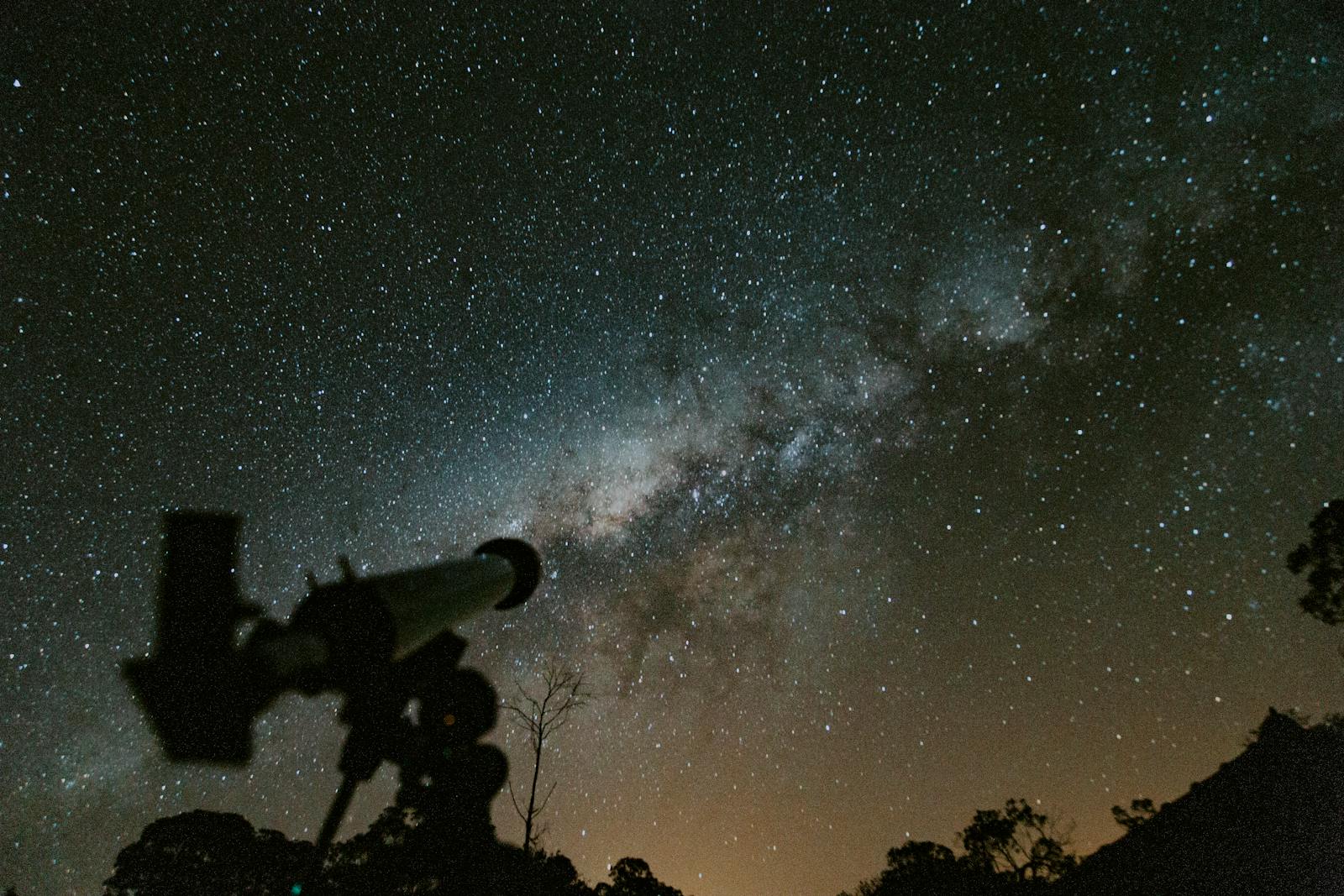
The James Webb Space Telescope sits roughly 1 million miles from Earth at a gravitational sweet spot called Lagrange point 2, a place where the pull of the Sun and the pull of Earth almost cancel out. Almost. Not quite. The telescope has to nudge itself back into position on a regular schedule using small thruster burns, and when its propellant runs out, it will drift away from that perch and keep drifting, with no spacecraft yet designed that could catch it.
Every image Webb has taken so far, including the one that resolved the surface of a rocky planet 48.5 light-years away, is being captured by an instrument operating on borrowed time at a location humans have not figured out how to revisit.
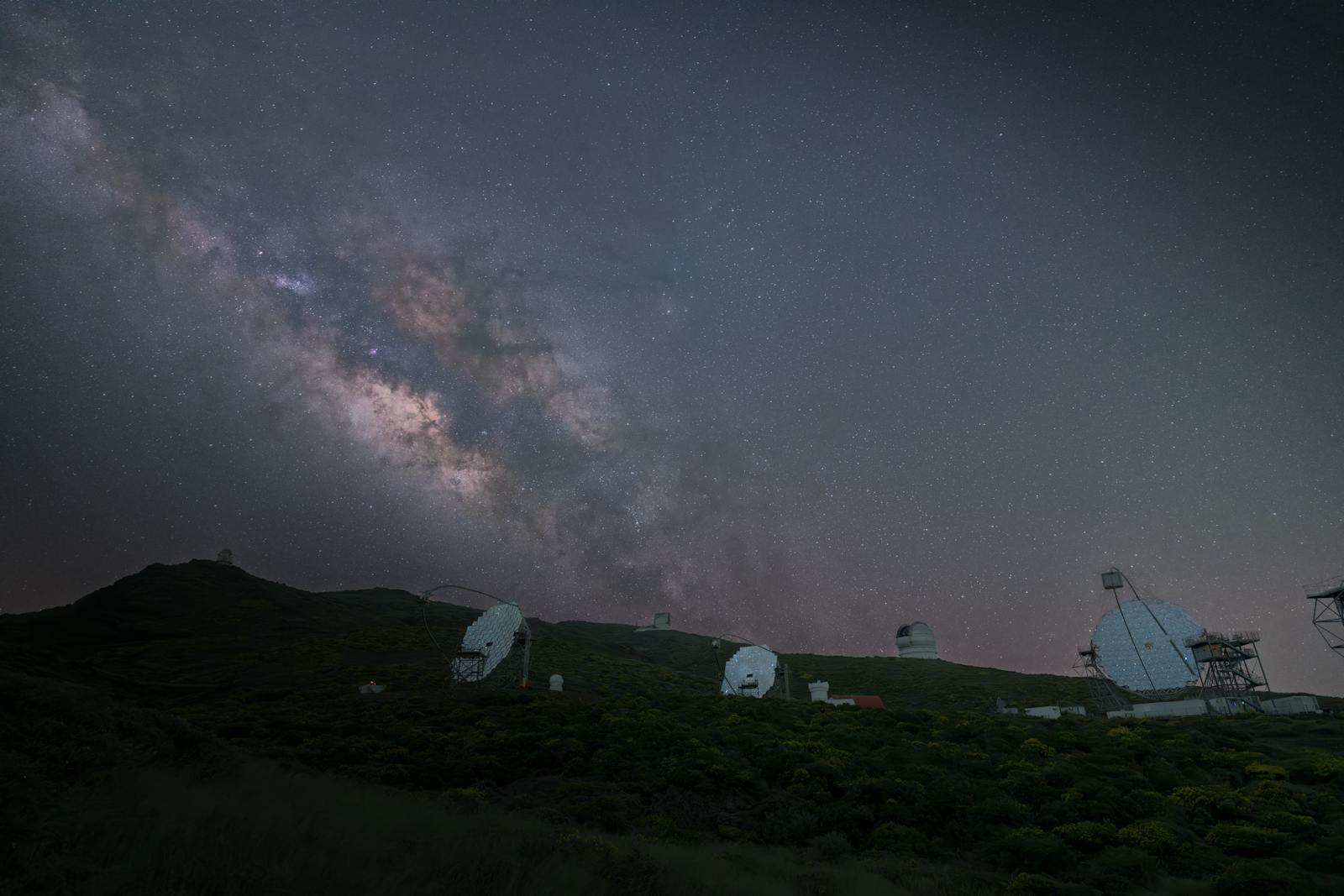
The point in space that isn’t quite a point
L2 is not a thing. It is a mathematical balance. In the late 18th century, the Italian-French mathematician Joseph-Louis Lagrange, building on earlier work by Leonhard Euler, completed the calculation that identified five places in any two-body gravitational system where a third, smaller object can sit in a kind of equilibrium. For the Sun and Earth, three of those points sit on a straight line through the two bodies. L2 is the one tucked into Earth’s shadow, about four times the distance from Earth to the Moon.
It is not stable in the way a marble at the bottom of a bowl is stable. It is stable in the way a marble balanced on top of an inverted bowl is stable. Leave it alone and it rolls off.
Webb does not actually sit at L2. It traces a wide, looping halo orbit around the point, a path that keeps it out of Earth’s full shadow so its solar panels can still see the Sun. The orbit is large enough that Webb sometimes swings hundreds of thousands of miles away from the mathematical point itself.
Why this particular spot, and no other
Webb is an infrared telescope. Heat is infrared. That is the engineering problem the entire mission was built around.
If Webb sat in low Earth orbit like Hubble, it would be bathed in heat from the Earth, the Moon, and the Sun on every pass. Its own infrared signal would drown in the noise. At L2, the Sun, Earth, and Moon all sit in roughly the same direction from the telescope’s point of view. A single sunshield, the size of a tennis court and made of five layers of aluminised polymer, can block all three at once. The cold side of that shield drops to extremely low temperatures. The instruments behind it can finally hear what they were built to hear.
NASA planetary scientist Stefanie Milam explained to Popular Science that Earth and Moon heat would interfere with Webb’s ability to detect faint signals from distant galaxies and stars.
L2 also keeps Webb away from the cloud of debris that orbits Earth and out of the path of most active spacecraft. It is, in nearly every respect except one, the right place.
The one respect in which it isn’t
Hubble orbits at a low Earth altitude. When its mirror turned out to be ground to the wrong shape, NASA sent astronauts to fix it. They went back four more times after that to swap instruments, replace gyroscopes, and add new cameras. Hubble is older than most of the people who write about it and still working partly because crews could physically reach it.
Webb is roughly 1 million miles away. No crewed vehicle has ever travelled to L2. No uncrewed servicing spacecraft has either. The telescope was launched with a docking ring added late in design as a hedge, in case someone, someday, builds a robot capable of catching it and topping it up. That robot does not exist. The mission to fly it does not exist. The budget line for that mission does not exist.
Space Daily has written before about what it means to operate an instrument we have collectively agreed not to rescue. The docking ring is hope expressed as hardware.
Why the thrusters have to keep firing
The orbit around L2 is unstable. Anything not actively stationkeeping will drift. Sunlight itself pushes on Webb’s sunshield. That five-layer kite catches photons the way a sail catches wind, and the resulting force, tiny as it is, slowly shoves the telescope outward, away from the Sun, away from L2, toward deep space.
Milam explained to Popular Science that unlike Hubble, Webb cannot rely on Earth’s gravity to maintain its position.
So Webb fires its thrusters on a regular cadence, small burns lasting a few minutes, calculated by the flight dynamics team to push the telescope back toward the inside of its halo orbit. The burns are deliberately one sided. Engineers correct only inward, because correcting outward would mean firing thrusters through the sunshield, and exhaust gases hitting that delicate film would be catastrophic. The whole stationkeeping strategy is built around the geometry of a spacecraft that can only ever be nudged in one direction.
Each burn spends a sip of propellant. The tank does not refill.
The fuel margin that got better, then stopped getting better
When Webb launched on Christmas Day 2021 aboard an Ariane 5, the rocket placed it on a trajectory so accurate that the telescope barely had to use its own propellant during the month-long cruise to L2. Two large correction burns were planned for the outbound leg. They came in well under budget. NASA announced shortly after arrival at L2 that the saved propellant would extend the mission’s operational lifetime well beyond the original ten-year minimum.
The agency’s public estimates moved upward, toward twenty years and beyond. The exact end date depends on how much stationkeeping the spacecraft actually needs, which depends on solar activity, on micrometeoroid hits, and on operational choices yet to be made.
What it is doing with the time it has
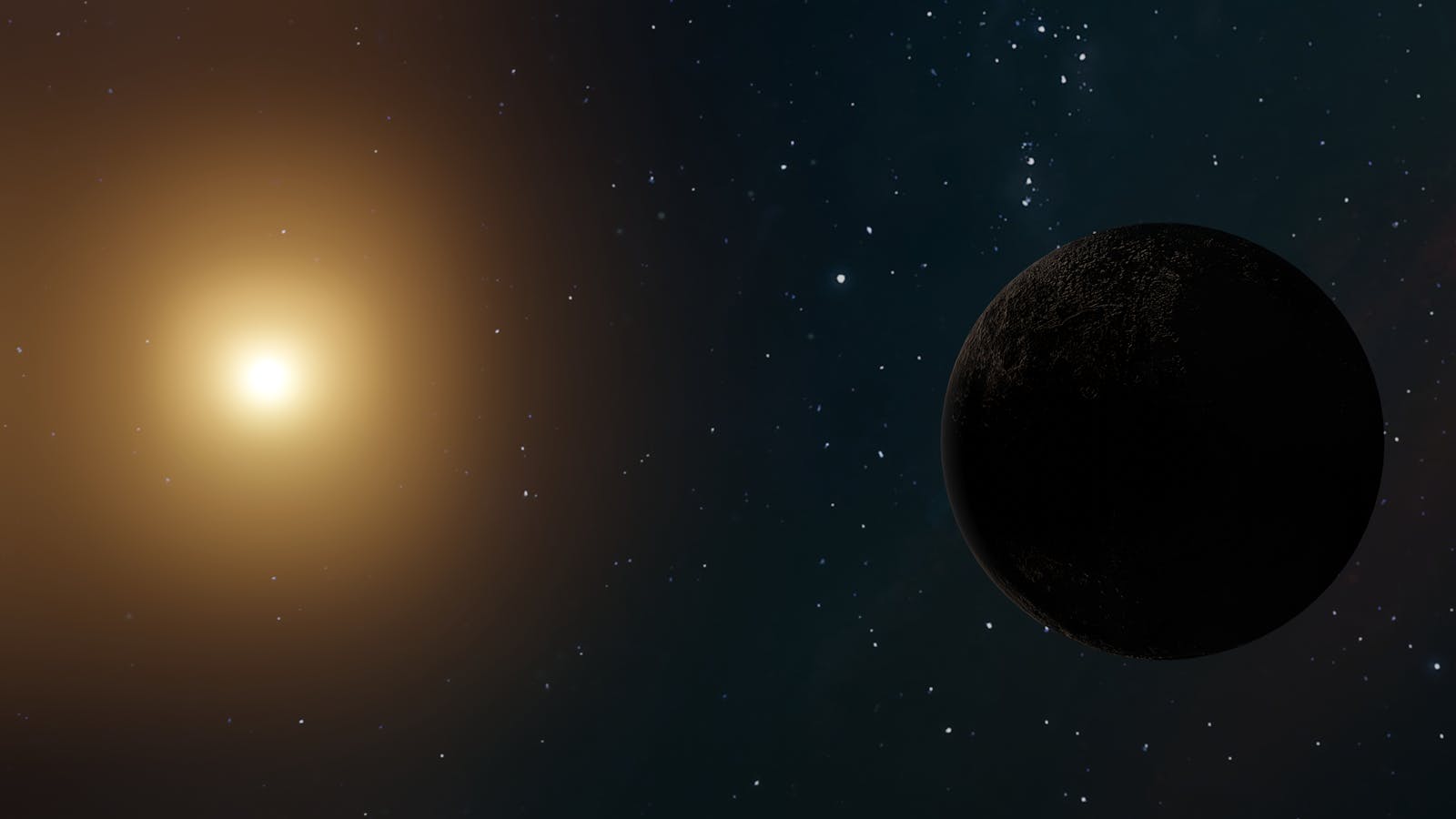
A team led by Sebastian Zieba and Laura Kreidberg of the Max Planck Institute for Astronomy published results describing the surface of LHS 3844 b, a rocky planet about 30 percent larger than Earth, orbiting a red dwarf 48.5 light-years away. The planet is tidally locked. Its dayside is scorching hot.
Using Webb’s Mid Infrared Instrument, the team analyzed the planet’s thermal glow and compared the resulting spectrum to libraries of minerals catalogued from Earth, the Moon, and Mars. They concluded that LHS 3844 b has no atmosphere and no Earth-like silicate crust. The surface looks like basalt, or like a long-weathered regolith resembling Mercury. According to The Debrief’s coverage, Kreidberg described the planet as a dark, hot, barren rock with no atmosphere.
This is what the propellant is buying. The ability to read the chemistry of a rock 48.5 light-years away by measuring how it glows in colours the human eye cannot see. The instrument doing the reading is a million miles from any human hand.
The reason no rescue mission exists yet
Refuelling a spacecraft at L2 is not science fiction. The technology exists in pieces.
What does not exist is a vehicle rated for the journey to L2 with the propellant, autonomy, and rendezvous hardware to find Webb, match its halo orbit, dock with the ring on its underside, and transfer hydrazine without damaging the sunshield. Designing it would take years. Building it would take more. Funding it would require a decision NASA has not made and Congress has not authorised, all while the science telescope keeps producing data that nobody wants to interrupt by triggering a debate about its mortality.
The agency’s position, in effect, is that the telescope will work for as long as it works.
The Cassini precedent, and the one Webb cannot follow
When a spacecraft runs out of fuel, mission planners have to decide what happens next. The Cassini probe was deliberately flown into Saturn in 2017 because engineers refused to let it drift uncontrolled near Enceladus, a moon with a subsurface ocean that might harbour life. The final orbits were a controlled burial.
Webb has no such option. L2 is not orbiting anything except, loosely, the Sun. When the propellant runs out, sunlight pressure will keep pushing the sunshield, and Webb will slowly migrate out of the halo orbit and into a heliocentric trajectory of its own. It will become, in effect, another small body orbiting the Sun, a 6.5-tonne aluminium and beryllium artefact tumbling through interplanetary space, instruments cold and dark.
It will not crash into anything. It will not return. It will simply become a very expensive, very precise piece of debris.
The science that has to happen before then
The mission has already rewritten what astronomers thought they knew about the early universe. In a recent piece, this site looked at Webb’s detection of galaxies that appear to have formed within 280 million years of the Big Bang, some containing heavier elements that should not have had time to assemble. One peer-reviewed paper has proposed, in response, that the universe might be roughly 26.7 billion years old, nearly twice the standard estimate.
Whatever the resolution of that argument, the data driving it came from an instrument firing thrusters every few weeks to keep itself from drifting off the spot where it can hear the faintest light in the sky. Each correction is a small acceptance: that the telescope cannot stay forever, that nothing has been built to save it, that the window for these particular photographs is finite and counting down.
What ending looks like, in propellant units
Webb’s lifetime is no longer measured in years exactly. It is measured in delta-v, the change in velocity its remaining hydrazine can deliver. Each stationkeeping burn subtracts a small amount. Each unplanned event, a micrometeoroid strike that requires a slew, a software fault that demands a re-pointing, takes more.
The mission team publishes propellant estimates periodically. The number keeps drifting downward, in tiny increments, in the same direction the telescope itself drifts when nobody is firing the thrusters. The two clocks run together. One tracks how much fuel is left. The other tracks how long the telescope will keep being where it needs to be to do what it was built to do.
When the first clock hits zero, the second one runs out a few weeks later. The light from LHS 3844 b will still be arriving. There will just be no telescope at L2 to catch it.
