

Roughly 400 kilometres above Earth, the International Space Station is flying through a kind of invisible chemical weather.
The station is not moving through empty space. It is moving through the thin upper atmosphere, where sunlight breaks oxygen molecules apart into single oxygen atoms. Those atoms are reactive, fast-moving, and hard on the materials used outside spacecraft.
Atomic oxygen does not chew through the ISS like acid through paper. The process is slower, subtler, and more engineering-specific than that. But over years in low Earth orbit, it can erode polymers, dull coatings, change optical surfaces, and force spacecraft designers to think carefully about every exposed blanket, paint layer, seal, film, and composite panel.
The most common particle in low Earth orbit is also one of the most corrosive
Down here, the oxygen humans breathe is mostly O2: two oxygen atoms bonded together. In low Earth orbit, ultraviolet radiation from the Sun can split those molecules into individual oxygen atoms.
Those single atoms are chemically reactive. A spacecraft in low Earth orbit is also moving at roughly eight kilometres per second, so the impact between a surface and the oncoming atomic oxygen environment is energetic enough to damage vulnerable materials over time.
NASA’s own materials work describes the problem plainly: polymers and other oxidizable materials on the exterior of spacecraft in low Earth orbit can be eroded by reaction with atomic oxygen. That is why engineers need flight data before trusting a material on the outside of a long-duration spacecraft.
How engineers learned to take the threat seriously
The danger became clearer as spacecraft began returning from low Earth orbit with exposed surfaces that had changed in ways engineers could measure.
Materials that looked stable on Earth could lose mass, roughen, darken, crack, or change their optical properties after time in orbit. The side of a spacecraft facing into its direction of travel, known as the ram direction, usually takes the harshest atomic oxygen exposure. Wake-facing surfaces are generally less exposed.
NASA’s Glenn Research Center has spent decades turning that orbital damage into engineering data. Its work with the Materials International Space Station Experiment, or MISSE, has used trays of test samples mounted outside the ISS to measure how polymers, composites, coatings, and other spacecraft materials behave in the real low Earth orbit environment.
That distinction matters. Ground chambers can simulate atomic oxygen, ultraviolet radiation, and thermal cycling, but space exposes materials to the combination in ways that are difficult to reproduce perfectly on Earth. MISSE gives engineers direct flight data from the same orbital environment in which many future spacecraft will have to survive.
What gets eaten first
Atomic oxygen is especially hard on carbon-based polymers. Kapton, a polyimide film widely used in spacecraft insulation, is one of the classic examples. It is valuable because it handles large temperature swings, but if it is left unprotected in low Earth orbit, atomic oxygen can erode it.
Other materials can suffer in different ways. Carbon composites can lose mass. Coatings can change reflectivity. Some optical surfaces can roughen. The issue is not that every spacecraft material falls apart quickly. It is that the wrong exposed material, in the wrong orbital direction, over the wrong mission duration, can fail faster than designers expect.
That is why exposed polymers are often protected with thin inorganic coatings. Silicon dioxide, aluminium oxide, and other hard protective layers can act as barriers, giving atomic oxygen something less vulnerable to attack before it reaches the underlying material.
The result is not one magic shield. It is a stack of small decisions: which polymer, which coating, which orientation, which expected mission life, and how much erosion can be tolerated before the surface no longer does its job.
The Japanese satellite that flew low on purpose
The lower a spacecraft flies, the denser the surrounding atmosphere becomes. That usually means more drag, more atomic oxygen exposure, and more stress on exposed surfaces.
Japan’s Super Low Altitude Test Satellite, also known as SLATS or TSUBAME, was built to explore that difficult region. The mission operated in very low Earth orbit and carried instruments designed to study atmospheric density, atomic oxygen, and material degradation.
Research based on SLATS describes the satellite as a testbed for understanding material behaviour in super-low orbit. That is important because very low altitude satellites can offer sharper Earth observation and other advantages, but only if engineers can solve the drag and surface-degradation problems that come with flying so close to the upper atmosphere.
Why this matters more now
Low Earth orbit is becoming more crowded. Communications constellations, Earth observation fleets, national security systems, and commercial spacecraft all depend on materials that can survive the environment around Earth for months or years.
Very low Earth orbit is especially tempting because satellites closer to Earth can collect sharper images and may need less power for some communications tasks. But the same closeness brings more atmospheric drag and more atomic oxygen.
That is why agencies such as DARPA have explored technologies for sustained operations in very low Earth orbit. Popular Science reported on DARPA’s Project Daedalus, a program aimed at pushing satellites into lower orbital regimes where drag, charging, space weather, and atomic oxygen erosion all become design problems.
The trade-off is simple to state and difficult to engineer: lower satellites can see Earth better, but Earth’s atmosphere reaches up to meet them.
What it means for the ISS
The ISS survives because it was designed, inspected, repaired, and upgraded with the orbital environment in mind.
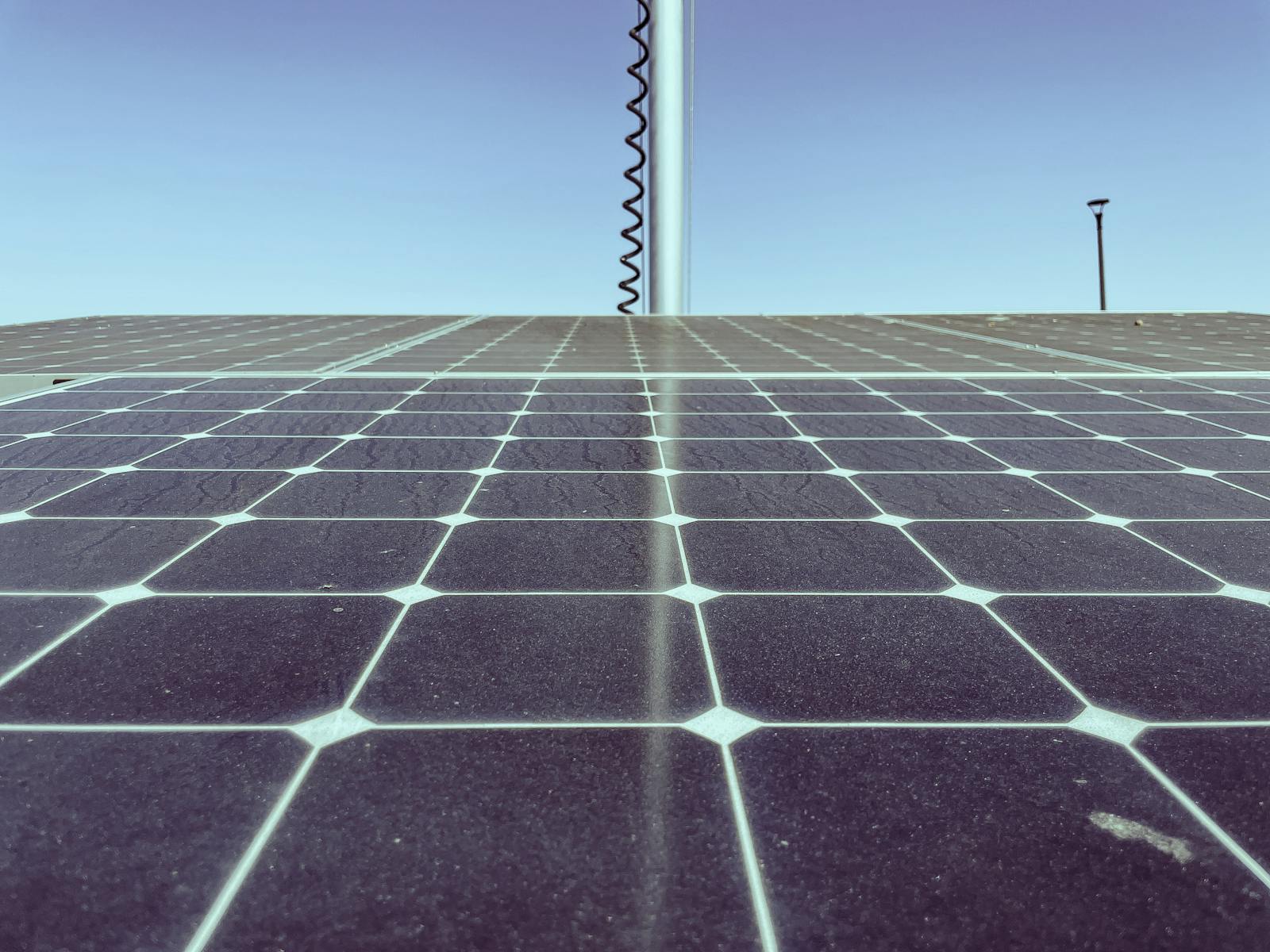
Its exterior is not one uniform skin. It is a complex mix of aluminium structure, thermal blankets, windows, solar-array materials, handrails, coatings, seals, antennas, sensors, and external experiment platforms. Each surface faces a different mix of atomic oxygen, ultraviolet radiation, thermal cycling, charged particles, micrometeoroids, and orbital debris.
Atomic oxygen is only one part of that environment, but it is a persistent one. It slowly changes exposed vulnerable materials. It can make polymers recede, change surface texture, and alter optical behaviour. For a long-duration platform like the ISS, those small changes matter because the station is not a short mission. It is a laboratory that has been operating in orbit for decades.
Mechanical damage is another problem. The station also faces impacts from tiny debris and micrometeoroids. According to Atomic-6 founder Trevor Smith, debris around three millimetres and smaller is largely untrackable and makes up the majority of debris in low Earth orbit.
Atomic oxygen does the slow chemical work. Microdebris does the fast mechanical work. The exterior of the station has to endure both.
Why the station endures anyway
The remarkable thing is not that atomic oxygen damages spacecraft materials. The remarkable thing is that engineers know enough about the damage to keep spacecraft working anyway.
NASA Glenn’s MISSE data helps mission planners estimate how long exposed materials will last. Protective coatings reduce erosion. Vulnerable components can be placed away from the worst orientations when possible. Hardware can be inspected during spacewalks. Some components can be replaced. Others are designed with enough margin to tolerate gradual degradation.
That is the deeper story behind the ISS exterior. The station is not being fully rebuilt every few months. It is being protected continuously by decisions made years before launch and by maintenance decisions made throughout its life in orbit.
Spacecraft durability is not a single invention. It is an accumulated discipline.
The strange usefulness of atomic oxygen
There is one strange twist: the same chemistry that damages spacecraft can be useful on Earth.
NASA Glenn researchers have also used controlled atomic oxygen exposure for art restoration. NASA’s Technical Reports Server describes the technique as a way to remove damage from defaced or fire-damaged artwork when conventional methods may not be suitable.
The reason is the same selectivity that makes atomic oxygen so important in orbit. It attacks organic carbon-based material. In a controlled chamber, that can allow conservators and engineers to remove soot or char from delicate surfaces while leaving some inorganic pigments less affected.
In orbit, atomic oxygen is a hazard. In a laboratory, under control, it can become a tool.
What happens when the station eventually comes down
The ISS is expected to be deorbited after the end of its operating life, with NASA planning a controlled retirement rather than leaving the station to decay unpredictably in orbit.
When that happens, the structure that re-enters the atmosphere will carry the record of decades in low Earth orbit. Some of its original materials will still be there. Some outer layers will have been replaced, repaired, protected, darkened, thinned, or chemically altered. The station will not be exactly the same machine it was when its first module launched.
That is what low Earth orbit does. It looks empty from the ground, but for spacecraft surfaces it is an active environment: sunlight, oxygen atoms, particles, debris, heat, cold, and time.
The atmosphere does not end cleanly at the edge of space. It fades upward. The ISS has spent its life inside that fading edge, surviving because engineers learned that even near-vacuum can still have teeth.
