
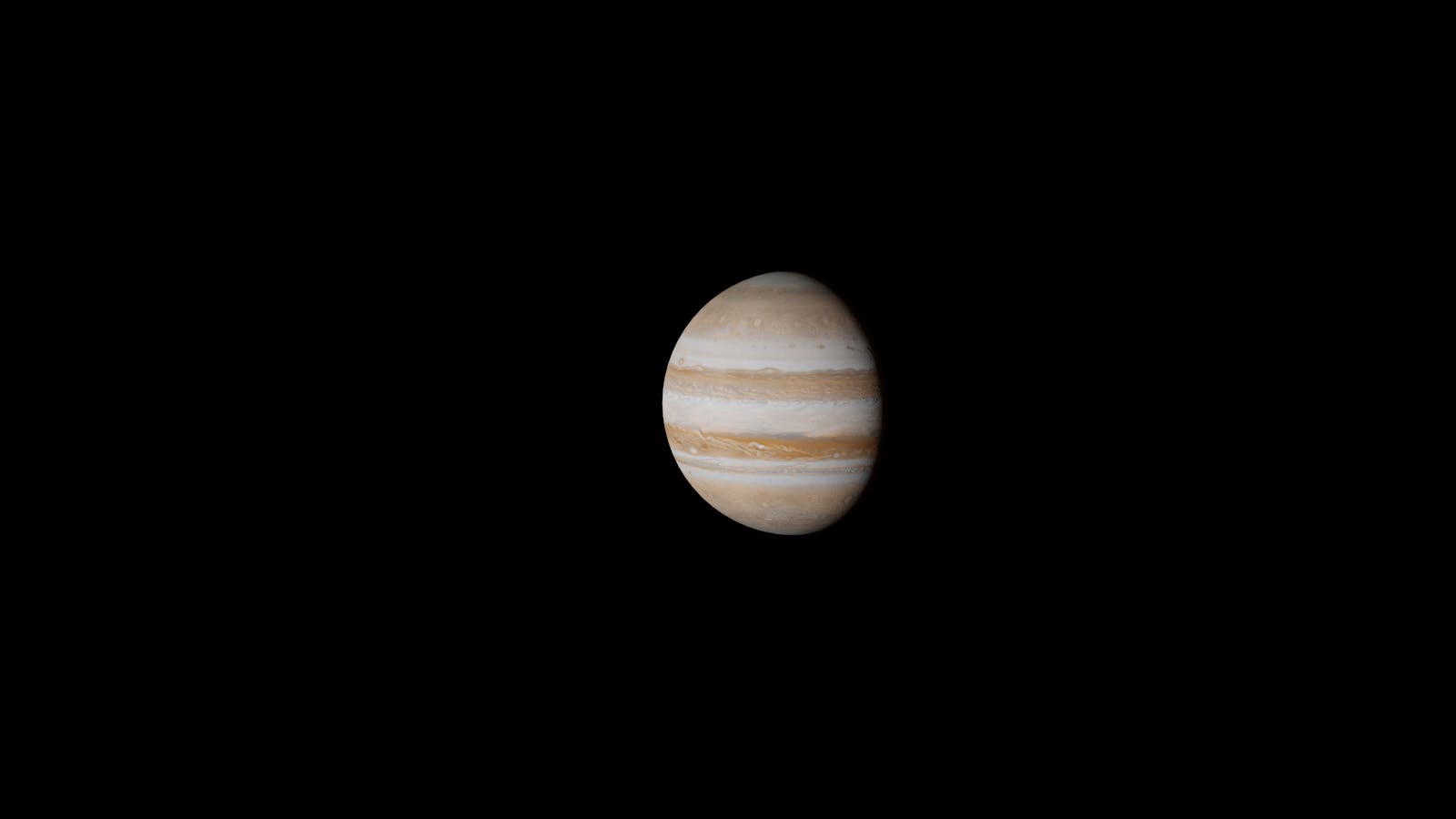
On September 21, 2003, a spacecraft about the size of a small bus hit Jupiter at 48.2 kilometres per second. Its name was Galileo. It was destroyed on purpose.
The reason was not failure. It was success. Galileo had spent years orbiting Jupiter and its moons, returning some of the strongest evidence that Europa may hide a salty ocean beneath its ice. Once that possibility became real, the spacecraft itself became a problem. A dead probe left drifting through the Jovian system could not be guaranteed to miss Europa forever.
So NASA chose the cleanest ending available. Galileo would not be abandoned. It would be aimed at Jupiter and erased.
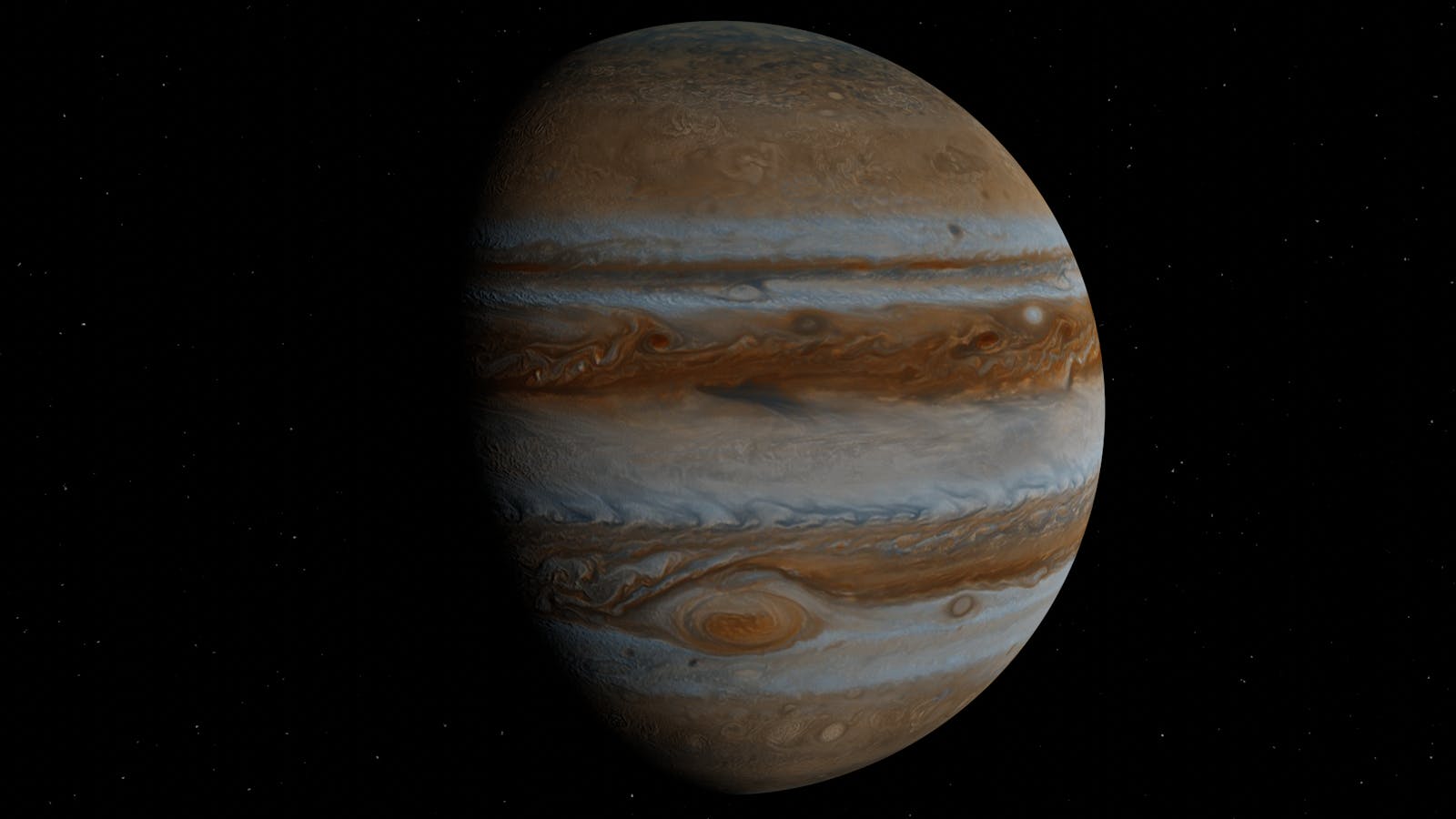
The probe that mapped the place it had to die to protect
NASA’s Galileo mission page lists the spacecraft as the first to orbit an outer planet, the first to deploy an entry probe into an outer planet’s atmosphere, and the first to make long-term observations inside a giant planet’s magnetosphere.
Galileo launched in the cargo bay of Space Shuttle Atlantis on October 18, 1989. It used gravity assists from Venus and Earth to reach Jupiter, where it entered orbit in December 1995. Its primary mission was later extended three times, giving it 35 encounters with Jupiter’s major moons, including 11 with Europa.
Those encounters changed Europa’s place in the human imagination. Before Galileo, Europa was one icy moon among many. After Galileo, it became one of the most compelling places in the solar system to ask whether life might exist somewhere beyond Earth.
What extreme radiation does to a spacecraft
Galileo’s route took it again and again through one of the harshest radiation environments any spacecraft had endured. Jupiter’s magnetic field traps charged particles that can interfere with electronics, damage instruments, and corrupt memory.
A historical NASA feature on Galileo’s mission noted that the spacecraft was designed to survive extreme environmental hardship and that, during its orbital mission, the average radiation dose absorbed by Galileo each minute was comparable to what an average person receives in a year on Earth.
That comparison is useful only as a scale marker. Spacecraft electronics and human tissue do not respond to radiation in the same way. Still, the operational problem was real. Galileo suffered memory glitches, tape-recorder trouble, and instrument degradation. Engineers kept it alive with workarounds, software changes, and careful sequencing from Earth.
Its high-gain antenna had never opened properly, forcing the mission to send data at a fraction of the rate originally planned. Its propellant was running down. By the end, Galileo was not a clean, healthy spacecraft waiting for retirement. It was a worn machine with a shrinking ability to control its own future.
Why a dying spacecraft becomes a biological hazard
The danger was not that Galileo was known to carry living microbes capable of surviving on Europa. The danger was uncertainty.
Galileo had not been built and sterilised as a Europa lander. It had been assembled on Earth, launched from Earth, and flown for years through space. Most terrestrial organisms would not survive those conditions, but planetary protection does not depend on wishful thinking. If Europa contains a subsurface ocean, even a small uncontrolled chance of delivering Earth biology there becomes scientifically unacceptable.
That is why the discovery mattered so much. NASA’s summary of Galileo’s results says the mission found evidence of subsurface liquid layers of saltwater on Europa, Ganymede, and Callisto. Europa in particular became the world Galileo had to avoid.
The broader policy framework comes from planetary protection: the idea that space exploration should avoid harmful biological contamination of worlds that may be scientifically important. COSPAR’s planetary protection policy is one of the key international reference points for that work.
The decision to crash
The plan was simple in outline and severe in meaning. NASA would use Galileo’s remaining controllability to send it into Jupiter before the spacecraft became unmanageable.
NASA states that the impact was long planned and necessary because Galileo’s onboard propellant was depleted. Without propellant, the spacecraft would no longer be able to point its antenna toward Earth or adjust its trajectory. That loss of control mattered because Galileo’s future path through the Jovian system could not be guaranteed to avoid Europa indefinitely.
The probability did not need to be high. For a moon that might have a habitable ocean, “probably fine” was not enough.
The same basic logic later shaped the end of Cassini at Saturn. When a mission reveals worlds that may be biologically interesting, the spacecraft can become one of the things those worlds need protection from.
The final hours
Galileo’s last act was not a graceful descent. It had no parachute, no heat shield for survival, and no scientific plan to sample Jupiter on the way down. Its job was to vanish.
NASA records Galileo’s entry point as about a quarter degree south of Jupiter’s equator. The spacecraft came in from roughly 22 degrees above the local horizon, moving at 48.2 kilometres per second, nearly 108,000 miles per hour.
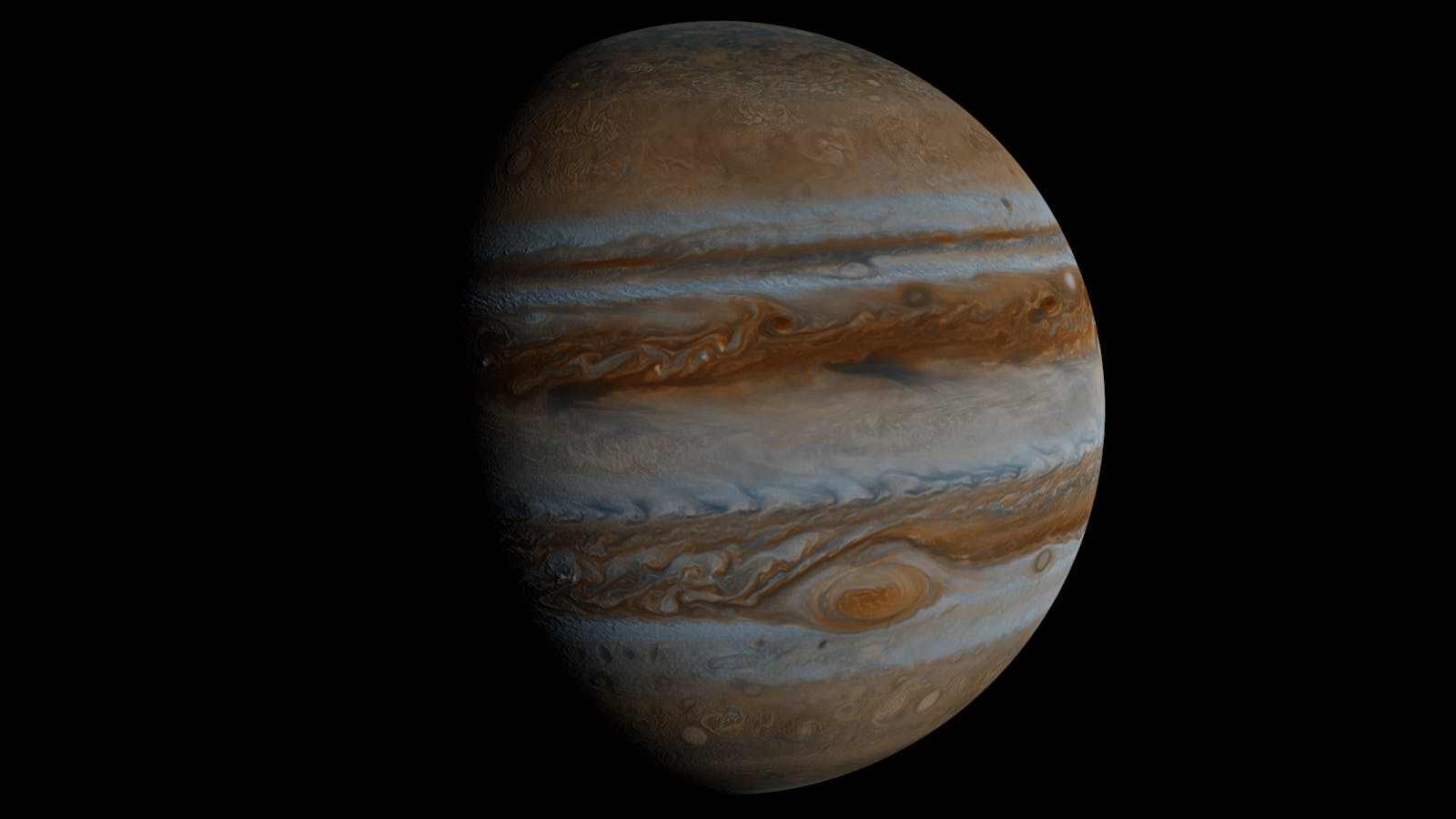
The final destruction came from atmospheric entry, not radiation. As Galileo hit the upper atmosphere, aerodynamic forces and heating would have overwhelmed the structure. What had survived launch, deep space, Jupiter’s radiation belts, and years of technical failures could not survive Jupiter itself.
The signal reached Earth after the usual light-time delay across the outer solar system. By the time controllers received the loss of signal, the spacecraft had already been gone for tens of minutes.
What the descent probe had already shown
Galileo’s terminal plunge should not be confused with the mission’s earlier atmospheric probe. In July 1995, five months before Jupiter orbit insertion, Galileo released a separate descent probe designed specifically to enter Jupiter’s atmosphere.
That probe slammed into the atmosphere at 47.6 kilometres per second, survived heating that NASA describes as twice as hot as the Sun’s surface, deployed a parachute, and transmitted data for 58 minutes. It measured pressure, temperature, winds, lightning, sunlight, heat flow, and atmospheric composition before high temperatures silenced it.
The orbiter’s 2003 plunge was different. It was not designed to survive. It was disposal by impact.
The discoveries that justified the destruction
Galileo’s scientific legacy is enormous even by flagship-mission standards. NASA credits the mission with evidence for subsurface liquid saltwater layers on Europa, Ganymede, and Callisto. It documented volcanic activity on Io, identified Ganymede as the first moon known to possess its own magnetic field, and observed Comet Shoemaker-Levy 9 striking Jupiter from a direct vantage point unavailable from Earth.
Those discoveries depended on a spacecraft that outlived its original mission and kept working in an environment that was punishing by design. Galileo’s failures did not erase the achievement. They made the achievement more improbable.
The spacecraft found the evidence that made Europa more precious. Then it had to be destroyed because of what it had found.
The precedent and what follows it
That logic now shadows every serious mission to the outer solar system. The more interesting an ocean world becomes, the more careful mission planners have to be about what touches it.
Europa Clipper, which launched in October 2024, is built around that caution. It will orbit Jupiter rather than Europa and make repeated close flybys of the moon. NASA says its goal is to determine whether there are places below Europa’s icy surface that could support life.
A 2025 paper in The Journal of the Astronautical Sciences describes Europa Clipper’s trajectory design as part of meeting planetary protection requirements and reducing the probability of spacecraft impact with the Jovian moons.
That is Galileo’s legacy in another form. The mission that taught scientists to care about Europa also helped define how cautiously later missions would approach it.
What it cost to learn what we learned
The strange arithmetic of Galileo’s death is that NASA spent years keeping the spacecraft alive, then deliberately destroyed it once it had done enough.
That was not waste. It was restraint. A machine built on Earth, powered by plutonium-238 radioisotope generators, and shaped by years of contamination uncertainty was sent into the one target that could absorb it without risking a future ocean-world investigation.
Somewhere inside Jupiter, the material that once made up Galileo has been crushed, heated, separated, and mixed into the planet. Its antennas, processors, shielding, fuel lines, and instruments are gone as working things.
What remains is the data: the Europa flybys, the magnetometer readings, the images of ice, the evidence for hidden saltwater, and the precedent that a spacecraft can be sacrificed to protect the discovery it made possible.
