
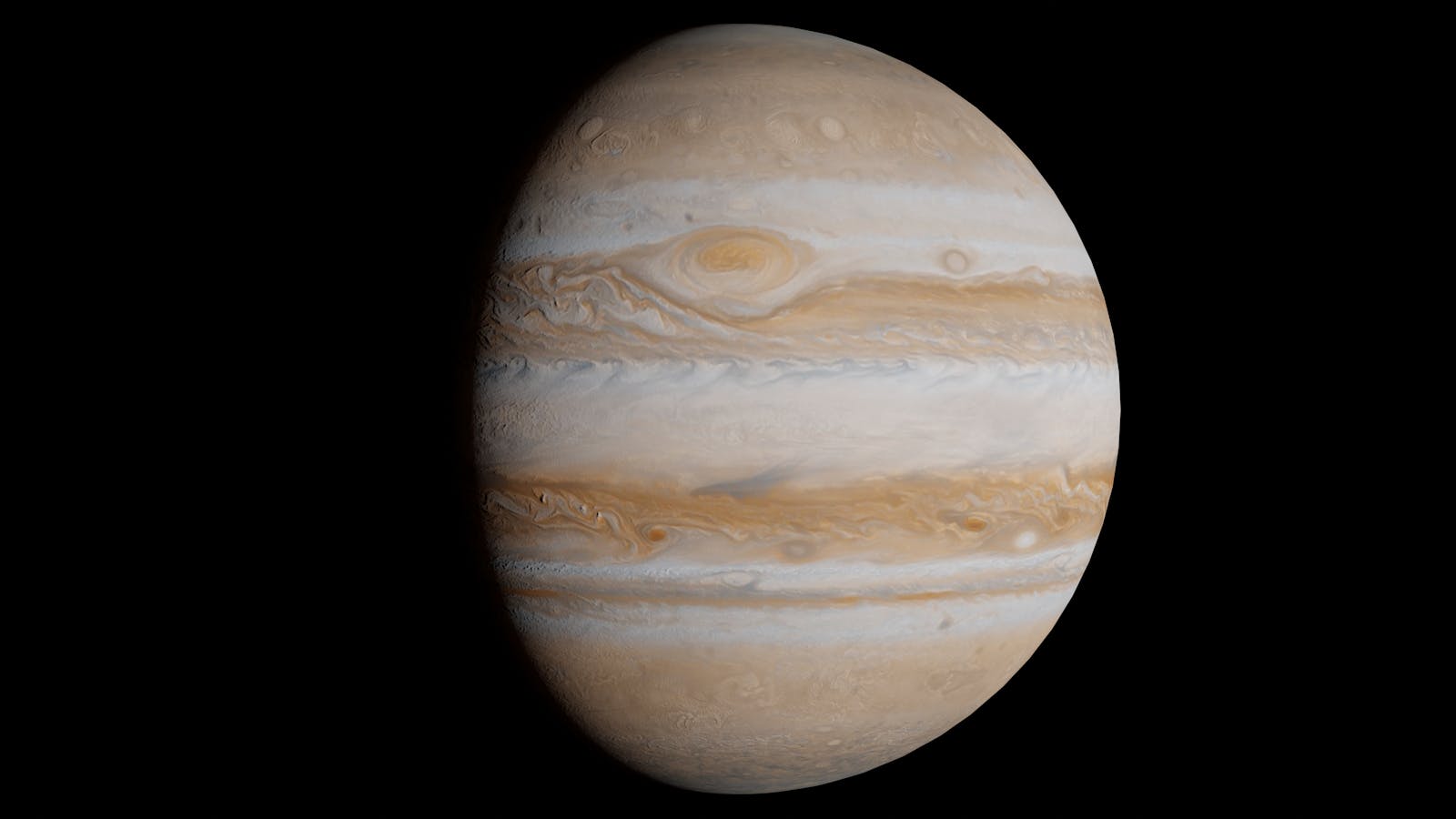
On September 21, 2003, NASA’s Galileo spacecraft hit Jupiter’s atmosphere at nearly 108,000 miles per hour. It was not an accident, and it was not a malfunction. After almost eight years orbiting Jupiter, flight controllers deliberately sent the spacecraft into the giant planet because the alternative had become harder to defend: leaving an aging, fuel-limited machine to drift through a system where one wrong future encounter could send it toward Europa.
That mattered because Galileo had changed Europa from a bright icy moon into one of the most scientifically sensitive places in the solar system. Its data strengthened the case that beneath Europa’s frozen crust there may be a global ocean of salty water. A spacecraft that had not been sterilized for contact with such a world could not simply be abandoned there.
So the mission ended with a controlled death. Engineers who had spent years keeping Galileo alive aimed it at Jupiter, not because the spacecraft had failed, but because it had succeeded.
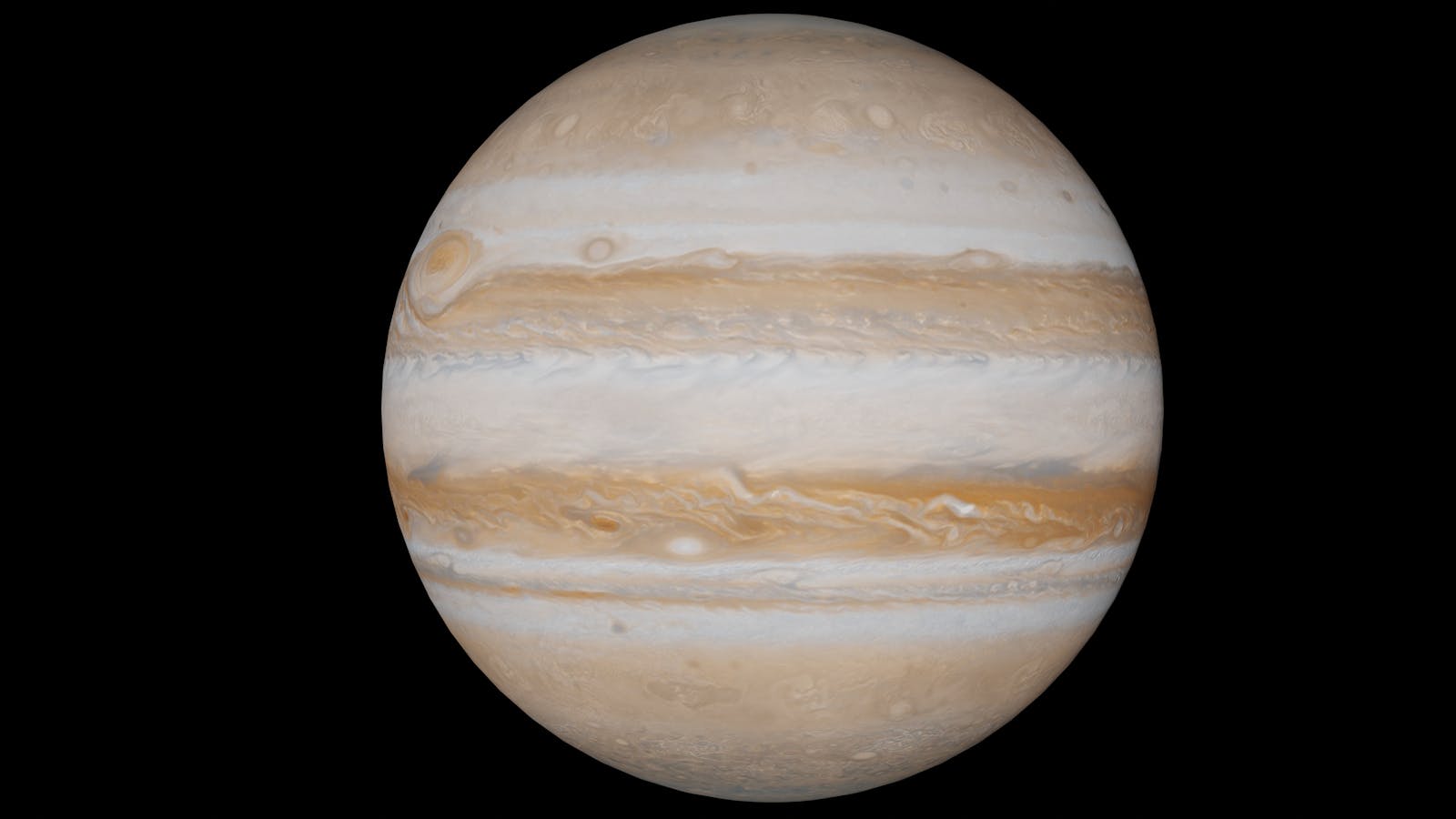
The spacecraft that outlived its own mission
Galileo launched from the cargo bay of Space Shuttle Atlantis on October 18, 1989, and entered orbit around Jupiter in December 1995. According to NASA’s Galileo mission page, it became the first spacecraft to orbit an outer planet, completed 34 orbits of Jupiter, and made close flybys of Io, Europa, Ganymede, Callisto, and Amalthea.
The primary mission was supposed to end in December 1997. NASA extended it three times.
Galileo kept working despite one of the most famous engineering setbacks in planetary exploration. Its high-gain antenna failed to deploy properly, forcing teams on Earth to rely on a slower low-gain system and rewrite the way data was compressed, stored, and returned. The result was not the mission originally imagined, but it was still a landmark one. The spacecraft returned enough data to transform Jupiter’s moons from distant objects into worlds with geology, magnetic signatures, thin atmospheres, and, in several cases, evidence of hidden liquid layers.
By 2002, however, the calculation had changed. Radiation damage was accumulating. Propellant was running low. Once Galileo could no longer point its antenna or adjust its trajectory, mission control could no longer guarantee where it would go.
What Europa had started to look like
Europa was the reason that mattered.
Before the spacecraft era, Europa was mostly a point of light. Voyager images had already hinted at a strange surface, with long cracks, dark bands, and relatively few large impact craters. Galileo brought the closer evidence. NASA’s Europa Clipper team explains that Galileo measured how Jupiter’s magnetic field was disrupted around Europa, a signature most strongly explained by an electrically conductive layer beneath the surface. Given Europa’s icy composition, the most likely explanation is a global ocean of salty water.
That possibility changed the moral and scientific status of the moon. Europa was no longer just another target in the outer solar system. It was a place where future missions might one day search for conditions suitable for life.
NASA now describes Europa as a world where strong evidence points to a saltwater ocean that may contain more than twice as much liquid water as all of Earth’s oceans combined. That does not mean life exists there. It does mean that contamination risk has to be taken seriously.
The doctrine that killed the spacecraft
Planetary protection is the name for that caution. It is not sentimental. It is procedural. The goal is to keep Earth organisms and organic material from compromising future searches for life, while also protecting Earth from potential hazards in returned samples.
COSPAR, the Committee on Space Research, describes planetary protection as a system designed to prevent harmful forward and backward contamination during solar system exploration. Its current policy notes that missions to Mars, Europa, and Enceladus have to follow stringent protection measures because these are places where the search for life or prebiotic chemistry could be compromised.
Galileo had not been built as a Europa-impact mission. It was assembled for a Jupiter orbiter mission under the assumptions and standards of its era. By the early 2000s, those assumptions had been overtaken by Galileo’s own discoveries.
That is why NASA chose impact with Jupiter. The agency’s account of Galileo’s end of mission says the spacecraft was put on a collision course with the planet to eliminate any chance of an unwanted impact with Europa. The concern was not simply that Galileo carried nuclear power. The broader issue was control. A dead spacecraft in the Jovian system could become a contamination risk if it eventually struck an ocean-bearing moon.
Falling into the biggest planet
The final trajectory was set up months in advance. Galileo’s orbit was adjusted so that its next close approach would carry it into Jupiter instead of past it. On impact day, the spacecraft entered the atmosphere about a quarter degree south of Jupiter’s equator.
NASA lists Galileo’s impact speed as 48.2 kilometers per second, nearly 108,000 miles per hour. At that speed, the spacecraft would have crossed the distance from Los Angeles to New York in 82 seconds.
There was a delay in knowing it had happened. Radio signals from Jupiter took about 52 minutes to reach Earth that day. By the time the signal vanished at Earth, Galileo was already gone.
Its own atmospheric probe had shown what kind of world waited below. Released from the orbiter in 1995, the probe entered Jupiter’s atmosphere at 106,000 miles per hour, survived intense heating, deployed its parachute, and transmitted data for 58 minutes before high temperatures silenced it. The orbiter, falling without a heat shield, had no such chance.
The plutonium question
Galileo was powered by two radioisotope thermoelectric generators, or RTGs. These systems used heat from the natural decay of plutonium-238 to generate electricity, which made them valuable for a mission so far from the Sun.
That fact is part of the story, but it should not be overstated. RTGs are not nuclear reactors, and the documented planetary-protection rationale for Galileo’s destruction was not that its plutonium would somehow poison Europa’s ocean. The problem was an uncontrolled spacecraft, carrying terrestrial material and hardware that had not been prepared for contact with a potentially habitable world.
Los Alamos National Laboratory notes that plutonium-238 heat sources powered Galileo, Cassini, and other NASA missions. Modern NASA radioisotope systems use ceramic plutonium dioxide fuel forms, iridium cladding, graphite components, and aeroshell structures designed to reduce release in accident conditions. Galileo’s generators belonged to that larger family of rugged deep-space power systems.
Jupiter, by contrast, was an acceptable disposal site. The planet is enormous, hostile, and not treated like Europa for planetary-protection purposes. Sending Galileo into Jupiter removed the spacecraft from a system of moons where its long-term trajectory could no longer be guaranteed.
Why the same logic still matters for Juno
Galileo’s ending set a precedent for thinking about Jupiter missions before they die, not after. NASA’s Juno spacecraft was designed with planetary protection in mind as well, because any long-lived spacecraft in the Jovian system eventually becomes a navigation problem.
JPL’s current Juno mission page says Juno entered orbit around Jupiter on July 4, 2016, completed its prime mission, and moved into an extended mission that included the broader Jovian system. The page lists Juno as current and says its investigation continues through September 2025 or until end of life.
The important continuity is not that every mission ends in the same way on the same schedule. It is that outer-planet missions now have to account for what happens when control ends. At Jupiter, that means thinking not only about the planet, but about Europa, Ganymede, Callisto, and the possibility that some icy moons may preserve environments worth protecting.
The engineering paradox
There is something specific about building a machine for years and then steering it into oblivion because it did too good a job.
The engineers who designed Galileo’s instruments, propulsion system, software, tape recorder, antenna workarounds, and power systems were always building for a finite life. Every spacecraft is temporary. Every mission has a budget, a fuel limit, a radiation limit, and a last command somewhere in its future.
But Galileo’s ending was unusually sharp. Its destruction was not a failure mode. It was the final act of mission design.
Most spacecraft die quietly. Batteries fade. Fuel runs out. Contact is lost. Some drift around the Sun indefinitely, no longer useful but not immediately dangerous. Galileo did not get that ending. It was deliberately aimed at the planet it had spent years studying, because the science it returned made its continued uncontrolled existence unacceptable.
The mission’s success killed the mission.
What the moons of Jupiter still are
Galileo’s data helped establish that Europa, Ganymede, and Callisto likely contain subsurface liquid layers. NASA’s summary of the mission lists evidence for liquid-saltwater layers on all three worlds among Galileo’s top science results.
Those results now shape the next generation of missions. NASA’s Europa Clipper launched on October 14, 2024, and is traveling toward Jupiter for a planned arrival in April 2030. NASA says the spacecraft will orbit Jupiter and conduct 49 close flybys of Europa to study whether there are places below the moon’s surface that could support life.
The European Space Agency’s JUICE mission is also en route to Jupiter. NASA’s Europa overview notes that JUICE is scheduled to arrive in 2031 and will investigate Europa’s sister moon Ganymede in detail. The era Galileo opened is still unfolding.
The pattern beyond Jupiter
The same logic has reached beyond the Jovian system. Cassini was deliberately sent into Saturn in 2017 to avoid future contamination of Enceladus and Titan, two moons of astrobiological interest. Mars missions operate under different but related rules, because Mars is both a scientific target and the most likely future destination for human surface activity.
COSPAR’s planetary-protection policy keeps evolving because the target list keeps changing. The more ocean worlds scientists identify, the more often mission planners face the Galileo problem: how to explore a place without making future life-detection science harder to trust.
This is the hidden cost of discovery. A spacecraft can reveal that a world is more interesting than expected. Once it does, the rules around that world change.
What the last signal meant
The final Galileo signal was not just the end of a spacecraft. It was proof that the spacecraft was exactly where mission planners needed it to be.
NASA says Galileo had traveled about 2.8 billion miles from launch to final impact. It had operated for 14 years, survived a broken antenna, endured Jupiter’s radiation belts, released a probe into the planet’s atmosphere, and returned the evidence that helped make Europa one of the most compelling destinations in planetary science.
Then it disappeared into Jupiter.
Somewhere below the cloud tops, the remains of Galileo were crushed, heated, dispersed, and lost inside the largest planet in the solar system. Europa, a few hundred thousand miles away, remained untouched. That was the point. The spacecraft had done its work. Its last responsibility was to get out of the way of what it had made possible.
