
The deepest hole humans have ever drilled into the Earth bottoms out at 12,262 metres, roughly 7.6 miles, in the Murmansk region of northern Russia. The shaft is astonishingly narrow for what it represents, only about 23 centimetres wide in the main borehole, and it took Soviet engineers more than two decades to reach that depth. Drilling stopped before the project hit its 15-kilometre target, and the site was later sealed, leaving a rusting cap on the Kola Peninsula over the deepest artificial point on the planet.
No one has drilled deeper vertically since. Longer oil and gas wells have been drilled by measured distance, but those records include long horizontal or angled sections. For true vertical depth into the crust, Kola still stands alone.
A race that turned downward
The Kola Superdeep Borehole came out of a Cold War moment when technological prestige was measured in frontiers. The United States had reached the Moon in 1969. The Soviet Union looked for another boundary where it could still make a claim, and one obvious direction was not up but down.
The United States had tried a version of that quest first. Project Mohole was meant to drill through the thin oceanic crust and recover a sample from the mantle. It reached thousands of metres below the seafloor before Congress cut the funding. Soviet planners then set a more dramatic target on land: 15 kilometres into the crust.
Drilling on the Kola Peninsula began in 1970. The site sat near the Norwegian border, on ancient crystalline rock that offered a chance to read a long geological record as the drill moved downward.
Nine years to break the record
The previous depth record belonged to the Bertha Rogers well in Oklahoma. Soviet drillers passed it in 1979 and kept going. By the early 1980s, the bit was below 12,000 metres, in conditions that were far more hostile than the project’s early models had suggested.
The borehole was not a single clean shaft all the way down. It became a branching system, because equipment failures forced engineers to restart from higher points and steer around stuck or broken sections. The deepest branch reached 12,262 metres in 1989. After that, further progress became brutally difficult.
The rock began to push back
The most important fact about the bottom of the Kola hole is heat. Soviet scientists had expected temperatures around 100 degrees Celsius at roughly 12 kilometres. Instead, reports on the project put the rock closer to 180 degrees Celsius. That difference mattered. It changed the mechanical problem from merely hard to almost unmanageable.
At those temperatures and pressures, deep crystalline rock does not behave like the brittle granite people know from buildings and countertops. It can deform slowly under pressure. Drill pipes stretched, sections twisted off, and the hole became harder to keep open. The deeper the project went, the less it resembled ordinary drilling and the more it became a fight against the crust’s own movement.
That is the part of the story the title usually misses. Kola was not stopped by one dramatic accident. It was worn down by accumulated physical limits: heat, pressure, equipment failure, unstable borehole walls, and then the collapse of the Soviet funding system around it.
What came back up
The samples pulled from Kola changed several assumptions about the deep crust. Researchers found microscopic fossils from ancient single-celled plankton in deep rock cores, as well as water far below the surface where many geologists had expected dry rock. The water was not simply rainwater trickling down from above. Reports on the project describe it as water released from minerals in the deep rocks and trapped under impermeable layers.
The borehole also complicated expectations about the Conrad discontinuity, the boundary that seismic surveys had suggested might mark a transition from granite-rich upper crust to basalt-rich lower crust. At Kola, the expected basalt layer did not appear. The rock record suggested that some seismic boundaries were not clean changes in rock type, but changes in fracturing, pressure, and water saturation.
That is why the borehole still matters. It did not reach the mantle. It did not come close to the centre of the Earth. But it gave geologists a direct column of evidence from depths that are usually known only through seismic echoes and models.
The sound people mistook for the planet
One of the stranger afterlives of superdeep drilling came through art rather than geology. In 2013, Amsterdam artist Lotte Geeven worked with geologists and engineers at the German Continental Deep Drilling Program borehole, not Kola, to create an audio project called The Sound of the Earth. WIRED reported that she used data from geophysical instruments rather than simply lowering an ordinary microphone into the abyss.
Hyperallergic described the result as a yawning, rumbling roar from more than five and a half miles below the surface. It is a gripping idea, but it needs careful wording. The project was an artwork built from instrument readings at an accessible German borehole, and even the reporting around it noted uncertainty about exactly what the sound represented.
That makes it less useful as proof of what the Earth “sounds like” and more interesting as a reminder of how little of the deep crust humans can experience directly. Most of what happens down there arrives to us translated: as cores, measurements, instrument traces, and sometimes, art.
Why no one has gone deeper
The Soviet Union dissolved in December 1991. Funding for the Kola project, already strained, faded with it. The deepest branch remained at 12,262 metres, and no further vertical drilling has passed it. The research station later declined, equipment disappeared, and the borehole was sealed.
Modern drilling has gone farther in measured length. Oil and gas wells can travel more than 12 kilometres when their horizontal sections are counted. But that is a different kind of record. Kola’s record is vertical depth into the crust, and that distinction is why it remains so hard to beat.
Business Insider’s reporting on deep drilling frames the problem clearly: despite decades of technological progress, humans still have not gone deeper than the Soviet-era Kola hole. The reason is not only cost. As depth increases, temperatures rise, pressures climb, drill strings become harder to manage, and the rock itself becomes less cooperative. Every additional metre below the deepest section becomes more expensive, more fragile, and less forgiving than the metre above it.
China came closer, but not past it
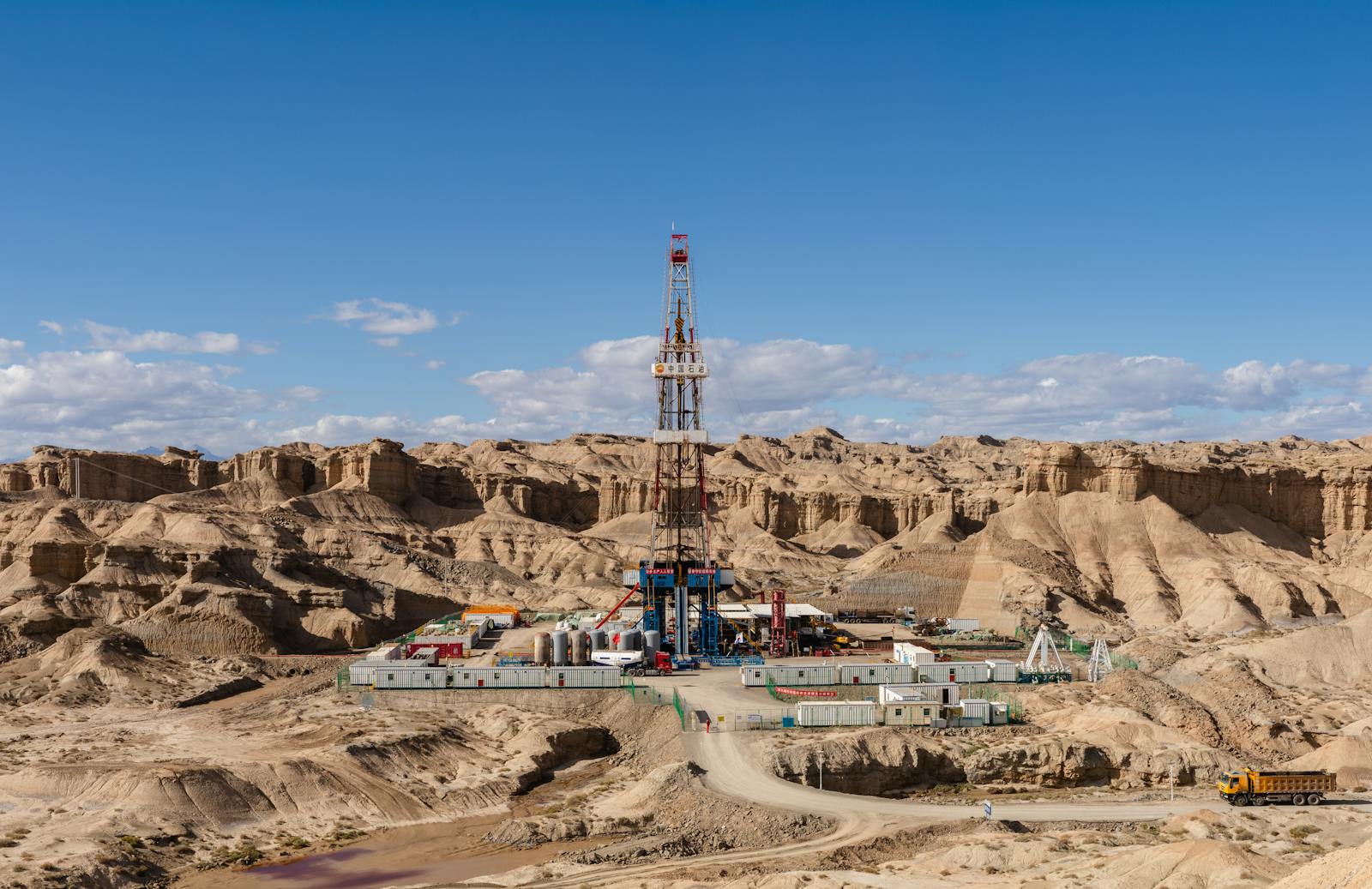
The most serious recent challenge came from China. The Shenditake 1 well in the Taklimakan Desert of Xinjiang was designed as a scientific and energy exploration project through the Tarim Basin. In February 2025, Xinhua reported that China National Petroleum Corporation had completed drilling at 10,910 metres.
That is a major engineering milestone. It made Shenditake 1 Asia’s deepest vertical well and one of the deepest onshore wells in the world. But it still stopped more than a kilometre short of Kola’s 12,262 metres.
The Chinese project shows how much drilling technology has improved: automated rigs, better logging tools, improved drilling fluids, and more precise downhole measurement. It also shows how stubborn the old Soviet record remains. Better tools help. They do not make deep heat and pressure disappear.
The scale of what we have not touched
Earth’s average radius is about 6,371 kilometres. The Kola hole reaches 12.262 kilometres. That is about 0.19 percent of the way to the centre. If the planet were scaled down to the size of an apple, the deepest human drilling would barely mark the skin.
The crust itself is still mostly beyond reach. EarthDate notes that continental crust averages about 22 miles, or 35 kilometres, thick, while oceanic crust is much thinner. That is why the old dream behind Project Mohole still points toward the ocean floor rather than a continental drill site: the mantle is closer beneath the sea.
For another comparison, the Challenger Deep in the Mariana Trench is the lowest known point of the oceans. Britannica gives its estimated depth as 10,935 metres below sea level. Kola went deeper into solid rock than that, although the comparison is not perfect: one is a natural seafloor depression, the other is a narrow artificial borehole into the crust.
What is left at the site
The Kola research station today is a ruin. The drilling derrick is gone. The surrounding buildings have decayed. What remains at the surface looks almost absurdly small compared with what it covers: a capped opening on a concrete pad, marking a shaft that once reached farther into Earth than any human-made hole before or since.
Beneath it, the deepest sections are likely no longer open in any clean, usable sense. Boreholes at those depths are vulnerable to deformation, collapse, and blockage, especially once active drilling and circulation stop. The exact condition of the deepest branches is not something a visitor can see from the surface.
That may be the most fitting end to the story. The Kola Superdeep Borehole was built as an act of technological force, a Soviet answer to the age of spaceflight. But the final image is not triumph. It is a sealed cap on a quiet, ruined site, with the crust below slowly taking back the space that engineers spent 20 years trying to hold open.
