
A team at Stanford and the Arc Institute studying why some people stay mentally sharp into their 90s while others lose their edge in their 50s has traced age-related memory loss to a specific gut bacterium and the inflammatory signal it sends to the brain. The findings, published in Nature in March 2026, identify a three-step pathway that starts in the gastrointestinal tract and ends in the hippocampus. Crucially, the researchers showed that interrupting this pathway in aged mice restored memory function to youthful levels.
The work did not begin as a search for a longevity molecule. It began with a simple question: why does memory loss vary so dramatically between individuals?
The accidental finding
Some very old people stay cognitively sharp. Others see significant decline starting in their 50s or 60s. The Stanford team, led by senior author Christoph Thaiss and lead author Timothy Cox, suspected the gut microbiome might play a role.
To test it, they housed two-month-old mice with 18-month-old mice for a month, allowing the animals to swap microbes through normal cohabitation. The young mice ended up carrying microbiomes that resembled those of the older animals, and they performed worse on object recognition and maze escape tests than control mice their age. Germ-free young mice given old-mouse microbiomes showed the same decline. When the cohoused young mice were given antibiotics that wiped out many gut microbes, cognitive performance returned to normal.
The bacterium and the mechanism
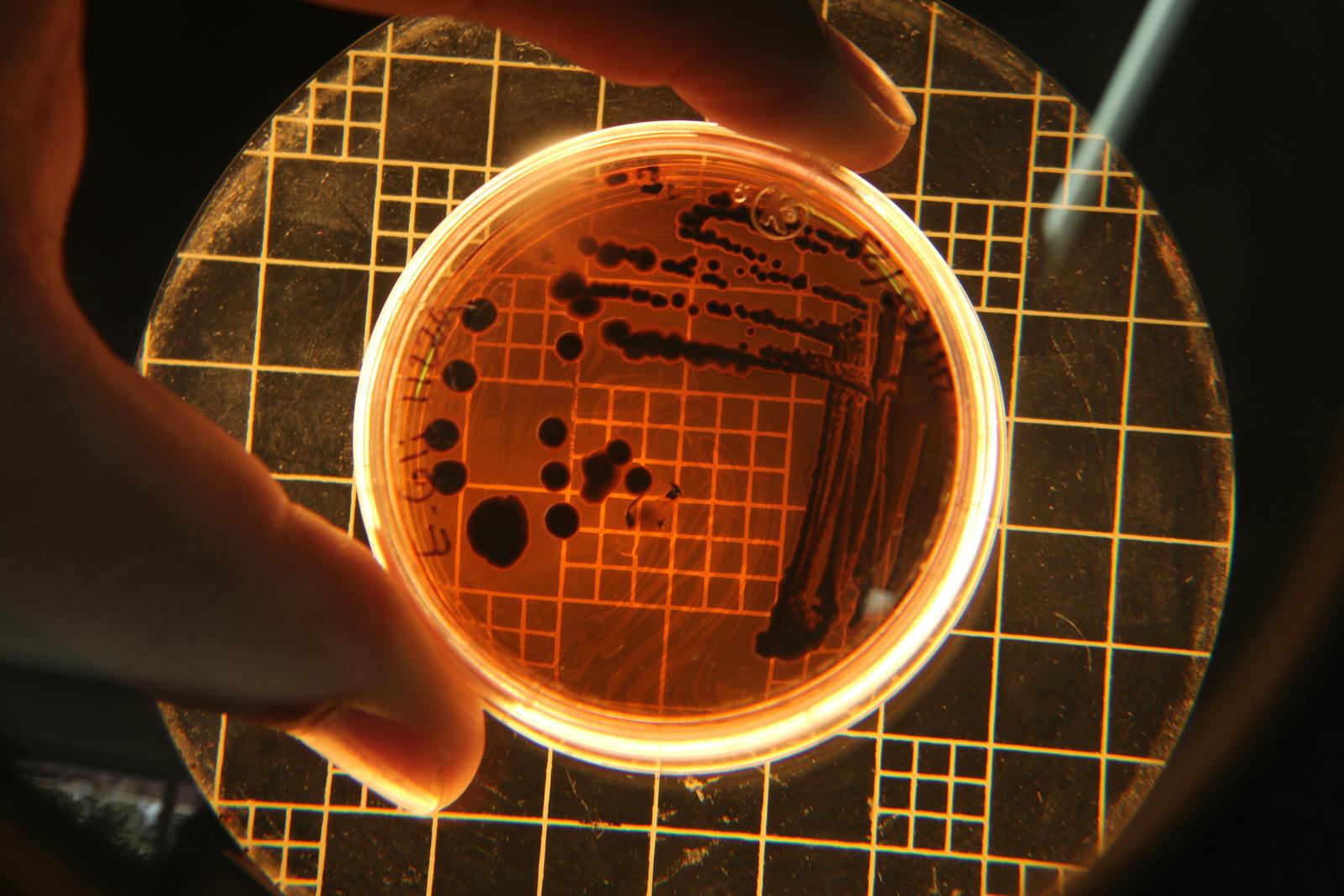
The team narrowed the effect to a single species. Parabacteroides goldsteinii, a gut bacterium whose abundance increases with age, was the strongest correlate of cognitive decline. Colonizing young mice with this species alone was enough to inhibit their memory performance and reduce neuronal activation in the hippocampus.
The downstream signal turned out to be a class of bacterial metabolites called medium-chain fatty acids. As P. goldsteinii populations grew, intestinal levels of these fatty acids climbed. They activated a receptor called GPR84 on inflammation-promoting myeloid immune cells in the gut. That inflammation, in turn, disrupted signaling along the vagus nerve, the long cranial nerve that carries information from the digestive tract to the brain. The disrupted signal failed to reach the hippocampus, the brain region central to memory formation.
According to coverage of the research, the team showed the chain was reversible. Treating aged mice with bacteria-killing viruses, blocking GPR84-driven inflammation, or chemically activating the vagus nerve all restored memory performance.
Why the timing of decline may not be fixed
The most consequential implication is that the timeline of memory decline is not hardwired. It is actively modulated in the body. That reframes cognitive aging, at least in mice, as a regulated process rather than an inevitable one.
The supporting evidence is broader than one study. Scientific American’s coverage describes the gut-brain communication pathway as integral to how well the brain holds memories. A 2022 review in Frontiers in Microbiology catalogued microbial mechanisms implicated in neurodegenerative disease, finding consistent patterns linking microbiome composition to neurodegenerative trajectories.
People who stay sharp into old age tend to share microbiome profiles that look younger than their chronological age. The pattern is consistent enough that algorithms can predict a person’s age from their gut bacteria alone.
What this changes
The Stanford finding does several things at once. It identifies a specific bacterial species, P. goldsteinii, whose abundance tracks cognitive decline. It pinpoints medium-chain fatty acids as the molecular currency of that decline. It maps a clean three-step pathway through GPR84-driven myeloid inflammation and vagus nerve signaling. And it demonstrates that the entire chain is reversible in mice.
The team now wants to confirm the findings in humans. That work is the bottleneck. Mouse data on aging often fails to translate cleanly. Human microbiomes are more variable, human lifespans are longer, and the regulatory path for an aging indication is unsettled because aging is not formally classified as a disease by the FDA.
The vagus nerve tools that already exist
One reason the Stanford pathway has attracted attention is that part of it intersects with technology already on the market. Vagus nerve stimulation, the third intervention the Stanford team used to reverse cognitive decline in mice, is already an FDA-cleared therapy for unrelated indications.
Implanted vagus nerve stimulators from manufacturers like LivaNova have been FDA-approved for epilepsy since 1997 and for treatment-resistant depression since 2005. A non-invasive handheld device called gammaCore, applied to the side of the neck, has been FDA-cleared for cluster headache and migraine since 2017. Thaiss has cautioned that current vagus nerve stimulation is “basically a sledgehammer approach” that activates the entire nerve bundle, and that more targeted tools will be needed before this can be translated to cognitive aging in humans.
A separate line of microbiome research, led by Meng Wang’s group at HHMI’s Janelia Research Campus, has identified a different gut-aging mechanism. Low-dose cephaloridine, a beta-lactam antibiotic, was shown to coax gut E. coli into producing colanic acid, an anti-aging compound that extended roundworm lifespan by up to 30% and improved metabolic markers in mice. Cephaloridine is no longer used as a human antibiotic — it was discontinued in the clinic decades ago because it is not absorbed through the gut. That same property is now being explored as an asset, since the drug stays in the gut and avoids systemic side effects. Human trials have not begun.
The translational distance for the Stanford cognitive finding is therefore mixed. Vagus nerve stimulation hardware exists and is in clinical use, but adapting it to the specific neuronal subtypes implicated in memory will take new engineering. The microbial side — identifying which bacteria to target and how — is still preclinical. The realistic timeline for human trials targeting cognitive aging through these tools is measured in years, not decades, but the researchers are clear that mouse-to-human translation is the bottleneck, not the technology.
Photo by Wassily Kandark on Pexels
