
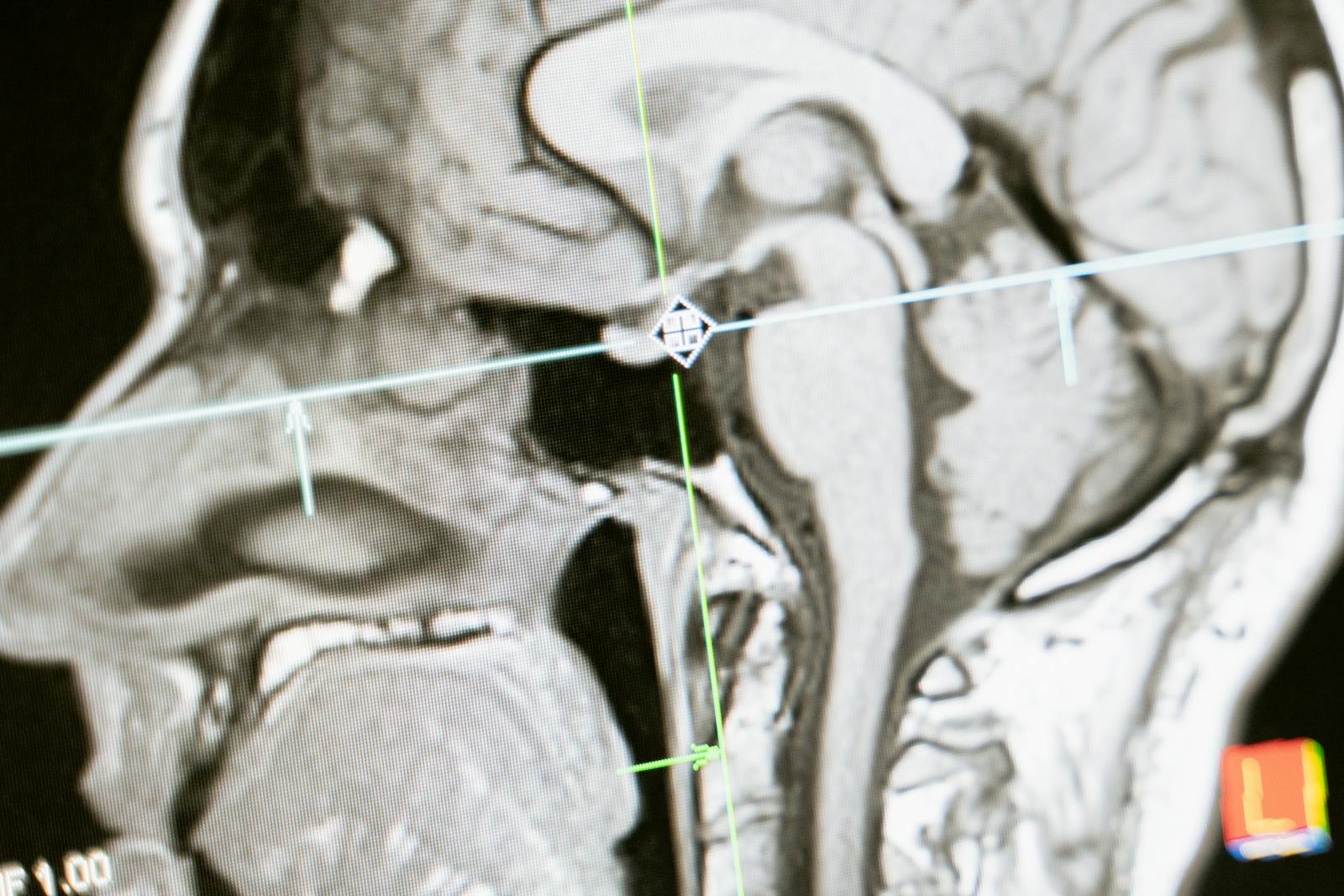
A clinical trial that just began dosing patients at Johns Hopkins is testing something the diabetes world has suspected for years: that the same class of drugs millions of people take to manage blood sugar may be quietly protecting the brain from shrinking. The trial, called TAG-MS, is tracking brain volume changes in adults with progressive multiple sclerosis. It is the most direct attempt yet to measure what longitudinal observational data has been hinting at since GLP-1 receptor agonists became one of the most prescribed drug classes in America.
The drug being tested is pegsebrenatide, also known as NLY01. It belongs to the same family as semaglutide, liraglutide, and dulaglutide, the medications that reshaped obesity and Type 2 diabetes care over the past decade. What makes the trial different is its primary endpoint. Researchers are not measuring weight, A1C, or relapse rate. They are measuring how fast the brain is losing tissue.
The signal that has been building for years
For years, endocrinologists have noticed something interesting in long-term diabetes patients. Adults who stayed on GLP-1 receptor agonists for extended periods seemed to track better cognitively than peers on other glucose-lowering regimens. The signal was real but messy, confounded by weight loss, blood pressure changes, and improved cardiovascular function.
A University of California analysis of GLP-1 brain effects pulled the threads together. A literature review by UCSF emeritus clinical professor Jeffrey Fessel evaluated several human studies. One followed roughly 9,000 participants with Type 2 diabetes and cardiovascular risk: those taking the GLP-1 dulaglutide had a 14% reduction in the risk of cognitive decline compared with placebo. A Danish review found dementia risk lowered by 53% when Type 2 diabetes patients on GLP-1s were compared with patients on placebo, though dementia case numbers in that cohort were small. A separate nationwide cohort of older Danish patients found an 11% reduced dementia risk on GLP-1s. Other smaller studies showed mixed results.
The numbers vary. The direction does not.
What the drugs appear to be doing inside the skull
The mechanism question has been the harder one. Cognitive decline tracks with vascular health, metabolic health, neuroinflammation, and protein aggregation, and GLP-1 receptor agonists touch all four.
Animal studies suggest GLP-1 drugs may increase synaptic plasticity, the process by which the brain rewires its connections. The drugs also appear to reduce neuroinflammation, scavenge free radicals, and limit damage to neurons. Each of these processes sits upstream of the cell death that defines neurodegenerative disease.
The vascular pathway may matter even more. Vascular dementia is driven by the same conditions GLP-1 drugs treat directly: hypertension, hyperglycemia, obesity, and stroke risk. If a drug class lowers all four, brain volume preservation may follow almost as a side effect of cardiovascular protection.
A 2025 review in Frontiers describing the research progress in the pathophysiological mechanisms of Type 2 diabetes framed this as an integrated picture. The brain does not exist in isolation from the kidneys, the heart, or the metabolism. Treat one node well enough and the others tend to benefit.
The insulin resistance angle
There is a separate hypothesis that has gained traction. Peripheral insulin resistance appears to track with cognitive outcomes independent of overt diabetes status. A Mendelian randomization study in Frontiers in Endocrinology found that genetically predicted higher insulin resistance was associated with worse cognitive performance, with changes in brain cortical structure mediating part of the effect.
If insulin signalling matters as much in the brain as that work suggests, GLP-1 drugs may not be incidentally helping the brain. They may be acting on one of the upstream drivers of neurodegeneration directly. That framing offers a possible reason why a brain-related signal has shown up across diseases as different as Type 2 diabetes, Parkinson’s, and progressive MS.
Why the new trial matters
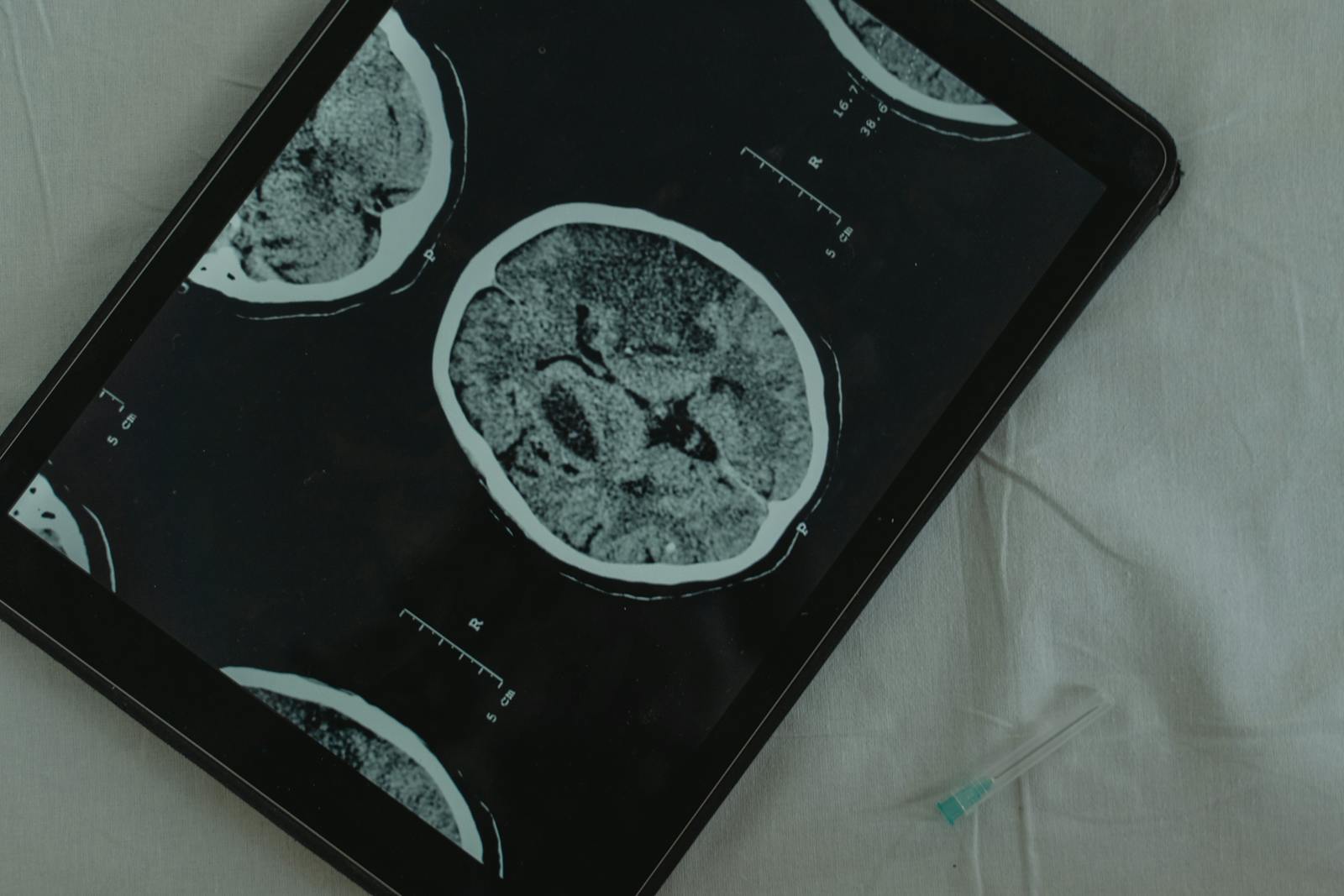
The TAG-MS trial, reported by Multiple Sclerosis News Today on May 7, is structured to address the mechanism question directly. About 120 adults with progressive MS, clinically stable on existing therapy for at least a year with no relapses or new MRI lesions, will be randomized to weekly subcutaneous pegsebrenatide or placebo for 96 weeks. The starting dose is 5 mg, escalating to 10 mg after four weeks.
The primary endpoint is normalized brain parenchymal volume, an MRI-based measure of how much brain tissue remains. Brain atrophy is the most direct biological readout of neurodegeneration available short of autopsy. Secondary endpoints track regional brain volumes and retinal changes, since the retina serves as a window onto central nervous system nerve damage in MS.
Ellen Mowry at Johns Hopkins is leading the study. Pegsebrenatide is being developed by Neuraly, whose CEO Seulki Lee described the program as targeting the neuroinflammatory processes that drive disability worsening in progressive forms of the disease.
What separates pegsebrenatide from semaglutide or liraglutide is design intent. Most GLP-1 drugs were optimized for glycemic control. Pegsebrenatide was built from the start to act on microglia and astrocytes, the support cells whose chronic activation is now understood to drive a substantial portion of neurodegenerative pathology. A previous Phase 2 trial in 255 patients with Parkinson’s disease suggested pegsebrenatide may slow the progression of motor dysfunction, with the most pronounced effects in patients younger than 60. Whether that translates to MS over two years is what TAG-MS will determine.
The Alzheimer’s question, still unsettled
The brain volume story does not yet extend cleanly to Alzheimer’s disease. A review from Anglia Ruskin University, summarized in a Knowridge analysis of GLP-1 drugs and Alzheimer’s prevention, looked at 30 earlier studies covering liraglutide, semaglutide, exenatide, and dulaglutide. In animal and cell models, the results were striking: 22 of the studies showed reductions in amyloid-beta, the protein that forms plaques in Alzheimer’s brains, and 19 showed reductions in harmful forms of tau, the protein that forms tangles inside neurons.
Liraglutide showed the strongest and most consistent effects. Semaglutide and dulaglutide also showed positive findings, with fewer trials available. Exenatide produced mixed results.
Human data is thinner. Only two clinical trials made it into the review. A 26-week liraglutide study did not reduce amyloid levels or improve cognition, though it preserved how the brain uses glucose. An 18-month exenatide study did not change the main Alzheimer’s biomarkers in cerebrospinal fluid but did reduce amyloid-beta in extracellular vesicles. A 2025 study cited in the UCSF analysis also reported that GLP-1s did not slow progression in patients who already had Alzheimer’s disease.
The pattern suggests these drugs may work as prevention rather than treatment. Once the cascade of plaques and tangles is fully established, intervening late in the disease appears to do little. The consensus emerging from these programs is that timing of intervention may matter more than which specific GLP-1 is used.
The addiction circuit, an unexpected branch
The brain effects extend beyond memory and motor disease. Earlier-generation GLP-1s appear to mute the dopamine surge that drives the must-have response to a drug cue, while engaging the prefrontal cortex, which governs impulse control. UCSF neuroscientist Khaled Moussawi is now leading clinical work on GLP-1 drugs designed to target craving circuits, with potential applications across alcohol and opioid use disorder.
What the long-term data actually supports
The headline finding driving current interest is more cautious than it sometimes appears in coverage. Adults on GLP-1 receptor agonists for extended periods show reduced risk of cognitive decline and dementia in several observational and trial datasets, with effect sizes ranging from modest single-digit reductions to much larger ones, depending on the cohort. The leap from that signal to a direct, measurable difference in MRI-quantified brain atrophy has not yet been demonstrated in a clean randomized trial, which is precisely the gap TAG-MS is designed to close.
The mechanism, as best the current evidence describes it, runs through several parallel channels. Reduced systemic inflammation may lower the inflammatory tone in the brain. Improved insulin signaling may restore neuronal energy metabolism. Better vascular health protects the small vessels whose dysfunction drives white-matter damage. And direct GLP-1 receptor activation in neurons appears to modulate microglial activity, dampening the chronic immune response that underlies much late-life cognitive decline.
What this changes for clinical practice
Nothing yet, formally. No GLP-1 drug is approved for cognitive indications. Prescribing these medications for brain protection alone would be off-label, and the human evidence is not strong enough to justify it outside of trial settings.
What changes is the framing. A patient with Type 2 diabetes choosing between a GLP-1 and an older oral agent is no longer making a purely glycemic decision. The drug class appears to have downstream effects that touch the part of the body patients fear losing most.
Whether those effects survive the scrutiny of trials like TAG-MS, the ongoing Parkinson’s studies, and the next wave of Alzheimer’s prevention work will determine whether the brain-volume question becomes a clinical recommendation or remains a tantalizing observational signal.
The broader pattern
The GLP-1 story fits into a larger trend in medicine: drugs developed for one organ system increasingly turn out to act on others. A diabetes drug is a weight-loss drug is a cardiovascular drug is, possibly, a neuroprotective drug. The body does not respect the specialty boundaries of the medical profession.
The TAG-MS trial reads out in roughly two years. By then, additional Parkinson’s data on pegsebrenatide should be more mature, and several larger Alzheimer’s prevention trials with semaglutide are expected to report. The decade of observational data has suggested something is happening. The next two years should help determine what.
Photo by MART PRODUCTION on Pexels
