
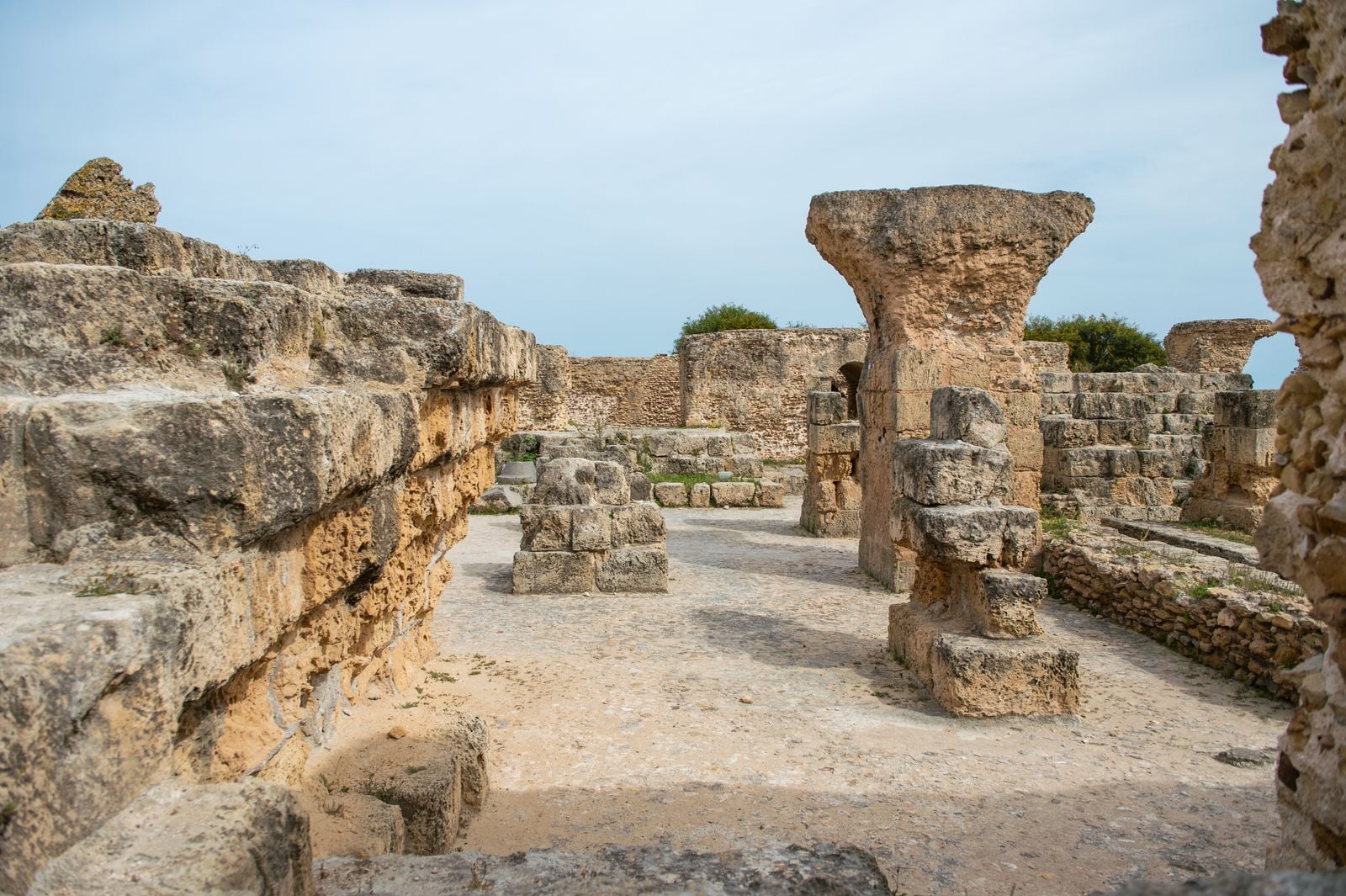
The concrete piers that Roman engineers sank into the Mediterranean in the last two centuries of the Roman Republic are not just still standing. Two thousand years of waves, storms and salt water have made them stronger. The mortar in harbours at Portus Cosanus, Baiae and along the Tyrrhenian coast contains crystals of a mineral so rare that materials scientists today struggle to grow it in a laboratory — and it is still slowly forming inside the walls, one micrometre at a time, fed by the same seawater that would eat a modern pier alive.
The mineral is aluminous tobermorite, and its interlocking, plate-shaped crystals are the reason a Roman breakwater built before the birth of Christ can outlast a highway overpass built in the 1970s.
A recipe written in volcanic ash
Roman marine concrete began with three ingredients: quicklime, chunks of volcanic tuff as aggregate, and volcanic ash quarried from the Bay of Naples, particularly around Pozzuoli. That ash — pulvis puteolanus — gave the world the word pozzolan. Instead of mixing with fresh water, marine engineers mixed it with seawater drawn straight from the harbour they were about to build.
The immediate reaction was violent and useful. Lime, ash and water triggered what chemists call a pozzolanic reaction, binding the mass into a rock-like matrix within days. That much the Romans understood well enough to write down. Pliny the Elder described the ash of the Gulf of Naples as a substance that turned to stone in the sea.
What Pliny could not have known is what happened over the following centuries, in the dark, wet interior of the wall.
The crystal that grows in the dark
Marie Jackson, a geologist at the University of Utah, has spent years drilling cores from Roman harbour ruins and putting them under electron microscopes. Her team’s work, published in the journal American Mineralogist, found that aluminous tobermorite and a related zeolite called phillipsite were growing through the fabric of the ancient concrete long after it had cured.
The mechanism is almost the opposite of what an engineer would design for. Seawater percolates into the pores of the concrete. It slowly dissolves the volcanic ash still trapped in the matrix. Silicon and aluminium ions released by that dissolution recombine into the flat, plate-like crystals of tobermorite, which wedge themselves into cracks and voids.
According to Jackson, the Roman concrete system appears to contradict conventional principles of cement-based concrete design. Jackson explained that the Roman concrete system benefits from ongoing chemical interactions with seawater.
Every crack becomes a place for a new crystal to grow. Every crystal makes the wall harder to break.
Why modern concrete goes the other way
Portland cement, patented in 1824 and now the base of nearly every bridge, dam and parking garage on Earth, does the opposite. Its calcium silicate hydrate binder is chemically stable when dry, but seawater is corrosive to it. Chloride ions attack the steel reinforcement inside, iron oxide swells, and the concrete spalls off in sheets. A marine pier built with reinforced Portland cement is typically designed for a service life of 50 to 100 years, and many begin serious deterioration well before that. Sewer infrastructure, exposed to sulfuric acid from biological activity, often fails faster still — a problem that new research on graphene-oxide-modified nano-concrete is trying to solve by densifying the microstructure against acid attack.
The Romans, working without rebar, sidestepped the entire problem. Their concrete had no steel skeleton to corrode. Its strength came from the aggregate and the mortar alone, and the mortar was designed — accidentally or otherwise — to react with seawater rather than resist it.
The Japanese nuclear plant that grew Roman crystals
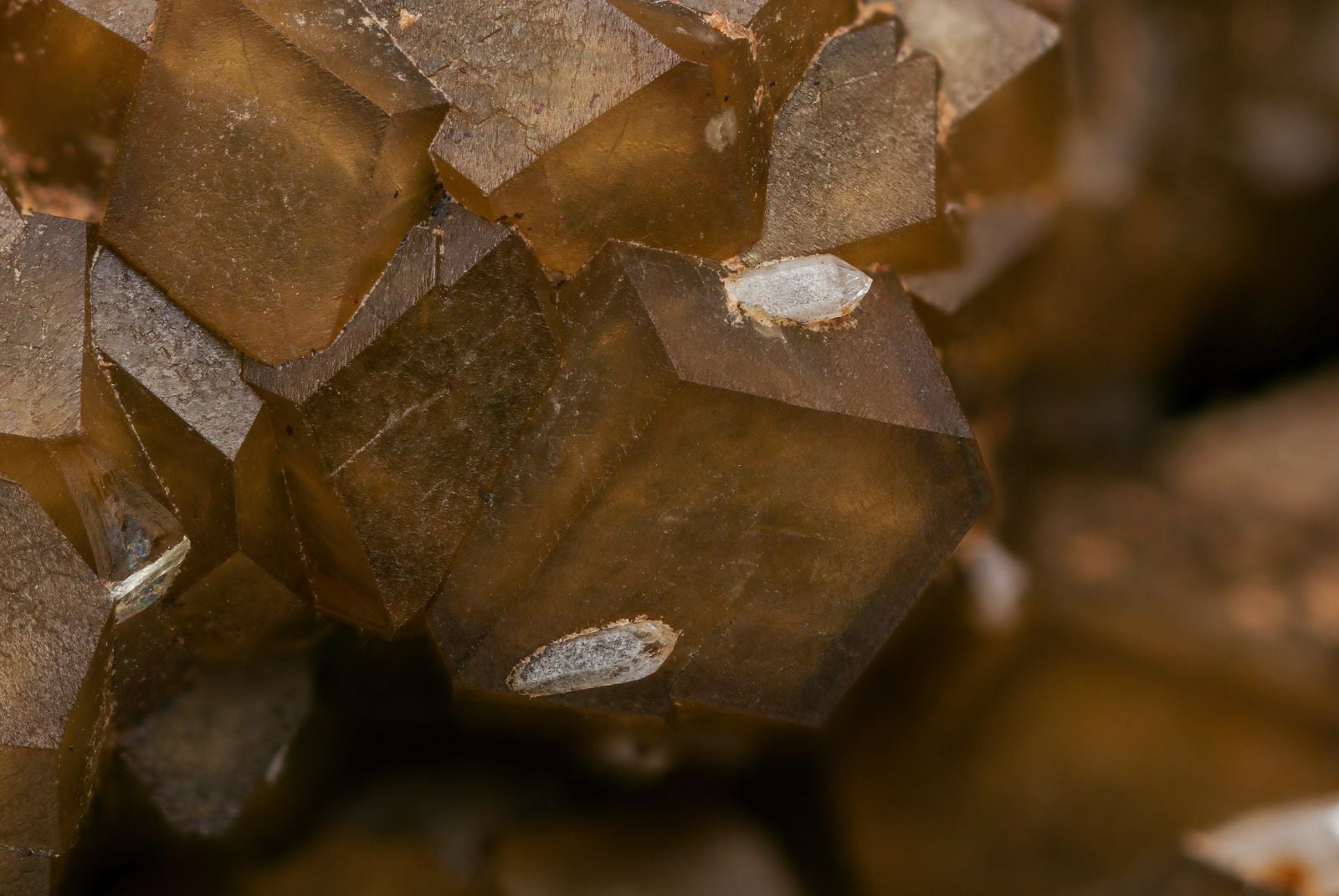
The strangest confirmation of the mechanism came not from an archaeological dig but from a decommissioned reactor. When engineers at Nagoya University sampled the thick concrete biological shield walls of the Hamaoka Nuclear Power Plant, they found something they were not looking for: aluminous tobermorite, the same mineral Jackson had found in Roman piers.
The Hamaoka walls had spent 16.5 years at temperatures between 40 and 55°C, retaining moisture deep in their bulk. That was apparently enough to nudge the chemistry in a Roman direction. Ippei Maruyama and his team reported that the mineral’s slow formation had raised the walls’ compressive strength to more than three times their original design strength.
Maruyama noted that concrete research typically relies on short-term laboratory experiments rather than long-term observations. Maruyama emphasized that studying actual concrete structures provides valuable information about long-term performance.
Tobermorite in a lab usually requires temperatures above 70°C to form. Roman piers grew it at Mediterranean seawater temperatures, roughly 15 to 25°C, over centuries. Hamaoka grew it at 40 to 55°C, over decades. Time and moisture, it turns out, can substitute for heat.
What the Romans knew, and what they didn’t
It is tempting to credit Roman engineers with a deep chemical understanding they did not possess. They had no concept of ions, silicates or crystal lattices. What they had was two centuries of empirical fine-tuning and a specific geological accident: the volcanic ash of Campania, which contains exactly the reactive aluminosilicate glass needed to feed the reaction.
They knew the ash worked. They shipped it across the empire, and Jackson’s team has found the same Pozzuoli material in harbour concretes from Israel to Spain. Vitruvius, writing in the first century BC, gave recipes and mix ratios. But the mineral that made those recipes last was invisible to him.
What the ancient builders did understand, in a way modern industrial concrete has partly forgotten, is that a structure lives inside a chemical environment. Fighting the sea is expensive. Working with the sea, letting it slowly rebuild the wall from within, is what kept the piers of Cosa standing while entire empires rose and fell around them.
Not every Roman structure is a marine one, and the same recipe does not always apply. Recent work at Pompeii, where archaeologists have partnered with materials scientists, has been reconstructing how the city’s buildings were mixed and repaired. It suggests that hot mixing — using quicklime rather than slaked lime — left small reactive lime clasts embedded in the mortar. When cracks later opened and rainwater seeped in, those clasts dissolved and re-precipitated calcium carbonate directly into the fracture, sealing it.
That is a different mechanism from the marine tobermorite story, but the underlying principle is the same. Roman concrete was designed, whether deliberately or by trial and error, to have self-healing built into its chemistry. Modern concrete generally is not.
Why we haven’t copied it, and what still stands
If the mineral is so useful, the obvious question is why every seawall in the world isn’t made of it. The answer is partly economic and partly chemical. Portland cement can be manufactured anywhere with limestone and clay, at industrial scale, and cures to usable strength in hours. Roman marine mortar required specific volcanic ash, cured slowly, and reached its remarkable strength over decades to centuries.
Modern infrastructure runs on quarterly schedules, not geological ones. A bridge that will be at 300% strength in the year 2225 is less useful to a highway department than one that is at 100% strength next month.
There is also a climate argument for revisiting the Roman approach. Cement production is a major contributor to global carbon dioxide emissions. A binder that grows stronger with age instead of weaker would mean less replacement, less rebuilding, less clinker fired in kilns. Jackson has suggested aluminous tobermorite could be useful in nuclear waste encapsulation, where structures must remain stable for far longer than any Portland cement is warrantied for.
The pier at Portus Cosanus, north of Rome, was built in the late second or early first century BC, the earliest dated use of pozzolanic concrete in seawater anywhere in the Mediterranean. It is still there, half-submerged, its mortar riddled with tobermorite crystals that have been growing, quietly and continuously, for about two thousand years. The harbour works at Baiae, sunk by volcanic subsidence into the Bay of Naples, are studied by divers who can pick up mortar samples from the seafloor and find fresh crystals forming inside old cracks.
Space Daily has written before about durability at different timescales — about the metabolic trick that lets bears emerge from hibernation with intact bone, and about the light from the Hubble Deep Field, gathered from a patch of sky held open for ten days. Roman concrete belongs on that shelf. It is an object designed, or accidentally engineered, to work across timescales that human institutions rarely plan for.
A wave hits a Roman pier this afternoon in the Tyrrhenian Sea. Somewhere inside the wall, in a pore too small to see, a new plate of tobermorite is locking into place. The pier is stronger this evening than it was this morning. It has been doing this for about 730,000 mornings.
