

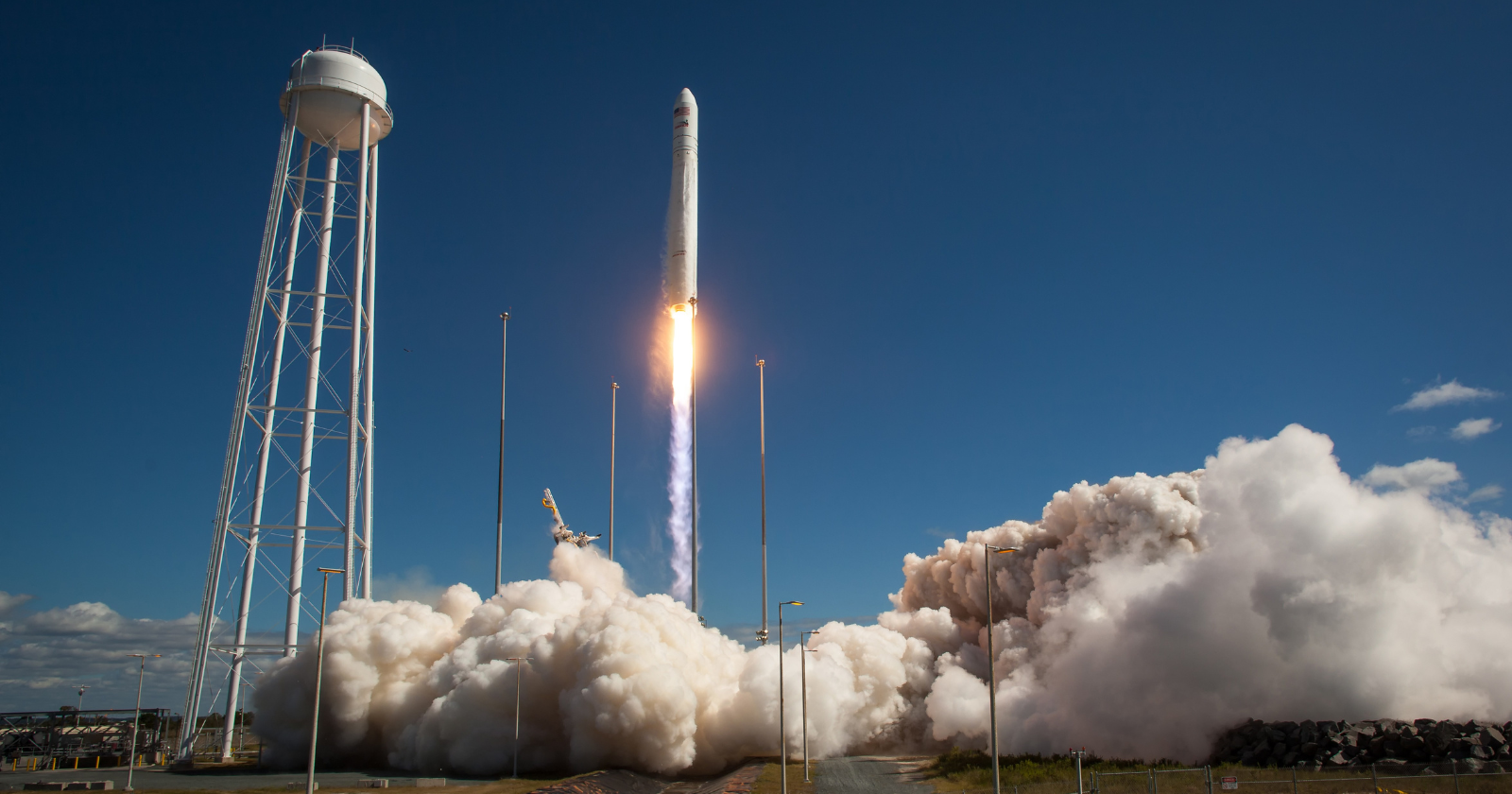
Vikram-1 is circling Earth after leaving ISRO’s First Launch Pad in fire and smoke over Sriharikota on July 18, 2026. ISRO recorded the liftoff at 12:05:30 p.m. India Standard Time; Reuters reported that about 15 minutes later the privately developed rocket had reached a 450-kilometre orbit.
The launch made Skyroot Aerospace the first private Indian company to reach orbit from Indian soil. The flight was also widely reported as making India the third country, after the United States and China, with private orbital launch capability.
The vehicle was private. Much of the path beneath it was public: ISRO provided motor casting and test facilities, liquid-engine testing, trajectory analysis, safety support, vehicle integration and the launchpad itself, while IN-SPACe coordinated access and authorisation.

The 22-metre rocket and what it carried
Vikram-1 is a four-stage small-satellite launcher: three solid-fuel stages followed by a liquid orbital-adjustment stage. The roughly seven-storey vehicle uses an all-carbon-composite structure and a 3D-printed liquid engine, and Skyroot rates it for up to 350 kilograms to low Earth orbit.
Liftoff had been set for 11:30 a.m. A hold in the final countdown pushed it back by about 35 minutes, then the first-stage motor lit and the rocket climbed through its sequence without a reported failure; mission control had marked the flight complete by 17 minutes after launch.
The maiden mission was called Aagaman, Sanskrit for arrival. Its manifest included Grahaa Space’s SOLARAS S3 nanosatellite, Skyroot’s SCOPE satellite, Cosmoserve Space’s Embrace soft-robotic debris-capture experiment and a technology demonstration from Germany’s DCUBED.
There was symbolic cargo too: Cosmic Bloom, an artwork made with a lab-grown diamond, and microscopic 18-karat-gold sculptures honouring Vikram Sarabhai, C.V. Raman and A.P.J. Abdul Kalam. Skyroot’s pre-flight manifest described the sculptures as smaller than a grain of rice.
ISRO said SCOPE and the Grahaa Space satellite were injected into low Earth orbit. The remaining payloads stayed with the upper stage to conduct in-orbit experiments, an important distinction from saying that every object aboard was released as a free-flying satellite.
Eight years from a Hyderabad office to orbit
Pawan Kumar Chandana and Naga Bharath Daka founded Skyroot in Hyderabad in 2018 after working at ISRO. The company now describes a workforce of more than 1,000 people across propulsion, structures, avionics, software, manufacturing and launch operations on its corporate history page.
Its first flight was smaller. On November 18, 2022, the single-stage Vikram-S suborbital rocket reached 88.8 kilometres, Mach 5.07 and a flight time of 301.4 seconds, figures recorded on Skyroot’s Mission Prarambh archive.
Skyroot’s early orbital-launch plans in January 2022, when Vikram-1 was still moving through designs, tests and shifting schedules. The hardware that flew that year was the suborbital demonstrator; the orbital vehicle required nearly four more years.
For Aagaman, Daka said the work represented around 1,000 people, more than 400 suppliers and nearly 3,000 days of effort. The figure described the wider network behind the mission, from company staff to outside manufacturers, rather than a 1,000-person launch crew.
Skyroot’s commercial argument is control. A small-satellite operator can buy a dedicated flight to a chosen orbit and timetable instead of waiting for spare room on a larger rocket, while the company also offers rideshare missions; Chandana has described a market in which launch supply remains tight even as demand for satellite services grows.
The reform that put a private rocket on a public pad
India’s launch programme was government-led for most of its history. Private firms supplied components and services, but ISRO developed and operated the orbital launch vehicles that left Sriharikota.
The formal opening came in 2020. The Indian Space Policy 2023 says the government began reforms that year to allow non-government entities to conduct end-to-end space activities and to create a level playing field.
The policy goes beyond contracting out parts. It permits private entities to manufacture and operate launch vehicles, establish launch infrastructure and sell services, while IN-SPACe acts as the authorising agency and ISRO concentrates on research, new systems and technology transfer.
Vikram-1 shows how that division works in practice. ISRO cast and tested solid-motor hardware, tested the Raman-1 liquid engine, supported trajectory work and integration, and kept safety teams on duty around the clock during pre-launch operations.
This was therefore not a clean withdrawal of the state. It was a change in who could design, own and sell the vehicle while gaining regulated access to national infrastructure, the same broader shift visible in India’s privately led Earth-observation constellation project.
The government now counts more than 400 space start-ups and describes a domestic space economy approaching $9 billion, with an ambition to reach roughly $44 billion over the next decade. Those figures appeared again after the launch in a Department of Space statement, and they sit behind the growth case examined in SpaceDaily’s earlier report on the sector.
A first flight is not yet a launch business
Skyroot entered the mission with deep financial backing. In May 2026 it raised about $60 million in a round co-led by Sherpalo Ventures and GIC, taking its valuation above $1.1 billion and making it India’s first space-technology unicorn, Entrackr reported.
Capital can buy factories, test hardware and inventory. It cannot compress reliability into a single successful ascent.
Aagaman proved that Vikram-1 could leave the pad, survive staging, guide itself and reach the intended orbit on its first attempt. Customers will now watch for repetition: how quickly Skyroot can inspect the data, make changes, build the next vehicle and fly again.
Skyroot has said it plans another test flight later in 2026 before moving toward commercial operations in 2027. Its next vehicle, Vikram-II, is advertised with a cryogenic engine and capacity of up to 900 kilograms to low Earth orbit, moving the company beyond the smallest satellite missions.
What changes after orbit
The 2023 policy assigns ISRO a different centre of gravity: advanced research, new launch and spacecraft systems, human spaceflight and missions that extend scientific capability. Mature systems and routine services are increasingly meant to move toward industry.
That division is still being built flight by flight. Skyroot has one orbital success, not yet a cadence; ISRO has a private partner, not an absent role.
The roar over Sriharikota lasted minutes. The institutional change took six years. SCOPE and the Grahaa Space satellite now circle roughly 450 kilometres above Earth, while the First Launch Pad stands beside the Bay of Bengal with a private rocket added to its history.