
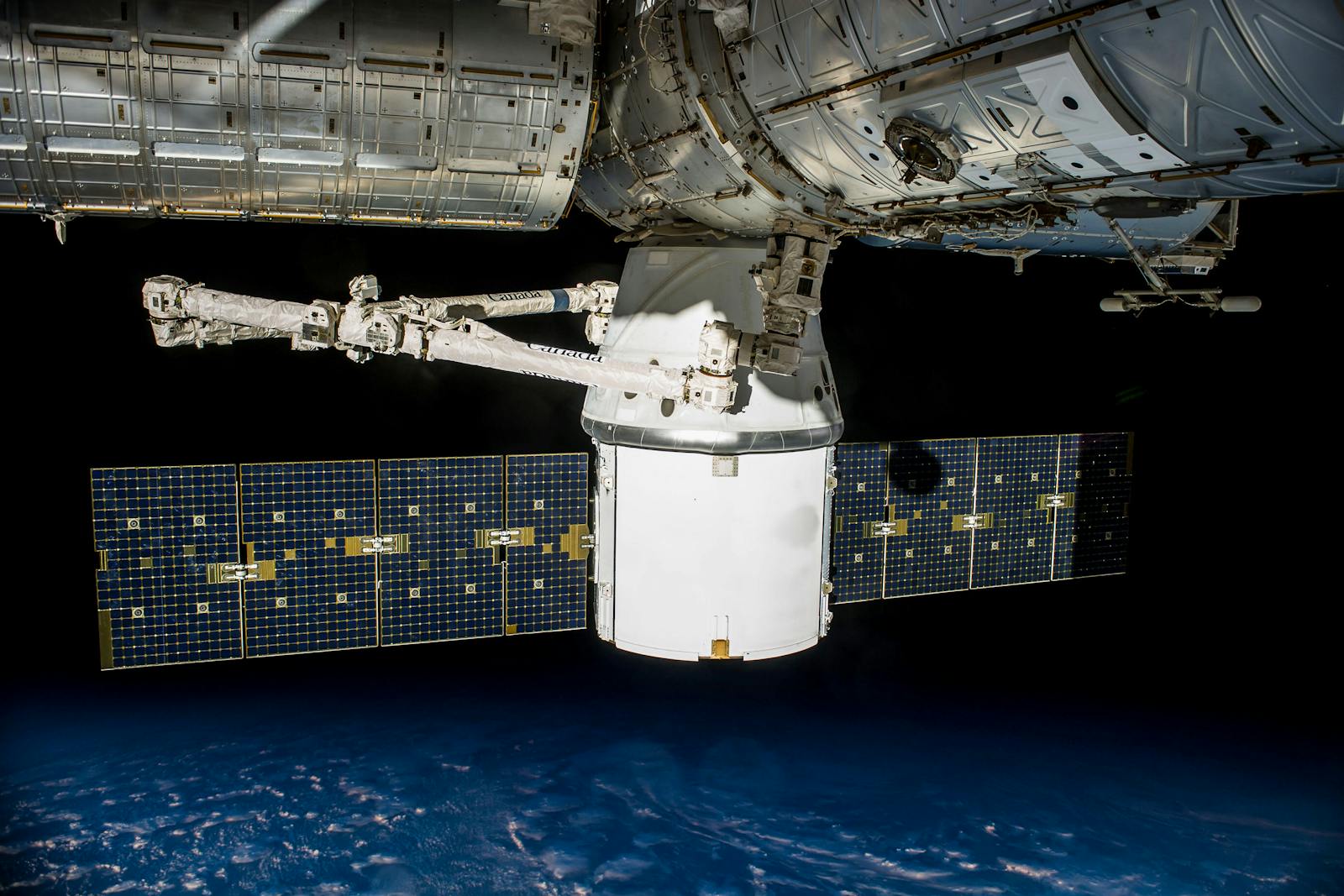
Cowboy Space, the orbital infrastructure startup founded by Robinhood co-founder Baiju Bhatt, has asked the Federal Communications Commission for permission to deploy up to 20,000 satellites carrying data center hardware in low Earth orbit. The constellation, named Stampede, would be one of the largest computing-focused satellite networks ever proposed. But the deeper bet is not simply that space is a better place to run computers. It is that AI infrastructure on Earth is increasingly being limited by power access, grid queues, permitting friction and the slow physical work of connecting large new electrical loads.
Independent Space News reported that Cowboy has filed plans for a 20,000-satellite Stampede orbital data center constellation. The filing follows a major financing round: Cowboy, formerly Aetherflux, raised $275 million in a Series B round led by Index Ventures.
What Cowboy is asking for
Cowboy is not presenting Stampede as a normal satellite communications constellation. The company describes itself as building orbital infrastructure for artificial intelligence, with satellites and rockets designed around power generation, compute hardware and optical data transmission rather than consumer broadband alone.
That distinction matters. A conventional satellite network moves data. Cowboy’s pitch is that the data center itself can move off Earth, where it can draw solar power in orbit and avoid some of the land, water, permitting and grid-connection problems that now surround terrestrial AI data centers.
The company says Stampede is meant to use abundant solar power in low Earth orbit to run on-orbit GPU data centers. Its own public materials frame the problem bluntly: Earth’s grid, in Cowboy’s telling, cannot move at the pace AI now demands.
The physics advantage is real, but it is not magic
Space does offer a genuine energy advantage. A satellite in the right orbit can see sunlight far more consistently than a solar farm on Earth, and it does not need to buy land, secure cooling water, or connect through the same utility process as a ground-based facility.
But that does not make orbital computing automatically cheaper. Launch is expensive. Hardware must survive radiation, thermal cycling and limited maintenance access. Data still has to move between orbit and Earth. The economics only start to make sense if the alternative is not a normal data center built quickly on cheap land, but a data center waiting years for power, transmission upgrades, transformers, substations and local approvals.
That is why Cowboy’s argument should be read less as a pure space thesis and more as an infrastructure workaround. Space is not being sold as cheap real estate. It is being sold as a way around a terrestrial bottleneck.
The real pitch: skip the grid queue
The American power system is under pressure from the same AI boom that makes orbital data centers attractive. RMI, a nonprofit energy research organization, warned in March 2026 that companies trying to build data centers and other large loads are struggling to secure power quickly enough, delaying construction or forcing expensive backup solutions.
PJM, the largest grid operator in the United States, has described a sharp change in its own planning outlook. Its 2025 annual report says demand growth is being driven primarily by data centers in its footprint, and that electricity demand from data center growth could rise by roughly 30 gigawatts between 2025 and 2030.
The broader problem is not limited to PJM. The International Energy Agency says grid capacity is becoming a critical bottleneck in many regions, with grid connection queues reaching record levels worldwide. It also notes that planning, permitting and completing new grid infrastructure can take five to 15 years, while data centers can be built much faster.
That mismatch is the opening Cowboy is trying to exploit. A terrestrial AI campus may have land, capital and customers, but still wait on the electrical system. Stampede asks whether it can be faster to put the power source, compute hardware and communications layer into a single orbital system than to wait for Earth-side infrastructure to catch up.
Optical links and regulatory complexity
Stampede’s technical case depends heavily on optical communications. If the constellation is meant to act as a distributed compute fabric, high-capacity laser links become more important than they would be for a simple relay network. Optical links can also reduce dependence on crowded radio-frequency spectrum, though they introduce their own engineering and operational challenges.
Regulation will still be a major obstacle. A 20,000-satellite constellation is not a small request, and orbital data centers sit awkwardly between established categories. They are not simply telecom satellites, not simply power infrastructure, and not simply data centers. That makes the FCC process central to the business case.
The bet is that the regulatory path to orbit may be faster than the combined local, state, utility and transmission processes required to connect large new loads on the ground. That could prove true in some cases. It is not guaranteed.
The competitive field
Cowboy is entering a field that is suddenly crowded. Blue Origin has asked the FCC for authority to send up to 51,600 data center satellites into low Earth orbit for Project Sunrise, according to GeekWire’s report on the filing. The same report notes that SpaceX is seeking approval for an orbital data center constellation that could amount to one million satellites, while Starcloud has been working on its own data center network proposal.
What distinguishes Cowboy is vertical integration. Bhatt is not only proposing satellites. He is also building toward launch infrastructure, with Cowboy’s upper stage designed to become the data center payload once in orbit. That is unusual, but it follows the logic of the market: if orbital compute depends on launch cadence, then relying entirely on other launch providers may make the economics impossible.
What to watch
Three questions will determine whether Stampede is a serious infrastructure project or mostly a regulatory marker.
First, the FCC process. A 20,000-satellite data center constellation will raise questions about orbital congestion, spectrum coordination, optical links, debris mitigation, collision avoidance and public-interest benefits. Approval is not just a paperwork issue.
Second, the demonstration timeline. Cowboy has said it plans early space-based tests before full-scale deployment. Those tests will matter more than the size of the filing. The company needs to show that power generation, thermal management, optical transmission and onboard compute can work together in orbit at useful scale.
Third, the terrestrial grid. If utilities, regulators and grid operators find faster ways to connect large loads, the orbital arbitrage shrinks. If connection delays continue to widen, Cowboy’s argument gets stronger even if the satellite economics remain difficult.
Our assessment: Stampede at 20,000 satellites is unlikely to be built exactly as filed. The scale is enormous, the launch cadence would be punishing, and orbital compute still has to prove that it can compete with terrestrial infrastructure on cost, reliability and serviceability. But the underlying thesis is real. AI infrastructure is no longer constrained only by chips or capital. It is increasingly constrained by kilowatts, transformers, permitting timelines and grid access. Cowboy’s proposal is best understood as a workaround for that bottleneck. The question is not whether space is the natural home for data centers. The question is whether Earth has become slow enough that orbit starts to look competitive.
