
A solar structure that should have exhausted itself in days kept broadcasting for nearly three weeks — and the implication is that our models of how electrons survive inside coronal magnetic fields may be fundamentally incomplete. A Type IV radio burst documented by NASA in August 2025 lasted 19 days, shattering the previous record of five and forcing researchers to reconsider what a transient solar event actually is.
Type IV bursts are radio emission generated by electrons trapped inside the Sun’s magnetic fields. They typically fade within hours to days. A 19-day signal does not just extend the record — it suggests that the magnetic structures hosting these electrons can sustain them on timescales current models do not accommodate.
A signal that refused to fade
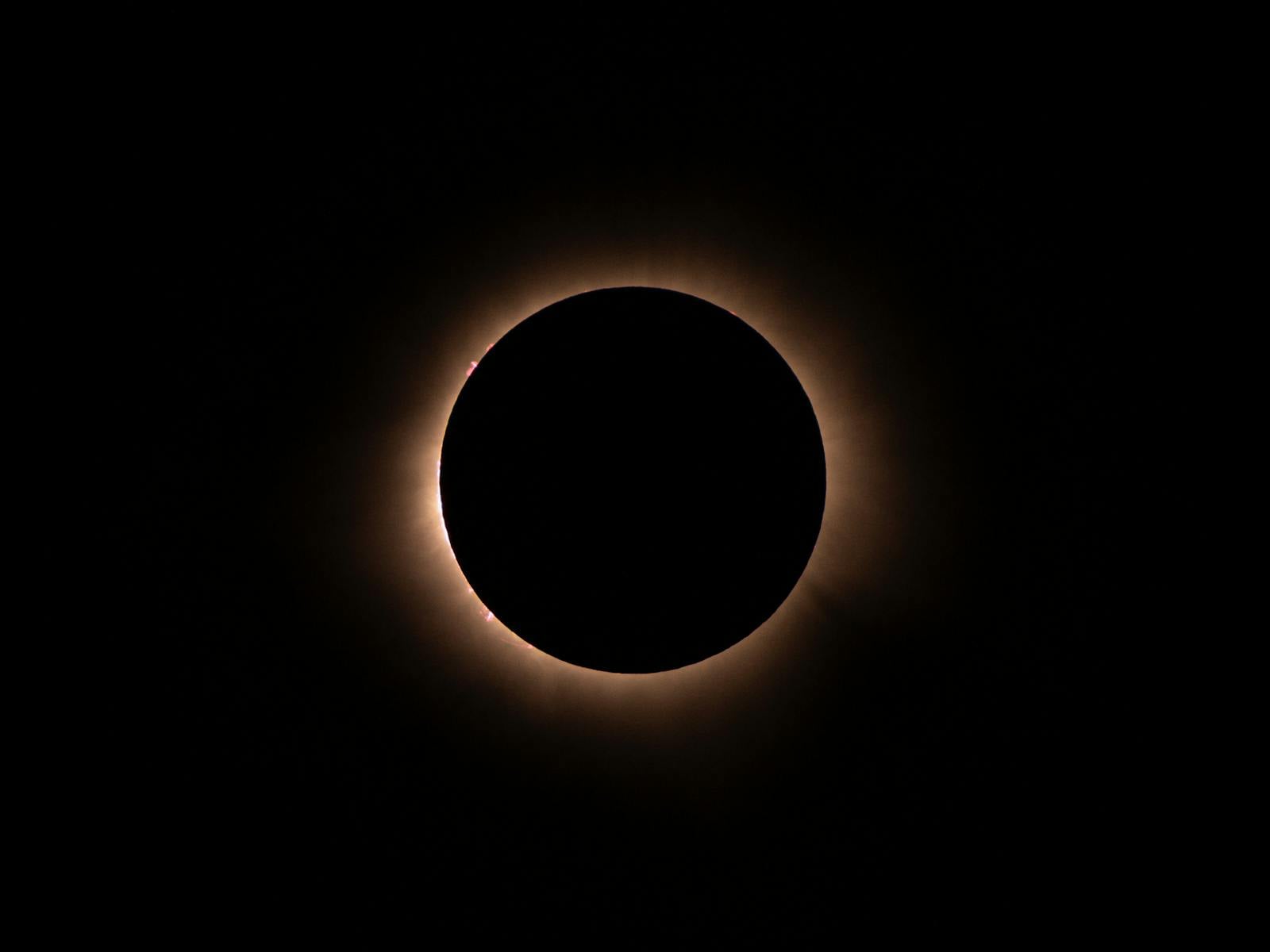
The burst originated from a helmet streamer, one of the elongated magnetic structures that arch outward from the Sun’s corona and trace the boundary between regions of opposite magnetic polarity. Helmet streamers are familiar features in solar eclipse photographs. They are not usually associated with sustained radio emission on this scale.
The duration is so far outside the established range that researchers had to look for a sustaining mechanism rather than a single triggering event. That search is what makes the discovery a problem for existing magnetic-field models, not just a curiosity for the record book.
Three eruptions, one reservoir
The leading explanation involves three coronal mass ejections that erupted from roughly the same region of the Sun during the period in question. Each one appears to have re-energized a population of electrons trapped along the helmet streamer’s magnetic field lines. In the peer-reviewed paper reporting the event, the structure is described as a corotating electron reservoir — a kind of long-lived magnetic bottle that kept emitting radio waves as the Sun rotated.
That framing matters. It suggests the 19-day burst was not a single anomaly but a chain of events linked by a stable magnetic geometry. If the geometry holds, the electrons keep radiating. If a new CME passes through, the population gets topped up. The streamer, in other words, is behaving less like a transient feature and more like a persistent accelerator — a structural category that current solar physics does not cleanly recognize.
What the record actually means
Records in heliophysics are slippery. The Sun has been emitting radio bursts for as long as it has had a corona, but humans have only been listening with sensitive instruments for a few decades, and only with a distributed fleet for the last twenty years or so. Calling something a record-breaker means it is the longest such event in the modern observational record.
That caveat does not diminish the finding. It sharpens it. The 19-day duration suggests that the physics of these reservoirs may allow durations far longer than previously modeled, given the right magnetic configuration and a steady supply of fresh CMEs. The implication is that the boundary between “eruption” and “ongoing structure” is blurrier than the categorical distinction suggests.
The reach of that revision is not confined to the Sun. If similar reservoirs exist on other Sun-like stars, the radio signatures of stellar CMEs may also persist far longer than current models predict — a point with implications for studies of exoplanet habitability, where stellar activity is one of the dominant variables. A magnetic geometry that can trap and re-energize electrons for weeks changes the assumed duty cycle of stellar magnetic activity.
Why it took a fleet to see it
The observation, which ran from August 21 to September 9, 2025, combined data from NASA’s twin STEREO spacecraft, the Parker Solar Probe, and the Wind mission, along with the joint ESA-NASA Solar Orbiter. The Sun rotates roughly every 27 days as seen from Earth, which means a feature on its near side will swing around to the far side within about two weeks. A 19-day burst outlasts that geometry — no single vantage point could have characterized it.
Together, those probes occupy different points around the inner solar system, giving researchers continuous coverage of the source region even as it rotated out of Earth’s view. That continuity is what allowed the reservoir to be identified as a single sustained structure rather than a series of separate events.
What comes next
The August 2025 event may become part of the reference catalog that solar physicists use to validate models of magnetic confinement in the corona. Follow-up analyses could compare it to shorter Type IV bursts and look for similar long-duration signals buried in archival data from earlier in the current solar cycle. Solar Cycle 25 activity has remained elevated through 2025 and is expected to stay relatively high into 2026, leaving room for another such event.
Parker Solar Probe continues its series of close perihelion passes, each one bringing it deeper into the corona than any previous spacecraft. Solar Orbiter is now producing high-resolution images of the polar regions for the first time. If another extended burst occurs during the remainder of Solar Cycle 25, the fleet is in position to catch it from the start — and to test whether the corotating reservoir is a rare configuration or a recurring one that has simply been hiding inside categories built too narrowly to contain it.
The 19-day radio burst is a reminder that the Sun keeps producing phenomena that exceed the descriptions built to contain them. The structures may have been there all along. The framework to recognize them is what is new.
