

Polish space technology company Creotech Instruments plans to raise $118 million to build a new satellite factory in Poland by 2029, a move that would quadruple its manufacturing output and position the Warsaw-based firm as one of Central Europe’s largest satellite builders.
The fundraise, announced by CEO Grzegorz Brona, is tied to a long-term strategy that shifts the company away from microsatellites toward heavier minisatellite platforms, with annual production capacity rising from 10 to roughly 40 spacecraft by the end of the decade, according to SpaceNews.
The timing is not accidental. Creotech’s existing facility in Piaseczno, near Warsaw, is full.
A backlog that outgrew the building
According to reporting in SpaceNews, Brona said the company’s facility in Piaseczno near Warsaw is operating at full capacity with approximately 600 million złoty in backlogged orders for the space sector.
That backlog, worth roughly $165 million at current exchange rates, is anchored by two government contracts where Creotech is the prime contractor. The first is Mikroglob, an optoelectronic Earth observation microsatellite program for the Polish military. The second is CAMILA, Poland’s effort to build a sovereign national satellite constellation, valued at 52 million euros (about $61 million).
Creotech reported 146 million złoty ($40.4 million) in space-sector revenue last year and turned a net profit for the first time in its history.
From microsatellites to something heavier
The expansion is not just about volume. It is about mass.
Creotech’s current production line centers on Kestrel nanosatellites and Eagle microsatellites, spacecraft typically weighing tens of kilograms. The new strategy moves the company up the weight class.
The Seagull platform, a 150-kilogram minisatellite carrying a synthetic aperture radar payload, is scheduled to fly in 2028 as part of CAMILA. A year later, the company plans to introduce SWAN, supporting satellites in the 200 to 300 kilogram range. By 2032, Creotech aims to roll out EMU, a platform built for missions up to 500 kilograms.
That progression mirrors what European Earth observation customers, both governmental and commercial, are increasingly asking for: heavier payloads, more power, longer mission lives. Microsatellites built the market. Minisatellites are where the contracts now sit.
A purpose-built factory, not a retrofit
Brona told Warsaw Business Journal that the company intends to build a greenfield facility rather than modernize existing sites, arguing that a purpose-built factory would better optimize satellite manufacturing. Creotech is currently choosing between two locations and hopes to finalize the decision before autumn.
The company will commit a significant portion of its own capital alongside the broader $118 million raise.
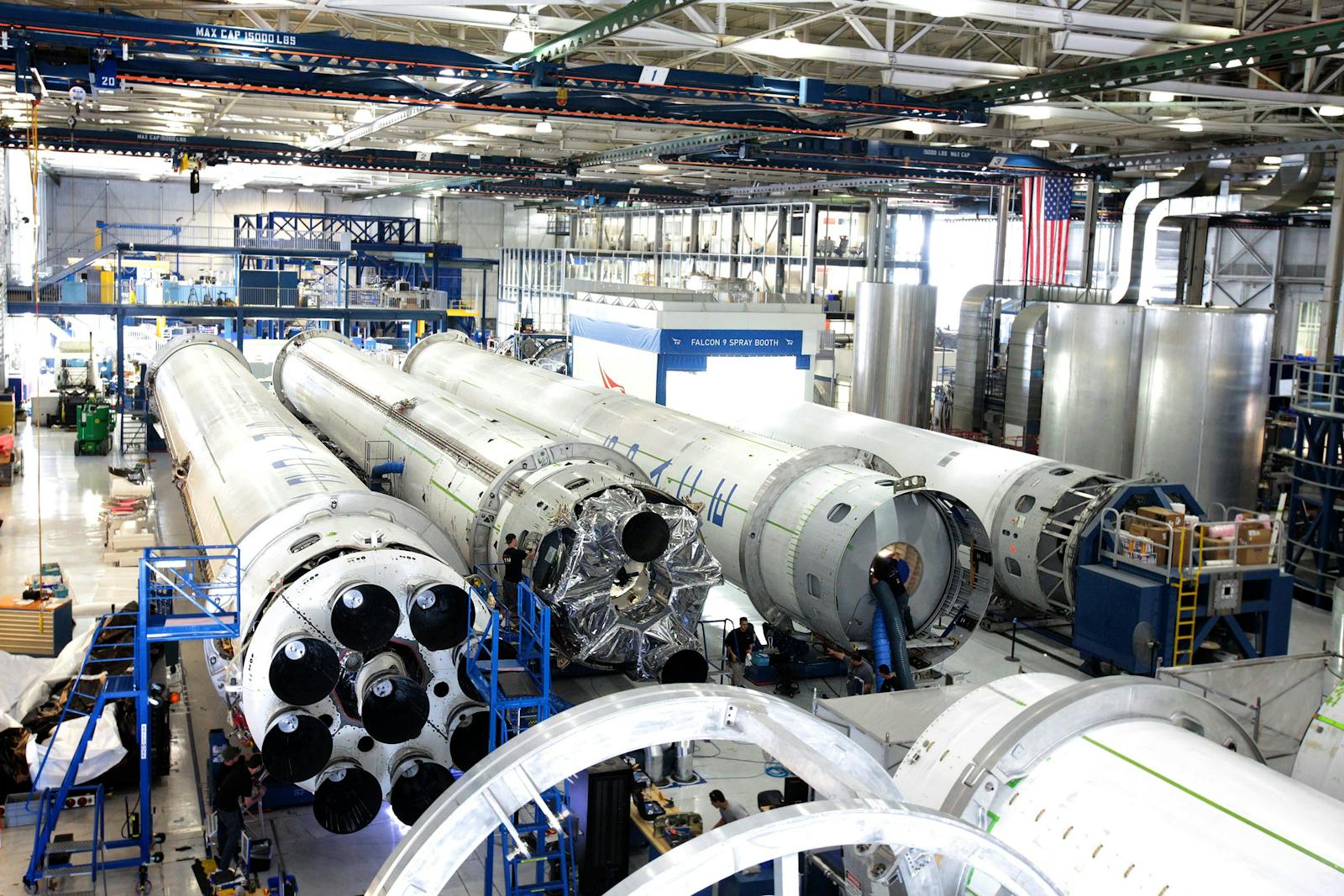
Building a satellite factory from scratch is a different problem than scaling a clean room. Production flow, integration bays, environmental test chambers, and shipping logistics all benefit from being designed together rather than fitted into an existing structure. SpaceX’s Starlink factory in Redmond and Airbus’s OneWeb Satellites line in Florida both followed this logic.
Poland’s space sector finds a moment
Creotech’s expansion sits inside a wider shift in how Poland and its neighbors think about space. Warsaw has steadily increased its contributions to the European Space Agency and is funding national programs that ten years ago would have been outsourced to Western primes.
CAMILA is the clearest example. The constellation is meant to give Poland sovereign Earth observation capability, reducing dependence on commercial imagery providers or allied governments. Another Polish firm, Eycore, recently launched the country’s first domestically built SAR Earth observation satellite, signaling that the supplier base around Warsaw is thickening.
The geopolitical backdrop matters. Russia’s war in Ukraine has made satellite imagery and secure communications strategic priorities for every NATO member on the alliance’s eastern flank. Poland has responded by raising defense spending past 4% of GDP and folding space into that calculation.
Last April, Creotech joined a multinational initiative to develop a hybrid satellite constellation across the Three Seas region, working with companies from Croatia, the Czech Republic, Greece, Slovakia, and Slovenia. The goal is shared Earth observation capacity across the Baltic, Adriatic, and Black Sea basins.
The financing question
Raising $118 million in a Polish capital market that has been uneven for new listings is the harder part of the plan. Creotech trades on the Warsaw Stock Exchange, where recent large offerings have struggled to deliver returns. Convenience-store operator Żabka debuted in October 2024 with one of the largest IPOs in the exchange’s history and has yet to deliver a positive return for investors a year on, despite strong underlying business growth.
Satellite manufacturing is a tougher pitch than convenience retail. Customers are concentrated, contracts are lumpy, and margins depend heavily on execution. Creotech’s profitability milestone helps the story, but the company will need to convince investors that the backlog is durable and that minisatellite demand will materialize on schedule.
The broader European picture offers some support. Defense and security ministries across the continent are buying more satellites, faster. Commercial operators are placing larger constellation orders. And capital is flowing into the sector globally, with companies like K2 Space raising $250 million to scale its own large-satellite platform.
Competitive position
Creotech is not trying to be SpaceX. It is trying to be the dominant satellite prime in a region that has historically bought from Airbus, Thales Alenia Space, and OHB. That is a narrower and more defensible target.
The European satellite market is fragmented, with national champions increasingly preferred by national governments for sovereignty reasons. Poland’s defense procurement increasingly favors domestic suppliers where capability exists, which is exactly the gap Creotech is positioning to fill. Other regional players, including firms working on navigation constellation hardware, are pursuing similar strategies in their home markets.
At 40 satellites per year, Creotech would still be smaller than the largest Western European integrators. But it would be large enough to bid credibly on full constellation programs rather than just subsystems or single spacecraft.
What to watch
Three milestones will determine whether the plan holds. The first is site selection, expected before the end of this year. The second is the structure and pricing of the capital raise itself, which will test investor appetite for Polish space exposure. The third is the 2028 launch of the Seagull SAR satellite, the first real demonstration that Creotech can deliver a minisatellite-class spacecraft on time and on budget.
Miss any of those, and the 40-satellites-per-year target becomes aspirational. Hit them, and Poland has a satellite prime contractor at industrial scale by the end of the decade.
For a country that did not have a domestic satellite industry worth naming fifteen years ago, that is a reasonable measure of how quickly the European space map is being redrawn.
Articles cover space industry news and the Mind & Meaning pillar (human psychology, ambition, isolation, meaning under extremes). The Space Daily Editorial Team produces content through a collective process: research, source verification, drafting, technical review, and editing. Articles under this byline reflect the team’s editorial judgment rather than a single writer’s. Space Daily takes editorial responsibility for content published under this byline. See our editorial policy for more on how we work.
Photo by Erik Mclean on Pexels
