
A softball-sized satellite from a small Miami company has quietly rewritten the rules of who gets to fly nuclear power in space. City Labs’ BOHR spacecraft reached orbit early Tuesday aboard a SpaceX Falcon 9, becoming the first commercially built nuclear-powered satellite ever launched and the first mission to clear the Federal Aviation Administration’s new commercial nuclear launch approval process.
The Betavoltaic Orbital High-Reliability satellite — BOHR for short — lifted off from Vandenberg Space Force Base at 12:10 a.m. PT on July 7 as part of SpaceX’s Transporter-17 rideshare mission, sharing the ride with 80 other payloads. It now circles Earth in a sun-synchronous orbit between 350 and 400 miles up.
The scale is deliberately modest. BOHR is a 1U CubeSat, roughly the size of a softball, and its onboard tritium betavoltaic battery produces power measured in nanowatts to microwatts. That is nowhere near enough to run a spacecraft bus, which is why the satellite uses conventional solar panels for its housekeeping functions. The nuclear device is the experiment, not the workhorse.
What actually flew
City Labs’ tritium-based battery works on a principle closer to a solar cell than a reactor. Tritium, a radioactive isotope of hydrogen, decays by emitting low-energy beta particles — essentially electrons. A semiconductor catches those electrons and converts them directly into electrical current. There is no heat cycle, no moving parts, no plutonium.
That distinguishes betavoltaics from the radioisotope thermoelectric generators that have powered NASA’s deep-space missions since the 1960s, from Voyager to Perseverance. RTGs generate hundreds of watts from the heat of decaying plutonium-238. Betavoltaics generate almost nothing by comparison — but they can run for decades, tolerate extreme cold, and pose a fraction of the handling risk.
The Nuclear Regulatory Commission’s fact sheet on tritium notes that the isotope emits a weak beta particle that cannot penetrate skin and does not travel far in air. That safety profile is why City Labs CEO Peter Cabauy has said a tritium battery can legally be shipped to a residential address — something unthinkable for most nuclear devices. Tritium is already inside millions of consumer objects, from tritium-illuminated exit signs in office buildings to the glowing dials on certain wristwatches and dive gauges.
The regulatory milestone matters more than the wattage
The technical demonstration is real, but the more consequential first is bureaucratic. BOHR is the first commercial mission to be authorized under the FAA’s new licensing regime for nuclear payloads, a framework built out of National Security Presidential Memorandum-20, issued in 2019. Before this process existed, any US launch involving radioactive material required a bespoke interagency review with no clear commercial pathway.
“The innovation here is not just in the technology. It’s in the regulatory part,” Cabauy told Payload Space after the launch, arguing that scaling nuclear power in orbit beyond the government-only era of the 20th century required exactly this kind of commercial precedent.
The FAA issued its affirmative payload authorization for the mission on September 30, 2025, after a comprehensive launch safety assessment led at City Labs by Kevin Makinson and independently validated by Sandia National Laboratories — the same Department of Energy lab that certifies parts of the US nuclear weapons stockpile. That approval is now a template. Any US company that wants to fly a nuclear payload — a betavoltaic, a small RTG, eventually something larger — has a documented pathway that did not exist eighteen months ago.
Why a Miami startup, and why now
City Labs is small, and its origin story tracks with how a lot of dual-use space technology actually gets built in the United States. The company was co-founded in 2005 by physicist Peter Cabauy and Denset Serralta, and developed its tritium battery under Department of Defense funding. The Air Force awarded City Labs a $1.25 million SBIR contract in 2023 to develop a tritium-powered COMSEC battery, and SpaceWERX followed with a $1.7 million contract for an autonomous imaging sensor for Space Force satellites. NASA has worked with the company on power sources for instruments destined for permanently shadowed craters at the lunar poles.
Those craters are the point. The lunar south pole, the target for NASA’s Artemis landings, contains regions that have not seen sunlight in billions of years. Water ice sits there, and so does the scientific and strategic case for a sustained human presence. Solar panels are useless in permanent shadow. Batteries freeze. A device that quietly produces electricity for a decade or more, needs no sunlight, and can be handled without a hazmat protocol solves a specific problem that Artemis planners have been staring at for years.
The payload will orbit for roughly ten years, though City Labs expects usable performance data within weeks. Lockheed Martin began running durability tests on the company’s tritium devices in 2008 in Orlando, subjecting the batteries to temperatures from -55°C to 150°C along with vibration, vacuum, and pressure stresses, and those units are reportedly still functioning nearly two decades later.
The gap between nanowatts and a moon base
Honest accounting requires acknowledging what BOHR cannot do. A nanowatt-to-microwatt power source will not run a rover, a lander, or a habitat. It will run a clock, a temperature sensor, a low-duty-cycle radio beacon, or a memory chip that needs to stay alive through a fourteen-Earth-day lunar night.
City Labs argues the technology scales. The company is also working on tritium-based mini radioisotope heater units capable of producing thermal output in the tens of watts and eventually more — closer to what a small lunar surface instrument would need. NASA and the Department of Energy have separately committed to deploying a 100-kilowatt fission reactor on the lunar surface by 2030, and Spacedaily has covered how that directive links to the parallel nuclear propulsion program for Mars. That reactor will not be a betavoltaic. But the sensor network around it, the distributed instruments, the cold-soaked hardware in shadowed craters — those are the addressable market City Labs is aiming at.
A commercial door that was previously closed
For most of the space age, nuclear power in orbit was the exclusive province of governments — the United States, the Soviet Union, and a handful of others. The plutonium supply was controlled. The launch approvals were political. The insurance was uninsurable. Commercial operators stayed away.
The reason the industry still flinches from the phrase “commercial nuclear satellite” traces to Kosmos 954, the Soviet reconnaissance craft whose onboard fission reactor failed to separate on re-entry in January 1978. Debris scattered along a 600-kilometre track from Great Slave Lake to Baker Lake, and the joint Canadian-American recovery, Operation Morning Light, spent most of that year sweeping a 124,000-square-kilometre area for radioactive fragments. Betavoltaics are a different animal — no reactor, no fission products, and tritium’s decay path ends at helium-3, which is inert.
What changed is a combination of chemistry and paperwork. Tritium is a low-consequence isotope that regulators can approve without the drama of plutonium-238. The FAA now has a process. And the customer base — lunar landers, cislunar surveillance satellites, deep-space smallsats, national security payloads that need to stay powered in eclipse — is growing fast enough to justify the engineering.
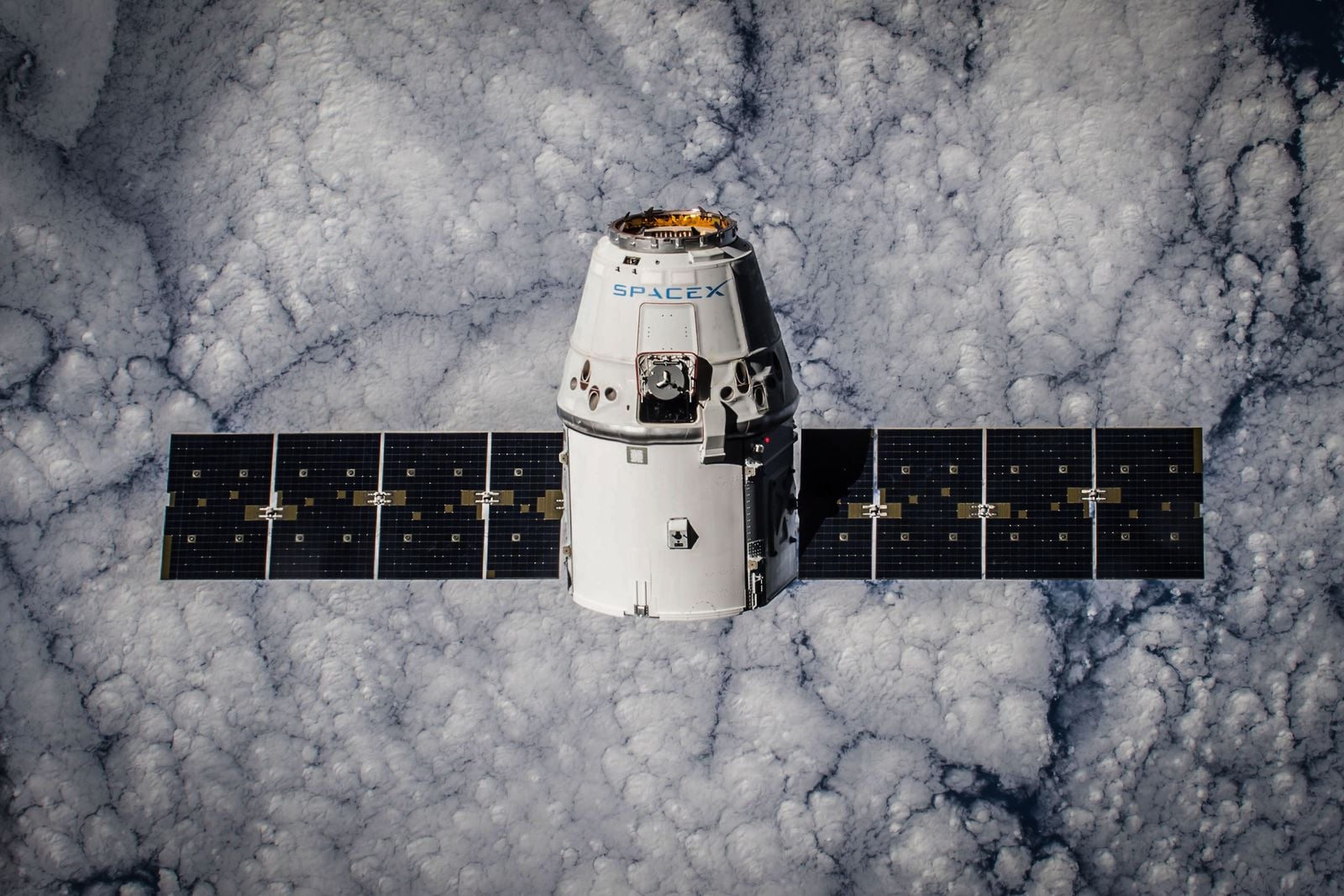
Transporter-17 carried 81 satellites total, one of which was BOHR. That framing is worth sitting with. A rideshare manifest that once would have been unthinkable — 80 commercial payloads and a nuclear device — flew without incident, without controversy, and without special handling beyond what the new regulatory process already anticipated. SpaceX has now put more than 1,800 payloads into orbit through its Transporter series since 2021, and Spacedaily’s earlier coverage of Transporter-14 gives a sense of how routine 70-to-100-payload manifests have become.
City Labs described the mission as a pathfinder for civil and national security applications, and Cabauy has said the regulatory approval opens the door for other companies pursuing similar power technologies. Space.com noted that the FAA’s clearance was the first ever issued under the NSPM-20 framework, meaning the file BOHR generated is now the working reference for whichever company comes next.
That is the real story of BOHR. A softball of hardware in low Earth orbit is producing almost no electricity. But it has demonstrated that a small company in Miami can get a nuclear device through the FAA, onto a Falcon 9, and into space alongside eighty commercial neighbors. The next company to try it will find the paperwork already drafted.
