
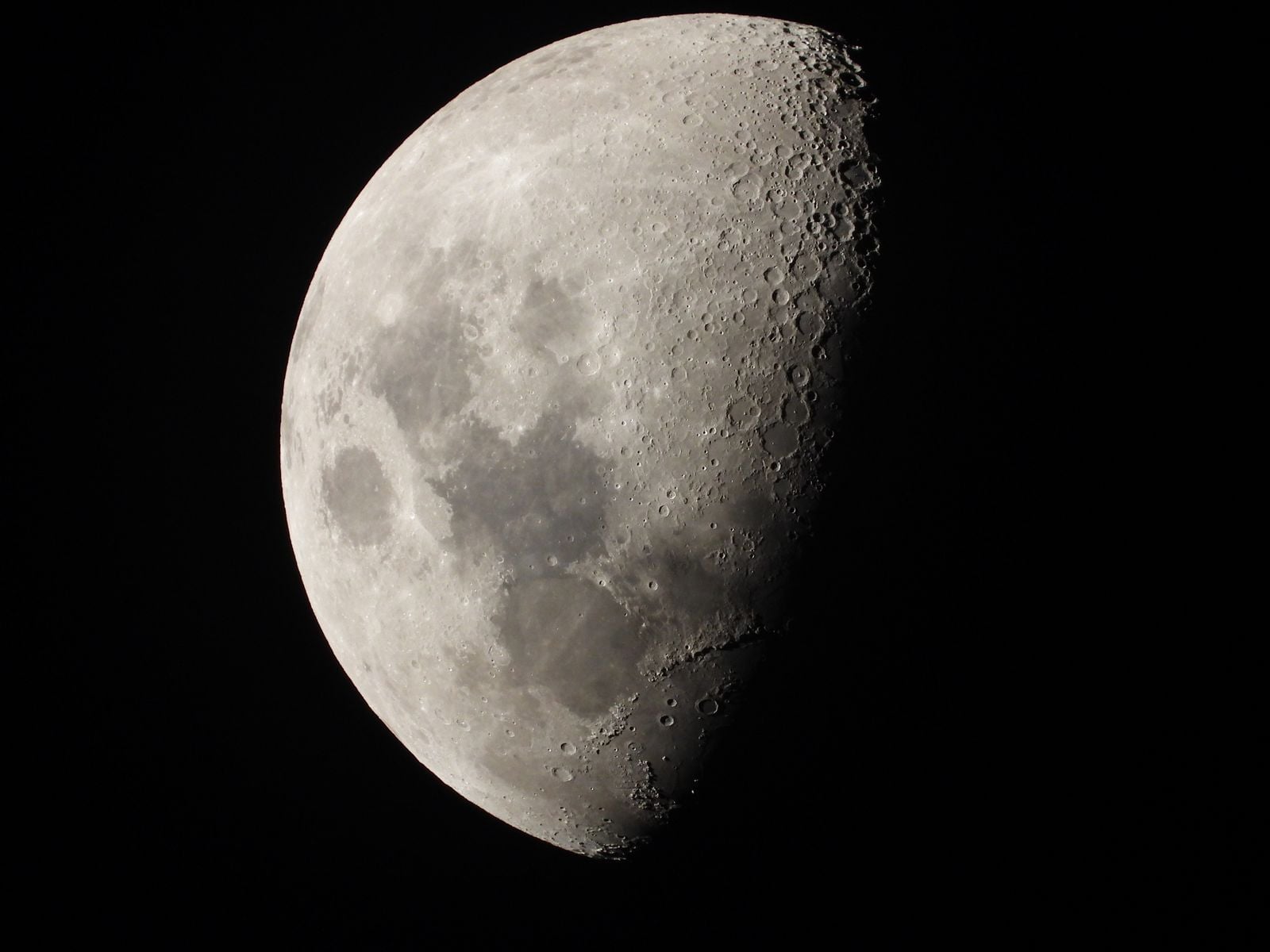
On July 20, 1969, roughly two hours after the Eagle lander touched down in the Sea of Tranquility and about six hours before Neil Armstrong opened the hatch to step onto the lunar surface, Buzz Aldrin reached into a small fabric bag known as his Personal Preference Kit and pulled out a plastic pouch of wine, a wafer of bread, and a small silver chalice. He read a line from the Gospel of John off an index card, poured the wine, and took Communion. The radio link to Houston was open but silent. NASA had asked him not to say what he was doing.
He was the first person to eat or drink anything on another world, and the meal was a religious sacrament.
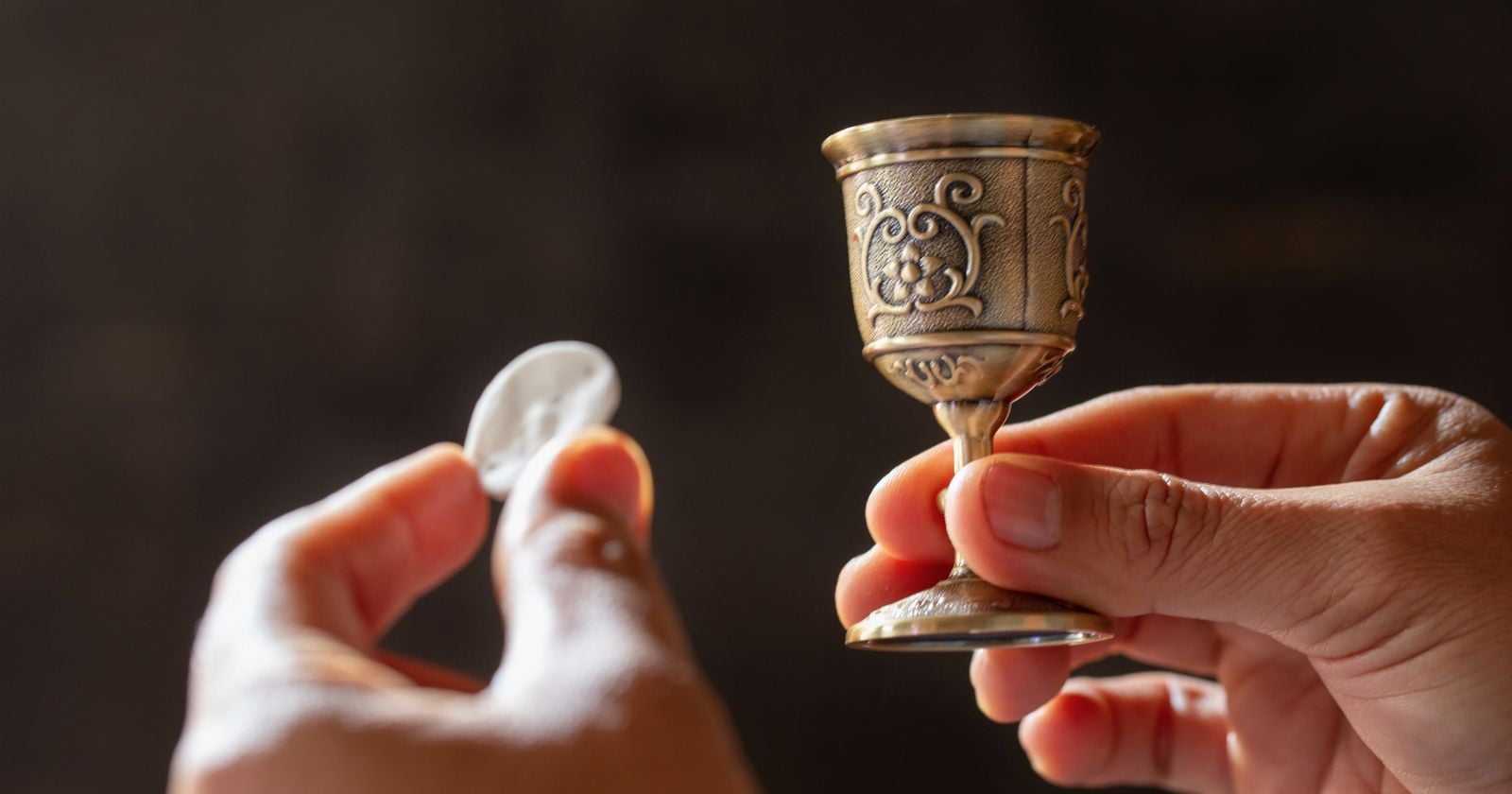
The chalice, the wafer, and the plastic pouch
The elements came from Webster Presbyterian Church in Webster, Texas, a small congregation near the Manned Spacecraft Center where most of the Apollo astronauts trained. Aldrin was an elder there. The pastor, Dean Woodruff, helped him prepare the communion elements a few weeks before launch. Both items went into the flight bag NASA allowed each astronaut for personal effects — a pouch the size of a paperback book.
Aldrin later described the wine curling slowly up the side of the cup in one-sixth gravity, clinging to the silver in a way it never would on Earth. According to his own account of the ceremony, he read the words “I am the vine, you are the branches. Whoever remains in me, and I in him, will bear much fruit; for you can do nothing without me” from a small handwritten card before consuming the elements.
The whole ritual took a few minutes. Armstrong watched but did not participate. Then the two men went back to running through the checklist for the moonwalk.
Why Houston went quiet
The silence on the loop was not accidental. Seven months earlier, on Christmas Eve 1968, the crew of Apollo 8 — Frank Borman, Jim Lovell, and Bill Anders — had read the opening ten verses of Genesis on live television while orbiting the Moon. It was one of the most-watched broadcasts in history to that point.
It also drew a lawsuit. The atheist activist Madalyn Murray O’Hair, who had successfully argued the case that ended mandatory Bible reading in American public schools, sued NASA on the grounds that federal employees reading scripture from a government spacecraft violated the Establishment Clause. The case was eventually dismissed for lack of standing, but in July 1969 it was still very much alive in the courts, and NASA’s legal counsel was nervous.
NASA administrator Thomas Paine asked Aldrin to keep the ceremony private and not broadcast it. Aldrin agreed. He read the scripture verse silently and described the act on the air only as According to reports, Aldrin asked listeners to take a moment to reflect on the landing and give thanks in their own way, without mentioning the communion ceremony directly.
That line went out over the air. The Communion itself did not.
What Aldrin actually said on the loop
The transcripts of the Apollo 11 mission are among the most-scrutinized documents in the history of spaceflight, and a National Geographic reconstruction of the crew’s real communications preserves the moment. Aldrin’s public request for a pause of reflection was made shortly after landing, before the moonwalk. He did not mention wine, bread, church, God, or Presbyterianism on the open channel. He mentioned none of the specific words of the sacrament.
The private character of the ceremony was part of the negotiation. NASA did not forbid the act. It only forbade its broadcast.
The Personal Preference Kit
Every Apollo astronaut was allowed a small allotment of personal items to fly. The bag was fabric, unpressurized, and weighed around a pound. Its contents were logged and inspected before launch, but the astronauts had wide latitude over what went inside.
Armstrong carried fragments of wood and fabric from the Wright brothers’ 1903 Flyer. Michael Collins, orbiting alone in the command module Columbia, carried personal items of his own. Aldrin carried the Communion elements, a silver chalice, and the index card with the verse from John 15:5.
The kits were also where the astronauts stored the small, ordinary tools that ended up mattering more than anyone expected. The most famous example is the felt-tip pen Aldrin used to rearm the ascent engine after a circuit breaker snapped off inside the Eagle — a piece of hardware that sold for more than $850,000 at auction. The pen and the wafer were both stowed in the same small bag. Both, in their own way, kept the mission on course.
A Presbyterian elder on the Moon
Aldrin was not a casual worshipper. He had been ordained an elder at Webster Presbyterian in 1968, the year before the flight. The chalice he used on the Moon was given to him by his church in Texas.
Webster Presbyterian still marks the anniversary every year. The chalice that flew to the Moon returned with Aldrin and was given back to the church, where it is brought out on the Sunday closest to July 20 for what the congregation calls Lunar Communion Sunday. The wafer used on the Moon was consumed. The wine was drunk.
Aldrin’s later ambivalence
In the decades after the flight, Aldrin’s public statements about the Communion shifted. He wrote about it warmly in his 1970 memoir Return to Earth. In his 1970 memoir Return to Earth, Aldrin described the communion ceremony as an expression of thanksgiving and hope. But he also came to wonder, in later writing, whether a Christian sacrament had been the right way to consecrate the first human meal on another world.
In a 1970 Guideposts essay, Aldrin reportedly expressed second thoughts about celebrating communion on the moon, noting that while personally meaningful, it was a Christian ritual performed during a mission undertaken in the name of all humanity, regardless of faith.
The ambivalence is part of what makes the episode strange. The first meal eaten by a human being on another world was chosen with specific denominational care, in a specific church basement in Texas, and then quietly revised by its own author as the years went on.
The pending lawsuit that shaped the silence
The O’Hair suit against NASA — O’Hair v. Paine — is often described as the reason for the silence, and that is broadly correct, but the timeline matters. The suit was filed in 1969, moved through the federal courts for several years, and was eventually thrown out in 1971 when the Supreme Court declined to hear it, letting a lower-court dismissal for lack of standing stand.
In July 1969, though, NASA’s lawyers did not know how it would end. The Genesis reading from Apollo 8 had generated tens of thousands of pieces of mail, most supportive but a significant minority furious. The agency’s calculation was straightforward: another broadcast religious moment during the most-watched event in the history of human civilization could invite years of legal exposure. A private ceremony, unbroadcast, could not.
So the ceremony happened. It was simply not narrated to the world.
The six hours between landing and moonwalk
One detail of Apollo 11 that has faded from popular memory: the moonwalk did not happen immediately after landing. The Eagle touched down at 20:17 UTC on July 20. Armstrong’s boot did not touch the surface until 02:56 UTC on July 21 — more than six hours later.
The original flight plan had scheduled a sleep period between landing and the walk. Armstrong and Aldrin asked Houston for permission to skip the rest and go outside earlier than planned. Even so, there were hours of checklists, suit preparation, and cabin depressurization to work through.
The Communion fell into that window. It was not a ceremony performed at the moment of stepping onto the Moon. It was a private meal taken inside a small aluminum-walled cabin sitting on the lunar surface, while the two men who had just landed on another world waited for the pressure equalization to finish and the checklists to close out.
What flew, what came back, what stayed
The chalice returned to Earth and is now kept at Webster Presbyterian Church. The index card with the scripture verse also returned. The wine pouch, empty, came back in the trash stowage of the ascent stage.
Everything else — the descent stage of the Eagle, the American flag, the seismometer, the laser retroreflector, the boot prints — stayed. Aldrin has continued to advocate for space exploration for more than half a century since, and at 96, he watched the launch of Artemis II from his home in California in April 2026, marking the first crewed mission to leave low Earth orbit since Apollo 17 in 1972. The Communion chalice is older than the space program that flew it and outlasted the one that came after.
Space Daily has written before about how researchers are now pulling water directly out of lunar soil to make oxygen and rocket fuel — a technical revolution that would have astonished the crew of Apollo 11, who carried every drop of what they drank up from Earth. The first liquid ever poured on the Moon traveled the full 240,000 miles in a plastic pouch inside a fabric bag inside an aluminum cabin. It was a sip of wine.
A private meal on a public world
The Apollo 11 mission was watched by an estimated 650 million people, roughly one in five human beings then alive. Every gesture on the surface was tracked, timed, transcribed, and photographed. Every word on the loop was recorded and later parsed for meaning.
And inside that vast public spectacle, one of the two men on the Moon took a private meal. He did it deliberately, off the air, at the request of the agency that had sent him. He read a verse to himself. He drank wine that had been poured for him by a small congregation in a small church in a small town outside Houston.
The bootprints Armstrong and Aldrin left behind in the Sea of Tranquility are still there, undisturbed. So is the descent stage. The chalice is in Webster, Texas, kept in a locked cabinet and brought out once a year. On the Sunday closest to July 20, someone lifts it, fills it, and passes it around — the same small silver cup that once held wine on the surface of another world, in a room the size of a small closet, while two men in bulky white suits waited for a hatch to open.
