
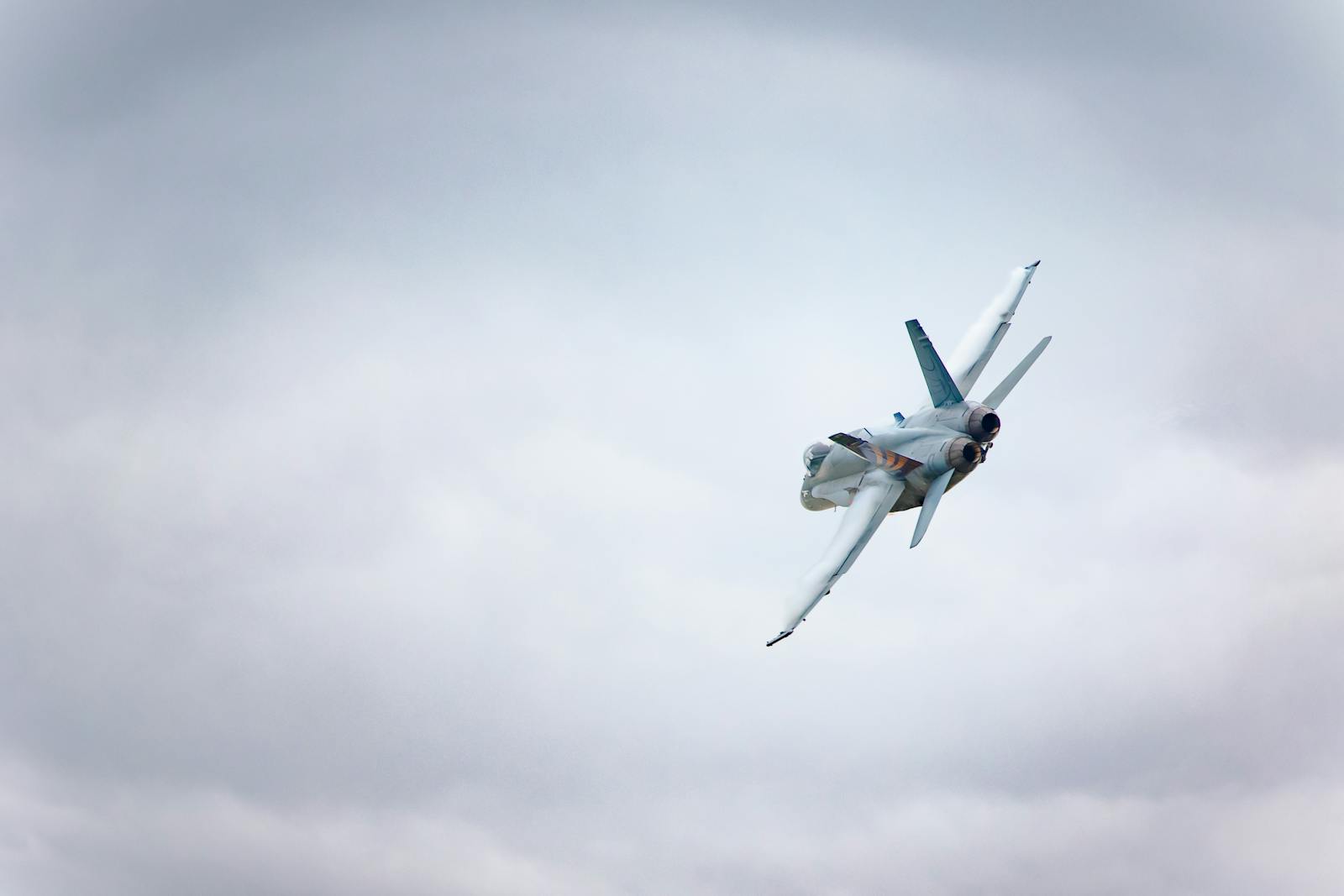
The X-59 is expected to cross Mach 1 for the first time in early June 2026 at about 43,000 feet, not as a speed stunt but as the opening move in a regulatory case NASA has been assembling since the United States restricted routine civil supersonic flight over land in the early 1970s.
The aircraft is built to do something narrower and stranger than fly fast. It is built to make a sonic boom arrive on the ground as a quieter pressure signature, the soft “thump” at the center of NASA’s Quesst mission.
That is why the first supersonic run matters. It begins the part of the program where the airplane stops being a shape on a ramp and becomes a flying argument about what the law should measure.
What happens in early June
NASA says the X-59 team expects the aircraft to fly faster than Mach 1 for the first time during a series of test flights in early June 2026, at approximately 43,000 feet and above 630 mph.
That first step is deliberately conservative. The milestone is to cross the barrier, gather data, and keep widening the flight envelope rather than jump immediately to the full mission profile.
The larger target comes after that. NASA says the aircraft will later fly a “mission conditions” profile at Mach 1.4, about 925 mph, at roughly 55,000 feet, the speed and altitude needed for the eventual community demonstrations over the United States.
The aircraft reached 43,000 feet and roughly Mach 0.95 in April 2026 during subsonic testing, according to NASA’s Quesst updates. Those flights were still short of the sound barrier, but they put the airplane close enough for the next series of tests to matter.
Why the thump matters more than the speed
The X-59 is not a prototype airliner. It is a single-seat research aircraft built by Lockheed Martin for NASA to test whether careful shaping can keep shock waves from merging into the sudden crack people associate with a sonic boom.
That shaping is visible before the aircraft ever leaves the runway. The nose stretches far ahead of the cockpit, the fuselage is long and narrow, and the pilot does not look through a forward windshield in the conventional way.
Instead, the aircraft uses an external vision system that feeds forward views to cockpit displays. NASA accepted that unusual cockpit arrangement because the front of the airplane is part of the acoustic design.
The goal is not silence. NASA has described the target as a quieter sonic thump, with expected levels as low as about 75 perceived loudness decibels, compared with Concorde-style booms above 100 PLdB.
That distinction is the entire program. If the public hears a low thump instead of a sharp boom, regulators may have a measurable noise basis for allowing some future overland supersonic operations.
The rule NASA is really testing
The regulation behind the X-59’s importance is not hidden. The FAA rule at 14 CFR 91.817 generally bars civil aircraft from operating in the United States above Mach 1 except under specific authorization.
In June 2025, the White House directed the FAA to take steps to repeal that prohibition and establish an interim noise-based certification standard, making the X-59’s data more politically useful than it would have been even a year earlier.
The order changed the policy direction, but it did not answer the acoustic question. A rule that allows civil supersonic flight over land still needs a defensible number, a test method, and public-response data regulators can use without relying on optimism from aircraft makers.
That is where Quesst fits. NASA plans to fly the X-59 over selected U.S. communities, collect ground measurements, and survey residents about how they perceive the sound.
The result is meant to be a dataset for U.S. and international regulators, not a sales brochure for one airplane. NASA’s own mission language says the community responses will be shared to help set data-driven acceptable noise thresholds for commercial supersonic flight over land.
The two-phase path to the ground signature
The first phase is about the aircraft itself. Engineers have to understand the X-59’s handling, propulsion, structures, flight controls, and instrumentation before they can make a serious claim about what reaches the ground.
That phase began after the aircraft’s first flight on Oct. 28, 2025, when NASA test pilot Nils Larson flew the X-59 for 67 minutes from Palmdale to NASA’s Armstrong Flight Research Center at Edwards, California.
NASA said that first flight stayed subsonic, reached about 12,000 feet and about 230 mph, and kept the landing gear down, which is common practice for an experimental aircraft on its first outing.
The next phase is acoustic validation. Engineers will use ground recording systems and aircraft measurements to determine whether the airplane’s shock pattern matches the low-boom predictions that justified the shape.
Only after that does the public-response campaign make sense. A community survey is not useful until NASA knows the aircraft is producing the kind of pressure signature the mission was designed to test.

Why this is slower than the old supersonic race
The X-59’s cautious pace looks almost theatrical beside the Cold War supersonic programs. The Soviet Tu-144 made its first flight on Dec. 31, 1968, before Concorde, and first went supersonic on June 5, 1969.
Concorde became the famous survivor of that era, but it never solved the overland boom problem. Its commercial life remained tied largely to oceanic routes, and Air France’s Concorde service ended in 2003 after 27 years.
The Tu-144 story was harsher. It was the first supersonic transport to fly and the first passenger aircraft to go supersonic, but the program was damaged by technical problems, crashes, and a short passenger-service life.
The X-59 has a different clock. NASA is not trying to beat another country to a first flight or sell tickets next season. It is trying to give regulators enough physical and human-response evidence to decide whether the old categorical ban can become a noise standard.
Other companies are moving around the same regulatory opening. Boom Supersonic’s XB-1 demonstrator broke the sound barrier on Jan. 28, 2025, and Hermeus announced in March 2026 that its unmanned Quarterhorse Mk 2.1 had received an FAA Special Airworthiness Certificate in the experimental category.
Those programs matter commercially, but they do not replace the X-59’s specific job. NASA’s aircraft is the one built around the low-boom community-response question.
What success would actually look like
Success is not just the X-59 going supersonic. A conventional fighter can do that, and Concorde did it for decades.
Success is a repeatable pressure signature low enough for ground instruments to record as a thump rather than a boom, then a set of community responses showing how ordinary people react when that sound arrives over their homes.
The selected communities have not been announced. NASA’s published planning for the community campaign describes multiple test locations, daytime operations, repeated surveys, and data meant to capture response across different conditions.
That makes the June 2026 supersonic run an opening measurement, not the verdict. The aircraft still has to fly the mission-condition profile, validate its acoustic signature, and then produce the public-response data regulators can use.
The old rule treated Mach 1 over land as the line that mattered. The X-59 is built to test whether the more important line is not the speed of the airplane, but the shape of the pressure wave that reaches the ground seconds later.
If the aircraft works, the sound under its flight path should not be the crack that made Concorde politically impossible over land. It should be a small atmospheric tap from 55,000 feet, quiet enough that the next argument begins with a number instead of a boom.
Related reading on Space Daily: X-59 QueSST more than the sum of its parts, Taming the boom, and Starbase neighbors take SpaceX to court over cracked walls and booming skies.
