

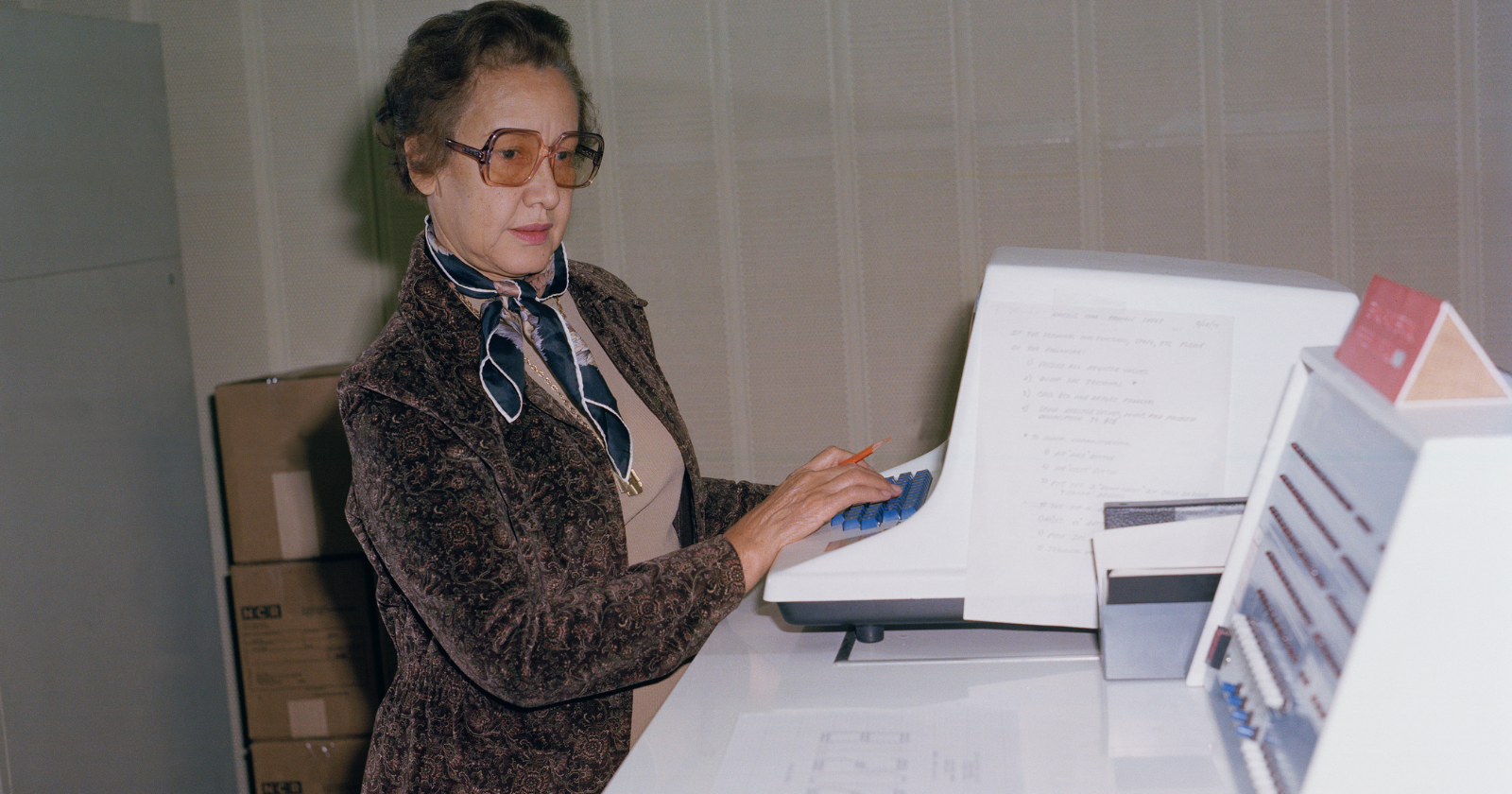
In the days before John Glenn climbed into the Friendship 7 capsule on 20 February 1962, he made an unusual request of the flight planners at Langley. The new IBM 7090 mainframes had produced the trajectory numbers for his three-orbit flight — go/no-go points, retrofire timing, splashdown coordinates. Glenn wanted them recomputed by hand. Specifically, he wanted them recomputed by Katherine Johnson, a mathematician in the West Area Computing unit. According to widely reported accounts, Glenn insisted that Johnson personally verify the computer’s calculations before he would fly, reportedly telling engineers he trusted her work above the machine’s output.
She checked them. It took a day and a half, working the equations on paper with a mechanical calculator. The numbers matched. Glenn flew.
The machine was new, and no one entirely trusted it
The room-sized IBM 7090 computers that ran Glenn’s trajectory sat at NASA’s Goddard Space Flight Center in Greenbelt, Maryland. The machine could do roughly 100,000 additions per second, a staggering figure at the time. It was also, in the parlance of the astronauts who would ride the numbers it produced, brand new. Nobody had watched it run an orbital mission profile in anger. And the profile for Mercury-Atlas 6 was not a simple parabola like Alan Shepard’s suborbital hop the previous May.
Glenn was going to circle the planet three times at roughly 17,500 miles per hour, reach an apogee of about 162 miles, and come home through an atmospheric re-entry corridor only a few degrees wide. Miss the corridor shallow, and the capsule would skip off the atmosphere back into space. Miss it steep, and it would burn.
The trajectory equations that governed every one of those decisions were, at their core, a set of differential equations Johnson had been working with since she joined the National Advisory Committee for Aeronautics — NASA’s predecessor — in 1953. She had co-authored the 1960 technical report that laid out the mathematics of putting a capsule into orbit and bringing it back to a specific point on Earth. She knew the numbers because she had helped invent the numbers.
Who Katherine Johnson was
Johnson was 43 at the time of the flight. She had graduated from West Virginia State College at 18 with degrees in mathematics and French. She was one of three Black students — and the only woman — chosen to integrate West Virginia University’s graduate program in 1939. By the time Glenn’s flight was being planned, she had been at Langley for nearly a decade, first in the segregated West Area Computing pool, later attached directly to the Flight Research Division.
The word “computer” in 1961 still meant a person. Rooms full of them, mostly women, sat at desks with mechanical calculators and slide rules and turned raw wind-tunnel data into flight coefficients. Johnson was one of these human computers. She was also, by the accounts of the engineers who worked with her, unusually fearless about pushing into rooms where women — and Black women in particular — were not expected to be. She asked to attend the editorial meetings where research reports were finalised. She asked to be listed as an author. She was, eventually.
What Glenn asked her to check
The Mercury-Atlas 6 trajectory was not a single calculation. It was a stack of them, chained together, each dependent on the last. The launch azimuth from Cape Canaveral. The insertion velocity required to hit a 100-nautical-mile perigee. The go/no-go points at the end of the first orbit, when mission control would decide whether to commit Glenn to two more laps. The retrofire attitude and duration. The predicted splashdown ellipse in the Atlantic.
Glenn had trained for months on simulators fed by the IBM’s numbers. He knew what the machine said would happen at every second of the flight. What he wanted, before he lit the Atlas booster underneath himself, was somebody who could do it without the machine and get the same answer. As at least one account of the request has it, he asked for the human computer by reputation and said he would go if she said the numbers were good.
Johnson worked through the equations by hand over about a day and a half. The results matched the IBM’s output to the precision the mission required. Glenn was told, and Glenn went.
The orbital mechanics for a Mercury capsule required solving a two-body problem — Earth and capsule — with a rotating reference frame, atmospheric drag terms for the low portions of the trajectory, and a burn correction for the retrofire. In closed form, most of these equations have no analytic solution. You approximate. You iterate. You use numerical methods that were, in 1961, still being refined at places like Langley and JPL.
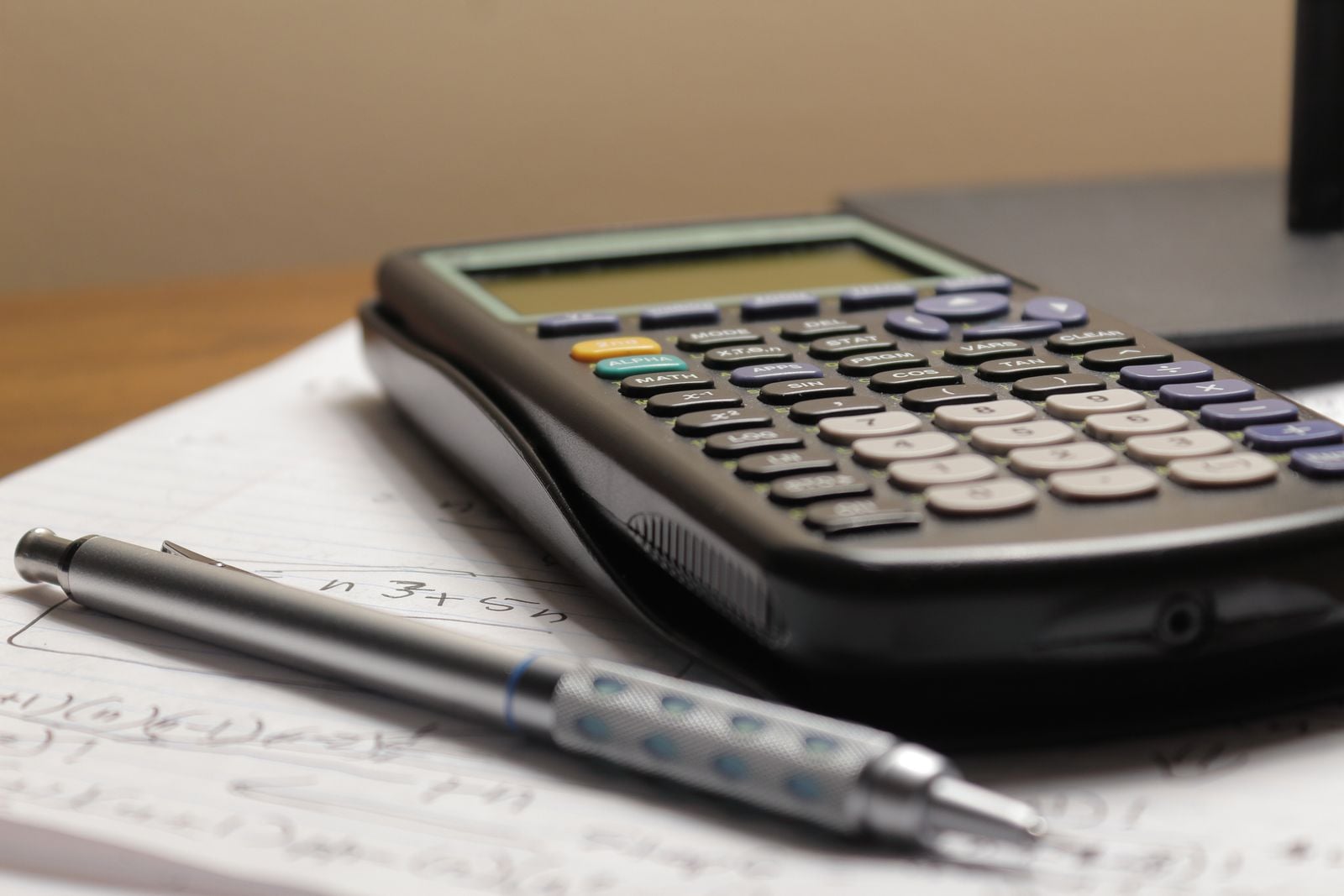
Johnson’s tool for the hand calculation was a Friden or Marchant mechanical calculator — a desk-sized machine of gears and levers that could multiply and divide but could not remember what it had just done. Every intermediate result had to be written down on paper, then re-entered. A single trajectory verification for Glenn’s mission involved thousands of these operations.
She got the same answer as the IBM. That is the part worth sitting with. A room-sized computer capable of 100,000 additions a second, and a woman with a mechanical calculator and a legal pad, arrived at trajectory numbers that agreed to the precision the mission required. The machine was faster. It was not, in 1962, more reliable.