
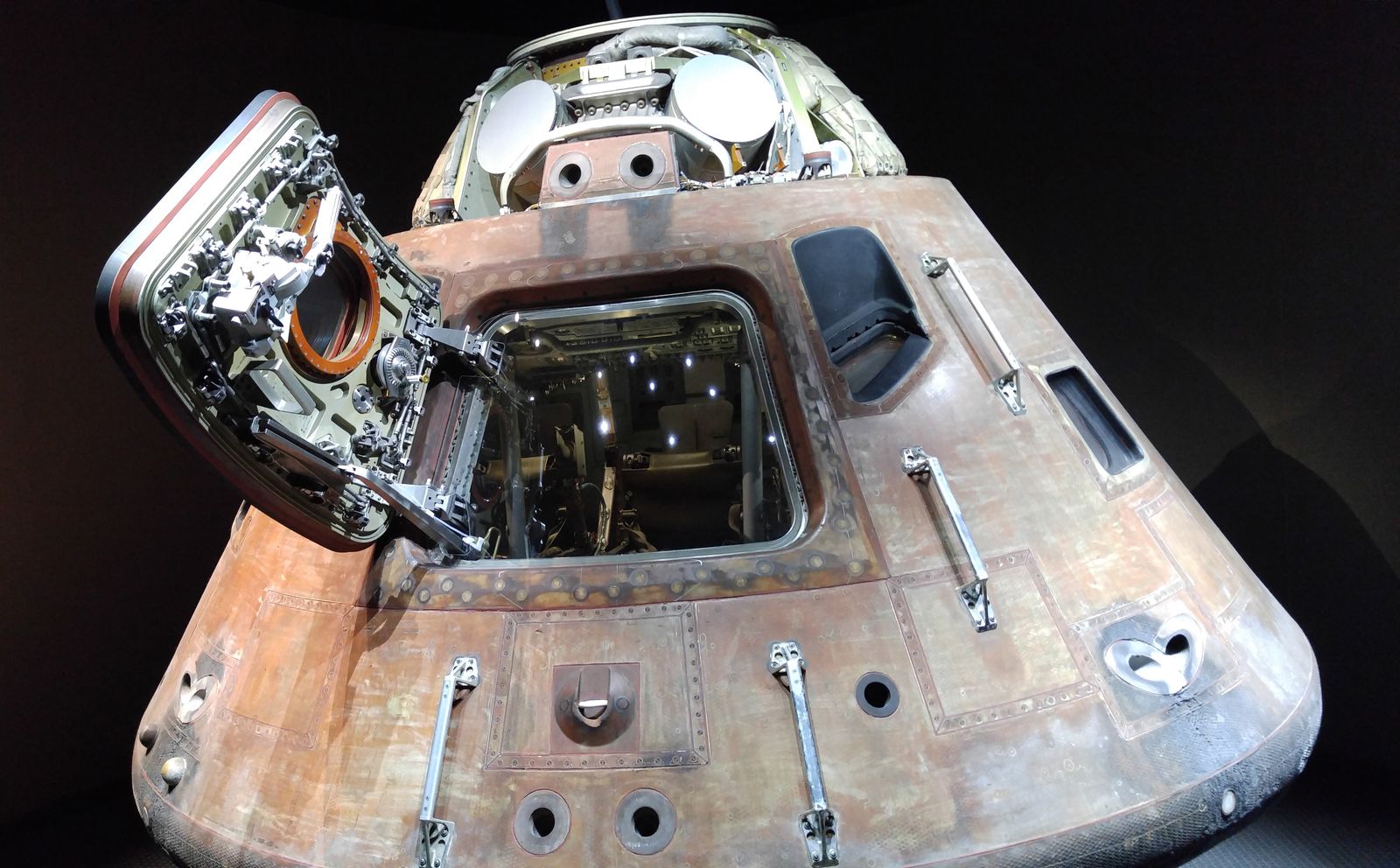
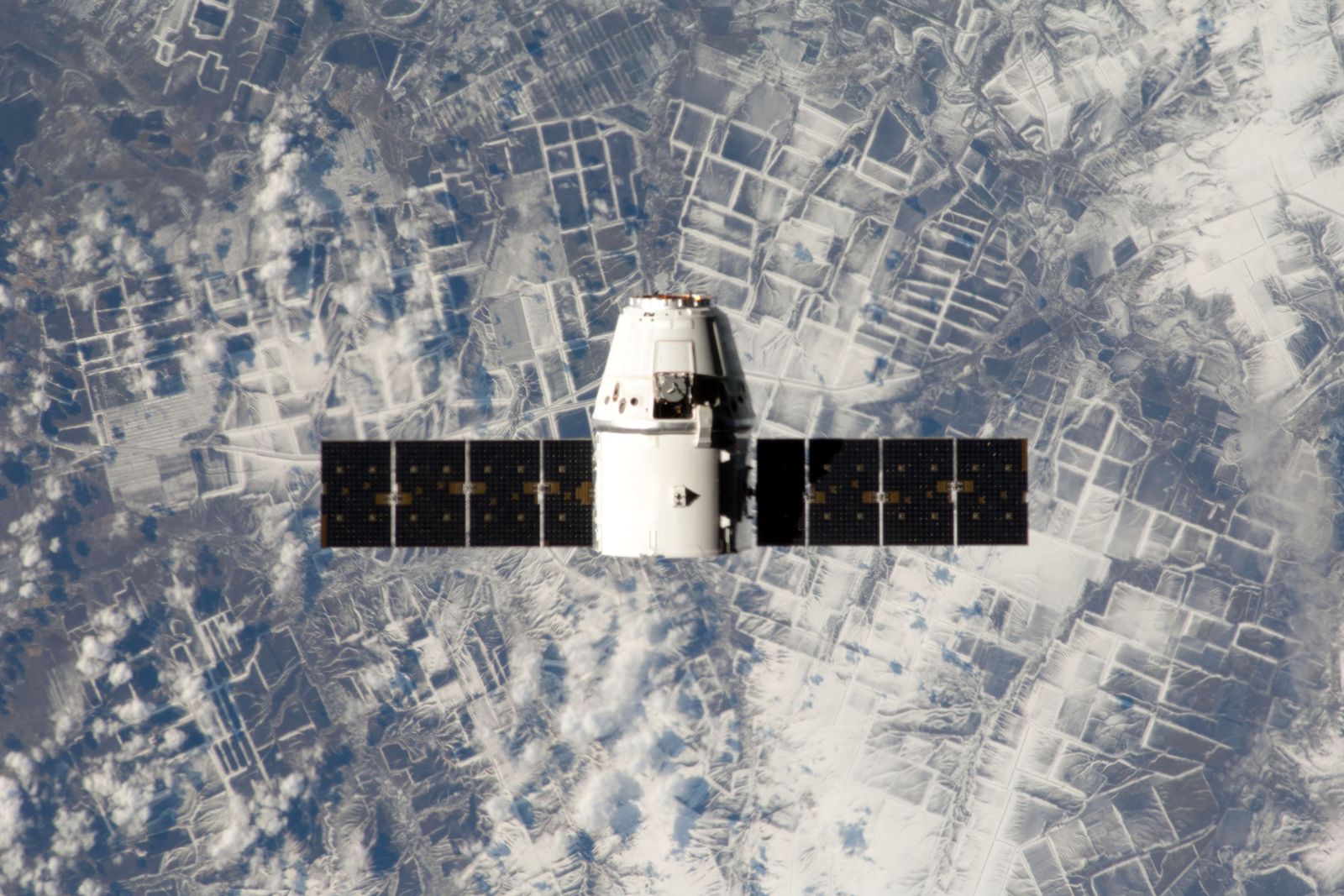
At 9:04 a.m. Eastern time on Friday, June 5, mission control in Houston told five astronauts on the International Space Station to put on their pressure suits, climb into the docked SpaceX Crew Dragon capsule named Freedom, and stand by for a possible evacuation. The order came as two Russian cosmonauts in the station’s oldest module prepared to take a saw to a metal bracket inside a small transfer tunnel that has been leaking, on and off, for nearly seven years.
The procedure NASA wanted them sheltered from involved cutting that bracket to gain access to a suspected leak source — work that, by NASA’s own assessment in a statement issued later that day, “could have resulted in elevated risk to the structure in the area.” The two agencies have argued over the cracks in that tunnel since 2019. On Friday, with the leak rate climbing toward two pounds of air a day and a Progress freighter still attached to the aft port, the disagreement moved out of the meeting rooms and into orbit.
Roscosmos paused the structural cutting about ninety minutes after the safe haven order. NASA strongly supported the pause, then cleared the crew to exit the Dragon and return to the rest of the station. The crack itself remained unfixed.
The saw, and the standoff
The five who climbed into Crew Dragon Freedom on Friday morning were NASA astronauts Jessica Meir, Jack Hathaway, and Chris Williams; ESA astronaut Sophie Adenot; and Roscosmos cosmonaut Andrey Fedyaev. The first four launched together on February 13, 2026, as SpaceX Crew-12; Williams arrived later aboard Soyuz MS-28. The two cosmonauts who stayed on the Russian side — Sergey Kud-Sverchkov and Sergei Mikaev — flew up with Williams.
The bracket the cosmonauts planned to cut sits inside the PrK transfer tunnel, a small vestibule at the aft end of the Zvezda service module that opens onto a docking port used by Russian Progress cargo vehicles. NASA’s update called the planned operation “a more extensive inspection and structural repair effort,” and was specific about the method: cutting a bracket to better access an area identified as a possible leak source for further inspection. According to SpaceNews, NASA’s flight controllers judged the approach too aggressive for an active pressure boundary on a twenty-five-year-old structure.
Their response was procedural rather than confrontational. Mission control asked the crew to take what NASA calls a “heightened safety posture” — the safe haven — and waited. Once Roscosmos paused the cutting work in favor of additional measurements and sealant application to one of the two suspected leak sites, NASA ended the shelter.
Roscosmos framed the day differently. “The situation does not threaten the safety of the crew and onboard systems,” the agency said in a statement issued Friday evening. “Pressure on board the ISS is stable and maintained at the calculated level.” That framing — the Russians describing the leak as manageable while NASA orders Americans and Europeans into a lifeboat — has become familiar as the station enters its final operating years.
NASA spokesperson Bethany Stevens narrated the sequence in a series of posts on X. The first announced the safe haven order. A second, posted later that morning, said Roscosmos had paused the structural repair effort and that Crew-12 and Williams had been instructed to end the safe haven and return to planned operations.
Six years of the same cracks
The PrK tunnel has been leaking, on and off, since September 2019. The cracks are microscopic, suspected to lie in the welds, distributed across a hull section that was built by RKK Energia in the 1990s and launched on a Proton rocket on July 12, 2000. NASA has classified the leaks as a high-likelihood, high-consequence risk to the station, and the phrase “catastrophic failure” has appeared in its safety panel’s public assessments.
Pressure inside the tunnel has come and gone with the rhythm of repair attempts. Cosmonauts have patched cracks with two-component sealants. They have applied tape. They have used Germetall-1, a Russian-made compound.
In early 2026, after months of patching, Roscosmos believed the leaks had finally stopped. On March 25, NASA’s acting associate administrator for space operations, Joel Montalbano, told the House Science Committee that “there are no leaks.” Five weeks later, at an April 29 meeting of the ISS Advisory Council, the committee’s chair — former astronaut and NASA associate administrator Bob Cabana — said that while the leaks appeared sealed, the engineering teams had not converged on a single explanation for what was causing the cracks. The joint commission, he said, “had failed to identify a single root cause.”
The leak came back in May. Russian cosmonauts unloading the Progress 95 cargo vehicle — which had docked at Zvezda’s aft port on April 28, 2026 — noticed a slow pressure drop. The rate accelerated during cargo operations the week of June 1, climbing from the baseline observed earlier in the year toward two pounds of atmosphere lost per day.
Each new docking is now a candidate trigger. The physical loads of berthing may be propagating existing fractures, even as sealant holds the older ones. Retired Canadian astronaut Chris Hadfield, who commanded the station in 2013, told the BBC after Friday’s order that the leak rate had crossed a meaningful operational line.
The aging-station problem
The ISS spans roughly the length of a football field and remains the largest human-made object in space. It has been continuously inhabited since November 2, 2000, operated by a US-Russian-led consortium that includes Canada, Japan, and 11 European countries. The first module, the Russian-built Zarya, launched on November 20, 1998.
That long service is now the story. Zvezda, originally designed for fifteen years of operation, has been pushed well past that with patches, software updates, and improvised repairs. Russian space officials have cautioned for years that an extended operating life carries risk of potentially catastrophic failures of aging systems. The warning, once read as political posturing during deteriorating relations, increasingly reads as engineering forecast.
NASA plans to keep flying the station until the end of 2030, then guide it to a controlled deorbit in early 2031 using a vehicle SpaceX is building under an $843 million contract awarded in 2024. Roscosmos has committed to participating through at least 2028. The two-year gap between those dates, and the question of whether the Russian segment can hold pressure that long, has become central to how both agencies plan crew rotations and contingency operations.
Why the methodology dispute matters
Friday’s incident exposed something usually kept behind closed doors: the two partners do not always agree on how to fix their shared spacecraft. The saw-versus-no-saw disagreement is a small example of a larger structural reality. NASA and Roscosmos operate under different engineering cultures, different risk thresholds, and different command chains. On the ground, those differences are managed through joint working groups. In orbit, with pressure dropping, they become live operational disputes.
The shelter order also reveals how the station’s safety architecture has shifted. With Crew Dragon Freedom at the Harmony zenith port and Soyuz MS-28 docked on the Russian side, NASA can isolate its US Orbital Segment crew in a lifeboat within minutes while Russian operations continue. That capability did not exist with the same flexibility a decade ago, when Soyuz was the only crewed vehicle docked. The 2021 debris-cloud emergency that followed a Russian anti-satellite test — captured in audio later released by the Guardian — forced a similar shelter, though that one was about an incoming debris field, not a methodology disagreement.
The structural disagreement underneath the operational one is older than the leak. NASA’s investigators believe the cracking is driven by some combination of pressure cycling, mechanical and residual stresses, environmental exposure, and material aging. Russian engineers have pointed at high-cycle fatigue from years of micro-vibrations, particularly from onboard pumps. The Houston meeting of the joint commission in March 2026 made progress on the question. It did not solve it.
What happens next
Russian engineers will reassess their repair plan. NASA will keep monitoring the leak rate and atmospheric data from the PrK tunnel. Progress 95 is scheduled to remain at the aft port until November. The crack — possibly more than one crack — remains unsealed in at least one of the two newly identified locations.
Mitigation, in the meantime, looks much like it has for years. The hatch between PrK and the rest of Zvezda stays closed except when cargo is being moved through. Crews from the US Orbital Segment do not transit the tunnel. If the Russian module had to be sealed off entirely, the station would lose a Progress docking port but would not be inoperable. ESA astronaut Andreas Mogensen said as much in 2024, when he told The Register that sealing off PrK was one option still on the table.
Friday was the most visible escalation of the leak story to date, and the first time NASA had moved its crew into a safe haven specifically because of a Russian repair procedure rather than an external threat. Scientific American’s account noted that safe haven procedures are normally reserved for events such as imminent debris conjunctions.
The five crew members who put on their pressure suits and climbed into Crew Dragon Freedom on Friday morning are back at their work assignments. The Dragon is still docked at the Harmony zenith port, where it has been since February. The two cosmonauts who got ready to cut, and then did not cut, are still in the back of Zvezda, taking measurements. The PrK tunnel still leaks, somewhere on the order of two pounds of air a day, into a vacuum that does not notice.
