
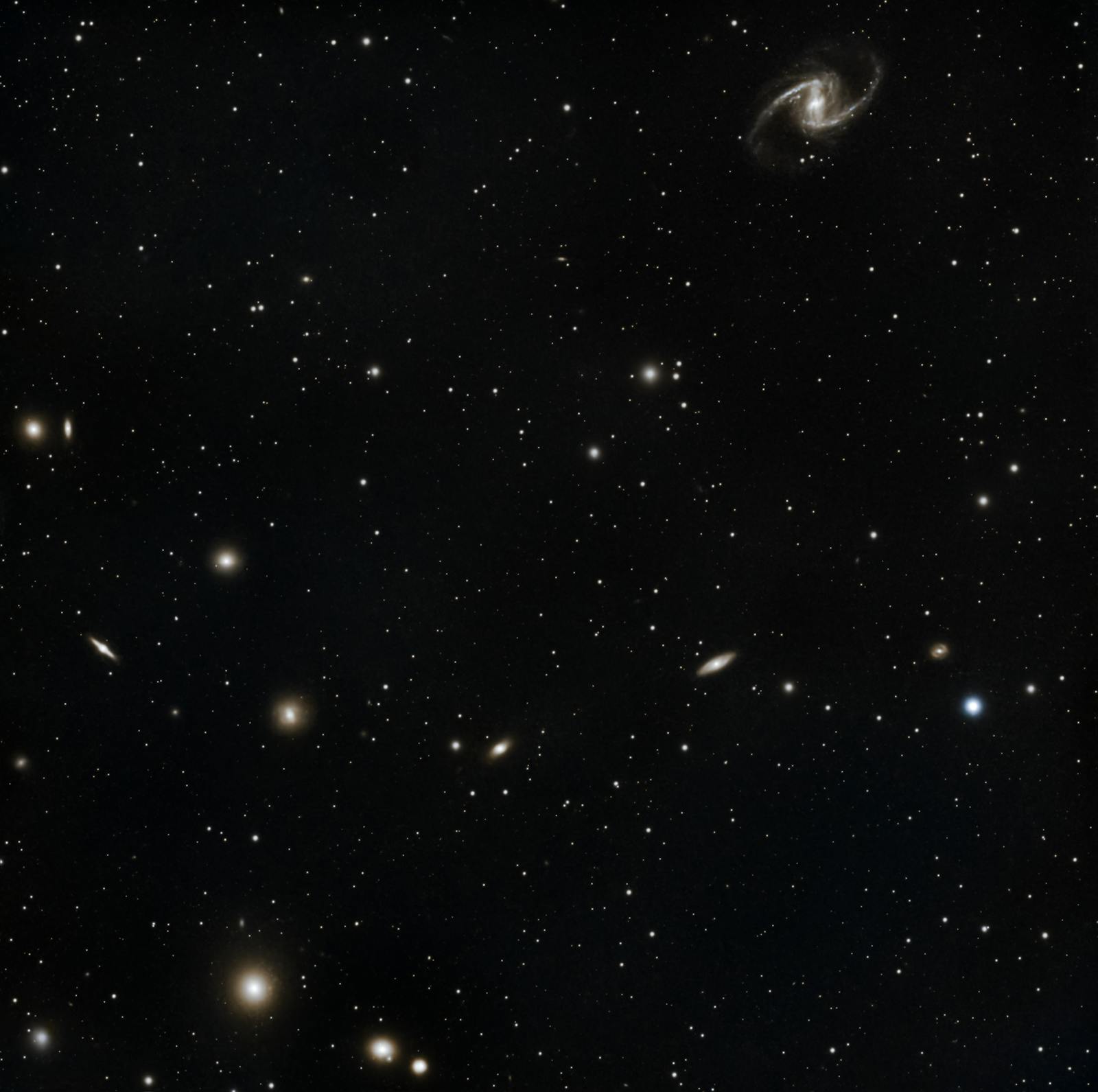
The James Webb Space Telescope cost roughly $10 billion, launched on Christmas Day 2021, and has produced science that, according to Space Telescope Science Institute project scientist Macarena Garcia Marin, is delivering cutting-edge results across every field of astronomy. The number that matters more than the price tag, though, is twenty-five. That is roughly how many years the project spent under the threat of cancellation, schedule slippage, congressional hearings, and engineering crises that several times came close to ending it before launch. Webb is not just an instrument. It is a survival story.
The astronomers who built it, the engineers who tested it, and the politicians who defended it were repeatedly told the project was too expensive, too late, too complicated, and too risky. Each time, someone made the case that the science could not be done any other way. Each time, the project barely held on. Now, four and a half years into operations, Webb faces a new budget threat that would cut its operational funding by 20 percent. The pattern is familiar to anyone who has followed the program from the beginning.
An idea that started before Hubble even worked
The conceptual origins of Webb predate the launch of Hubble. Astronomers were already sketching out a successor in the late 1980s, knowing that Hubble’s optical and ultraviolet sensitivity would leave a major gap: the infrared universe, where the earliest galaxies, dust-shrouded star formation, and cool exoplanet atmospheres live. Infrared light from the most distant objects has been stretched by cosmic expansion out of the visible range entirely. To see the first billion years after the Big Bang, you needed a cold telescope, a big mirror, and a vantage point far from Earth’s heat.
By 1996, the project had a name: the Next Generation Space Telescope. Early concepts called for an 8-meter mirror and a budget of around $500 million. Both numbers turned out to be optimistic in opposite directions. The mirror eventually shrank slightly to 6.5 meters of segmented beryllium. The budget grew by a factor of nearly twenty.
The mission was renamed in 2002 after James E. Webb, the NASA administrator who oversaw the agency during the Apollo era. The renaming was meant to signal ambition. It also tied a science mission to a political figure, which would matter later when budget hawks went looking for projects to kill.
The 2011 cancellation vote
The defining near-death moment came in July 2011. The House Appropriations Committee, looking at cost overruns that had ballooned the projected price from around $1 billion to more than $6.5 billion, voted to cancel the project outright. Launch had already slipped from 2011 to 2018. To members of Congress watching the numbers climb, Webb looked like a runaway program with no end in sight.
What saved it was a combination of scientific lobbying and political stubbornness. Senator Barbara Mikulski of Maryland, whose state housed the Space Telescope Science Institute and Goddard Space Flight Center, fought to restore funding. The American Astronomical Society mobilized. As NPR documented in its retrospective on the program, many astronomers genuinely believed at the time that the telescope might never fly. The cancellation vote was withdrawn, but only after NASA agreed to a strict cost cap of $8 billion for development and a hard launch date of October 2018. Both commitments would eventually be broken.
The engineering nightmare
What made Webb so risky was not just its cost. It was its design. Unlike Hubble, which orbits close to Earth and has been serviced five times by astronauts, Webb operates at the second Lagrange point, roughly 1.5 million kilometers from Earth. No human will ever visit it. If something fails, it stays failed.
And the telescope had to unfold itself in space. The 6.5-meter primary mirror, the tennis-court-sized sunshield, the secondary mirror tower, the radiator, the antennas: all of it had to fit inside the 5.4-meter fairing of an Ariane 5 rocket and then deploy in a precisely choreographed sequence over roughly two weeks. NASA engineers identified 344 single points of failure during deployment. Any one of them could have ended the mission.
The sunshield alone, made of five layers of Kapton thinner than a human hair, had to separate cleanly without tearing. Earlier ground tests had torn it. The mirror segments had to align to within nanometers. The cryocooler for the mid-infrared instrument had to chill its detectors to seven degrees above absolute zero. None of this had been done before at this scale.
By 2018, every one of these problems was visible at once. An independent review board found the cost cap would be breached and launch would slip to 2021. PBS reported on the lengthy delay as engineers grappled with sunshield tears during deployment tests and valves on the spacecraft’s thrusters that had sprung leaks after being improperly cleaned, taking the better part of a year to replace. Congress held hearings. Lawmakers questioned NASA leadership and prime contractor Northrop Grumman over the breach, asking whether contractor accountability and agency oversight had failed. Cancellation was on the table again. By that point, though, the sunk cost was so high that scrapping the program would have meant losing nearly a decade of work and most of a fully assembled telescope.
Then came the deployment itself. Two weeks of holding breath. Every step of the choreography worked. Every screw held. The sunshield unfurled without tearing. The mirror segments locked into alignment. The success demonstrated what large-scale science programs can still accomplish when the engineering is given enough time and money to be done correctly.
What the telescope has actually delivered
The science has matched the hype, which is rare for a flagship mission. Webb has imaged galaxies whose light left them more than 13 billion years ago, characterized exoplanet atmospheres in unprecedented detail, mapped chemistry in protoplanetary disks, and observed objects in our own solar system. It has detected carbon dioxide, methane, and water vapor in the atmospheres of worlds orbiting other stars. It has resolved individual stars in galaxies that Hubble could only see as smudges.
Demand has been overwhelming. Tom Brown, who leads the Webb mission office at the Space Telescope Science Institute, told the American Astronomical Society’s January 2025 meeting that astronomers requested the equivalent of nine years’ worth of observing time in a single operational year. That oversubscription rate is among the highest in the history of space-based astronomy.
Recent observations include studies of interstellar comet 3I/ATLAS, which Webb examined alongside Hubble and SPHEREx, capturing infrared spectra of a body that originated in another star system. Webb has also detected supermassive black holes blowing bubbles in the Milky Way’s center, observed one of the earliest gargantuan supernovas ever recorded, and watched a cosmic structure nicknamed the Phoenix cool down to birth new stars.
The telescope is, by the assessment of the team running it, performing far better than anyone predicted. Brown described the mission as working better than most people expected, with fuel reserves alone suggesting the observatory could operate for 20 years or more, double its original 10-year primary mission.
The new threat
And now, a familiar problem. The team has been directed to prepare for budget cuts of up to 20 percent starting later in fiscal year 2025. Brown told the AAS meeting that the cuts would touch every aspect of operations, from proposal review to data analysis to anomaly response. He described the proposed reduction as a huge cut, not the sort of trim that nibbles around the edges.
The fiscal year 2026 NASA budget request from the current administration would significantly reduce science funding. As a Salt Lake Tribune commentary documented, the proposed cuts have ripple effects far beyond any single mission, touching jobs, contractor networks, and even Earth science programs related to wildfire monitoring. Hubble faces a similar 20 percent cut. Chandra, the X-ray observatory that launched in 1999, is being wound down entirely, with its budget falling from $41.1 million in 2025 to just $5.2 million by 2029.
Webb is in a different category. It is in the middle of its prime mission. It is the most capable instrument of its kind ever built. Cutting its operations budget by a fifth would not save the construction cost, which has already been spent. It would only reduce the science return on a $10 billion investment that taxpayers have already made.
What survival means
The story of Webb fits a recognizable pattern in big science. Programs that promise to do something genuinely new tend to be underbid in their early years, partly because nobody knows yet what the hard problems will be, and partly because realistic budget estimates would scare off political support before the science case has been fully built. Then the hard problems show up. Costs rise. Schedules slip. Critics call for cancellation. Defenders point to the science that will be lost. The program limps forward.
The lesson Webb offers is not that flagship missions are too risky to attempt. It is that the cost overruns and schedule slips that look like failures during development can look very different in retrospect once the science starts arriving. The 2011 cancellation vote, had it succeeded, would have saved the federal budget several billion dollars. It would also have prevented the entire scientific output of the most productive infrared observatory ever built. That is the calculation that every future flagship will be judged against, from the Habitable Worlds Observatory to whatever comes after it. If Webb had been cancelled in 2011, the precedent would have made every subsequent ambitious telescope harder to defend. Because Webb survived, the case for patience with hard programs is stronger than it was.
The current 20 percent cut is not measured in billions. The total operations line for Webb, Hubble, and Chandra combined was $317 million in the 2025 request. A 20 percent cut to Webb’s share is in the tens of millions, a rounding error in a federal budget that runs into the trillions. What is at stake is not the money. It is the question of what the country thinks a working flagship telescope is for. The instrument is built. It is in orbit. It works, better than anyone predicted, with fuel for two decades of operation. The only thing left to do is use it.
Webb’s twenty-five-year journey from concept to first light included three near-cancellations, multiple cost cap breaches, the loss of original mission partners, the redesign of major subsystems, and a deployment sequence with hundreds of single failure points. It survived all of that because, at every decision point, enough people concluded that the science could not be done any other way. Whether that argument still works, after the engineering miracle has already happened and the data is already arriving, is the real test. A civilization that builds a telescope like this and then refuses to fully operate it is telling itself something about what it values. The pattern that defined Webb’s first twenty-five years was that someone always made the case in time. The next chapter will reveal whether that is still true.
Photo by Dennis Ariel on Pexels
