
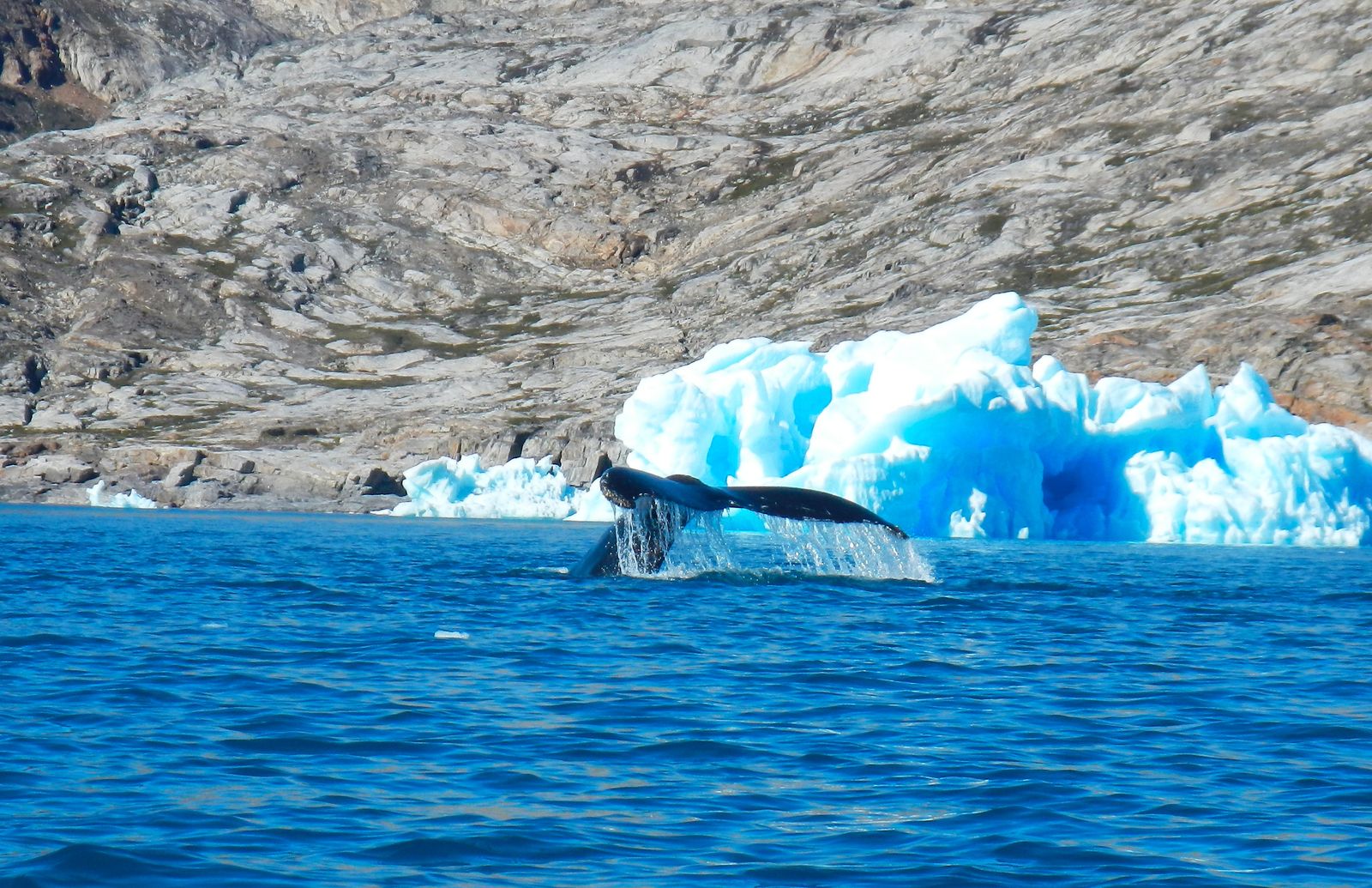
A bowhead whale calf born the year Thomas Jefferson took office could, in principle, still be alive today, drifting under the Arctic ice with a harpoon point from the 1840s lodged in its blubber. The species (Balaena mysticetus) is the longest-lived mammal on Earth, with peer-reviewed lifespan estimates exceeding 200 years, and biologists who have spent the last decade reading its genome think they are beginning to understand why a 60-tonne animal with roughly a thousand times more cells than a human almost never dies of cancer.
The latest work, published in Nature in October 2025, points to an unusually abundant DNA repair protein that lets bowhead cells fix double-strand breaks with both speed and accuracy. In a 200-year-old whale, that precision may be the difference between a body and a tumour.
The 115-year-old whale with a Victorian harpoon
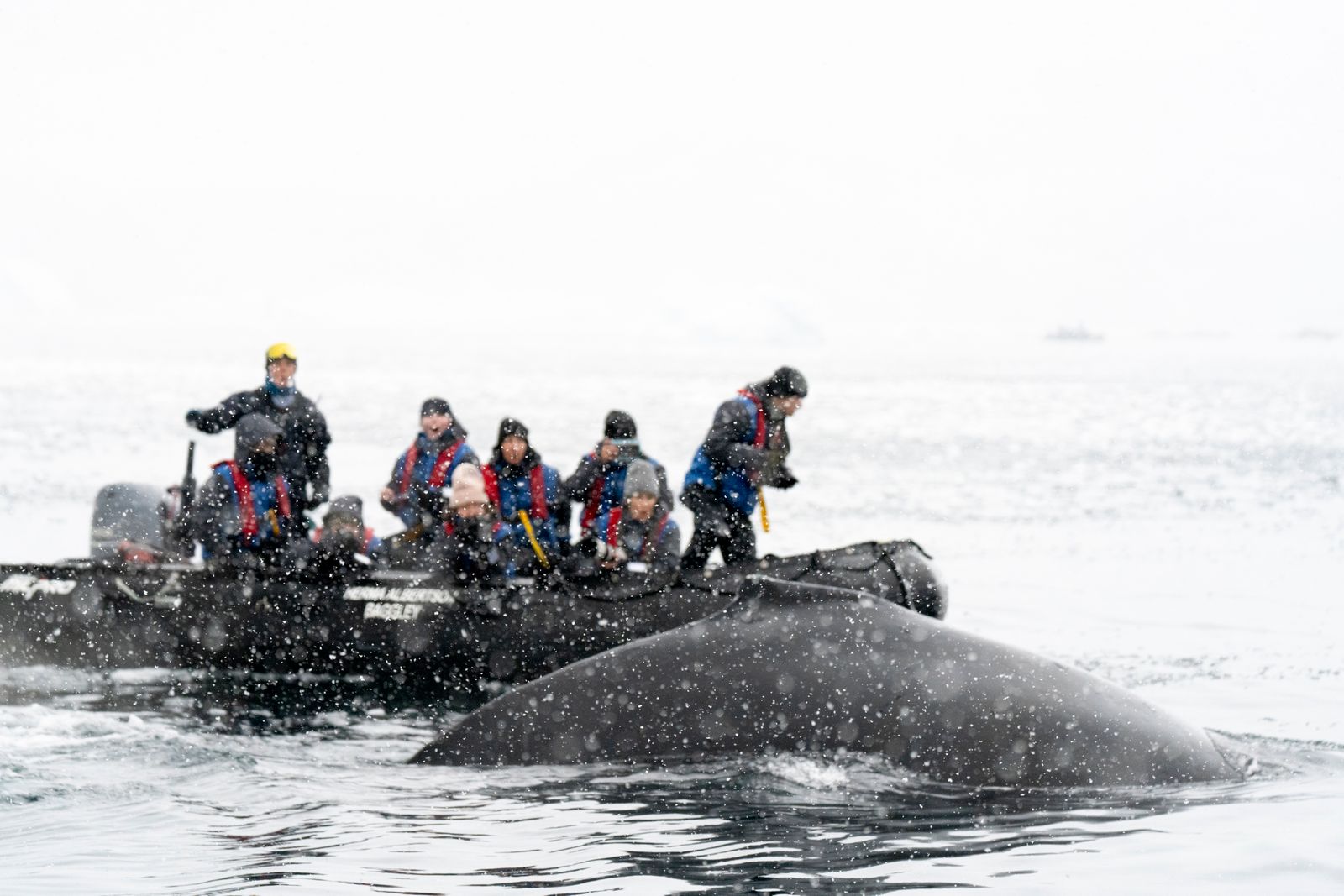
The hardest evidence for bowhead longevity is physical. In May 2007, Iñupiat hunters off Utqiaġvik (then Barrow), Alaska, landed a 49-foot male bowhead with a rusted metal fragment buried in its neck. The shard was identified by John Bockstoce of the New Bedford Whaling Museum as part of a bomb lance patented in 1879 and manufactured only between roughly 1879 and 1885. The whale had been swimming around with that fragment lodged in its shoulder for at least 115 years.
Other methods agree. Aspartic acid racemisation in eye lens crystallins — proteins laid down at birth and never replaced — has yielded age estimates for individual bowheads exceeding two centuries. The technique has its critics, but the Victorian harpoons keep turning up. Multiple bowheads landed in recent decades have carried stone or iron weapon fragments older than electric light, a pattern documented in the comparative-aging literature.
Why size should kill them, but doesn’t
A bowhead has roughly a thousand times as many cells as a person, and each cell divides over a lifespan ten times longer than ours. Every cell division is a chance for a copying error. Every error is a chance for cancer. By the simplest arithmetic, every bowhead should be riddled with tumours before its first century.
This is Peto’s paradox, which describes the observation that cancer rates do not scale with body size across species. Mice get cancer. Elephants mostly don’t. Whales almost never do. The Rochester team frames the puzzle directly in their Nature paper: a bowhead has vastly more cells than a human but is not highly cancer-prone. Something about being big and long-lived has forced evolution to invent better defences, and each large animal seems to have invented its own.
Elephants carry multiple copies of the tumour suppressor gene TP53, where humans carry one. Naked mole rats appear to have cellular mechanisms that suppress tumour growth. The bowhead, it now seems, took a different route entirely.
The CIRBP discovery
In October 2025, a team led by Vera Gorbunova and Andrei Seluanov at the University of Rochester, with first authors Denis Firsanov and Max Zacher and collaborators in Alaska, the UK and Korea, published findings that pointed at a single protein doing a lot of the work. The protein is called CIRBP — cold-inducible RNA-binding protein — and bowheads make it at roughly 100 times the level seen in other mammals. As Gorbunova explained in the University of Rochester announcement, several DNA repair proteins were elevated in bowhead cells, but CIRBP stood out because it was present at 100-fold higher levels than in other species.
What CIRBP does is striking. When a DNA strand breaks — and in any large animal, strands break constantly, from radiation, from oxidative stress, from the simple mechanics of replication — the cell can repair the damage in two ways. The fast pathway, called non-homologous end joining, slaps the loose ends back together and often loses or scrambles a few letters in the process. The slower one, homologous recombination, uses an intact copy of the sequence as a template and rebuilds the break with high fidelity. The Rochester team found that bowhead CIRBP boosts both pathways — making end joining more accurate and homologous recombination more efficient — so breaks get repaired faithfully rather than papered over with errors.
The result, in laboratory tests on bowhead fibroblasts, is a cell that fixes double-strand breaks with what the Rochester group described as remarkable precision and lower mutation rates than cells of other mammals. When the team inserted bowhead CIRBP into human cells, DNA repair improved. When they did the same to fruit flies, the flies lived longer and tolerated radiation better. Heidi Ledford’s news coverage in Nature framed the result as a possible mechanism for the species’ near-immunity to cancer.
What “unique gene variants” actually means here
The phrase “unique gene variants” gets thrown around loosely in popular coverage, so it is worth being careful. CIRBP itself is not a bowhead invention. Humans have it. Mice have it. Almost all mammals do. What is unusual in the bowhead is the expression level — how much of the protein the cell actually produces — along with a small number of sequence differences and a second protein, RPA2, also present at high levels. The Rochester team also flagged differences in genes governing the cell cycle and tumour suppression, though the headline finding is the CIRBP-driven repair quality.
The work has not yet been replicated by independent groups, and the leap from bowhead cells showing efficient DNA repair in laboratory conditions to this explaining bowhead longevity of up to 200 years remains an interpretation rather than a settled fact. But it is a plausible interpretation, and it lines up with the 2015 comparative genomics work that had already flagged the bowhead’s DNA damage response as unusually robust.
The cold matters
One of the more elegant aspects of the CIRBP story is that the protein’s name describes its trigger. Cold-inducible RNA-binding protein is produced in larger quantities when a cell’s temperature drops below normal. Human cells make a little more of it during mild hypothermia. Bowhead cells, sitting at the core temperature of an animal that spends its entire life in water hovering near freezing, appear to make it constantly and in vast quantities. The Rochester group showed that simply chilling cells by a few degrees ramps up CIRBP production.
This raises an awkward and interesting question: is bowhead longevity partly a side effect of living in the Arctic? If so, the warming of polar seas is not just a habitat problem for the species but potentially a longevity problem. A bowhead in 2-degree water may not produce CIRBP the way its great-grandparents did in water that was routinely colder. No one has measured this yet. It is a hypothesis hanging in the air, waiting for someone to test it.
What this might mean for humans — and what it almost certainly won’t
Coverage of the Rochester paper has been breathless. Smithsonian magazine framed it as a possible route to extending healthy human lifespan, and the Rochester press materials openly floated the idea that lifestyle interventions like cold exposure might modestly boost human CIRBP production.
The honest answer is that nobody knows whether a CIRBP-based therapy could extend human lifespan, and there are good reasons for caution. Human cells already make CIRBP. Upregulating it in a person is not the same as engineering a whale-grade repair system, because the repair pathway depends on dozens of other proteins working in concert, and on cellular machinery that may not respond to extra CIRBP the way a bowhead cell does. Gorbunova herself has been clear that the immediate medical target is cancer resistance, not radical life extension.
Still, the gap between species is provocative. A human has a median lifespan around 80 years. A bowhead, more than 200. The variation across mammals is enormous, and it is increasingly clear that much of it is written in genes that govern how cells respond to damage rather than in any single gene responsible for aging.
The whale that watched the steamship era
Consider what a 200-year-old bowhead has lived through. The oldest individuals swimming today were calves when the Crimean War ended. They were juveniles during the American Civil War. They survived the commercial whaling fleets that nearly wiped them out — the Alaska Department of Fish and Game estimates the global bowhead population collapsed from around 50,000 to fewer than 3,000 by the early twentieth century — and they have lived to see their species protected, the Bering-Chukchi-Beaufort stock climbing back above 12,000 in the most recent survey.
A bowhead born in 1820 has, if it is still alive, seen the Arctic ice retreat in ways no previous generation of its species ever experienced. The same DNA repair that lets it reach 200 also means its cells carry an unusually faithful record of two centuries of environmental change — a kind of biological logbook written in the slow, accurate hand of an unusually well-resourced repair crew.
What comes next
The Rochester team and collaborators are now trying to engineer the bowhead version of CIRBP into mouse cells and see whether it produces the same repair fidelity in a different cellular background. If it does, the next step is small-animal lifespan studies, which take years. If those work, human trials are at least a decade off, and probably longer.
In the meantime, the whales themselves remain the experiment. The Iñupiat subsistence hunt, monitored by the North Slope Borough and the International Whaling Commission, continues to produce the occasional carcass with an old harpoon point or a lens crystallin that aspartic acid racemisation places in the eighteenth century. Each one is a data point in an experiment that started before the Napoleonic Wars and has not yet ended.
Somewhere under the ice off Point Barrow tonight, an animal is exhaling through a blowhole it first used when Andrew Jackson was alive. Its cells are quietly correcting the damage of another day. The harpoon, if there is one, is older than the lightbulb.
