
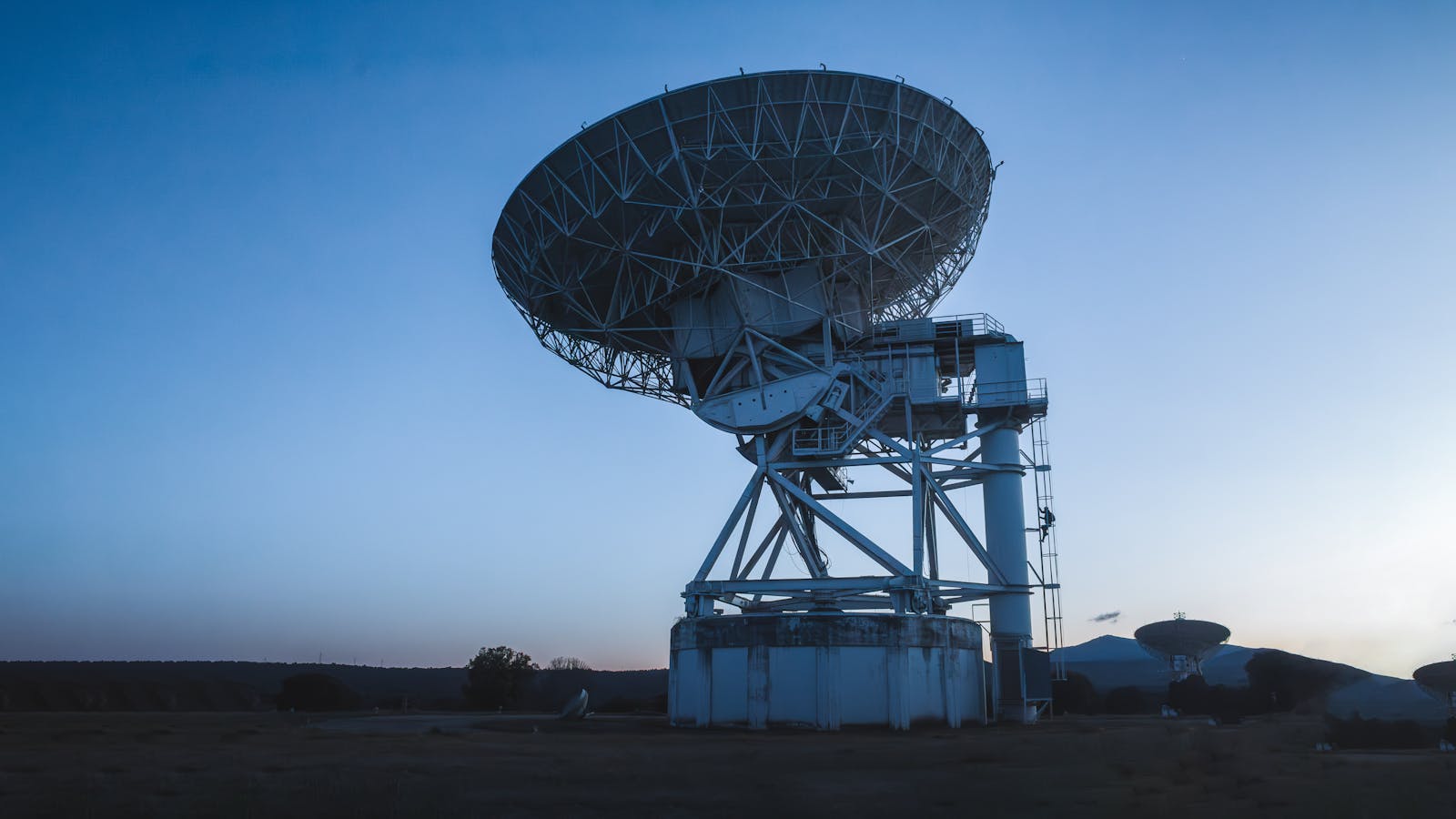
In Western Australia’s outback near Exmouth, an array of parabolic dishes spread across the landscape is already tracking satellites in geostationary orbit for the United States, the United Kingdom, and Australia. The Deep Space Advanced Radar Capability (DARC) Site 1, ultimately a 27-antenna array operating as a single sensor, has begun feeding tracking data to AUKUS partners, with full operational capability targeted for 2027. Several hundred kilometers up the coast, the iron-ore port of Port Hedland is being seriously discussed as a future Starship recovery site. These are not parallel curiosities. They are the visible edges of Australia’s transformation into the southern anchor of allied space power.
The strategic logic is straightforward. The execution will be anything but. But the case for treating Australia as a junior AUKUS partner, a label that still clings stubbornly in Washington and London commentary, is collapsing in real time, and the orbital domain is where the collapse is most visible.
From Woomera gap to AUKUS hub
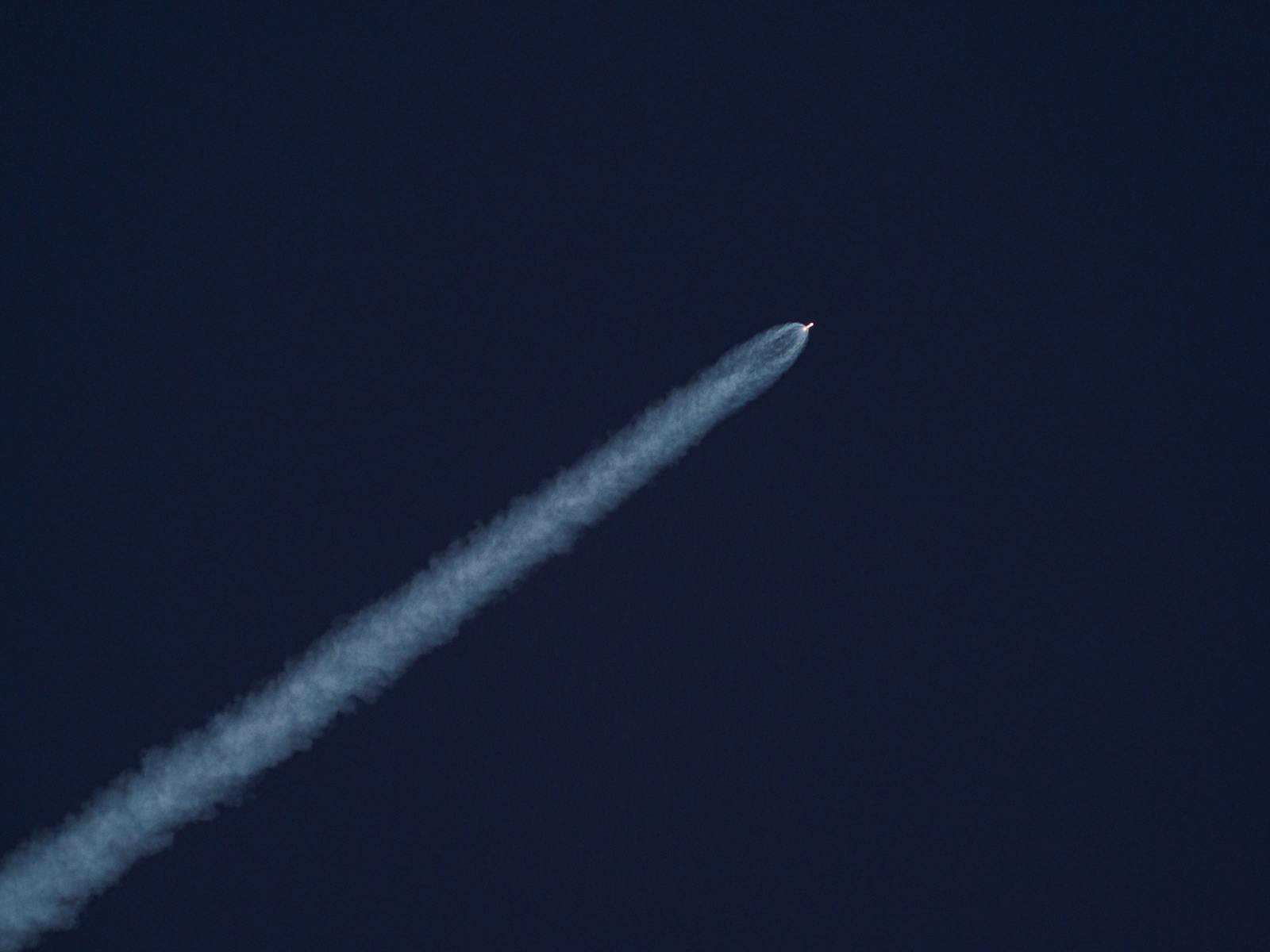
Australia hosted launches from Woomera in the early Space Age, then largely vanished from the orbital map for decades. That gap is closing fast. The Australian Space Agency has signaled that the country is open for business for launch and returns, and Varda Space Industries has already brought down its W-2 and W-3 capsules at the Koonibba Test Range in South Australia, with W-4 and W-5 to follow and a 20-mission agreement running through 2028. The commercial reentry pipeline is operational, not theoretical.
Australia’s National Defence Strategy formally identifies space as a warfighting domain, aligning Canberra’s doctrine with Washington and London. That alignment unlocks budget lines and procurement pathways that, until recently, were tangled in interagency ambiguity. The southern anchor is no longer aspiration. It is acquisition.
DARC and the deterrence calculus
DARC Site 1 is the first of three planned deep-space radar facilities under the trilateral AUKUS arrangement, with sister sites planned in the United Kingdom and the United States. The 27 parabolic dishes work together as a single sensor capable of detecting objects as small as a football at geosynchronous range, around 36,000 kilometers above Earth. The southern hemisphere placement matters. Existing U.S. deep-space surveillance is concentrated in northern latitudes and at Diego Garcia. A persistent Australian eye on geostationary and high-Earth orbits closes coverage gaps that adversaries have studied carefully. Distributed sensing is harder to blind.
That distribution argument is the heart of why Australia matters disproportionately to its formal partner status. Allied space operations have a concentration problem. A large share of Western launch, tracking, and downlink capacity sits in a handful of locations across the continental United States, Cape Canaveral, Vandenberg, and a few European and Pacific sites. Adversary targeting maps are not complicated.
The geography premium
Sites in northern Australia near 12 degrees south latitude, including parts of Cape York, Weipa, and Arnhem Land, offer measurable payload advantages through Earth’s rotational boost. The closer a launch site sits to the equator, the more free velocity a rocket gets at liftoff. For heavy lift to geostationary transfer orbit, that translates to either more payload or more margin.
Port Hedland is the other half of the geographic argument. The Pilbara port has deep water, heavy industrial infrastructure, and existing logistics chains built for iron ore export. SpaceX has been reported as exploring potential Starship recovery operations off the Australian coast, with towing to a Pilbara or northwestern port floated as a practical option in discussions with Australian and US officials. Early Starship test flight trajectories have included Indian Ocean corridors, and the logistics of recovering and refurbishing a vehicle of Starship’s scale favor industrial ports with heavy lift capacity.
Other operators are already on the ground. AALTO, the Airbus subsidiary behind the solar-powered Zephyr stratospheric aircraft, is planning a second AALTOPORT in northern Australia and seeking local payload partners, an indication that the country’s open airspace and clean skies are attracting more than headline-grabbing reusable rocket programs.
The redundancy nobody wants to name
Distributed infrastructure changes the deterrence math. A stratospheric base in the Northern Territory, a recovery zone at Koonibba, a deep-space radar in the west, and industrial logistics at Port Hedland together form a redundant southern node that any contingency planner would value. The resilience case is reinforced by parallel issues Space Daily has covered before, including the mismatch between ground station operators’ technical ability to reroute traffic and the legal authority to actually do it.
That mismatch is a warning. Building physical redundancy without the legal and command frameworks to use it under stress produces expensive infrastructure that cannot move at the speed of conflict. A dedicated trilateral AUKUS Pillar 2 working group focused on space logistics, standardizing range safety, aligning reentry approvals so commercial operators like Varda do not relitigate basic permissions for each mission, and coordinating where capacity actually gets built, would close that gap. Pillar 2 covers advanced capabilities outside the nuclear-submarine track of Pillar 1, and space has been treated as one priority among many rather than a dedicated workstream. It deserves better.
What this actually buys
The strategic case for Australia as the southern pillar of AUKUS space power rests on geography that reduces launch cost, alliance commitments that reduce political friction, and existing commercial activity at Koonibba and interest in Port Hedland that reduces execution risk. None of these guarantees that the buildout happens on the timeline supporters want. Australian regulatory throughput, environmental review processes, and Indigenous land negotiations are real constraints. The Varda experience demonstrates the model can work; scaling it to Starship-class operations is a different order of complexity.
The deterrence value, though, is already accruing. DARC Site 1 is tracking targets today. The 2027 full-capability milestone gives the trilateral arrangement a concrete delivery date. And the same logic that is reshaping American spy-satellite doctrine through proliferated NRO constellations, distribute, replicate, complicate the targeting problem, applies on the ground as much as it does in orbit.
The radar in the outback is already changing who sees what in geostationary orbit. The port in the northwest may soon change who can recover and refly the world’s largest rocket. The label of junior partner has not caught up with the infrastructure.
