
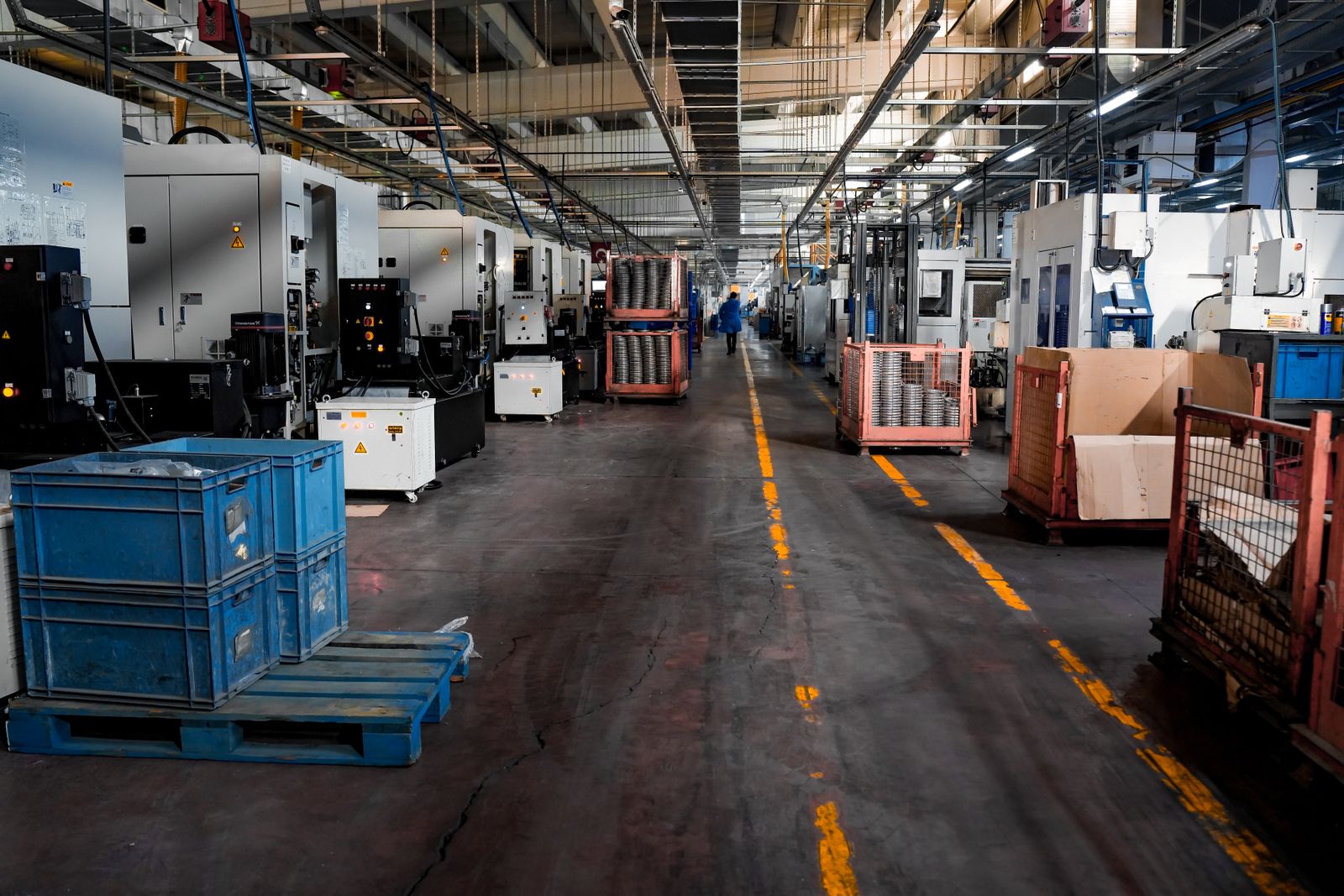
Inside a 140,000-square-foot building in Long Beach that the local aerospace crowd calls Space Beach, circuit boards for spacecraft and defense systems are now coming off the line in a matter of weeks — the same boards that used to take years. The people who run the plant are not claiming the engineers suddenly got faster. They are saying something stranger: there are no longer enough engineers to build the hardware the United States has ordered, and a software agent is now doing the parts a person used to do.
The facility belongs to Voyager Technologies, a Denver-based aerospace and defense company that opened the site on March 12, 2026. Its purpose is narrow and blunt — compress the timeline between a defense-electronics design and a working board, using agentic artificial intelligence to do it.
That single fact cuts against the loudest story being told about AI everywhere else. In most industries the technology arrives as a way to trim headcount. In aerospace and defense it is arriving because the headcount cannot be filled.
The boards that used to take years
Voyager’s Long Beach center runs research, development, and manufacturing across advanced electronics, mission hardware, propulsion, and autonomy systems, SpaceNews reported from the March opening. It is the company’s second major buildout in three months, following the 150,000-square-foot Voyager American Defense Complex that opened in Pueblo, Colorado, in January with a focus on missile defense and tactical munitions.
The man running the defense side is Matt Magaña, Voyager’s president for space, defense, and national security. He grew up in Long Beach and spent close to two decades as a Raytheon executive before joining Voyager in 2024. He describes the old way of building mission electronics in plain terms: it takes years and years, and that is the bottleneck.
The plant’s pitch is that agentic AI can collapse that. Magaña has described printing circuit boards within weeks and months rather than years, using AI to compress the journey from a design to a board headed for orbit. “We’ve got to cut that down to have the speed of relevance,” he told Aviation Week.
Speed of relevance is a military phrase, and it is doing real work here. Voyager is building alongside other Space Beach companies, including Anduril Industries and True Anomaly, in a stretch of Southern California where firms have clustered to stay near the engineering talent and suppliers left over from the region’s older aerospace era.
The robots-on-the-factory-floor story is decades old. What is new at Space Beach is the robot in the engineering office — the one drafting the design, not bolting the part.
Why there aren’t enough people
The shortage is not anecdotal. Clay Mowry, chief executive of the American Institute of Aeronautics and Astronautics, told an audience at the ASCEND conference in Washington that some companies are trying to lift production “by a factor of four,” according to SpaceNews. Firms in the missile-interceptor business, he said, have to scale fast, and there are not enough trained people to put in the jobs — so they are scrambling.
The demand is real and specific. The companies cannot bring in enough trained engineers, software developers, and specialized manufacturing staff to meet the contracts already signed, let alone the expansion the Pentagon now wants. They are all chasing the same small pool of workers fluent in autonomy, machine learning, and systems integration, and that pool is not growing fast enough to match the order books.
The workforce is also aging out. About one-third of aerospace and defense manufacturing and engineering roles are held by workers 55 or older, the AIAA’s Aerospace America reported, citing Deloitte and McKinsey analyses, and the sector’s retirement and attrition rate runs nearly 10 percent above the national industry average. One McKinsey estimate put the cost of that talent drain at up to $330 million for a single mid-sized company.
So the experienced people are leaving faster than they can be replaced, the work is harder to learn than almost any other engineering discipline, and the orders keep climbing. The arithmetic does not close.
A shrinking pipeline
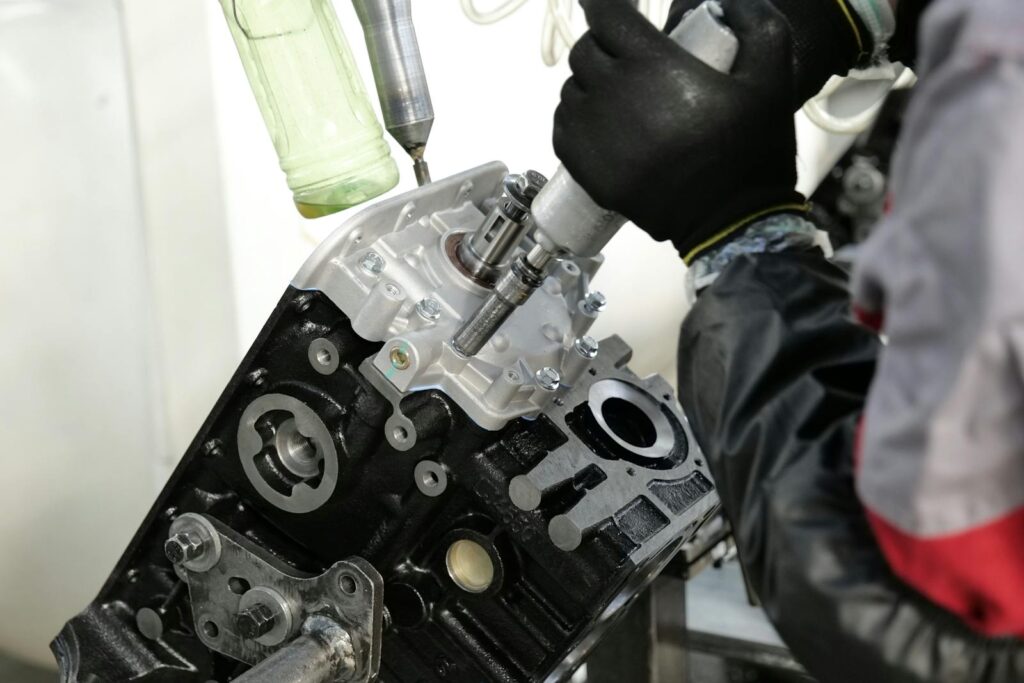
The squeeze sits inside a broader contraction of the technical labor supply. The federal workforce shrank by roughly 220,000 people through November 2025, about a 10 percent cut, according to data analyzed by The New York Times from the Office of Personnel Management — the steepest reduction in decades. Many of those losses landed at civilian agencies that historically fed engineers into defense and aerospace through internships, fellowships, and research partnerships.
Money has been thrown at the gap. Congress added nearly $34 billion above the president’s fiscal 2026 defense request for more than 1,000 research and procurement programs, Roll Call reported, drawing on a database from Taxpayers for Common Sense. The watchdog group has counted more than $134 billion in such program increases since fiscal 2022.
But an appropriation does not produce a qualified engineer, and it does not shorten a test cycle. That is the wall the industry keeps hitting, and it is why a Denver company is standing up a building in Long Beach to let software do the work that hiring cannot fill.
What agentic AI actually does in the engineering office
Agentic AI is not the rule-based automation aerospace plants have used for forty years. Traditional automation handles one narrow, repeating task: a robotic arm welding a seam, a machine running a tolerance check. The agentic version is built to work across the whole production cycle — design iteration, compliance paperwork, supply-chain coordination, production planning — treating them as one connected job rather than a chain of handoffs.
On the floor, that changes who the engineer is. A systems engineer who once shepherded a single program can now oversee several, with the agent drafting the documentation, running the early trade studies, and grinding through the routine compliance work that used to eat hours a day. The engineer becomes a reviewer and a decision-maker instead of a producer of paperwork.
The people selling it are careful to say the humans do not disappear. Magaña has framed the goal as accelerating the cycle time, not removing the engineer from it. The agent is the junior staff that cannot be hired.
The space hardware itself is what makes this hard. A board bound for orbit has to survive launch loads, thermal swings of hundreds of degrees, and a radiation environment that corrupts ordinary electronics. Qualifying that hardware still routinely takes years — a timeline that turns into a problem when commercial operators want a satellite constellation fielded in months and defense customers want resilient systems in place before an adversary closes a gap.
This is where the agent is pointed. It can run thousands of simulation variations in parallel, assemble the qualification documentation, and flag design choices that historically surfaced only after an expensive physical test had already failed. The compression is not in the welding. It is in the thinking that used to happen one engineer at a time.
The accountability problem nobody has solved
The story the plant tells is coherent, and it is also unfinished. When a human engineer signs off on a missile-guidance design, there is a chain of accountability running back through years of training, licensure, and named responsibility. When an agent drafts the compliance package or proposes a design change, that chain gets harder to trace.
The qualification regimes that govern space and defense hardware were built around human reviewers checking human work. Adapting them to artifacts an AI generated — without losing the rigor that keeps an interceptor intercepting and a satellite operating — is a problem the sector has not solved. It is regulatory rather than technical, and it sits in the space between agentic AI accelerating a cycle and quietly defining it.
For now, the shortage is making the decision. The contracts are signed, the deadlines are fixed, and the engineers cannot be hired at the rate the order books demand, so the experiment is running whether or not the verification questions have answers.
Back in Long Beach, the boards keep coming off the line in weeks. The building is new, the talent it was meant to draw on is thinner than it has been in a generation, and the agent in the engineering office is doing the trade studies that a younger engineer, in another decade, would have done by hand. Whether those boards hold up the way years of human review once guaranteed will not be settled in a conference hall. It will be settled in orbit, and on the ranges, on the first programs fast enough to get there.
