

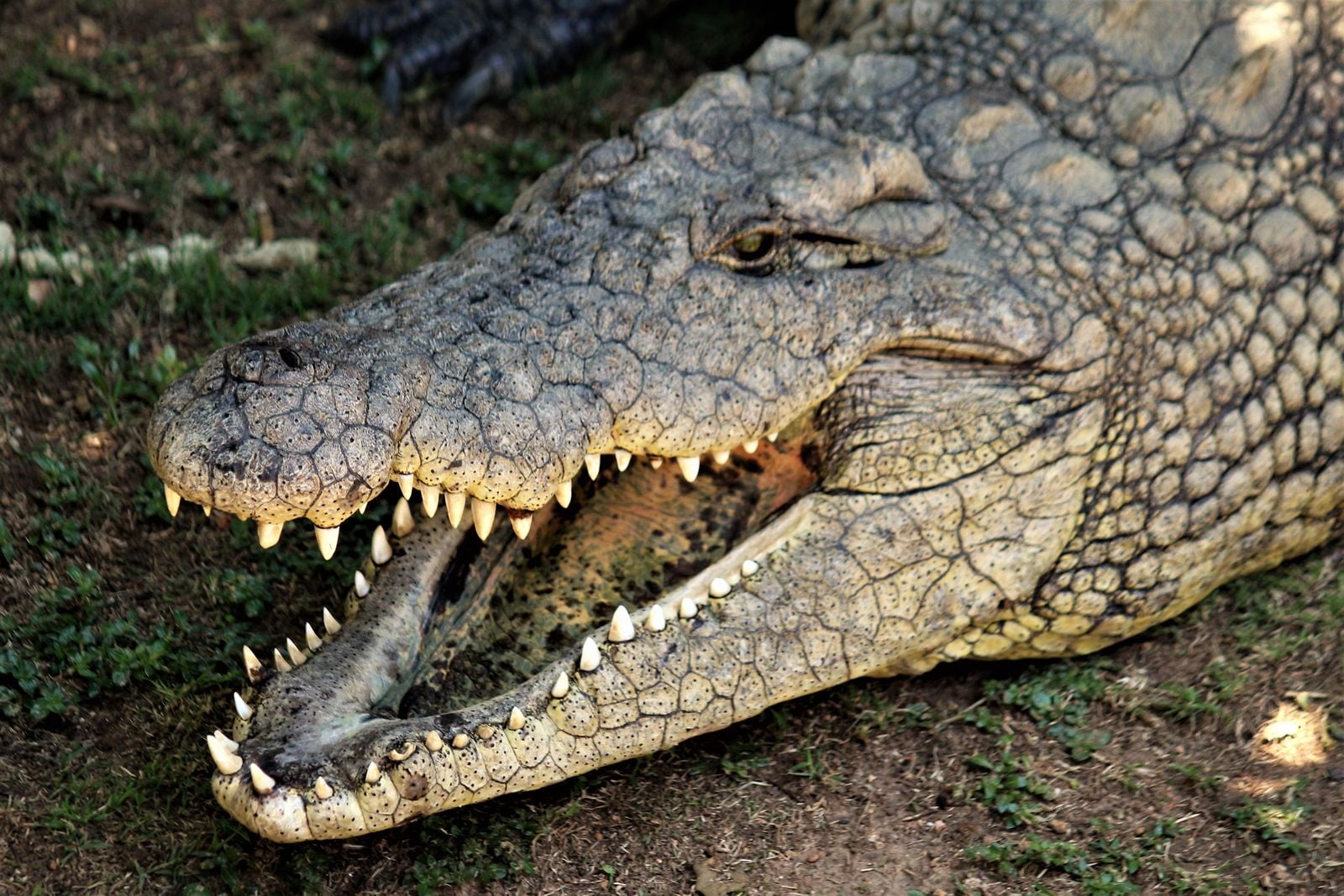
A single Nile crocodile bite closes with roughly 3,700 pounds of force per square inch — the highest bite force ever directly measured in a living animal. The muscles that open the same jaw are so anemic that a grown human can pin them shut with two bare hands and a length of duct tape. That asymmetry is not an accident. It is the whole design.
For a frame of reference, the average human bite lands at about 162 PSI, according to bite-force comparisons compiled by WIS News. A grizzly bear tops out near 975 PSI. A Bengal tiger, around 1,050. A gorilla, 1,300. A polar bear, 1,200. American alligators clock in at roughly 3,000 PSI. The Nile crocodile leaves all of them behind.
The number, and where it came from
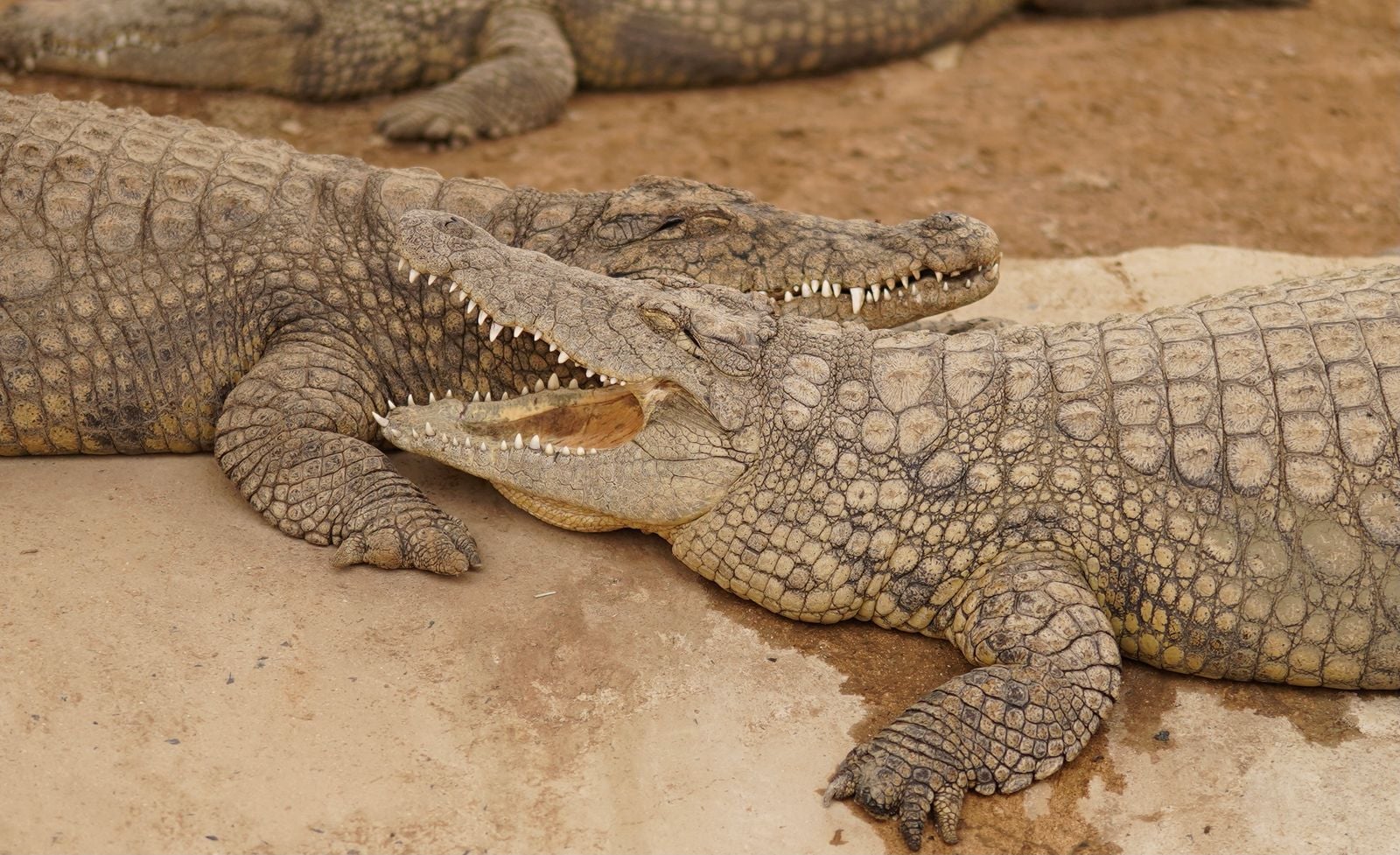
The 5,000 PSI figure most often quoted for the Nile crocodile traces to herpetologist Brady Barr, who strapped a bite meter between the jaws of wild Nile crocodiles for a National Geographic Dangerous Encounters shoot and recorded a chomp of around 5,000 PSI — roughly 22,000 newtons of force.
The peer-reviewed record belongs to a cousin. In a 2012 study covering all 23 living crocodilian species, a saltwater crocodile bit down on an instrumented sensor with a force of 16,414 newtons — the strongest bite force ever documented in scientific literature. It takes about 4,000 newtons to snap a human femur. A saltwater crocodile could break four femurs at once and still not be biting at full capacity.
Nile crocs and salties trade the top spot depending on which study you read and which individual animal happens to be in the jig that day. Either way, the pattern holds: the strongest bite ever measured on Earth belongs to a modern crocodilian.
Why the closing force is so extreme
Bite force is a product of muscle mass, muscle architecture, and jaw mechanics. Crocodilians max out all three.
The two muscle groups doing the work are the pterygoideus and the temporalis, packed into the wide back half of a crocodile’s skull. In a large Nile croc, those muscles account for a startling fraction of the animal’s head weight — dense slabs of fibre arranged for short, explosive contractions rather than sustained chewing. Crocodiles do not chew. They clamp, roll, and swallow chunks whole.
The skull itself is built to survive the recoil. Crocodilian jaws are reinforced with dense bone struts along the tooth row and a hinge point set far back, giving the closing muscles a long lever arm. When those muscles fire, they pull the lower jaw up with the concentrated urgency of a mousetrap ten feet long.
Palaeontologists studying Tyrannosaurus rex jaw mechanics have compared its skull architecture to modern alligators for exactly this reason. The alligator-like arrangement of the T. rex jaw is what allowed estimated bite forces of around 8,000 PSI — enough to shear through bone. Living crocodilians are the closest thing to a T. rex bite you can still film in the wild.
The opening muscles are almost an afterthought
Now flip the jaw over. The muscles that open a crocodile’s mouth — chiefly the depressor mandibulae — are small, thin, and mechanically disadvantaged. They sit behind the jaw hinge and have to pull the massive lower jaw down against gravity.
Field biologists and wildlife handlers have known for decades that if you can get a hand or a loop of rope around a crocodile’s closed snout, the animal cannot open it. Not because it lacks the will, but because the anatomy simply does not permit it. Adult handlers routinely subdue crocodilians of considerable size with a wrap of electrical tape around the muzzle. The tape holds. The croc, for all its 3,700 PSI of closing power, cannot break free.
The evolutionary logic is straightforward. A crocodile that ambushes prey from the waterline needs to close its jaws hard and fast. It never needs to open them against resistance. Nothing in a wildebeest’s neck, or a fish’s flank, or a hippo calf’s leg, is going to try to hold a crocodile’s mouth shut from the outside. Selection has spent millions of years bulking up the closers and letting the openers atrophy to whatever minimum will still lift the jaw between meals.
Where the design came from
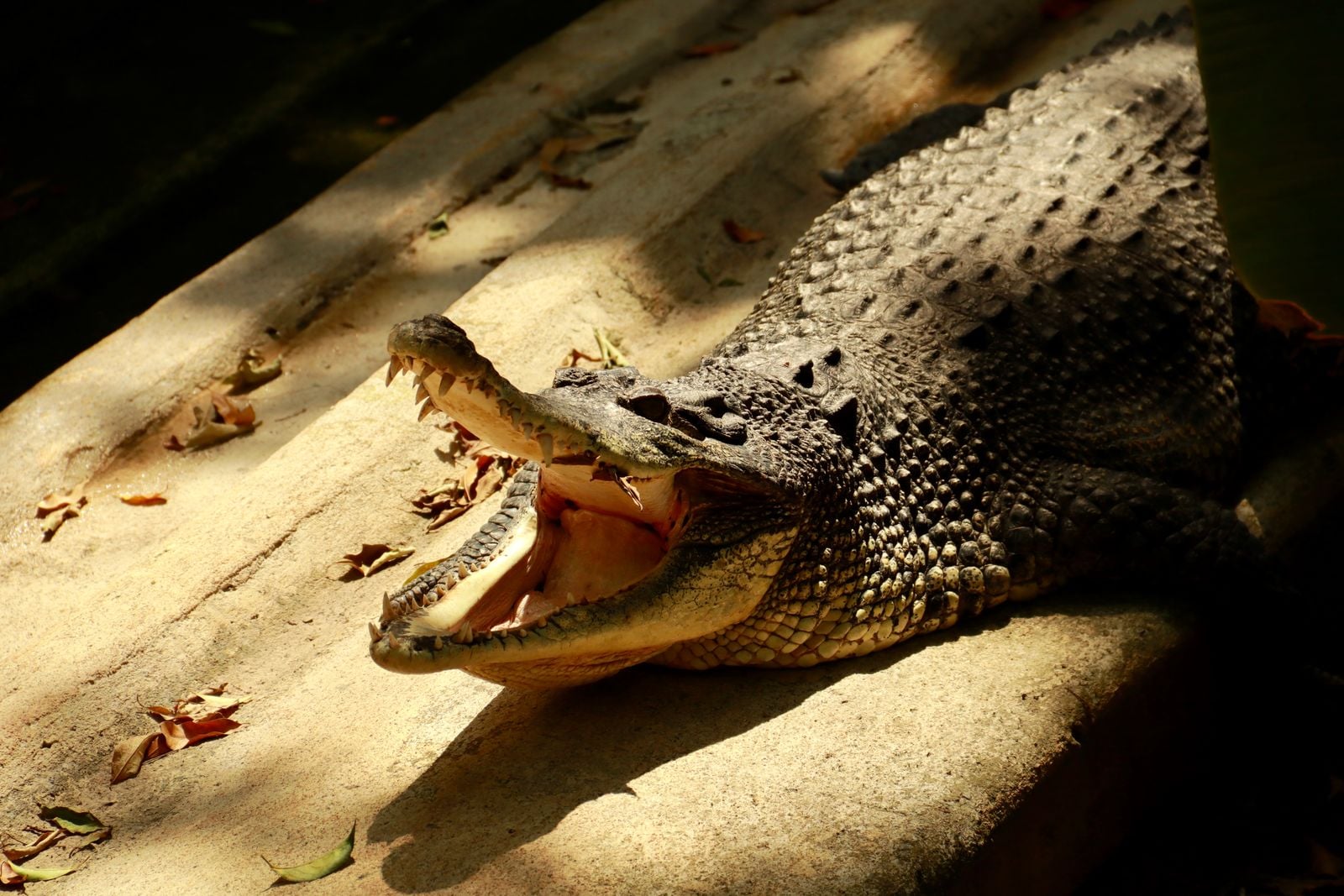
Crocodilians are older than the flowering plants. The lineage stretches back more than 200 million years, and the basic body plan — armored, low-slung, ambush predator with a disproportionate head — has been refined across almost every continent. Some extinct relatives went stranger. A fossil dubbed the “cat crocodile”, Pakasuchus kapilimai, had differentiated mammal-like teeth for slicing, suggesting the group experimented with all sorts of jaw architectures before settling on the modern crushing design.
The winning strategy in the current lineup is simple. Grow a wide, flat skull. Fill it with conical teeth built for gripping rather than cutting. Wire the closing muscles to a bite of biblical force. Let the opening muscles wither. Wait in the water.
What that bite does to prey
At 3,700 PSI, a Nile crocodile does not need to shake or saw. A single bite through the neck of a zebra severs vertebrae. A bite across the pelvis of an antelope crushes bone the way a hydraulic press flattens a can. The follow-up is the famous “death roll,” where the crocodile spins its whole body along its long axis to twist a chunk of flesh free of the carcass, since it cannot chew.
The teeth themselves are not particularly sharp by predator standards. They do not need to be. When the force behind each tooth is equivalent to the weight of a small car pressing down on a single point, edge geometry stops mattering. What matters is that nothing the tooth touches can push back.
The Nile crocodile in its actual habitat
The world’s second-largest reptile lives across sub-Saharan Africa, with a stronghold in Lake Nasser, the 250-mile reservoir formed behind Egypt’s Aswan High Dam. Egyptian environmental officials estimated the lake’s Nile crocodile population at between 6,000 and 30,000 during the last large-scale survey in 2008–2009. Individuals have been recorded at up to 18 feet long.
The species was once so central to Egyptian life it had a city named after it — Crocodilopolis — and served as a religious icon in temples along the lower Nile. By the 1950s it had been hunted out of the lower river entirely. The dam, finished in 1970, gave it Lake Nasser and a second chance. That chance is now being eroded by illegal hunting for skins, meat, and traditional-medicine markets, according to reporting from Aswan.
The habitat matters here because the crocodile’s bite is a habitat weapon. It evolved for the ambush zone at the waterline, where zebra and wildebeest have to lower their heads to drink. A land predator with the same jaw force would be over-engineered. In the water, with only a few seconds of striking distance before prey bolts, it is exactly the right amount of overkill.
The lineage’s deep past
The Sahara was not always sand. Space Daily has explored how the Sahara turns green roughly every 20,000 years, and during the last African Humid Period, hippos and crocodiles lived in lakes where there is now only dune. The rock art of the central Sahara is stippled with them. Nile crocodiles are recent visitors to their current range; they are much, much older than the desert around them.
Life Signs has looked at other survivors of that kind of deep time before — the goblin shark, a 125-million-year lineage only recently filmed alive near the Tonga Trench, and wood frogs that freeze solid every winter and thaw in spring. Crocodilians belong in that company. Their jaw is a piece of engineering older than most of the mountain ranges on Earth.
How the asymmetry gets exploited
The two-hands-to-hold-the-jaw-shut trick is standard field procedure for herpetologists working with juveniles and mid-size adults. The technique is straightforward: get behind the animal, drop a knee across the shoulders, push the snout against the ground so it cannot lever open against the substrate, wrap the muzzle. It works because the depressor mandibulae, the primary jaw-opening muscle, is generating something on the order of a few dozen pounds of lift against several hundred pounds of applied hand pressure. The math is not close.
What the technique does not do is protect against the tail. Or the sudden lateral roll. Or the twenty other crocodiles in the water behind you. Handlers who forget this stop being handlers.
Larger crocodiles — the 16-foot, 1,500-pound animals that occasionally show up in Lake Nasser or the Zambezi — cannot be jaw-taped by a person. Not because the muscle ratio changes, but because getting close enough to a wild adult croc to try is a categorically different problem.
The number that stays in the mind
3,700 PSI on the way down. Maybe forty or fifty pounds of lift on the way up. That single ratio — closing force at nearly a hundred times opening force — is what a hundred million years of ambush predation looks like when you measure it with a load cell.
The next time footage surfaces of a Nile crocodile exploding out of the shallows at a drinking zebra, the thing to watch is not the strike. It is the moment after, when the jaws are closed and the crocodile slides back into the water with its meal, and does not need to open its mouth again for a long, long time.