
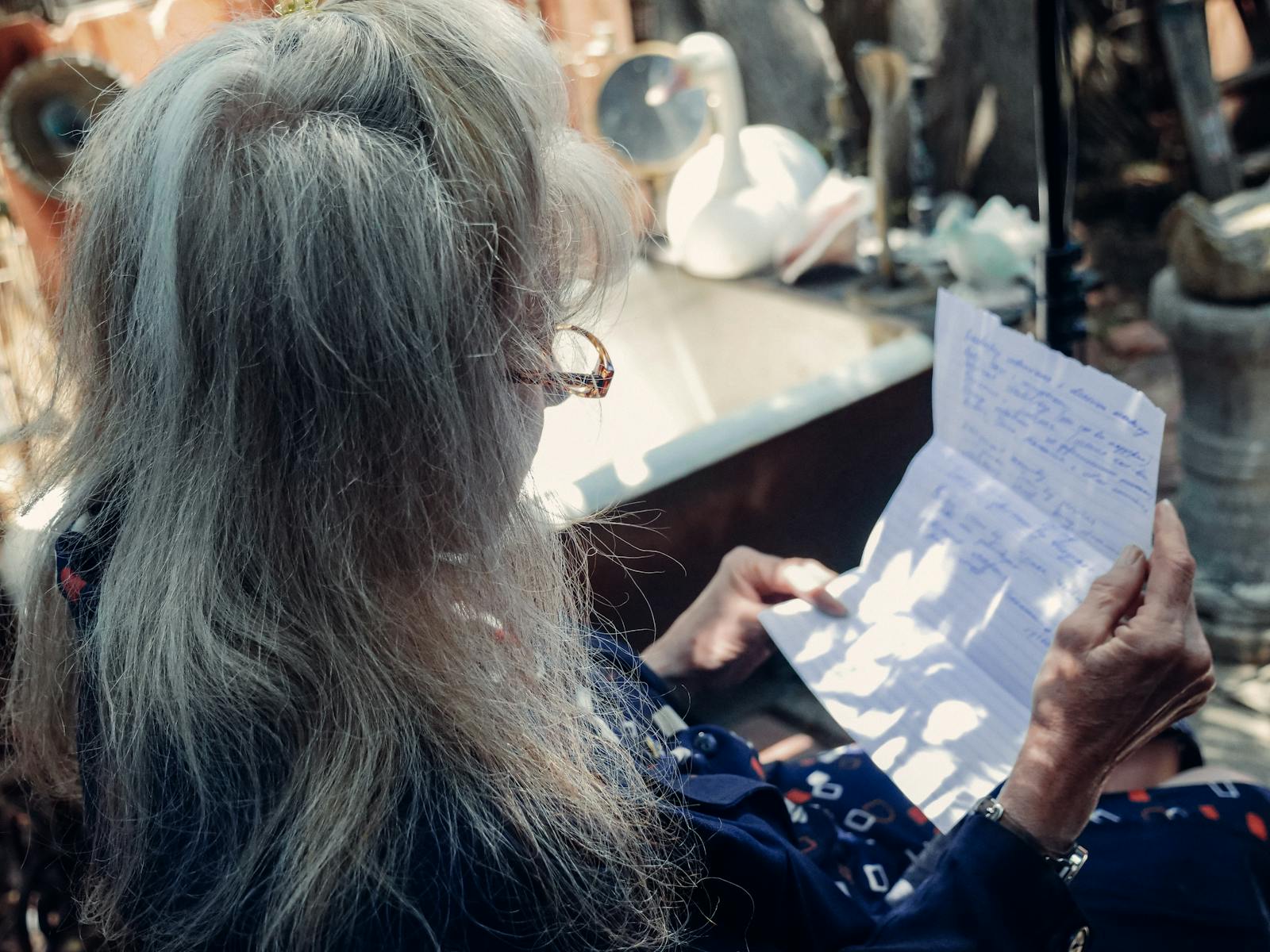
We’d bet there is, somewhere in your house, a box. Maybe it is a plastic tub on a shelf in the closet. Maybe it is a drawer in the spare room that has long since stopped closing properly. Maybe it has migrated, over the years, into three boxes, then four, and you have stopped counting.
Inside is the archive. Crayon drawings on construction paper that has gone soft at the edges. School photos with the same gap-toothed smile in three different sizes. A handprint pressed into plaster, dated in your own handwriting, from a kindergarten class that no longer exists. Report cards from teachers whose names you cannot quite remember. A birthday card with the letters running uphill across the page, signed in marker by a child who is now, somehow, taller than you.
You have probably been told, at some point, that this is too much. That you should sort through it. That you should keep only the best ones. That you are being sentimental, or that you are running out of room, or that the child in question has long since stopped caring about the fingerpainting from when they were four.
We want to say something about this, and we want to say it gently. The research is clearer than the people offering you decluttering advice may know.
This is not what excess looks like
What you are doing has a name, and it is not hoarding.
In 1981, the psychologist Mihaly Csikszentmihalyi and the sociologist Eugene Rochberg-Halton published a book called The Meaning of Things: Domestic Symbols and the Self, based on a study of eighty families in the Chicago area. They went into people’s homes and asked, in essence, a single question: which of the objects in this house actually matter to you, and why?
The objects people most cherished were rarely the ones that had cost the most or impressed visitors. They were the objects that carried relationships. The chair that had belonged to a grandmother. The photograph from a particular Christmas. The first piece of pottery a child had ever made. The objects that mattered were the ones that had a person inside them.
The box of drawings is part of this. So is the report card. So is the handprint. They are not surplus. They are the architecture of a particular kind of love, made physical so that it does not have to live entirely inside your head.
The handprint is not really a handprint
What you are keeping, when you keep these objects, is not really paper and ink and dried plaster. You are keeping evidence.
Memory, as decades of research have established, is a reconstructive process. We do not retrieve our memories from a fixed archive in the way we open a file on a computer. We rebuild them, every time, from fragments — and the fragments grow harder to find as the years pass. A specific Tuesday afternoon in a specific kitchen, with a specific four-year-old asking for more glue, is not durable on its own. It begins to fade almost as it ends.
The drawing made on that Monday evening, however, is durable. It can be held. It can be pulled out of a box twenty years later, and the kitchen and the four-year-old and the request for more glue can come back, in part, because the paper survived to remind you.
You are not being sentimental. You are protecting access to your own life.
Nostalgia is a resource, not a weakness
For most of the modern era, nostalgia was treated as a kind of mild pathology. The term was originally coined in the seventeenth century by a Swiss physician who classified it as a disorder. To be nostalgic was to be stuck, weak, unable to live in the present.
The research has almost entirely overturned that view.
Nostalgia has been shown to buffer against loneliness, and increase our sense of social connectedness. The summary one of the research teams arrived at could not be more direct:
“Nostalgia is a psychological resource — not a liability.”
The parent who occasionally takes the box down from the closet, opens it, and looks at the drawings is not being indulgent. They are using one of the most reliable mood-regulation tools the human mind has developed. The artifacts are a delivery mechanism. They are how the nostalgia gets in.
The archive is also a love letter to the future
There is one more thing worth saying about the box.
It is not only for you. Somewhere down the line — twenty years from now, or thirty, or after you are gone — the child who made the drawings will encounter the archive themselves. They may find it in your house when they help you move. They may find it after a funeral. They may find it on an ordinary Sunday when they are looking for something else entirely.
What they will find is the proof that someone, for years, considered them worth keeping. Not the trophy versions. Not the curated highlights. The ordinary drawings, the report card from the year that nothing went right, the handprint from the kindergarten that no longer exists. Every piece of evidence that they were paid attention to, by someone who decided, quietly, that none of it should be thrown away.
Most people do not get to encounter that kind of evidence about themselves. The ones who do tend to remember it for the rest of their lives.
You are not making a mess. You are not failing to declutter. You are, in your own quiet and unphotographed way, building something that will eventually do work in the world that no one in this moment can quite see. The box is not a problem to be solved. It is one of the more honest things you have ever made.
Keep it.
