

There is a particular kind of person every family seems to produce, and by the time they reach their late fifties, something in them has gone quiet. The quiet is specific. They answer the phone on the third ring instead of the first. They stop volunteering for the holiday hosting before anyone has asked. They drive home from a family dinner and realize nobody asked them a single question about their own life. They are still the one who remembers the appointments, who picks up the phone at odd hours, who drives across town when a sibling’s car breaks down. The strange part is that almost nobody around them notices they have stopped expecting anything back.
That quiet is not the beginning of withdrawal. It is the late stage of a much older pattern, one that started decades earlier when reliability got reclassified, somewhere along the way, as not having needs.
The role nobody auditioned for
In most families, one person becomes the structural beam. They mediate between parents, translate for grandparents, drive the cousin in crisis to rehab, host the holidays, manage the medical paperwork when someone gets sick. They did not volunteer so much as get assigned, often as children, and the assignment was sticky.
Children who absorb adult responsibility early tend to develop a recognizable adult signature: composed under pressure, slow to ask for help, quick to anticipate what other people need. The competence is real. The cost is invisible, even to them.
By midlife, that competence has produced a strange social contract. Everyone in the family treats them as the person who handles things. Few people, if any, treat them as a person who might also be tired, frightened, or quietly grieving.
How dependability gets misread as self-sufficiency
The misreading happens in small steps. A sister calls about a problem and the reliable one solves it. A parent drops a worry and the reliable one absorbs it. A friend cancels plans because something came up, and the reliable one says, easily, that it’s fine. None of these moments look like much. Stacked across thirty years, they teach everyone around them a single lesson: this person does not need to be checked on.
Pew Research Center’s 2026 report on family caregiving in an aging America found that women providing regular care to an aging parent are far more likely than men to report a negative impact on their emotional well-being (47% vs. 30%) and physical health (38% vs. 26%). The relationship with the parent often improves. The caregiver’s inner life often does not. That gap, between how the relationship looks from outside and how it feels from inside, is exactly where invisibility lives.

The math of late midlife
By the late fifties, the reliable person is usually carrying more than at any earlier point in life. Parents are aging into the bracket where caregiving load steepens sharply. The same Pew survey found that adults with a parent age 75 or older are nearly twice as likely to be active caregivers as those with a parent in the 65 to 74 range.
Adult children, even grown ones, often still circle back for help. Younger siblings, ex-spouses, old friends from college: the network that learned long ago who picks up the phone has not forgotten. Demands stack up at the precise life stage when the reliable person’s own body, marriage, and career are also asking harder questions. More is being asked. Less is being offered. Almost nobody in the family realizes the ledger has tipped, because the person keeping the ledger has never sent them a copy.
Why the burden stays hidden
The U.S. Centers for Disease Control and Prevention estimates that 80% of people living with dementia in the United States receive informal care from family members or friends, which works out to roughly 16 million unpaid caregivers, according to research summarized by Science Daily. Almost all of that labor is invisible to anyone outside the household.
A 2024 George Mason University study published in the Journal of Applied Gerontology tested a nine-week online stress management program for family caregivers of older adults with dementia. After the intervention, average burden scores dropped by 15% across 97 caregivers. The finding is encouraging on its own terms. It is also a quiet indictment: the burden was high enough, and chronic enough, that a structured program had measurable room to lower it. Similar work covered by News-Medical found that peer support, even delivered over video calls, reduced caregivers’ sense of isolation. The people doing the most invisible labor are often the loneliest in their own families.
The slow erosion of being seen
Invisibility, in this context, is not a single event. It is a thousand small omissions. The dependable person stops being asked how they are doing because everyone assumes they are fine. They stop being invited to vent because they are the one others vent to. Their own milestones get forgotten in the family group chat because the role of remembering has always belonged to them.
By their late fifties, many of these adults describe a peculiar internal weather. They are not angry, exactly. They are not even sad in any obvious way. They have simply noticed that if they stopped showing up, it would take a surprisingly long time for anyone to ask why.
What competence costs
Reliability is not the problem. Most of these adults are good at what they do, and the work matters. A child gets through chemo. A parent dies at home instead of alone in a hospital. A sibling makes rent. None of that is small.
The cost shows up in the parts of life that nobody is tracking. Sleep. Marriage. Friendship. The small daily ritual of being asked, by someone, what you actually want.
A study on family support for caregivers of older adults with chronic conditions in rural China found that caregivers who received emotional and instrumental support from other family members reported significantly higher well-being than those carrying the load alone. The protective factor was not money or services. It was simply having other people in the family who saw the work and shared it. The reliable person does not collapse from the work itself. They erode from doing it without witnesses.
The fifties as a turning point
Why does this surface so often in the late fifties specifically? Several pressures arrive at once. Aging parents need more. Adult children are launching, returning, divorcing, or having their own children. Careers either peak or stall. The body sends its first ungentle signals.
And the social bench thins. Friends move, retire, get sick, get divorced. The casual network that once made it possible to feel known by accident is no longer dense enough to do that work. For someone whose identity has been wrapped around being the one others lean on, the loss of casual witnesses is a particular kind of grief.
Why they don’t speak up
Asked directly, most reliable people will say they are fine. Several factors keep them in that script.
The first is identity. Being the dependable one is not just a behavior, it is a self-image, often built in childhood as a response to instability. Asking for help can feel like betraying the role that organized their entire understanding of themselves. The role kept them safe once. Letting it slip feels dangerous in ways they cannot fully explain.
The second is calibration. They have spent decades learning what other people can absorb. They know which sibling cannot handle bad news, which parent will weaponize a vulnerability, which friend will say the right thing and which will go quiet. By their fifties, they have a precise internal map of where it is safe to be honest. The map is often nearly empty.
The third is exhaustion. Asking for help is itself a kind of labor. It requires explaining the problem, anticipating the listener’s reaction, managing their feelings about not having noticed. For someone already running near capacity, the prospect of doing emotional logistics on their own behalf feels like one more job.
What “becoming invisible” actually looks like
Invisibility, in late midlife, rarely looks dramatic. It looks like declining invitations because the energy isn’t there to perform. It looks like answering the phone less. It looks like a slow, almost imperceptible shift toward routines that do not require anyone else’s cooperation: solo walks, gardening, long stretches of reading, hours alone in the car.
Other family members, if they notice at all, often misread the shift as aging or temperament. The reliable one is just getting quieter. Just slowing down. Just becoming a homebody. Few connect the dots backward to the years of unanswered need that produced the silence.
The bitterness that isn’t really bitterness
Some of these adults do reach a sharper edge. They become harder to read, more clipped on the phone, less willing to host. Family members describe them as having become difficult, or moody, or distant.
What is usually happening is more specific. They have started to recognize that decades of giving were not registered as choice. The giving was registered as availability, as default, as something the family could spend without thanking. The recognition is not exactly resentment. It is closer to grief, with a thin metallic edge of anger underneath.
What helps, when help comes
The interventions that work in the research literature are not complicated. Peer groups. Structured check-ins. Permission, granted by someone outside the family system, to name the load out loud. The George Mason program reduced burden scores meaningfully in nine weeks largely by creating a room where the work was witnessed.
Within families, the equivalent is harder to engineer but simpler in principle. It looks like a sibling who says, without being asked, that they will handle the medical calls this month. A spouse who notices the silence after a long day and asks a real question. A grown child who calls to talk about nothing in particular, instead of calling only when something needs solving. A friend who notices the dependable one has gone quiet and refuses to accept the surface answer.
Reporting from cancer caregiver navigation programs echoes the same finding. Caregivers do better when the system around them treats them as people who also need care, not just as conduits for someone else’s treatment plan. The intervention is, at base, a refusal to let them disappear.
What the dependable person can do
For the reliable person themselves, the late fifties can be an unexpectedly useful inflection point, if they catch it. The role that organized their entire life is loosening anyway, as parents die and children become adults. The question is whether they will refill the space with new work or with something closer to a self.
That often means small experiments. Saying no to one request. Mentioning, to one trusted person, that something has been hard. Going to therapy, not because they are in crisis but because the role has finally cost more than it returned. Letting someone help and not narrating their way through the discomfort.
None of this dismantles the identity overnight. It does start, slowly, to teach the people around them a new lesson. The reliable one has needs. The reliable one is a person. The reliable one has been there the whole time.
The quiet point
The most reliable person in any family is not invisible because they faded. They are invisible because the people around them learned, over decades, to look past them toward whatever needed handling next. The dependability worked so well it erased the human doing it.
By the late fifties, the cost of that erasure starts coming due. The research keeps pointing in one direction: the load itself is rarely what breaks people. What breaks them is carrying it without anyone naming what they are carrying. A 15% drop in burden scores after nine weeks of structured witnessing is not really a finding about programs. It is a finding about how starved most caregivers are for someone, anyone, to acknowledge the shape of their days.
Whether the cost gets paid in bitterness, in withdrawal, in a slow renegotiation of the role, or in something better, depends on a single variable. Not whether the reliable person finally asks. They have spent a lifetime learning not to. It depends on whether someone in their orbit is willing to stop treating their competence as consent, and to ask the question the family has been avoiding for thirty years: what has this actually cost you, and what would it look like if you stopped paying alone.
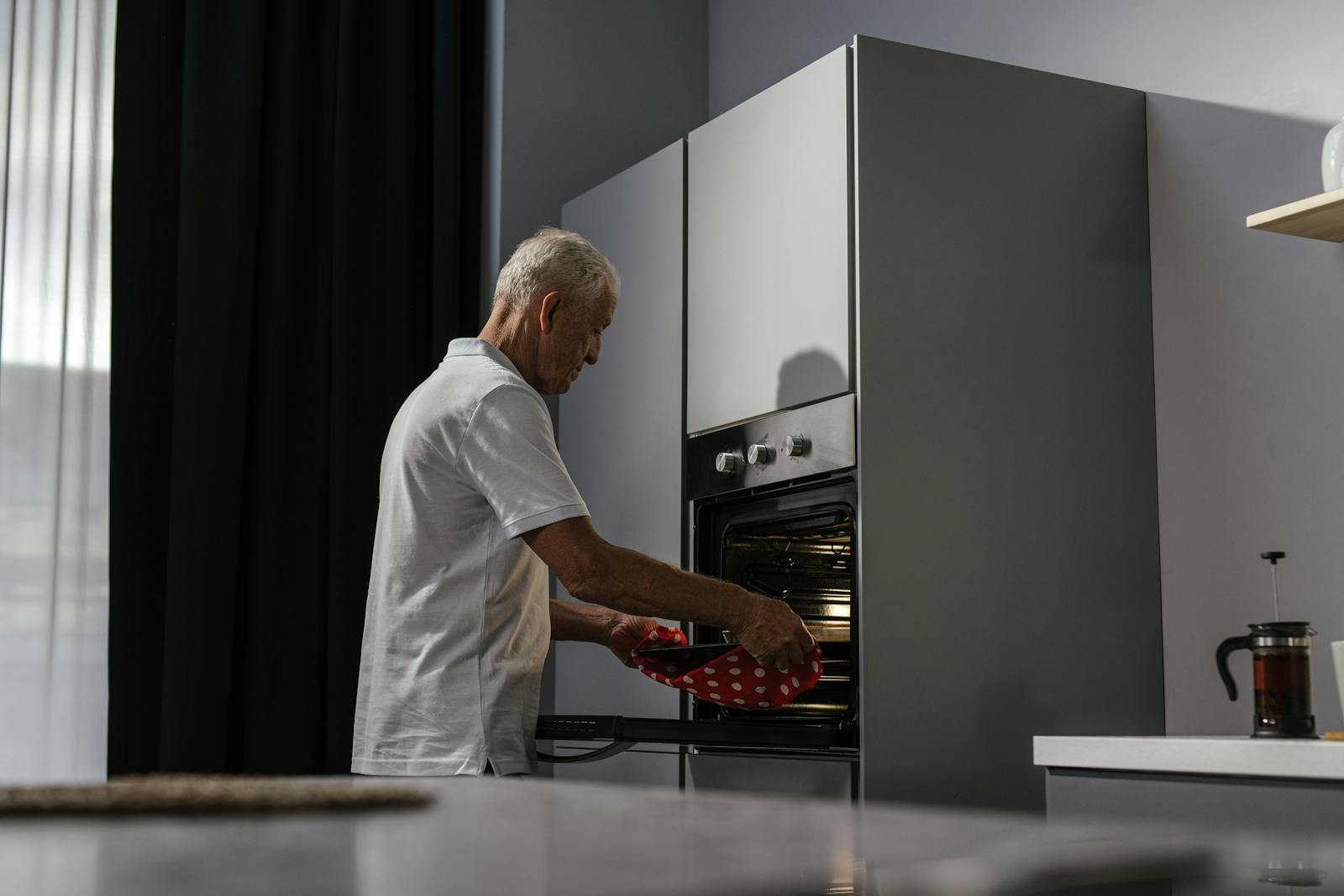
Photo by Patricia Bozan on Pexels
