

There is a particular kind of adult who cannot sit down in a room until the kitchen is reset. Not tidied. Reset. Counters wiped, sink dry, dishcloth folded, the faint smell of cleaner hanging in the air like a confession. From the outside, this looks like discipline. From the inside, it can feel closer to bracing.
The habit is not always about cleanliness. Sometimes it is about a learned association between mess and tension, formed long before the adult had words for it.
The kitchen as an early warning system
Children are remarkable forecasters. Long before they can name an emotion, they can read the weather of a household. The pitch of a sigh. The way a parent sets down keys. Whether the dishwasher got unloaded.
In some homes, an unfinished kitchen was just an unfinished kitchen. In others, it became the leading indicator of a coming storm: the slammed cabinet, the cold silence at dinner, the long lecture about respect. A child who grew up in the second kind of home may have learned to scan surfaces the way meteorologists scan radar.
By adulthood, the scanning can become automatic. The dishes in the sink generate a low, prickling unease that has little to do with hygiene and a lot to do with an old expectation that someone is about to walk in and be disappointed.
Why old patterns can outlive their original setting
Most people who behave this way will say they simply prefer order. Press a little, and the explanation can thin out. They are not always sure why a stray bowl on the counter ruins their evening. They just know it does.
That gap between behavior and explanation is where old household conditioning often lives. A Yale study published in Communications Psychology in 2025 found that the timing of childhood adversity can shape how adults later distinguish between threat and safety cues, with differences in brain activation during a threat-and-safety learning task.
That study was not about kitchens, dishes, or domestic chores. But it does support a broader point: early environments can influence how people later read cues of safety and danger. For some adults, a wiped counter may feel like a safety signal. An unwiped one may feel like a problem waiting to happen.
The mood-volatile parent and the watchful child
Not every household that produces this pattern was abusive. Many were simply unpredictable. A parent whose moods turned on small domestic details, often without warning, can teach a child that vigilance is the price of peace.
Children in these homes may become unusually skilled at anticipating and preempting another person’s reactions. A Psychology Today essay by licensed mental health counselor Leon Garber describes how enmeshment and perfectionism can involve taking too much responsibility for another person’s wellbeing, including trying to predict and manage their responses before they happen.
A clean kitchen, in this framework, is not only a chore completed. It can become a peace offering submitted in advance.
Perfectionism as a way of keeping the peace
It is tempting to call these adults Type A, high-functioning, or simply particular. The labels are flattering, but they can obscure what may be happening underneath.
Some children learn that goodness means prevention. Prevent the complaint. Prevent the cold silence. Prevent the look of disappointment. If the kitchen is spotless, maybe no one will be in a bad mood tonight.
The logic is not rational in adult life, but it can make perfect sense to a child. If cleaning the counter once softened a parent’s mood, the child may remember the pattern. If doing extra work earned calm, praise, or even just the absence of criticism, the lesson can stick.
By thirty-five, the adult may still be running the equation, even though the original parent is no longer in the room and may not even be alive.
The cost nobody sees
From the outside, this kind of adult looks competent. They host well. Their homes are calm. Friends compliment the candles, the folded throw, the lemon water in the fridge.
What friends do not see is the inability to sit down in their own home. The way a partner’s offer to help with dishes can register as oddly stressful, because the system has to be done their way to create the feeling it was designed to create. The 11 p.m. wipe-down after a long day, performed not because the counter is truly dirty but because the adult cannot rest until the room feels safe enough.
The compulsive cleaner may have learned that the environment had to be managed because no one else was reliably managing their own mood.

How to tell tidiness from something heavier
The difference is rarely visible in the kitchen itself. It shows up in what happens when the kitchen cannot be cleaned.
A genuinely tidy person who comes home exhausted to a sink full of dishes may feel mild irritation, shrug, and go to bed. A person whose tidiness is carrying a heavier emotional job may not be able to do that. The dishes seem to hum from the next room. They lie awake calculating. They get up at 1 a.m. and do them, then feel a strange, hollow relief that is not quite relief, because the same scene will repeat tomorrow.
Three other tells tend to cluster with this one:
The pre-arrival sweep. When a partner or family member is about to come home, the adult performs an unconscious inventory. Not of what needs doing, but of what could be criticized. They are not preparing the house. They are preparing a defense.
The mood-reading reflex. They can tell within seconds of someone walking through the door whether that person is in a good mood, and they adjust their behavior accordingly without ever deciding to. Constant worry about whether someone is mad is a common sign of an adult whose childhood required this skill.
The disproportionate relief at being alone. When the house empties out, something in the chest unclenches. The cleaning slows down. The standards drop. The adult realizes they were performing for an audience that left hours ago, or decades ago.
The role of the unpredictable parent
What unsettles children is not always one dramatic event. Often, it is volatility. A parent whose response to the same stimulus varies wildly, where leaving a glass on the table earns a laugh on Tuesday and a tirade on Thursday, teaches the child that the rules cannot be learned, only the moods.
A 2026 Psychology Today essay on parenting argues that children need emotional safety, steady limits, and reliable support to handle stress and relationships. The article is expert commentary rather than a definitive study, but it reinforces a useful everyday point: consistency matters.
Research summarized by EurekAlert! has also found that positive parenting, as reported by children and teenagers, can buffer young people from the effects of serious stressors such as financial hardship or illness. The broader lesson is not that parents must be perfect. It is that steadiness can be protective.
If the parent is the weather, the child becomes the barometer. And barometers do not stop reading pressure just because they have been moved to a new house.
Why this often goes unnoticed for decades
Compulsive household management is one of the most socially rewarded ways to carry old unease. Nobody stages an intervention for someone whose home is too clean. Partners often appreciate it. Parents brag about it. Employers mistake it for conscientiousness.
The pattern only becomes visible when something interrupts it: a serious illness, a newborn, a renovation, or a period of exhaustion that finally exceeds the adult’s ability to keep performing. When the kitchen stops getting cleaned, the underlying unease can surface with surprising force, and the adult discovers that the cleaning was not only a preference. It was a regulation strategy.
This is also why so many of these adults find themselves, in their forties and fifties, exhausted in a way they cannot quite name. They make the same discovery in a different room: the labor was supposed to buy peace, and the peace never quite arrived.
What changing this actually requires
The instinct, once someone recognizes the pattern, is to try to stop cleaning. This rarely works on its own. The habit has a job, and removing the behavior without understanding the job can leave the unease with nowhere to go.
A smaller first step is often more useful than a dramatic one. Leave one dish in the sink for a while. Notice what the mind predicts. Notice whether the feared reaction actually arrives. Notice how strongly the body wants to finish the task even when nothing bad is happening.
This is not about forcing mess for its own sake. It is about finding out whether the adult is choosing cleanliness freely, or obeying an old rule that no longer belongs in the house.
It can also help to name the feeling out loud to a partner: I am not upset about the counter. I am bracing for someone who is no longer here.
The quiet reframe
There is nothing wrong with liking a clean kitchen. The question is whether the kitchen is serving the adult or the adult is serving the kitchen.
If a person can leave the dishes and sleep, the cleanliness is a preference. If they cannot, the cleanliness may be doing a job assigned a long time ago by someone whose moods were not theirs to manage.
Recognizing this does not make the dishes wash themselves. It does, sometimes, make it possible to sit down in the room before they are done. To eat a second helping without already mapping the cleanup. To let a friend leave their wine glass on the counter overnight without it ruining the morning.
That small permission is what the child may not have had. The adult can finally begin to give it to themselves.
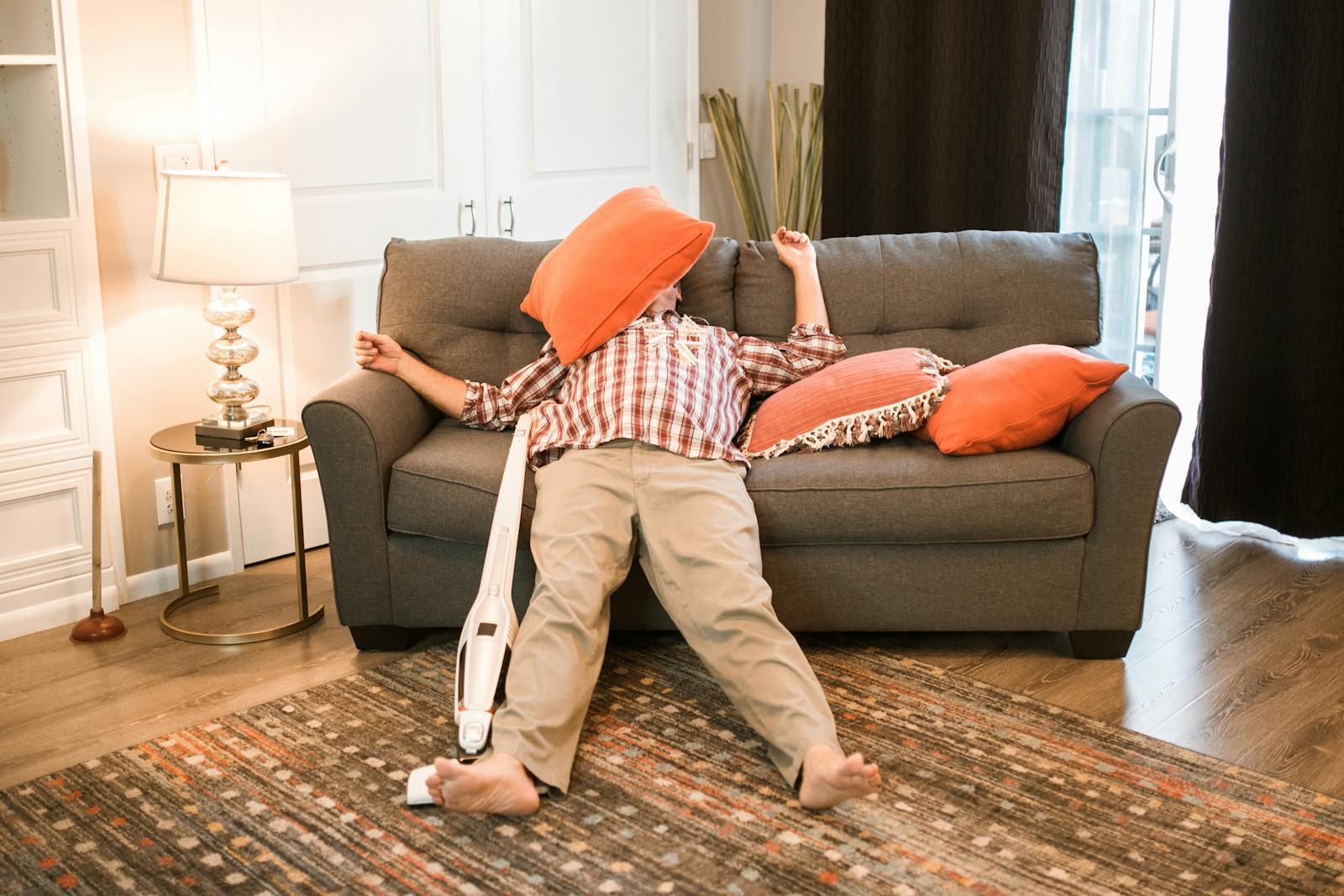
Photo by Ron Lach on Pexels
