
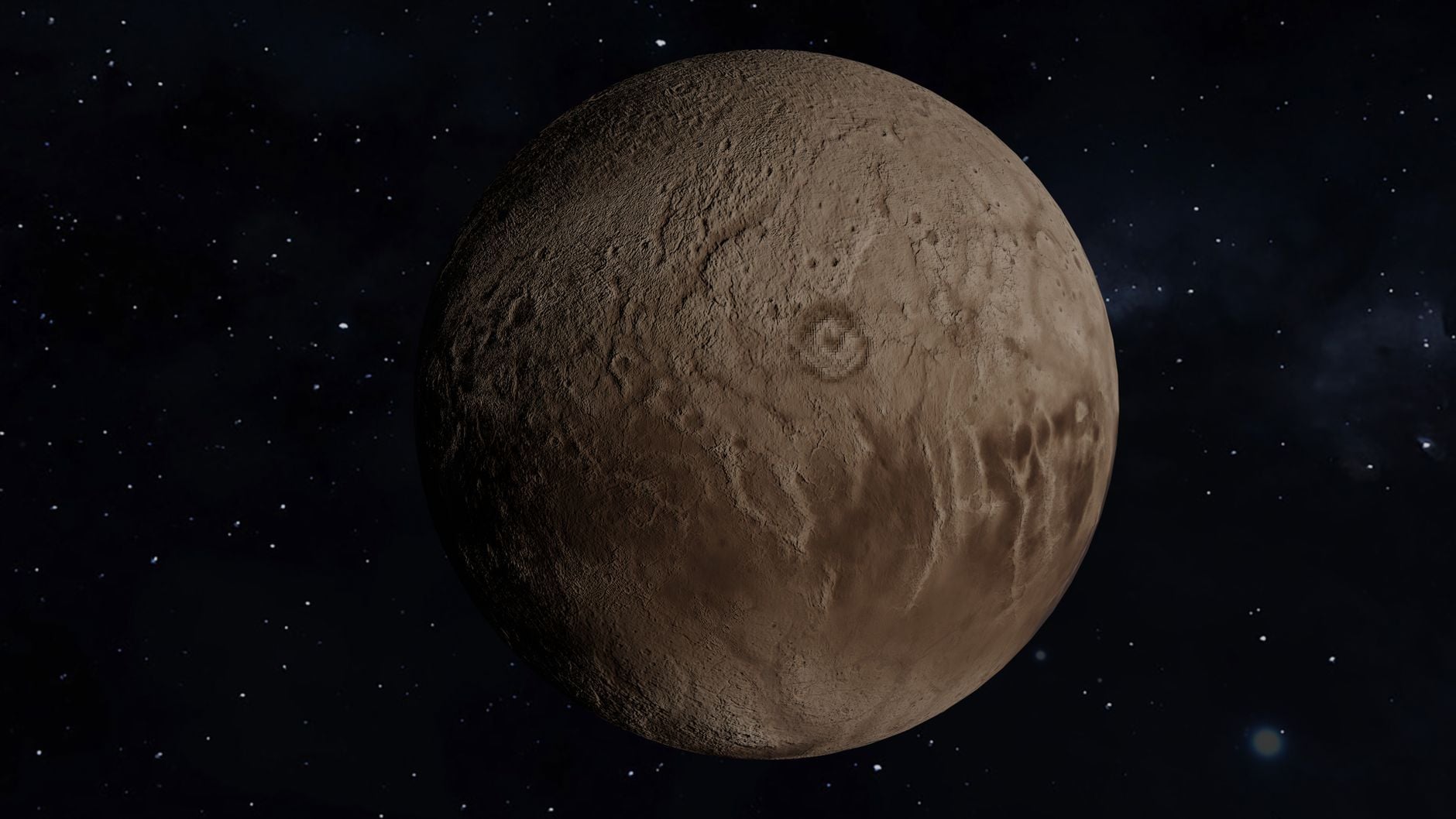
When astronomers first weighed the planet GJ 3378 b, they got a figure of about 5.3 times the mass of Earth. That was heavy enough to make it a likely gas world, wrapped in a thick atmosphere with crushing pressure and no surface to speak of. Then a fresh run of telescope measurements, 137 of them, revised the number down to about 2.3, nudging the planet across the boundary into rocky, potentially life-bearing territory. It is a neat illustration of how a single well-measured number can change what kind of world we think we are looking at.
Why a planet’s mass decides its fate
The reason the figure matters so much is that mass, for a planet, is close to destiny. Around five Earth masses lies a rough dividing line. Below it, worlds tend to be rocky super-Earths with solid surfaces. Above it, they tend to gather and hold onto thick, hydrogen-rich atmospheres, becoming mini-Neptunes: gaseous, enormously high-pressure, and with no ground to stand on.
At 5.3 Earth masses, GJ 3378 b sat on the gassy side of that line, a probable small Neptune. At 2.3, it falls clearly on the rocky side. The difference between those two numbers is, in effect, the difference between a possible second Earth and a miniature gas giant.
How you weigh a planet you cannot see
You cannot put a planet on a scale, so astronomers weigh it indirectly. As a planet orbits, its gravity tugs its star into a tiny back-and-forth wobble, and ultra-precise instruments can detect that wobble in the star’s light. A heavier planet pulls harder and produces a bigger wobble. GJ 3378 b, orbiting a red dwarf about 25 light-years away, was found this way, and the early data put its mass near 5.3 Earth masses.
137 measurements later
The revision came from simply gathering far more data. A team led by astronomers at the University of California, Irvine added 137 new measurements from the Habitable-zone Planet Finder, an instrument on the Hobby-Eberly Telescope in Texas, collected over roughly seven years, along with further measurements from the NEID spectrometer in Arizona. They combined all of it with earlier observations from other instruments.
With that much more data, the star’s wobble could be traced far more precisely, and the planet’s mass settled at about 2.3 Earth masses, less than half the original estimate. The orbital period was refined too, to about 21.45 days. The extra measurements did not merely tighten the uncertainty around the old answer. They moved the answer, and moved it across the line that separates a gas world from a rocky one.
Across the line, with caveats
Two qualifications keep this honest, because the headline is more certain than the science. The first is technical but important: the wobble method yields a minimum mass, not the exact mass, because it depends on the tilt of the orbit, which we cannot fully see. So 2.3 Earth masses is really a floor. The true mass could be somewhat higher, though it is most likely close to that value.
The second is that mass alone does not prove a solid surface. To be sure a planet is rocky you also want its size, and therefore its density, and size comes from watching a planet cross the face of its star. This world was found by the wobble rather than by such a crossing, so its size is unknown. “Rocky” is now the strong bet, based on how planets of this mass usually turn out, rather than a confirmed fact.
“Potentially life-bearing” is doing a lot of work
The phrase in the headline deserves the same care. GJ 3378 b sits in its star’s habitable zone, the band where a planet could hold liquid water on its surface if it has a suitable atmosphere. That is a necessary condition, not a guarantee.
Because it circles a red dwarf, the planet also sits, in the study’s words, on the cosmic shoreline, the rough boundary beyond which a star’s radiation can strip a planet’s atmosphere away. Whether GJ 3378 b has kept an atmosphere at all is unknown. “Potentially life-bearing” means the address looks promising, not that anyone has found signs of a tenant.
Why the re-measurement matters
Stripped of the drama, this is science working as it should. A borderline result was given more data, and it shifted, in the direction that matters most, from a probable gas world to a possible rocky one only 25 light-years away, close enough to be a prime target for the next generation of telescopes.
It is also a useful caution. Early exoplanet figures are provisional, and a world’s very identity can hinge on a mass estimate that further observation may revise, in either direction. The things to watch now are whether the planet’s size can be pinned down to confirm it is rocky, whether it holds an atmosphere, and whether still more data nudge the mass again. For the moment, 137 patient measurements have turned a likely gas world into a candidate rocky one, and that reclassification, more than any single night at the telescope, is what has put GJ 3378 b on the shortlist of nearby worlds worth watching.
