
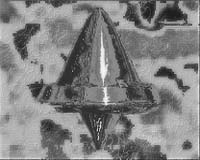
Plans to make the first known attempt to “push” a spacecraft in Earth orbit using energy beamed up from the ground will be announced next week at the First International Symposium on Beamed-Energy Propulsion at The University of Alabama in Huntsville.
Scientists from the University of California at Irvine and Microwave Sciences, Inc., will discuss the Planetary Society’s plans to launch its Cosmos Sail mission next year using a Russian launch vehicle.
Once the spacecraft is in orbit about 800 kilometers up and its sail is deployed, a microwave beam emitted from the Jet Propulsion Lab’s Goldstone 70-meter antennae in California’s Mojave Desert will be used to give the spacecraft an extra push, according to Dr. Gregory Benford, a professor of physics at UC-Irvine. Instruments on board the satellite will measure how much the sail accelerates due to the microwave boost.
Benford’s identical twin, Dr. James Benford, the president of Microwave Sciences, will chair two sessions on microwave powered propulsion during the symposium and is scheduled to present information about the mission on Wednesday, Nov. 6, 2002.
They will also answer questions about the upcoming mission at a press conference at 5:30 p.m. CST, on Tuesday, Nov. 5, 2002. Press conference specifics follow at the end of this message.
While the push received from the Goldstone microwave beam will be tiny compared to the effect of solar radiation on the sail, the spacecraft’s mission is to test the feasibility of beam-boosted sails, said Greg Benford. “The basic ability to move energy and force through space weightlessly is key to a genuinely 21st century type of spacecraft.”
