
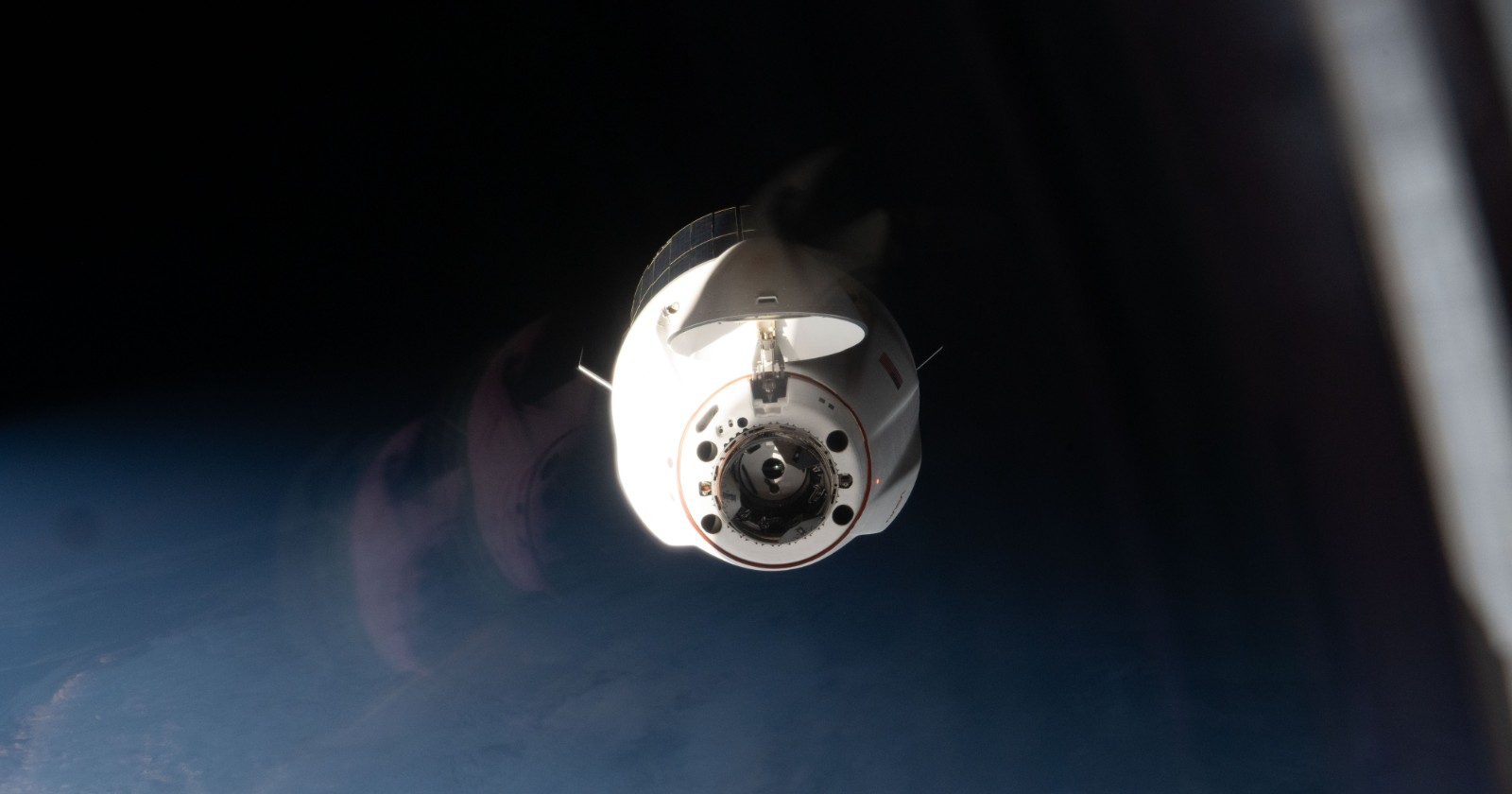
A SpaceX Dragon cargo spacecraft is scheduled to leave the International Space Station on Tuesday, June 16, and head back to Earth carrying research samples and used hardware, with splashdown expected off the coast of California early on Wednesday, June 17.
According to NASA, the capsule will undock from the forward port of the station’s Harmony module at about 12:05 p.m. EDT, after a command from SpaceX ground controllers, then fire its thrusters to back away from the orbiting laboratory. Live undocking coverage begins at 11:45 a.m. EDT on NASA+ and the agency’s YouTube channel. The spacecraft is due to reenter the atmosphere the next day and splash down at about 5:08 a.m. PDT; NASA will not carry the splashdown live but plans to post updates on its space station blog. The flight closes out the 34th SpaceX commercial resupply mission, known as CRS-34.
Dragon is returning thousands of pounds of cargo. The science aboard includes bioprinted organ and cartilage tissue, data on storing cryogenic fuel for future missions, and DNA-inspired materials being developed into cancer treatments. The returning hardware includes an ocular imaging device used to track crew members’ eye health, an absorbent bed that filters trace contaminants from cabin air, and a separator pump from the station’s waste and hygiene compartment.
Several of the experiments target health problems on Earth. One NASA investigation grew blood-forming stem cells in microgravity, where researchers believe the cells better keep their ability to develop into the red and white blood cells used to treat blood diseases and cancers. Another, called MVP Cell-09, sent up lab-grown heart tissue deliberately infected with pneumonia-causing bacteria, which tend to grow more aggressive in orbit, to study a poorly understood link between pneumonia and heart disease. A third returns 3D-printed cartilage; NASA notes that more than 900,000 knee cartilage injuries occur in the United States each year, many requiring surgery, and that printing in microgravity spreads cells more evenly than is possible on the ground.
Partners flew experiments of their own. The European Space Agency’s Green Bone study tested a scaffold made from wood and designed to mimic real bone, work aimed at conditions such as osteoporosis, which weakens the bones of millions of people. Other returning samples include heart, liver, kidney, and brain tissue models dosed with experimental RNA-based drugs, and semiconductor crystals grown in orbit for use in sensors and lasers.
NASA frames these as early-stage investigations. The samples still have to be analyzed back on Earth, and the medical and engineering payoffs the agency describes remain prospective rather than proven.
Dragon arrived at the station on May 17, carrying nearly 6,500 pounds of crew supplies and experiments, two days after launching on a Falcon 9 rocket from Space Launch Complex 40 at Cape Canaveral Space Force Station in Florida. It docked to the Harmony module to deliver cargo to the Expedition 74 crew.
Once the capsule is recovered, its cargo heads to research teams across the United States and Europe, where the slower work of the mission begins: reading what weeks in microgravity did to the samples.
