

Rocket Lab said on June 29 that it had agreed to buy Iridium Communications in a cash-and-stock deal valuing the satellite-communications company at about $8 billion, a purchase that would carry the launch and spacecraft manufacturer into the business of operating its own global network in orbit.
Under the definitive agreement, Iridium stockholders would receive $27.00 in cash plus Rocket Lab shares for each Iridium share, a package the companies put at a notional $54.00 per share. The stock portion is set by an exchange ratio bounded by a collar of $67.50 to $112.50 on Rocket Lab’s share price. Both boards approved the transaction unanimously, and every Iridium director who holds stock has signed a voting agreement to support it.
What Iridium brings
Iridium operates a low-Earth-orbit constellation it markets as the only truly global mobile satellite network, serving more than 2.55 million active subscribers across aviation, maritime, government, and commercial markets. Its globally coordinated L-band spectrum delivers connectivity that holds up in bad weather and offers an alternative source of positioning, navigation, and timing when GPS and other satellite-navigation signals are degraded or unavailable.
The McLean, Virginia, company reported $871.7 million in revenue in 2025 and $495 million in operational earnings before interest, taxes, depreciation, and amortization, a 57 percent margin on that measure. Rocket Lab framed that recurring income as a way to help fund growth, a steadier revenue base than the project-by-project rhythm of the launch business.
Why Rocket Lab wants it
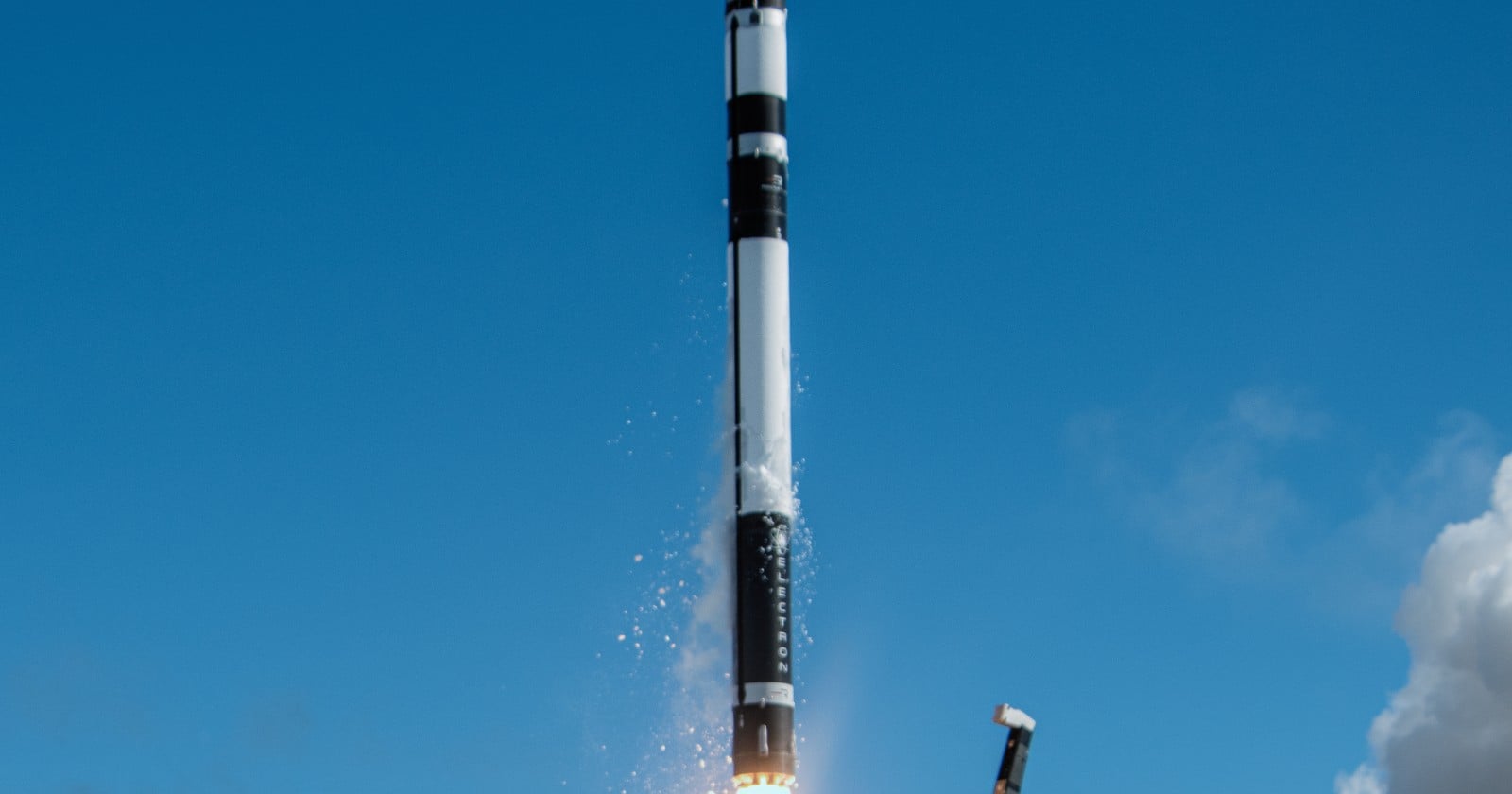
Rocket Lab has built its business on the Electron, which it describes as the world’s most frequently launched orbital small rocket, and is developing the larger Neutron vehicle aimed at deploying constellations. Buying Iridium would let the company design, build, launch, and operate its own satellites end to end, a level of vertical integration it has long said it was working toward.
The company argued the combination would let it stop paying outside providers to launch a constellation and instead keep that launch margin in house, while guaranteeing itself access to orbit as launch capacity across the industry tightens. “This is a defining moment for the space industry and the start of a new era of strategic, accelerated growth for Rocket Lab and Iridium,” said Sir Peter Beck, Rocket Lab’s founder and chief executive.
Iridium chief executive Matt Desch cast the deal as a way to move new technology to orbit faster and sustain it, pointing to next-generation direct-to-device service, marketed as Iridium NTN Direct, alongside internet-of-things, aviation, maritime, and national-security applications.
Financing and timeline
Rocket Lab has secured commitments for a $3.6 billion 364-day senior secured bridge loan from Deutsche Bank and Wells Fargo to cover the cash portion, and said it intends to fund that component through a mix of cash on hand and other debt and equity financing. Deutsche Bank Securities is serving as lead financial advisor.
The deal is expected to close in mid-2027, subject to approval by Iridium stockholders and regulators. Rocket Lab said it would file a registration statement with the Securities and Exchange Commission that includes Iridium’s proxy statement, the document that will lay out the full terms for the shareholder vote. Until those approvals clear, the two companies remain separate, and the wider consolidation reshaping the commercial space sector has one more deal waiting on the regulators.