
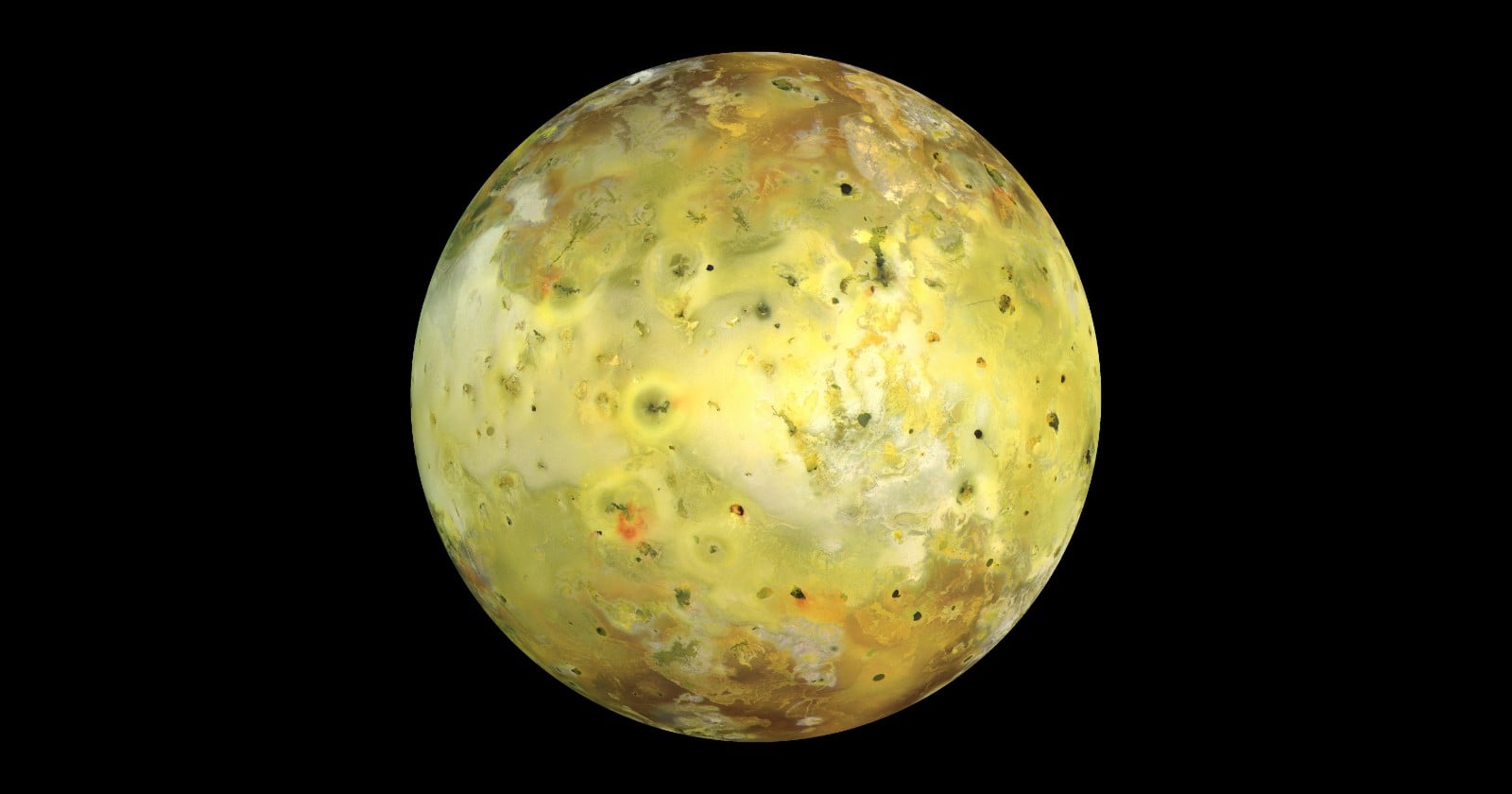
In 1676, at the young Paris Observatory, a Danish astronomer named Ole Rømer was keeping careful time on a moon of Jupiter and finding that it would not keep time back. Io, the innermost of the large Jovian moons, slipped into Jupiter’s shadow and out again on a schedule that should have been as regular as a metronome. Instead the eclipses ran late when Earth was drawing away from Jupiter, and early when Earth was moving toward it.
Rømer’s explanation, which he presented to the French Academy of Sciences that November, was that the light itself was arriving late. When Earth and Jupiter were farther apart, the light carrying news of each eclipse had farther to travel, and that extra journey took measurable time. Light, in other words, moves at a finite speed rather than reaching an observer the instant an event happens. It was among the first times anyone had made that case, and the evidence came from the timing of a distant moon.
Why anyone was watching Io in the first place
The observations were not a hunt for the nature of light. They were about the practical problem of longitude. A ship at sea could find its latitude from the height of the Sun, but longitude, its position east or west, required knowing the exact time at a fixed reference point and comparing it to local noon. Sailors had no clock reliable enough to carry that reference time across an ocean.
Jupiter offered a clock in the sky. Galileo had proposed that the regular eclipses of Jupiter’s moons could serve as a universal timekeeper, visible to observers anywhere, and by 1668 the astronomer Jean-Dominique Cassini, who would soon direct the Paris Observatory, had published tables predicting them. Compare the predicted moment of an eclipse with the local time you observed it, and in principle you could read off your longitude. Rømer had come to Paris in 1671 after the astronomer Jean Picard, sent to Denmark to fix the longitude of Tycho Brahe’s old observatory, spotted his talent and brought him back. Timing Io was his work.
The clock that ran slow
The trouble was that the tables kept missing. Io’s eclipses drifted from prediction in a pattern that lined up with the changing distance between Jupiter and Earth, and with nothing about Jupiter itself. As the two planets separated over the months, the eclipses fell later and later behind schedule. As they closed again, the lag shrank.
The drift was not trivial. Over the full swing from Jupiter’s closest approach to its farthest, the predicted times could be off by as much as a quarter of an hour, more than enough to ruin any attempt to read a longitude from them. The pattern had been accumulating in the Observatory’s records for about five years before anyone tied it firmly to distance. What made it hard to see was that Jupiter’s other moons carried irregularities of their own, from causes no one at the time understood, so the clean signal in Io’s timing sat buried in a good deal of noise.
Cassini himself flagged the pattern first. In a note to astronomers in August 1676, he warned that an emersion of the first satellite due that November would come about ten minutes later than the tables said. He floated an explanation: light might take time to travel, needing roughly ten or eleven minutes to cross a distance equal to the radius of Earth’s orbit. A November emersion was indeed observed about ten minutes behind the tables. Rømer took the idea, built the full argument around Io’s timing, and presented it as a demonstration that the motion of light is not instantaneous. His paper appeared in the Journal des Sçavans in December 1676, and an English version reached the Royal Society the following summer.
The claim he made, and the number he never reached
Rømer showed that light has a finite speed. He did not calculate what that speed was, and the popular version tends to blur the two. His estimate took the form of a travel time: he reckoned that light needed around 22 minutes to cross the full diameter of Earth’s orbit. The modern figure for that crossing is a little over 16 minutes, so his timing was off by roughly a third.
Turning the delay into a number came later, and from someone else. Christiaan Huygens, reading Rømer’s paper, worked out a value in 1678, finding light more than 600,000 times faster than sound. In today’s units that is about 230,000 kilometres per second, roughly a quarter short of the true value of just under 300,000. Huygens was the first person to put a figure on the speed of light. Neither Cassini nor Rømer had tried, most likely because the number was simply too large to feel meaningful.
The credit is messier than the plaque suggests
An inscription on the front of the Paris Observatory states plainly that Rømer discovered the speed of light there in 1676. The record, examined closely by historians at the Observatory, is less tidy. The first written account of the finding is Cassini’s August note, not Rømer’s paper, and Cassini had already given a reasonable order of magnitude for the delay. Working at the same observatory, on the same observations, discussing them at the same weekly meetings, the two men may have reached the idea together, with the rest of the team around them.
What separates them is what they did next. Cassini soon backed away. Light-travel time explained Io beautifully, but he could not find the matching delays in Jupiter’s three other large moons, whose motions were riddled with irregularities no one yet understood. For Cassini, a hypothesis that fit one satellite and not the others was not good enough, and he abandoned it and defended his doubt for the rest of his life. Rømer committed to the idea and argued it in public, which is why his name is the one on the wall. His article was published with Cassini’s and Picard’s agreement, the two of them leaving him to take sole responsibility for a claim they were not sure of.
Nor was the idea quickly accepted. Many astronomers, especially in France, stayed unconvinced for another half-century. The matter was only settled in 1728, when the English astronomer James Bradley found a small annual shift in the apparent positions of stars, an effect called aberration, that made sense only if light travelled at a finite speed while Earth moved through its orbit. Bradley’s discovery confirmed at a stroke both that light has a speed and that the Earth goes around the Sun.
The delay Rømer read in the late arrival of one small moon is the same delay that reaches every telescope now pointed at anything far away, so that the light from a distant object always shows it as it was, not as it is. The first person to notice was watching Jupiter to help sailors find their way home.
