
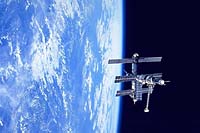
With the Russian space station Mir coming down to Earth, the Russian Space Agency has gone shopping for an insurance policy to cover any damage to third parties. According to a Itar-Tass report, RSA is now going through the necessary formalities to obtain coverage.
However, RSA would not detail the amount of coverage and the underwriter of the policy. The Tass report indicated that it would include involve insures with experience in the space market such as Megaruss, with further invitations to foreign insurers.
Based on third party coverage for a Proton launch of $300 million, Tass estimated that the coverage for Mir would be double that. Third party damage premiums are generally fixed at one percent of the coverage sought. But Tass reported that the rate would most likely be less and cannot not exceed a budgeted amount of $1.5 million.
Without insurance, RSA would have to pay any damages incurred within the borders of Russia. Should damage occur in other countries then the Russian government would be responsible for any financial compensation as required under an international convention signed in 1972.
Similar to the US and Europe, Russia does not insure for the loss of government launchers and associated satellites. However, all commercial launches on Russian rockets are now subject to compulsory insurance coverage.
The only exceptions to the general rule of self insurance by government of its launchers was for the launch of the Russian ISS module Zarya, which according to Tass was insured three days before it was successfully launched in November 1998.
Furthermore, Russia and the US now take out personal insurance of their cosmonauts and astronauts.
