

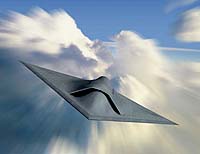
As the United States prepares for a potentially lengthy campaign against worldwide terrorism, the U.S. Department of Defense is determined to achieve technological superiority on what will be an unconventional battlefield.
As a result, demand is rising for technology that will keep the U.S. military ahead of terrorists while also defeating them on their own turf. The need for new weapons that can penetrate deep caves and hardened bunkers, for example, will lead the development of sophisticated munitions in the short term.
New analysis from Frost & Sullivan, U.S. Department of Defense (DoD) Research and Development Markets, reveals that this industry generated revenues totaling $22.6 billion in 2001. Steady growth for a range of military projects, from command and control units to missiles, should push revenues to $31.87 billion in 2007.
The current focus among research and development projects is on interoperability.
“As the military services continue to forge close alliances, including joint operations and working environments, there will be an increasing need for interoperable systems,” says Frost & Sullivan Research Analyst Jenny Benavidez. “This requirement can be met only through research and development of systems that satisfy each service’s needs while at the same time allowing intercommunication and operation.”
The need for interoperability will primarily impact communications, intelligence, and command and control areas.
“The current focus is on improving combat identification between ground vehicles and personnel, and for close air support and deep air strikes,” says Benavidez.
Despite the recent push towards bolstering security, the U.S. has experienced a decline in defense budgets since the end of the Cold War. Federal expenditures for defense have dropped from approximately 23 percent of total government spending in 1990, to less than 15 percent in 2000.
“The result of cutbacks has been a loss of revenues for aerospace and defense industry manufacturers, as well as for companies supporting them,” says Benavidez. “Organizations now face the tremendous challenge of completing contract requirements for less cost while still meeting mission requirement standards.”
Though the drive to modernize the military will create multiple market opportunities, finding the proper balance between costs and requirements will intensify competition among manufacturers.
Frost & Sullivan is a global leader in strategic market consulting and training. This ongoing research is part of the Defense and Security Monitor Service, which also includes market analyses on World Unmanned Aerial Vehicle Markets and U.S. C4ISR Markets. Frost & Sullivan also offers custom consulting to a variety of national and international companies. Executive summaries and interviews are available to the press.
