
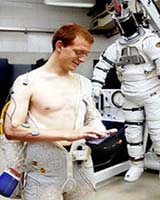
On Earth as in space, muscle monitoring has been given a boost in the arm from NASA-developed technology. In the past, the only way muscle performance could be monitored was with bulky, complicated and cumbersome equipment. In space it was nearly impossible to use the traditional electromyography (EMG) machines.
Assistance from the Small Business Innovation Research (SBIR) funding division of NASA’s Johnson Space Center in Texas helped DelSys of Boston, develop a lightweight, portable electromyography device called the MyoMonitor EMG system
The MyoMonitor is a battery-powered, cable-free unit. The benefit of an EMG that only weighs a little over two pounds is that it gives the wearer complete freedom to move naturally. Possibly the most important feature of this ingenious device is that muscles can be monitored away from the laboratory in any environment, even in space.
Special electrodes had to be developed for the MyoMonitor because EMG signals became impaired during vigorous activity and with the accumulation of sweat.
This new type of contact uses an active parallel bar electrode which doesn’t require skin preparation or conductive gel. The parallel bar electrodes make monitoring muscles a breeze even during activities like a tennis serve, baseball pitch or golf swing.
This NASA-funded technology is also making a difference here on Earth. For example, doctors can now monitor their patients’ muscle activity during exercise training, rehabilitative therapy and at work. The MyoMonitor can also study carpal tunnel syndrome in people performing routine tasks while sitting at their desks.
Currently, the device is capable of storing over three hours of data that can be transferred to a regular personal computer and analyzed with a specialized software program.
Studies are underway for incorporating the DelSys EMG equipment into NASA’s space suits. The electrodes are ideal for positioning under the astronaut’s cooling suit along with other sensors.
From the technology designed for space, those of us on Earth can benefit from NASA-based know-how, improving our health and quality of life.
