
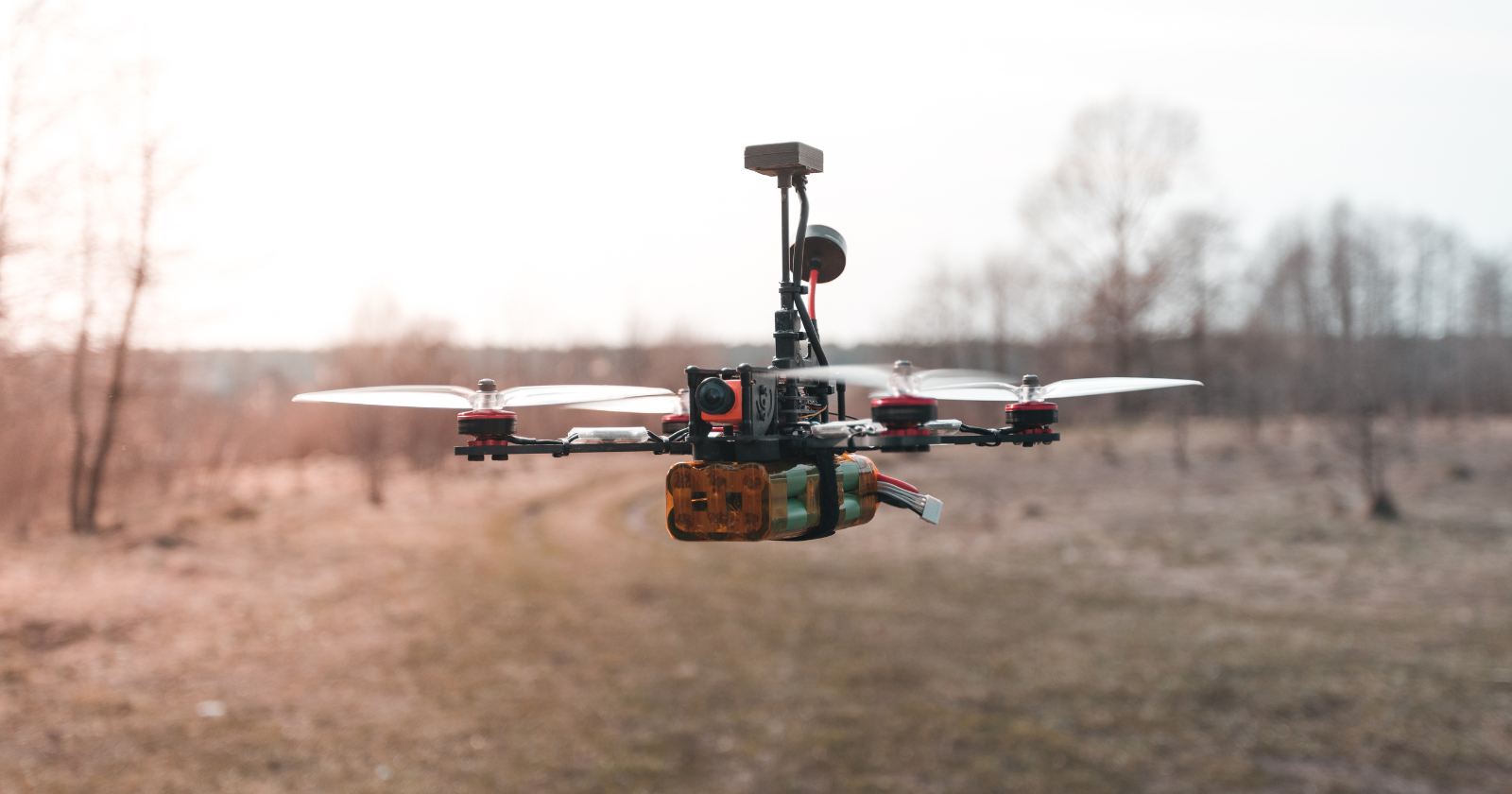
When Russia launched its full-scale invasion of Ukraine in February 2022, military planners on both sides were operating on doctrines built for a different kind of war. Four years later, those doctrines have been rewritten in real time, under fire, at a pace that no peacetime military exercise or planning cycle has ever produced. The conflict has become, in the assessment of analysts across the spectrum, the largest live test of autonomous drone warfare in history.
What both sides have learned — and what every military establishment on Earth is now trying to absorb — is not a single lesson. It is a compounding set of them, each arriving faster than the institutional frameworks designed to process it.
The scale that changed everything
The numbers alone are disorienting. According to reporting by Bloomberg cited in Army Recognition, Ukraine produced approximately 2.2 million unmanned aerial vehicles in 2024 and was on track to exceed 4.5 million in 2025 — more than the entire NATO Alliance combined. Ukraine’s defence ministry budgeted more than $2.6 billion for FPV drone procurement in 2025 alone, with roughly 96 percent going to domestic producers.
Russia has matched this industrial mobilisation on its own terms. A detailed assessment by the OSW Centre for Eastern Studies published in October 2025 documented the growth of Ukraine’s drone industry from 41 registered aerospace companies in 2022 to more than 290 by early 2025. Russia, meanwhile, was producing its own fibre-optic guided variants at a rate of more than 50,000 per month by September 2025 according to Ukraine’s Arms Monitor.
The National Security and Defense Council of Ukraine reported in January 2026 that 60 percent of Russian army losses were being inflicted through FPV drones. Ukrainian Defence Minister Mykhailo Fedorov had earlier estimated that figure at up to 90 percent for battlefield kills in August 2025. The imprecision in the range reflects the difficulty of battlefield attribution under these conditions. The direction of travel it describes is not in dispute.
Eight phases in four years
The French Institute of International Relations (IFRI) published a comprehensive military technology review in February 2026 identifying eight distinct phases in the evolution of drone use over the course of the conflict. In 2022, UAVs functioned primarily as reconnaissance tools. By 2025, they had become, in IFRI’s assessment, “partially AI-coordinated weapon systems.” The report notes that the electronic warfare arms race this evolution triggered was itself rendered obsolete by the emergence of fibre-optic cable-guided drones in 2024 — drones that communicate through a physical tether rather than a radio signal, removing the target the electronic warfare competition had been designed to defeat.
The doctrinal significance of the fibre-optic transition extends beyond the technology itself. As the U.S. Army’s Military Review documented in its September-October 2025 edition, Ukraine’s battlefield innovations have driven a learning process on both sides that runs continuously in parallel to the actual fighting. Each tactical adaptation by one side produces a countermeasure on the other, which produces a counter-countermeasure, which produces further adaptation. The cycle is faster than any traditional acquisition or doctrine cycle was designed to accommodate.
The procurement crisis this exposed
The central institutional problem Ukraine’s experience revealed is not primarily technological. It is organisational.
Traditional military procurement systems in NATO countries are built around large, expensive platforms developed over years and fielded for decades. The F-35 programme ran for more than twenty years from conception to operational deployment. The Abrams tank entered service in 1980 and remains in the U.S. Army’s primary armoured force today. These platforms represent the accumulated assumption of a particular kind of warfare — one in which unit cost can be amortised over long service life, and in which attrition rates are low enough to sustain a force built around expensive, non-replaceable assets.
Ukraine’s experience demonstrated that this assumption does not hold in a high-intensity drone-saturated conflict. A February 2026 analysis from the Center for Strategic and International Studies, based on more than 50 in-depth interviews with Ukrainian Armed Forces personnel and U.S. defence stakeholders, found that Ukraine’s decisive procurement innovation was structural rather than technical: creating a dedicated acquisition budget outside the traditional defence procurement system, managed by an alternative agency, with simplified rules enabling direct engagement with commercial suppliers.
By 2025, nearly a third of all Ukrainian defence procurement spending was directed toward commercial innovation, with a major portion allocated to unmanned systems. The speed advantage this produced was not incremental. It was generational.
What the U.S. Army concluded
The response within the U.S. military establishment has been direct. As Military.com reported in October 2025, the U.S. Army issued a directive in July 2025 ordering every squad to be equipped with unmanned systems by the end of 2026. Army Chief of Staff General Randy George testified to Congress in June that technology was advancing too rapidly to sustain large programmes that take years to develop and risk obsolescence before fielding. Defence Secretary Pete Hegseth’s accompanying directive described the core challenge in terms that would have been unusual language in any prior American military document: “Drone technology is advancing so rapidly, our major risk is risk-avoidance.”
The shift in posture this represents is not cosmetic. The Army is restructuring units, retraining infantry, and reclassifying drone systems from durable assets to consumable munitions — a doctrinal category change that reorients logistics, maintenance, and procurement planning simultaneously. The Drone Warfare Strategic Brief for July 2025 identified this reclassification as the most significant doctrinal shift since the inception of unmanned warfare.
What NATO is still getting wrong
The institutional adaptation, however, has been uneven. A May 2026 analysis from the Modern War Institute at West Point warned explicitly of the risk of misreading Ukraine’s lessons — noting that a multinational NATO exercise demonstrated Ukrainian participants employing tactics adapted for a drone-saturated battlefield while NATO forces had not been compelled by the realities of war to do the same. Dispersal, concealment, reconnaissance-forward movement: these are not new concepts. What is new is the density and lethality of the drone environment that makes their absence fatal at the tactical level.
Lt. Gen. (Ret.) Lance Landrum, former deputy chair of the NATO Military Committee, told CSIS researchers in March 2025 that the conflict had demonstrated unmanned systems’ capacity to extend operational reach while reducing risk to personnel in ways that would reshape alliance planning. Air Marshal Johnny Stringer, deputy commander of NATO’s Allied Air Command, described the battlefield transformation as one that challenged the conventional emphasis on expensive platforms that had defined NATO force structure for decades.
The autonomy threshold
The most consequential development the conflict is producing may not yet be fully visible in any current engagement metric. The Center for European Policy Analysis documented in 2025 the emergence of Ukraine’s Saker Scout — an AI-powered FPV drone reportedly capable of autonomously detecting and identifying enemy equipment and, according to company officials, engaging targets without a human in the loop — though this has not been independently verified at operational scale. If confirmed, this would represent a meaningful threshold in the deployment of autonomous systems in warfare: not a drone that a human guides, but a drone that selects and engages its target once given an operational parameter.
The former defence minister of Ukraine, Andriy Zagorodnyuk, framed this trajectory in a Carnegie Endowment paper in 2026 as a new revolution in military affairs, driven by what he termed “affordable precise mass” — the deployment of low-cost, long-range autonomous systems at a scale that changes the fundamental calculus of attrition warfare.
Ukraine is also the first country in history to establish a dedicated military branch for unmanned systems. The Unmanned Systems Forces, founded in 2024, now comprises an estimated 40,000 to 80,000 personnel and operates under a separate command structure.
What every other military is now working out
The diffusion from the conflict is already documented and rapid. The U.S. Army Military Review noted that China has intensified development and integration of FPV and swarm drones into its armed forces directly in response to Ukraine. North Korea mass-produced FPV systems with Russian technical support after its troops encountered them in combat. Serbia’s armed forces adopted domestically developed FPV variants in 2024.
The former commander-in-chief of the Ukrainian Armed Forces, General Valeriy Zaluzhniy, stated in April 2025 that the war had “completely changed the nature of warfare” and predicted that future conflicts would be decided by countries that concentrated resources on drones, electronic warfare, and artificial intelligence. That prediction is no longer a projection. It is a description of a reorientation already underway in defence establishments across the world.
What Ukraine and Russia have produced between them, through four years of continuous tactical adaptation under live fire conditions, is the most compressed doctrinal learning environment in the history of modern warfare. The lessons it is generating are not classified. They are being published, analysed, and absorbed in real time — by allies, by adversaries, and by every military institution trying to understand what the next conflict will look like before it arrives.
The consensus emerging from that body of analysis is not complicated. The era of warfare built around a small number of expensive, exquisite platforms has not ended. But it has been fundamentally disrupted by the emergence of affordable, autonomous, expendable systems at industrial scale. What that means for procurement, doctrine, force structure, and the geography of deterrence will be worked out over the next decade. Ukraine has provided the first and most unambiguous data.
