

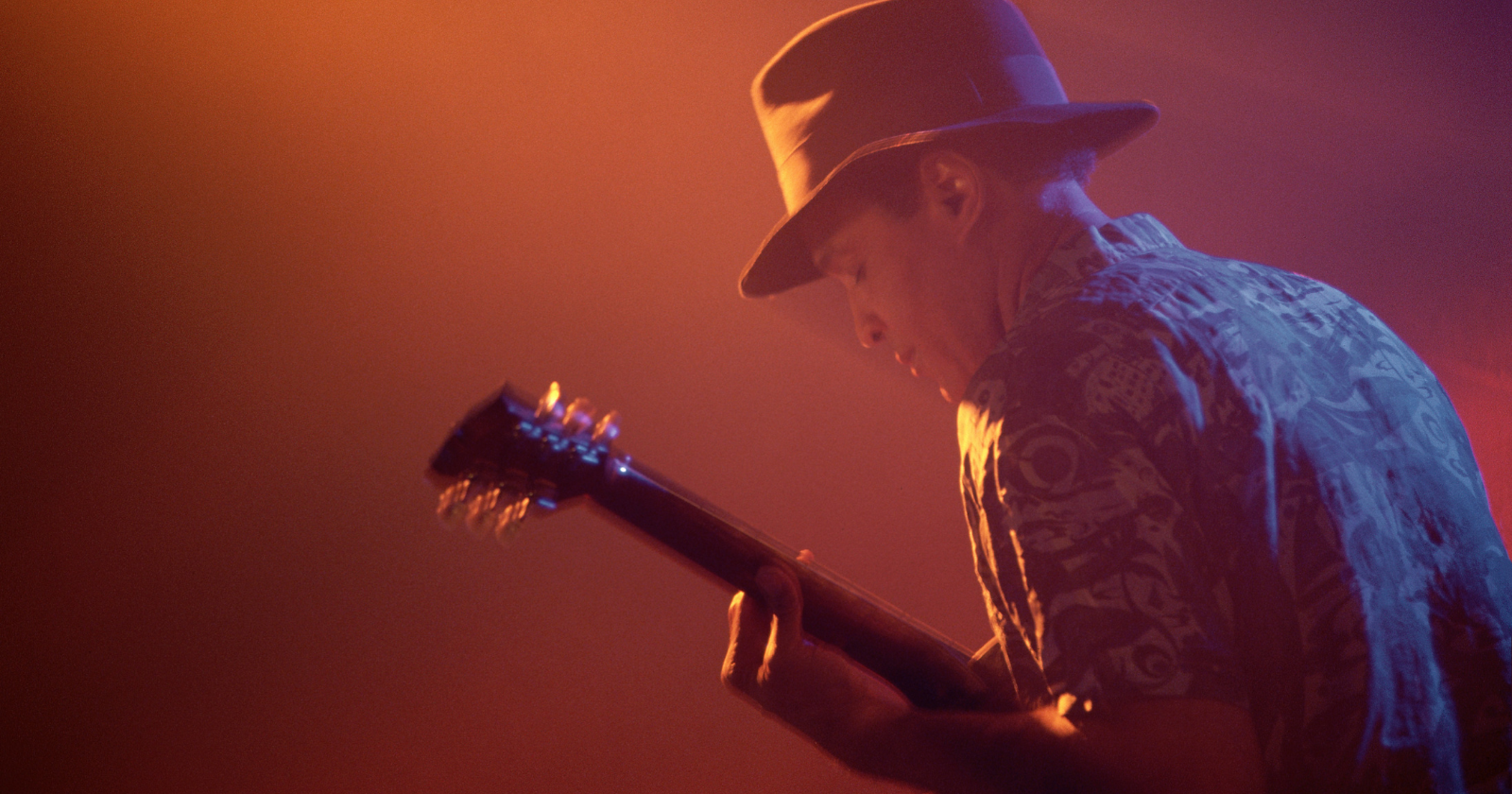
Among musicians who improvise, there is a description of a certain quality of playing that comes up often enough to constitute its own category: moments when the decisions stop feeling like decisions, when the playing seems to happen without the ordinary overhead of consideration and choice. Jazz musicians talk about it, as do classical performers who describe passages where technical self-consciousness dissolves and the music just runs. The experience gets called flow, or being in the zone, or, in some traditions, something closer to grace. For a long time, it was treated as either metaphor or mysticism.
Neuroimaging research has started to look at it more directly. The study that sits at the centre of this line of inquiry was published in 2008 by Charles Limb and Allen Braun in PLOS ONE, using professional jazz pianists as subjects. The picture that emerged was not of the brain being more active during creative performance. In some regions, it was less active, specifically in areas associated with deliberate self-monitoring. The most widely discussed finding was a dissociated pattern: extensive deactivation of the dorsolateral prefrontal cortex, paired with focal activation of the medial prefrontal cortex. The brain was not simply working harder. Something specific was stepping back.
The Limb and Braun paper has generated a substantial follow-on literature, some of it replicating the pattern in different musician populations, some of it finding more complicated or partial results. The research is not settled into a single clean narrative. But the central question it raises, about what the brain is actually doing during expert creative performance, is worth examining carefully.
What the Limb and Braun study found
The study scanned professional jazz pianists using fMRI while they performed two tasks: playing a memorised musical sequence and improvising freely over the same harmonic structure. Limb and Braun were looking for what differed neurally between the two conditions, one involving deliberate execution of pre-learned material, the other involving real-time musical invention.
The deactivation of the dorsolateral prefrontal cortex was the most consistent finding. This region is involved in working memory, in the inhibition of responses, in planning sequences, and in what researchers sometimes call cognitive control: the capacity to suppress competing information and maintain focus on a goal-directed task. During deliberate performance of a memorised piece, this region is active. You are monitoring your own execution, catching errors, adjusting in real time. During improvisation, the pianists were effectively releasing that monitoring function.
Simultaneously, the medial prefrontal cortex, a region associated with self-expression and internally generated thought, showed focal activation. Limb and Braun described this as a shift from external monitoring toward a more internally directed mode of processing. The pianist was no longer primarily checking their own output against a stored template. They were generating from somewhere else.
The mechanism this suggests is not that creativity is a natural or unlearned capacity that skilled monitoring suppresses. It is that creativity of the kind observed in expert jazz improvisation requires two things in sequence: first, a long period of highly deliberate practice that ingrains the technical vocabulary deeply enough to make it automatic; and second, the capacity to release the conscious oversight of that vocabulary at the moment of performance. You cannot release control of something you do not yet have. The deactivation only produces creative output when there is a large reservoir of learned material underneath it.
What happened when the research moved to guitars
An obvious question after Limb and Braun was whether the same pattern would hold across different instruments and musical traditions. Jazz piano is a specific domain; the motor demands, the harmonic conventions, the improvisational idiom are all particular to it. A 2019 study by Atsumichi Tachibana and colleagues, published in Scientific Reports, examined improvisation in rock guitarists using functional near-infrared spectroscopy (fNIRS), a different neuroimaging method with lower spatial resolution than fMRI.
The results were not a clean replication. The consistent deactivation of the dorsolateral and dorsomedial prefrontal cortices that characterised the pianist findings did not appear in the guitar task. The guitarists showed partial and inconsistent prefrontal changes across participants, with no clear population-level deactivation pattern matching the pianist study. Bashwiner’s team acknowledged the divergence and suggested several possible explanations: the difference in imaging method, the difference in musical genre and its conventions, the structural differences between guitar improvisation and piano improvisation, and the possibility that the pianist finding is more specific to that population and context than the earlier research implied.
This does not invalidate the Limb and Braun findings. It complicates the picture. The prefrontal deactivation pattern during improvisation appears to be real in expert jazz pianists. Whether it generalises cleanly to other improvisational contexts is an open question the field has not resolved. The honest reading of the current literature is that the pianist study identified something, subsequent research has found partial and mixed replication, and the boundaries of the effect are still being worked out.
The inspiration account, reconsidered
One way that creative states get described, in music and elsewhere, is as a kind of visitation: something that arrives from outside ordinary processing, that cannot be summoned by effort, that depends on some quality of receptivity in the artist. There is a long cultural history to this account, and it is not without a real referent. The state being described, characterised by reduced effortful oversight and a quality of things happening rather than being made to happen, does seem to correspond to something musicians and other creative practitioners actually experience.
The neuroimaging picture complicates the idea that this state is primarily about receptivity. What the data from the pianist study suggests is closer to a technical achievement: one that is hard-won, that depends on a specific kind of preparation, and that involves not just the capacity to let go but the prior construction of something worth letting go into.
The flow state in jazz is not available to beginners. A pianist who has been playing for six months and who stops monitoring their left hand does not enter a creative state; they hit wrong notes. The release of monitoring that produces creative flow is available only to musicians who have practised long enough that the monitoring can be safely suspended because what it was monitoring has become automatic. The freedom comes after the constraint, not instead of it.
The partial results in the guitar study may reflect exactly this specificity. Rock guitar improvisation, with its different conventions and scales and modal grammar, may recruit different patterns of neural oversight and release. Or the fNIRS method may be insufficiently sensitive to capture the same effects fMRI found in the pianists. Both explanations are plausible; neither is confirmed. What the divergence does suggest is that the relationship between expertise, monitoring, and creative output is not a single fixed mechanism that activates identically across musical traditions. It is something more contextual, which makes the pianist finding more interesting, not less, because it points to the conditions under which that specific pattern emerges rather than treating it as a universal law.
What this suggests about creative states more broadly
Jazz improvisation is a specific domain, and the neural signatures found in expert jazz pianists may not map directly onto creative processes in writing, visual art, scientific problem-solving, or other fields. Limb and Braun were careful about this. Extrapolating from a sample of jazz pianists to a general theory of creativity is a step beyond what the data supports, particularly given the incomplete replication pattern in subsequent studies.
That said, the basic structure of the pianist finding, expertise providing a substrate followed by a partial release of deliberate oversight that allows the substrate to produce novel combinations, appears in accounts of creative experience across many fields. Mathematicians describing the moment a proof comes together often describe a similar quality of not-quite-deciding. Writers working at their best often describe the sense that the sentence knows where it is going before the writer does. Whether these experiences share the neural correlates found in jazz pianists is an open empirical question, not something the current literature can answer.
There is also a practical implication for how creative work gets structured, particularly in environments that place a high premium on continuous monitoring and evaluation. If the deactivation of self-monitoring is a feature of the most creative performance rather than a failure of discipline, then the conditions that prevent that deactivation, constant self-review, frequent external evaluation, interrupted attention, may be directly counterproductive for the kind of creative output they are ostensibly trying to improve. The pianists in the Limb and Braun study were not being evaluated in real time. They were playing, in a context that allowed for sustained attention and the kind of temporary release of judgment that the data suggests creative performance requires.
What the research leaves open
What neuroimaging can show is which regions are more or less active during a task. It cannot show what the activation means in terms of the subjective experience of the musician, or fully separate the neural correlates of creative quality from the neural correlates of experience level, confidence, or some other variable that correlates with both. The Limb and Braun study used a small sample of professional pianists, and small samples in specialist populations are always subject to the question of how well they represent anything beyond themselves. The incomplete replication in the guitar work makes that question sharper.
The studies also cannot resolve whether the creative state is teachable in any direct sense, or whether it is an emergent property of a level of mastery that can only be reached through the long work of practice. The data from the pianist study is consistent with the latter reading. You get to the state through the practice, not around it. But the study was not designed to test pedagogical interventions, and no study in this literature has yet followed musicians through the process of acquiring the capacity for this kind of creative performance.
What keeps recurring in this line of research, across the pianist findings and the partial guitar results and the follow-on work with vocalists and other improvisers, is something that experienced practitioners in many creative fields already describe: the most generative moments are rarely the most effortful ones. They tend to come after effort, often long after, and they seem to require not the withdrawal of skill but its thorough assimilation. The brain imaging work is finding partial, domain-specific, methodologically varied evidence for what musicians have been describing for a long time. The picture is incomplete. It is also, on the available evidence, pointed in a consistent direction.