
Ask a father about the first year after his child was born, and a particular phrase tends to surface eventually. Not the sleeplessness, not the logistics, not the specific chaos of keeping a newborn alive — though all of those come up too. What comes up, given enough time and trust, is something harder to articulate: the sense that he was becoming a different person, running on unfamiliar operating software, responding to the world in ways that didn’t entirely match who he thought he was before. Most men frame this as metaphor. New research suggests it may be a fairly literal description of what was happening inside their skulls.
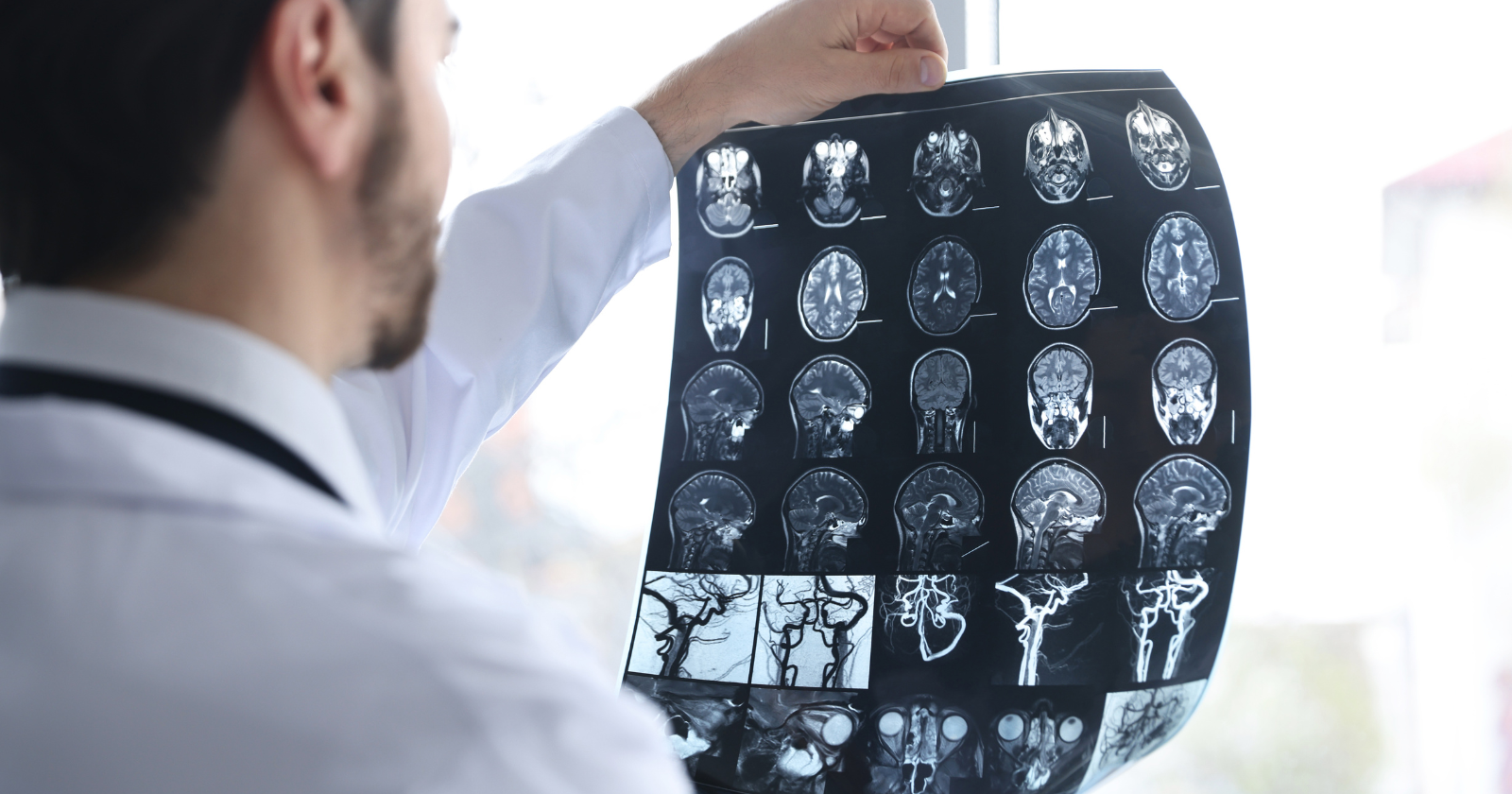
A study published in Translational Psychiatry, part of the Nature portfolio, followed 25 first-time fathers through one of the most detailed longitudinal neuroimaging sequences ever applied to the paternal brain. Researchers led by Negin Daneshnia at RWTH Aachen University scanned participants immediately after childbirth, then again at 3, 6, 9, 12, and 24 weeks postpartum — six measurement points across the entire first six months of fatherhood, plus a follow-up at the two-year mark. What the scans showed was not subtle, and not what most people would expect.
What the scans found
The most dramatic structural changes happened early — concentrated in the first six weeks after birth. During this window, gray matter volume decreased across a wide range of brain regions: bilateral occipital, frontal, temporal, and parietal cortices, along with the temporo-parietal junction, the insular cortex, and hippocampal regions. Reductions appeared in areas tied to sensory processing, self-referential thinking, social cognition, and spatial and emotional memory. This was not a small or localized shift. It was broad, rapid, and it did not continue indefinitely.
After the initial phase of reduction, the brain stabilized. Then, from around week 12 onward, something different happened: gray matter began to increase in frontal and cerebellar regions — areas associated with planning, emotional regulation, and motor coordination. The trajectory was not one of decline. It was one of reorganization: contraction followed by selective expansion in regions that map fairly directly onto the demands of active caregiving.
Alongside the structural changes, the researchers tracked functional connectivity — how different brain regions communicate with each other. Here too the pattern was consistent. Connections with regions involved in sensory processing became weaker. Connections with regions involved in emotion, attention, and cognitive control became stronger. The brain was not simply changing its shape. It was changing its emphasis.
The first six weeks as a critical window
The researchers used the phrase “critical period” deliberately. Based on the timing and magnitude of the changes observed, they identified weeks six to nine postpartum as the key window for paternal neuroplasticity — the period during which the brain’s reorganization is most active and, by implication, most sensitive to the conditions around it. Coverage of the findings by ZME Science noted that this language places the paternal brain in the same conceptual territory as developmental neuroscience — the idea that certain phases of life open windows of accelerated change that later close, or at least narrow considerably.
That framing matters for practical reasons. The first six weeks of a child’s life are also the period during which most workplace parental leave policies, where they exist at all, are at their most compressed for fathers. The cultural expectation, in many countries, is that a father will take a brief pause and then largely resume normal functioning. The neuroimaging data tells a different story: this is precisely the window during which his brain is undergoing its most significant structural reorganization.
Gray matter reductions are not what they sound like
The phrase “gray matter reductions” carries connotations that the research does not support. It sounds like damage, or depletion — something going wrong. The better analogy is specialization. Research on maternal neuroplasticity, most notably the work of Elseline Hoekzema and colleagues, documented similar gray matter reductions in women during pregnancy and early motherhood — and interpreted them not as loss but as neural pruning. The brain eliminates redundant or low-priority connections so that the most important circuits become more efficient and more responsive. The mother’s brain is not degraded by early parenthood. It is, in a meaningful sense, sharpened.
The Aachen findings suggest the same process occurs in fathers, on a somewhat compressed and differently contoured timeline. The gray matter reductions in the first six weeks are consistent with a brain that is shedding the architecture of a previous life and building, or at least beginning to build, the architecture of a new one. The subsequent increases in frontal and cerebellar regions from week 12 onward point toward the consolidation phase — the brain establishing the structures it has decided to keep and develop.
Network reorganization and what fathers report
The functional connectivity findings — weaker links with sensory processing areas, stronger links with regions governing emotion, attention, and cognitive control — map with unusual precision onto what fathers actually describe experiencing. The heightened alertness to a child’s sounds, the way an infant’s cry can cut through background noise that nothing else penetrates; the new emotional textures that arrive without warning; the sense of monitoring that runs quietly in the background even during unrelated tasks. These are not personality traits. They are not simply the product of responsibility or love, though both of those are real. They appear, at least in part, to be the output of a brain that has reorganized its network priorities.
ScienceX reporting on the study highlighted this functional dimension — the idea that the new father isn’t just thinking differently about his situation, but that the underlying network architecture through which he processes the world has materially shifted. The metaphor of “running different software” that fathers sometimes use turns out to be a reasonable approximation of what the neuroimaging shows.
Why this research matters beyond the findings themselves
The neuroscience of parenthood has, until relatively recently, been almost entirely a study of mothers. That is partly methodological — the maternal brain undergoes its most dramatic changes during pregnancy, which provides a natural before-and-after structure that is harder to replicate in studies of fathers. But it also reflects a deeper cultural assumption: that the profound reorganization of becoming a parent is, in its biological dimension, primarily a maternal experience. Fathers adjust. Fathers adapt. But their adjustment has largely been treated as psychological and social in nature, not neurological.
The Aachen study is part of a small but growing body of work pushing back against that assumption. It does not claim that paternal and maternal neuroplasticity are identical — the timing, magnitude, and specific regions involved differ. But it does establish that the paternal brain undergoes genuine structural and functional reorganization in the early months of a child’s life, and that this reorganization follows a coherent pattern tied to the demands of caregiving.
That validation matters for the many fathers who have found their own reported experience met with a kind of benign dismissal — the assumption that whatever difficulty or transformation they felt was either less real or less biological than the equivalent experience in mothers. The scans suggest otherwise. The first year of fatherhood is not merely a social adjustment. It is, in measurable ways, a neurological one. When fathers say they feel like they are learning to be a different person, they are describing something that turns out to have a biological basis. The brain reorganizing itself is about as literal an explanation as science tends to offer for feelings that most people assume are just feelings.
